


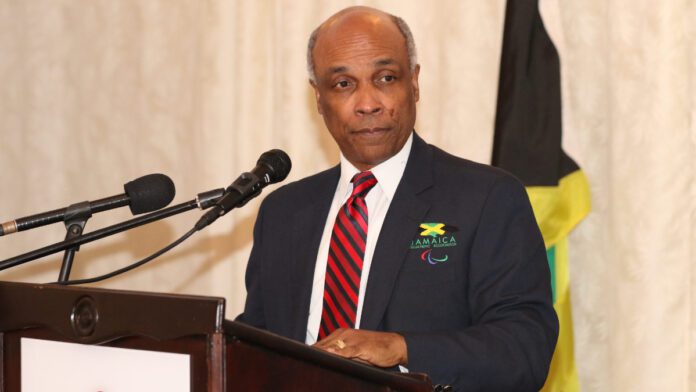
Jamaica Olympic Association (JOA) President Christopher Samuda has once again championed the idea of establishing a Caribbean Athletes’ Union, arguing that the time has come for sportsmen and women in the region to speak with one united voice.

Samuda’s call came during a recent conference in Rodney Bay, St. Lucia, hosted by the International Olympic Committee, the World Intellectual Property Organization (WIPO), and the Government of St. Lucia. The event brought together regional stakeholders, sport ministers, and policy leaders under the theme “Beyond the Game: Innovation, IP, and Sports.”
According to WIPO, the forum aimed to explore “how intellectual property can be harnessed to generate value, recognition, and economic opportunities within the region’s vibrant sports ecosystem.” For Samuda, however, the conversation highlighted an even broader need—structural representation for athletes across the Caribbean.

Beyond representation on boards
While applauding the progress already made through athlete commissions and board representation, Samuda stressed that more robust mechanisms are required.
“Don’t get me wrong, athletes’ commissions and having athlete representation on boards are organic to the ecosystem of sport,” he said. “They enable critical achievements for athletes, particularly in the fields of education, health, and, to a lesser extent, the business of sport. But while sportsmen and women are competing in their shelf lives, it would be valuable to have concentrated advocacy on athlete welfare that gives expression to a bankable voice from its own household, in addition to the voice in the residence of others — their governing bodies.”
For Samuda, this proposed union is not about undermining existing institutions but rather ensuring athletes have direct bargaining power, particularly in matters of compensation, working conditions, health benefits, safety standards, and commercial rights.
A call for self-determination
The JOA president emphasized that such a body would only succeed if athletes themselves embrace the principle of self-determination.
“It is principally for the athletes themselves to acknowledge, unreservedly, the value of self-determination and instrumental support in that self-help context and act accordingly to protect their fundamental, social, and commercial rights, including their intellectual property,” he declared.
Samuda also highlighted the financial and legal complexities that often accompany the safeguarding of athlete rights. “This very fact compels collective representation that utilises professional expertise and economises efforts,” he added.

A timely reminder
This is not the first time Samuda has pressed for stronger athlete advocacy. In June, following reports that several Jamaican Olympians were considering switching allegiance to Turkey ahead of the 2028 Los Angeles Games, he urged a revival of the National Sports Council to create meaningful dialogue with athletes.
Now, with regional sporting disciplines expanding rapidly and athletes facing increased obligations and risks, Samuda believes the idea of a Caribbean Athletes’ Union is not only urgent but unavoidable.
“The evolution of a Caribbean sport ecosystem demands that the rights and interests of the athlete have an infrastructure that goes beyond constitutional seats on boards and commissions and gains expression in bargaining representation,” he said firmly.




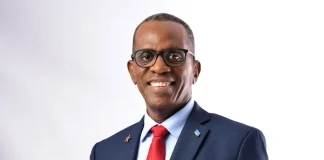
 President Christopher Samuda has once again championed the idea of establishing a Caribbean Athletes’ Union.)