St Lucia PM urges more direct communication among CARICOM leaders
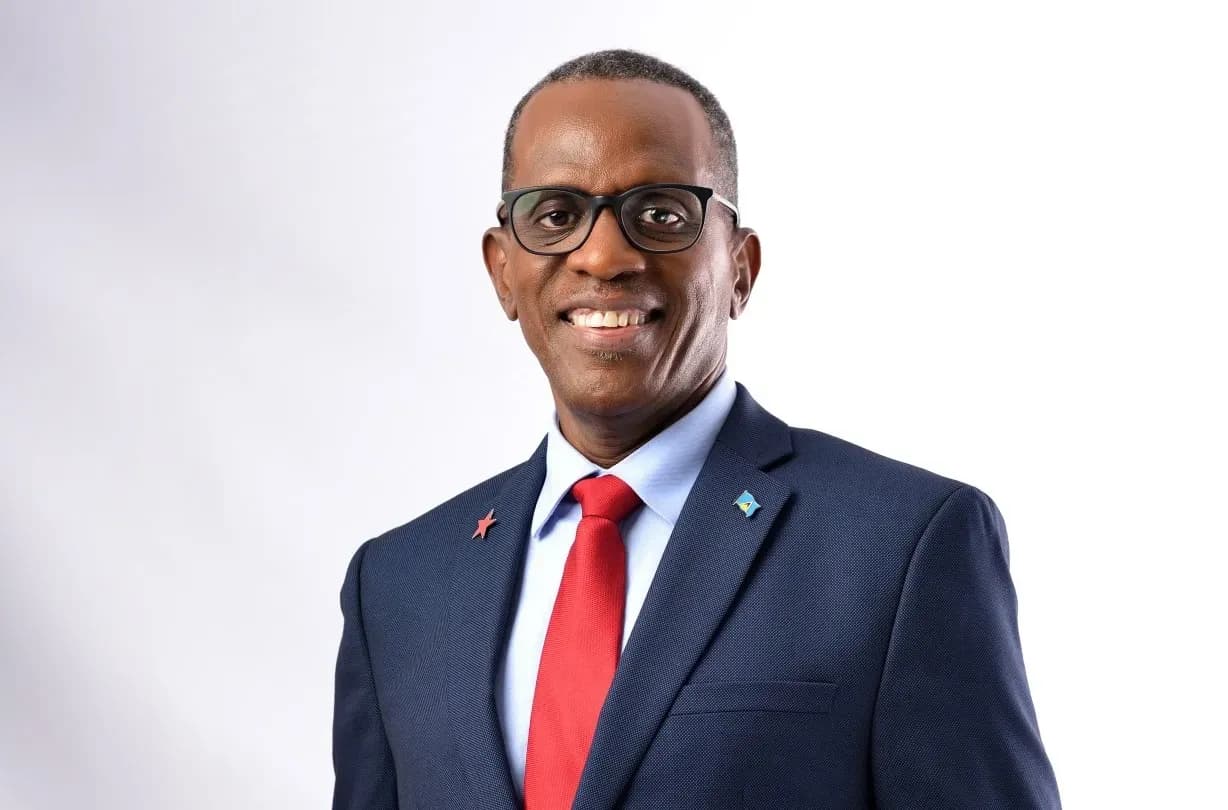
St Lucia Prime Minister Philip J. Pierre is calling on CARICOM leaders to communicate more directly as tensions continue to swirl around the controversial reappointment of Caribbean Community (CARICOM) Secretary-General Dr. Carla Barnett.
Speaking at his weekly Cabinet news conference on Monday, Pierre avoided directly engaging in the dispute but urged regional heads to rely more on simple phone calls to resolve disagreements before they escalate publicly.
“I really wish Caricom prime ministers would speak more to each other,” Pierre said. “A phone call… I don’t want to get involved in that to create more drama.”
His comments come as the row intensifies over Barnett’s reappointment, following claims from Trinidad and Tobago that it was not invited to a key retreat where the decision was made in Nevis in February.
Trinidad and Tobago Prime Minister Kamla Persad-Bissessar has disputed the process, calling for the release of meeting minutes, performance evaluations, and other documentation tied to the appointment. In a recent social media post, she questioned the transparency of the process and asked where key records of the decision-making process were.
CARICOM Chairman and St Kitts and Nevis Prime Minister Terrance Drew has defended the process, releasing correspondence and details of communications leading up to the February 24–27 summit in Basseterre. He also noted that Persad-Bissessar left the summit early and did not attend the subsequent retreat session where the decision was finalized.
Drew further referenced communications in which Trinidad and Tobago’s Foreign and CARICOM Affairs Minister Sean Sobers indicated he might attend in the Prime Minister’s absence, though logistical concerns were also raised.
Pierre, who is set to assume the CARICOM chairmanship in July, reflected on earlier eras of Caribbean leadership, recalling frequent informal communication between past prime ministers such as Sir John Compton, Owen Arthur, and Kenny Anthony.
“I just wish if Caricom prime ministers would just speak to each other,” he said. “I’m a pretty simple person… if by the end of my term I could get Caricom prime ministers to pick up the phone and call each other, that’s all I ask.”
He added that while CARICOM is not a political union and member states may differ on foreign policy, stronger communication could help resolve disputes more effectively and prevent public disagreements.
Pierre also pointed to CARICOM’s ongoing work in regional integration, including the Common External Tariff, saying the bloc continues to play a key role in sustaining intra-regional trade despite political tensions.
“The issue has gone into the public domain now,” he warned. “And once it does, all politics is local.”
He described his proposal as simple but important, saying more direct dialogue among leaders could help stabilize relations within the regional bloc.