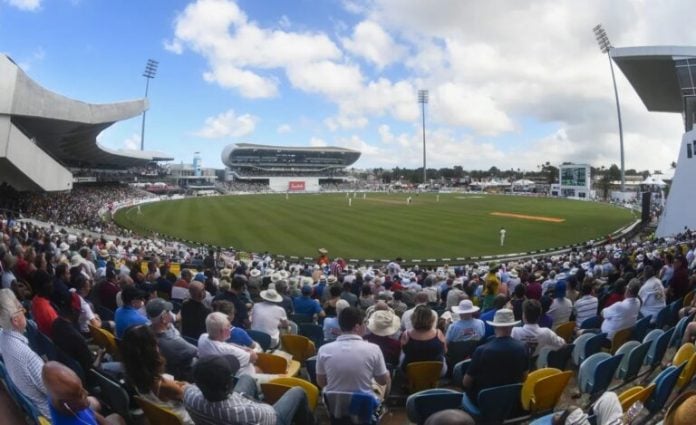
PORT OF SPAIN, Trinidad — The omission of Kensington Oval, long revered as “The Mecca” of Caribbean cricket, from the 2026 international schedule has sparked a sharp and unexpected dispute between regional stakeholders.

At the center of the fallout is Cricket West Indies (CWI), whose decision to exclude Barbados from hosting matches against Sri Lanka, New Zealand, and Pakistan triggered public expressions of disappointment from Barbadian leaders.
Public outcry meets internal surprise
Barbados Prime Minister Mia Mottley and Calvin Hope both voiced concern after learning that no fixtures would be staged at Kensington Oval.

But for CWI vice-president Azim Bassarath, those reactions came as a complete shock.
According to Bassarath, the decisions that led to Barbados’ exclusion were not only discussed but effectively accepted months earlier, with Barbadian representatives present.
Bassarath outlined the board’s strategic allocation of matches across the region, shaped in part by financial realities and logistical planning.

“Everyone knows the situation CWI is in at the present time financially. When the board sat and made the decision that we were going to host New Zealand in Guyana for all the white-ball games, we decided that the Pakistan tour would take place in Trinidad, we decided when Sri Lanka comes that they would play all the white-ball in Jamaica and the two Tests in Antigua…and Barbados’ representatives sat in the meeting and not a word of objection came from them.”
The schedule effectively distributed matches across Guyana, Trinidad and Tobago, Jamaica, and Antigua and Barbuda, leaving Barbados off the hosting list.
From consensus to contention
What followed, Bassarath suggests, was an unexpected shift in tone.

“So it was very surprising to us to hear afterwards about this talk about no games in Barbados. At the end of the meeting, we thought that all the board members were happy and they are satisfied with the recommendations made and I think that we went away from the meeting very comfortable, not knowing that a few months down the road that we were going to hear something of that nature.”
The comments, made during an interview on i95.5 FM’s Isports, highlight a growing disconnect between internal boardroom consensus and public reaction.
While the dispute centers on venue allocation, it also underscores broader challenges facing regional cricket administration, particularly financial constraints and the balancing act of distributing matches across multiple territories.
For now, the absence of Kensington Oval from the 2026 calendar remains both a symbolic and practical flashpoint, raising questions about communication, expectations, and unity within West Indies cricket leadership.