



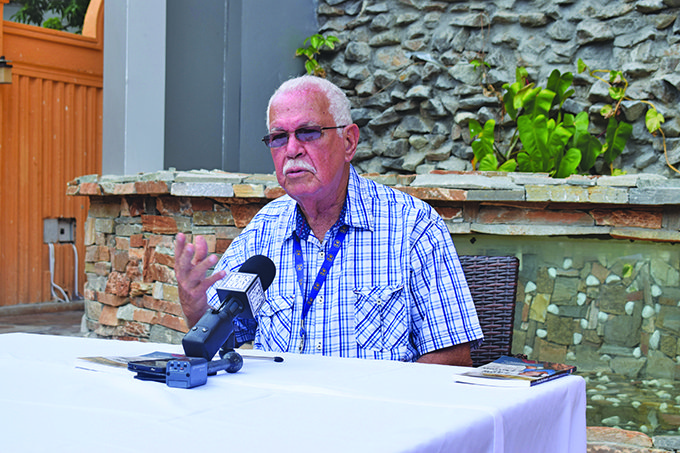
GEORGETOWN, Guyana — Renowned cricket commentator Joseph “Reds” Perreira has sharply criticized Cricket West Indies (CWI) for fielding a senior men’s team against Nepal in last month’s T20 International series, arguing that the historic defeat has damaged the region’s cricketing reputation.

The Akeal Hosein-led side suffered a stunning 2-1 loss to the lower-ranked South Asians in the United Arab Emirates — a result that handed Nepal their first-ever victory over a full ICC member nation and sent ripples of disbelief through the global cricket community.
“A missed opportunity for development”
Perreira, who has chronicled West Indies cricket for over half a century, told Isports on i95.5 FM that the series should have been used to nurture emerging talent rather than risk embarrassment with senior professionals.

“We had beaten Nepal on the previous visit with an ‘A’ team led by Roston Chase. I didn’t see the need to put the West Indies’ good name on the line by picking the team that they picked,” he said.
Perreira argued that the match-up should have been treated as a developmental exercise, allowing young players to gain valuable exposure instead of sending established internationals.
“I would have gone, and I suggested it, with a development team. Some of the players they picked — younger ones like [Amir] Jangoo — made sense. But I wouldn’t have gone for [Jason] Holder, [Obed] McCoy, or [Kyle] Mayers. I would have gone with a development team and exposed a number of young men instead,” he explained.
The veteran analyst said the decision to prioritize short-term victory over long-term growth was misguided.
“They were more interested in winning the series than developing players, and I think they missed an opportunity. We’ve actually done Nepal a great deal of good — and they’ve done us a great deal of harm.”
Timing and preparation under fire
Beyond selection, Perreira also took aim at the logistical planning of the series, noting that the fixtures were scheduled uncomfortably close to the end of the Caribbean Premier League (CPL) season.

Players, he said, had little time to recover or prepare, traveling across multiple time zones before playing three matches in four days.
“It was just rush, rush, rush,” Perreira said pointedly. “If we had been able to agree with CPL to finish a week earlier, we wouldn’t have been in the kind of rush that we were. There was no camp — we left on the 23rd, and it was just too rushed. I don’t believe they were mentally prepared. It’s a long journey to Nepal, and their cricket has developed.”
“Why risk the good name of the West Indies?”
The respected broadcaster, who has witnessed the highs and lows of West Indies cricket for decades, expressed disbelief that such a fixture was allowed to unfold under those conditions.
“Why expose the good name of the West Indies to be embarrassed?” he asked. “Just maybe to get a victory to crow about.”
His comments echo the growing sentiment among regional fans and analysts who have questioned CWI’s scheduling priorities and player management strategies amid a broader push to rebuild West Indies cricket.
For Perreira, the issue goes beyond the scoreboard — it’s about vision, respect, and responsibility. The former giants of the world game, he implied, must choose their steps more wisely as they navigate a new era of rebuilding and renewal.












 for fielding a senior men’s team.)