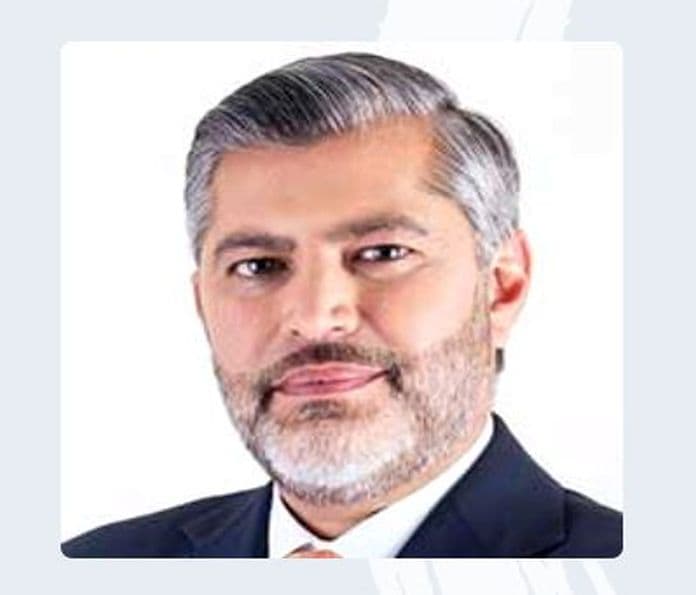
World Bank names Juan Carlos Alvarez as Trinidad and Tobago country manager
Key Points(5)
- The World Bank has appointed Juan Carlos Alvarez as its country manager for Trinidad and Tobago, bringing country-level leadership for the World Bank Group’s institutions under one official as the organisation seeks to deepen its development impact in the Caribbean country.
- Alvarez, a Costa Rican national, will oversee the World Bank Group’s engagement in Trinidad and Tobago, including the International Bank for Reconstruction and Development (IBRD), International Finance Corporation (IFC) and Multilateral Investment Guarantee Agency (MIGA).
- The World Bank said the unified leadership structure is intended to support a more integrated approach to mobilising financing, knowledge and private investment in support of job creation and the country’s public and private sector priorities.
- Alvarez most recently served as the World Bank’s country manager for Angola and São Tomé, where he led the institution’s engagement with both countries.
- He joined the World Bank Group in 2000 and has worked as legal counsel across several regions, including Latin America and the Caribbean and South Asia.
The World Bank has appointed Juan Carlos Alvarez as its country manager for Trinidad and Tobago, bringing country-level leadership for the World Bank Group’s institutions under one official as the organisation seeks to deepen its development impact in the Caribbean country.
Alvarez, a Costa Rican national, will oversee the World Bank Group’s engagement in Trinidad and Tobago, including the International Bank for Reconstruction and Development (IBRD), International Finance Corporation (IFC) and Multilateral Investment Guarantee Agency (MIGA).
The World Bank said the unified leadership structure is intended to support a more integrated approach to mobilising financing, knowledge and private investment in support of job creation and the country’s public and private sector priorities.
Alvarez most recently served as the World Bank’s country manager for Angola and São Tomé, where he led the institution’s engagement with both countries.
He joined the World Bank Group in 2000 and has worked as legal counsel across several regions, including Latin America and the Caribbean and South Asia. In those roles, he advised country management units on legal, operational and policy matters.
Alvarez holds a Juris Doctor from the Universidad Autónoma de Centro América in Costa Rica and a Master of Laws in International Law from American University’s Washington College of Law in Washington, D.C.
His appointment comes as the World Bank expands its physical presence in Trinidad and Tobago.
World Bank establishes permanent office
In April, the government signed an agreement with the World Bank Group to establish a permanent office in Port of Spain, formalising a relationship officials said would expand the country’s access to financing, technical expertise and private-sector investment.
The establishment agreement was signed on April 30 at the Diplomatic Centre in St. Ann’s by Prime Minister Kamla Persad-Bissessar and senior World Bank Group representatives.
The agreement covers the IBRD, International Development Association (IDA), IFC and MIGA and establishes the legal and operational framework for the World Bank Group’s local presence.
According to the government, the agreement provides the World Bank Group with internationally recognised privileges and immunities covering its offices, assets and official functions, as well as exemptions from certain taxes and customs duties.
It also provides protections for the organisation’s offices and archives, immunity from legal proceedings for official acts subject to limited exceptions, and protection of its assets and property from search, seizure or expropriation.
The agreement also provides the World Bank Group with autonomy over internal administrative and employment matters and allows it to conduct financial operations without restrictions, including holding and transferring funds in any currency.
The government said the local office is intended to strengthen development cooperation and improve the implementation of national projects through closer coordination between government officials and World Bank teams based in Trinidad and Tobago.
Persad-Bissessar said the office would bring the World Bank’s expertise and financing capacity “directly” into the country as the government seeks to diversify the economy, attract investment and create jobs.
She has also identified public-private partnerships as a key component of the government’s development strategy.
According to the government, such partnerships could support infrastructure and national projects in areas including transportation, water management, education and health care.
The government said the approach could improve efficiency, accelerate project implementation and expand access to financing while creating more opportunities for local businesses and entrepreneurs to access capital, advisory services and international markets.
Officials also said the World Bank Group’s expanded presence would signal to international investors that Trinidad and Tobago offers a stable and structured environment for investment.