

Why Small Drones Are Rewriting the Rules of Aerial Defense
Key Points(5)
- A $500 quadcopter can now do what a manned aircraft once needed a runway, a crew, and a budget to accomplish.
- That single shift has forced every defense planner on earth to rethink how they protect troops, bases, and convoys from the sky.
- Small unmanned aerial systems, or sUAS, are cheap, easy to launch, and hard to spot.
- They fly low, move fast, and can be packed into a backpack.
- Defending against them isn't a problem you solve once.
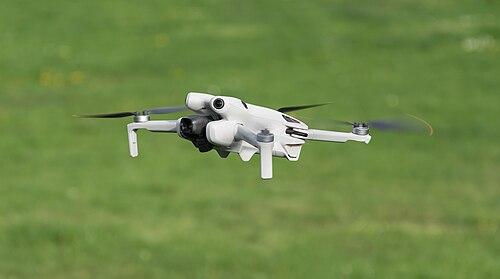
A $500 quadcopter can now do what a manned aircraft once needed a runway, a crew, and a budget to accomplish. That single shift has forced every defense planner on earth to rethink how they protect troops, bases, and convoys from the sky.
Small unmanned aerial systems, or sUAS, are cheap, easy to launch, and hard to spot. They fly low, move fast, and can be packed into a backpack. Defending against them isn't a problem you solve once. It's a problem you keep solving, because the technology on the attacking side keeps changing shape. Part of the answer now lives in the ammunition itself. Rounds built specifically for this job, like the ones covered in this anti drone ammunition overview, let a standard rifle engage an aerial target without new hardware bolted to the weapon.
Here's what that means in practice, why it matters, and how to think about the tradeoffs if you're the person making the call.
What actually makes a small drone so hard to stop?
Size and speed, working together. A drone the width of a dinner plate at 300 feet is a tiny moving dot. Add wind, dust, and the fact that it's coming at you, and the shot gets harder fast. A shotgun helps with spread, but its pellets lose energy quickly and the pattern scatters wide.
Radio jamming used to be the default answer. Knock out the control link and the drone drops or drifts away. That worked until fiber optic drones showed up, spooling a physical cable behind them so no radio signal exists to jam. When the control link can't be cut, you're back to hitting the thing directly. Kinetic defense doesn't care how the drone is steered.
The United Nations has spent years tracking how quickly small drones have spread into conflict zones, and the pattern is consistent: the hardware gets cheaper while the capability grows. That trend doesn't reverse. My read is that any plan leaning entirely on electronic warfare is one firmware update away from being useless.
The case for putting the countermeasure inside the cartridge
A dedicated anti-drone round changes the math because it removes logistics from the equation. You don't add a new weapon to the armory. You don't retrain a squad on a new platform. You load a magazine and the rifle cycles the same way it always has.
That last part is the whole ballgame. Weapons that feed, cycle, and eject identically to standard ammunition mean a soldier under stress isn't learning a new manual during a live threat. Suppressor compatibility and full-auto function matter too, because real engagements don't happen in a clean test lane.
Velocity is the other lever. Pushing a projectile past 2,000 feet per second gives you a flatter trajectory and less lead time to calculate, which is exactly what you want when the target is small and closing. Multi-projectile variants trade some reach for pattern density, which is a smart trade at close range where reaction time beats precision. You can read more about how the alliance structures its counter-UAS thinking at NATO, which has made drone defense a standing priority for member states.
None of this is a magic wand. It's a tool that fits an existing platform, and that's precisely why it earns a place in the kit.
My framework for choosing a counter-drone approach
I call it the Four Questions Test. Before you buy anything, run your situation through these four filters. If a vendor can't answer all four cleanly, walk away.
- What's the engagement range? Map your real threat distance. A solution tuned for 100 meters is wasted money if your exposure is at 30.
- What's the training cost? Count the hours, not the brochure. Anything that requires a new muscle memory under fire carries hidden risk.
- What happens when the control link is gone? If jamming fails, does your plan still work? Kinetic backup closes that gap.
- Where does the supply come from? Rounds you can't resupply in a hurry are rounds you don't really have.
That fourth question gets skipped constantly. Domestic production capacity matters when shipping lanes get contested. The Federal Aviation Administration tracks the explosive growth of civilian drone registrations in the United States alone, which tells you how many airframes now exist in the wild and how much spare parts supply chain exists alongside them. Multiply that globally and the resupply question stops being hypothetical.
A scenario that shows why mixed defense wins
Picture a forward operating position with a fiber optic drone inbound at low altitude. The electronic warfare operator reports no signal to jam, because there isn't one. Seconds matter. The nearest rifleman transitions, acquires the target, and fires a multi-projectile round into the flight path. The drone breaks apart before it reaches the perimeter.
Now run the same scenario with only jamming gear on hand. The operator watches a screen show nothing, and the position takes the hit. Same troops, same training budget, completely different outcome. The difference was a single decision made months earlier about what went into the magazine.
That's the texture people miss when they talk about drone defense as a technology race. It's really a procurement and training race, decided in conference rooms long before anyone hears a rotor.
What to check before you commit
Ask for a live demonstration, not a video. Watch how the round cycles on a platform you already own. Confirm the effective range against the variant you're buying, because the close-range and extended-range versions are not interchangeable. Verify where the ammunition is made and what the annual output ceiling looks like, since a production line that can turn out hundreds of millions of rounds a year tells you something about staying power.
Then pressure-test the claim that no weapon modification is needed. Drop-in compatibility is the single biggest selling point of this category, and it's also the easiest thing to verify in an afternoon at the range. If it feeds, cycles, and ejects like your standard load, you've confirmed the core promise. If it doesn't, you've saved yourself a very expensive mistake.
Finally, think about collateral. A round designed for aerial engagement should put its energy into the target, not the neighborhood behind it. Pattern control and projectile design are what keep a defensive shot from becoming its own problem.
The bottom line
Small drones won't get slower, cheaper to stop, or easier to see. The defenders who adapt fastest will be the ones who stopped treating counter-UAS as a single gadget purchase and started treating it as a layered plan with kinetic options at the core.
So here's the question worth taking back to your team: if the radio link went dark tomorrow and a drone was already inside your perimeter, what's in the magazine? If you can't answer that in one sentence, you've just found your next priority.