

What Hurricane Melissa Revealed About Jamaica's Betting Economy
Key Points(5)
- When Hurricane Melissa made landfall in western Jamaica on October 28, 2025, it hit businesses that depend on physical premises especially hard.
- Figures from the island's gaming regulator show that pattern in sharp relief.
- In the quarter after the storm, lottery sales fell 6.4% and the betting sector as a whole dropped 6.8%, yet sports betting grew.
- A shock measured in GDP The scale of the damage set the backdrop.
- In a statement to Parliament in early November, Prime Minister Andrew Holness put preliminary damage at US6billiontoUS7 billion and warned that short-term economic output could decline by 8% to 13%, according to the Jamaica Information Service .
When Hurricane Melissa made landfall in western Jamaica on October 28, 2025, it hit businesses that depend on physical premises especially hard. Figures from the island's gaming regulator show that pattern in sharp relief. In the quarter after the storm, lottery sales fell 6.4% and the betting sector as a whole dropped 6.8%, yet sports betting grew.
A shock measured in GDP
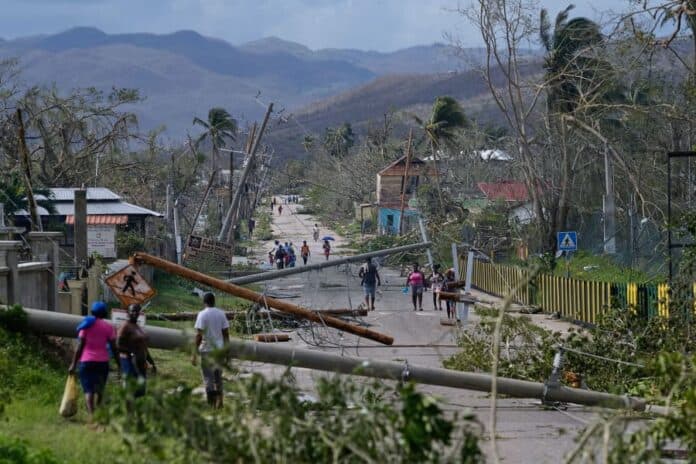
The scale of the damage set the backdrop. In a statement to Parliament in early November, Prime Minister Andrew Holness put preliminary damage at US6 billion to US7 billion and warned that short-term economic output could decline by 8% to 13%, according to the Jamaica Information Service. Later assessments pushed the damage estimate higher, and, as Caribbean National Weekly reported, the storm left thousands of Jamaicans jobless.
Damage of that size does not spread evenly. Businesses that rely on a storefront, a machine or a local power connection stop earning the moment the building goes dark. Businesses that reach customers through a phone can keep trading, at least with customers whose connectivity returns quickly. Jamaica's data from one regulated industry offer a rare look at that split.
What the regulator's numbers show
The Betting, Gaming and Lotteries Commission's report for October to December 2025 puts total industry sales at J$57.55 billion, down 4% from a year earlier. The commission linked the decline to operational disruptions after Melissa: about 36% of gaming lounges were affected, local horse racing was suspended for two race days, and one lottery operator lost about a month of sales on one of its games. Gaming sector sales slipped 1.8%, while sales at non-gaming lounges, smaller machine venues, fell more than 40%.
Against that backdrop, bookmakers' sports betting sales rose 4.4% year over year to about J$3.53 billion. Simulcast racing sold through bookmakers, another segment that does not depend on local tracks, also rose. The report does not separate online from retail wagers, and its definition of sports betting also covers online casino and poker games. Still, the direction is telling: the segment least tied to a single physical location grew while most of the industry shrank.
Continuity is becoming a design question
Melissa followed Hurricane Beryl in 2024. That makes digital channels part of disaster planning for Caribbean businesses, not just a marketing add-on. For a retailer that might mean off-island cloud hosting and mobile payments. For a licensed betting operator, it usually means an online sportsbook that keeps taking wagers when shops are closed.
Building one is expensive. An in-house sportsbook needs odds data feeds, trading staff to manage prices, risk systems to catch fraud and arbitrage, payment integrations and player account management, all certified to local rules. Smaller operators often license a turnkey sportsbook solution instead, which bundles those components into a platform the operator runs under its own brand, usually in exchange for setup fees and a share of revenue.
The trade-offs are real:
- Dependence on one supplier for uptime, pricing and product changes.
- Revenue share that can outgrow the cost of an in-house team as volumes rise.
- Regulatory exposure, since a supplier's outage or compliance failure becomes the licensed operator's problem.
Why it matters for public finances
The fiscal hit was sharper than the drop in sales. Government revenue from betting, lotteries and gaming fell about 12% year over year to J$2.30 billion in the quarter, with lotteries supplying roughly 88% of the total. That money does not go only to the Consolidated Fund; more than a quarter of it flowed to the CHASE Fund, which finances culture, health, arts, sports and education programs.
That gives the government a direct interest in how resilient its licensees are. A gaming sector whose sales depend on buildings in hurricane paths delivers volatile revenue at the worst possible moment, just as reconstruction spending peaks. Licensed digital channels, properly supervised, can keep part of that revenue flowing when physical outlets cannot, while also giving regulators a clearer transaction record than cash-based retail.
Melissa was a reminder that in the Caribbean, resilience is an economic variable, not only an engineering one. The quarter's numbers suggest that businesses able to serve customers without a working storefront held up better than those that could not. For operators, lenders and regulators alike, the question after the next storm will be how much of the economy has made that shift in time.


