

What a Metal Roof Really Costs in Fort Myers (and Why It's Worth It)
Key Points(5)
- That's the high end of what a metal roof can set you back in Fort Myers, and it's the number that makes a lot of homeowners close the browser tab and never come back.
- Here's the thing: most people won't pay anywhere near that.
- The typical homeowner lands somewhere between $13,000 and $20,000, and a small home can come in under $10,000.
- The goal here is simple.
- By the time you finish reading, you'll know what drives the metal roof cost in Fort Myers , how metal stacks up against shingles in a climate that treats roofs like a stress test, and how to spot a quote that looks cheap until you read the fine print.
$35,000. That's the high end of what a metal roof can set you back in Fort Myers, and it's the number that makes a lot of homeowners close the browser tab and never come back. Here's the thing: most people won't pay anywhere near that. The typical homeowner lands somewhere between $13,000 and $20,000, and a small home can come in under $10,000.
The goal here is simple. By the time you finish reading, you'll know what drives the metal roof cost in Fort Myers, how metal stacks up against shingles in a climate that treats roofs like a stress test, and how to spot a quote that looks cheap until you read the fine print. I'll also tell you which material I'd pick if this were my house and why.
What actually moves the price
Roofing costs come down to a handful of variables, and understanding them takes the mystery out of wildly different quotes. When one contractor says $9,000 and another says $19,000 for what sounds like the same job, the gap usually lives in one of these areas.
- Roof size. Roofers price in "squares," and one square equals 100 square feet. A 1,500 square foot roof is 15 squares, which lands around $9,750 to $15,000.
- Metal type. Corrugated panels are the budget option. Standing seam costs more upfront but handles wind and water better.
- Roof complexity. Valleys, dormers, skylights, and steep pitches all add labor hours.
- Removal of the old roof. Tearing off shingles is a real line item, and some quotes bury it or leave it out entirely.
Size is the biggest lever by far. A 1,000 square foot roof runs $6,500 to $10,000. Bump that to 3,000 square feet and you're looking at $19,500 to $30,000. Same house style, same neighborhood, triple the price. That's not a contractor trying to pull one over on you. It's just geometry.
Corrugated or standing seam? Pick based on your risk tolerance
These are the two paths most Fort Myers homeowners weigh, and they behave very differently in a storm.
Corrugated metal is galvanized steel rolled into a wavy or ribbed pattern, with U-panel and R-panel being the common styles. It's prefabricated, lightweight, corrosion-resistant, and cheap to transport, which keeps the price down. It sheds water well and holds up better than shingles in punishing sun.
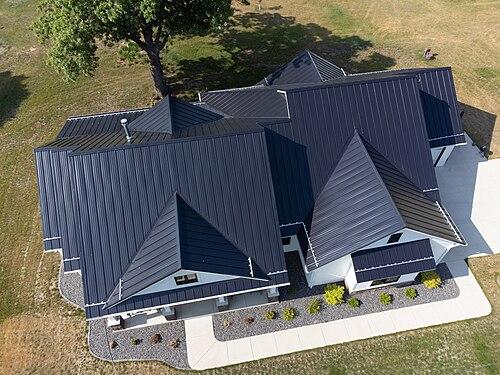
Standing seam metal uses interlocking panels where the seams rise above the roof surface. Fasteners stay hidden, which cuts down on leak points. You can get snap-lock, mechanical lock, or batten panel seals, and the right choice depends on the climate and wind exposure. Standing seam costs more. It also lasts longer and looks sharper, and I'd choose it for any home within a few miles of the coast.
Why metal makes more sense here than it does up north
Southwest Florida beats up roofs in two specific ways: sun and wind. Asphalt shingles bake under UV exposure and degrade faster in a hot climate than in a cooler one. Metal reflects heat and shrugs off the constant sun.
Wind is the bigger argument. The National Oceanic and Atmospheric Administration tracks hurricane activity across the Atlantic basin, and Florida sits in the middle of that bullseye. Metal roofing panels, when installed to code, handle uplift pressure better than most shingle systems because the panels interlock and fasten mechanically rather than relying on adhesive.
Insurance is worth mentioning too. Many Florida carriers offer premium credits for wind-rated roofing materials, and the Federal Emergency Management Agency maintains guidance on storm-resistant construction practices that insurers reference. Ask your carrier about credits before you sign anything. A $2,000 annual premium difference pays for a lot of metal.
A five-step plan before you commit
Don't start calling contractors until you've done these five things. It'll save you hours and probably some money.
- Measure your roof's footprint. Take your home's length times width, then add 15 to 20 percent for pitch and overhangs. That rough number gets you into the right cost bracket before anyone shows up.
- Get three written quotes that list materials, tear-off, permits, and warranty separately. A single lump sum tells you nothing.
- Ask specifically whether the price includes removing the existing roof and hauling it away.
- Check for a wind mitigation inspection. It's often cheap, and it documents features that can reduce your premium.
- Confirm the contractor pulls permits in their own name. A roofer who asks you to pull it is telling you something.
Metal versus shingles: the honest math
Here's a comparison that goes beyond sticker price, because sticker price is where most homeowners stop and regret it.
Factor Metal Asphalt Shingle
Upfront cost Higher Lower
Expected lifespan Decades longer Noticeably shorter, especially in coastal heat
Heat reflection Strong Limited
Wind performance Better with mechanical fastening Depends on adhesive and installation
Maintenance Minimal More frequent
Shingles win on day one. Metal wins on day 3,000. If you're planning to sell in two years, the cheaper roof might genuinely be the smarter financial call. If you're staying put, metal is the better bet, and I don't think that's a close contest in this climate.
The mistakes that turn a bargain into a headache
The cheapest quote is rarely the cheapest roof. I've watched homeowners save $3,000 upfront and spend twice that on repairs within a few years. A few things to watch:
Panels installed without proper underlayment will trap moisture and rot decking from underneath. Contractors who skip the permit are skipping inspections too. And anyone who won't put a written warranty on the contract, spelling out what's covered and for how long, is telling you what to expect when something goes wrong.
Also pay attention to how they handle fasteners on a corrugated roof. Exposed screws are normal with panels, but the washers need to be seated right or you'll have leaks at every single one after a couple of storm seasons.
What to do next
You now know the range: roughly $6,500 on the low end for a small home with corrugated panels, up to about $35,000 for a large roof with premium standing seam. You know size and material drive most of the spread. You know metal costs more than shingles upfront and earns it back over time, and you have a five-step checklist to run before you call anyone.
One last thing. Get an inspection before you get a quote. A roofer who looks at your actual roof and tells you what's under it will price the job more accurately than someone estimating from a satellite image. Ask what they find, and ask what they'd do if it were their own house. The answer tells you whether you've found a contractor or a salesperson.