US imposes new sanctions on Cuban president, military entities
Key Points(5)
- The United States has announced a new round of sanctions against Cuban President Miguel Díaz-Canel, senior government officials and military-linked entities, accusing Havana of engaging in activities that threaten U.S.
- national security and support anti-American movements.
- In a statement on Thursday, U.S.
- Secretary of State Marco Rubio said the sanctions were imposed under President Donald Trump's Executive Order 14404, signed on May 1, 2026.
- The measures target five Cuban entities and five individuals, including Díaz-Canel and Alejandro Castro Espín, whom the U.S.
The United States has announced a new round of sanctions against Cuban President Miguel Díaz-Canel, senior government officials and military-linked entities, accusing Havana of engaging in activities that threaten U.S. national security and support anti-American movements.
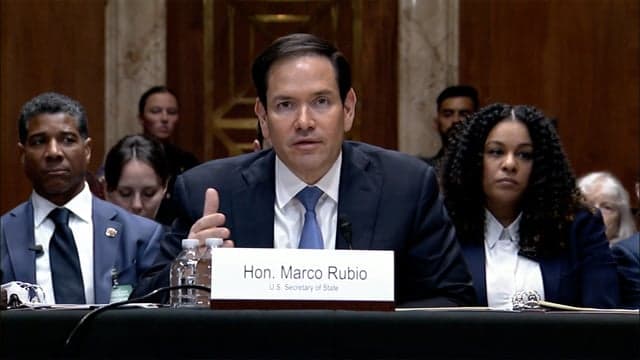
In a statement on Thursday, U.S. Secretary of State Marco Rubio said the sanctions were imposed under President Donald Trump's Executive Order 14404, signed on May 1, 2026.
The measures target five Cuban entities and five individuals, including Díaz-Canel and Alejandro Castro Espín, whom the U.S. government alleges are involved in supporting and financing activities aimed at undermining U.S. interests.
Rubio accused Cuba's Communist government of conducting a decades-long campaign against the United States and serving as a base for the promotion of left-wing revolutionary movements throughout the hemisphere.
The sanctions also expand pressure on Cuba's military-controlled economic sector. The U.S. designated Cuba's Ministry of the Revolutionary Armed Forces (MINFAR), arguing that it exercises significant control over the island's economy through military-owned businesses.
According to the State Department, companies owned 50 percent or more by MINFAR, the military conglomerate GAESA, or Cuba's Interior Ministry could also face restrictions and potential sanctions exposure.
The U.S. additionally sanctioned a Cuban government-linked gold mining joint venture, alleging that it generates revenue for military and political elites rather than benefiting the Cuban population.
The announcement marks the latest escalation in U.S.-Cuba tensions as the Trump administration continues to tighten economic and diplomatic pressure on Havana. Cuba's government has historically rejected similar accusations, arguing that U.S. sanctions are politically motivated and contribute to economic hardship on the island.