Trinidad and Tobago weighs extending state of emergency as deadline looms
Key Points(5)
- Carole Boyce-Davies, the distinguished Trinidadian-born scholar on Caribbean and African studies with deep ties to South Florida, is being honored with a prestigious endowed chair at Howard University in Washington, D.C., one of the nation’s leading historically Black universities.
- The school announced that Boyce-Davies will become the Eric Eustace Williams, Ph.D., Endowed Chair in Caribbean Studies.
- The appointment recognizes her international scholarship and contributions to Caribbean and African diaspora studies, while the chair honors the legacy of Eric Eustace Williams.
- A historian and scholar, Williams taught at Howard before becoming Trinidad and Tobago’s first prime minister after the country gained independence from Britain on Aug.
- Boyce-Davies is currently chair and professor of African Diaspora Literatures in the Department of Literature and Writing at Howard.
Trinidad and Tobago’s government is weighing whether to extend the country’s state of emergency as it approaches a constitutional deadline next week, with the administration facing the added challenge of securing enough Senate votes to keep the emergency measures in place.
The National Security Council met on Thursday, September 11, to consider the future of the state of emergency, which has been in effect since March as part of the government’s response to gang violence and other serious crime.
Prime Minister Kamla Persad-Bissessar confirmed the meeting while speaking to reporters outside the Hall of Justice in Port of Spain on Wednesday, during the opening of the 2026/2027 law term.
“We will have a meeting of the council on Thursday, and we’ll let you know thereafter,” Persad-Bissessar said, declining to indicate whether the government was leaning toward another extension.
The current emergency measures are due to expire on September 17.
The state of emergency, which took effect on March 3, is the second imposed since the United National Congress returned to office in 2025.
The previous state of emergency was declared on July 18, 2025, and remained in effect for 197 days before expiring on January 31, 2026. Parliament extended that measure twice, first by a unanimous 39-0 vote in July 2025 and again by a 27-12 vote in October.
Barely a month after it ended, President Christine Kangaloo proclaimed a second state of emergency on the advice of the National Security Council. Attorney General John Jeremie said at the time that authorities had received intelligence about threatened reprisal killings involving criminal gangs.
The House of Representatives approved an initial three-month extension on March 13 and a second extension on June 10 by a vote of 28-12.
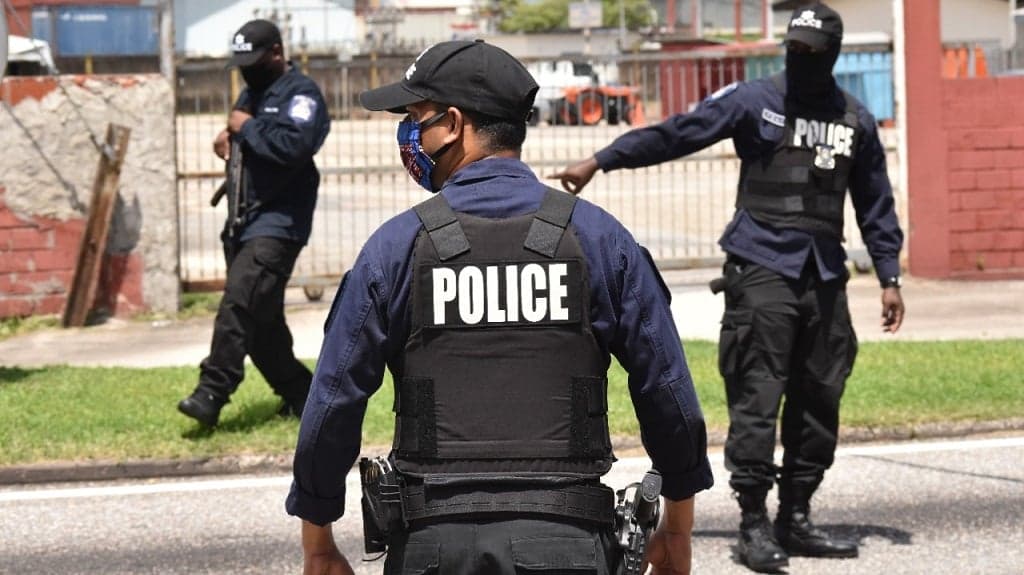
Under the emergency regulations, police and the Defence Force have expanded search, seizure and detention powers aimed at disrupting criminal gangs and recovering illegal firearms.
The government has pointed to falling crime figures as evidence that its security measures are working.
Murders fell from 626 in 2024 to 369 in 2025, a decline of about 42 percent and the country's lowest annual murder total since 2014.
Persad-Bissessar, who made tackling violent crime a major issue during her election campaign, said Wednesday that the downward trend has continued.
“The numbers are down, down, down in every regard, in every division,” she said. “Numbers don’t lie.”
Independent crime trackers had recorded at least 265 murders by mid-July 2026, putting the country below the pace seen during some of its deadliest years but leaving the murder rate among the highest per capita in the Caribbean.
The government has also paired the emergency measures with longer-term spending on security. The 2026 budget allocated approximately TT$6.37 billion, or about US$935 million, to national security and prison reform, while Persad-Bissessar said new joint army-police posts are expected to begin operating in the coming weeks.
Asked whether she considered the state of emergency successful, the prime minister said: “I think it has been very successful. Maybe it’s not the best thing to do, but it was very successful.”
Any attempt to continue the emergency measures beyond September 17, however, would face a higher parliamentary hurdle.
Under Trinidad and Tobago’s Constitution, the House of Representatives can extend a state of emergency for periods of up to three months by a simple majority until the combined extensions reach six months. Extending it beyond that point requires approval from both chambers of Parliament, including a three-fifths majority in the Senate.
That means the government would need support beyond its own senators and would have to secure three additional Senate votes to continue the state of emergency.
If the emergency expires, police would retain their normal law enforcement powers, but people being detained solely under the emergency regulations would have to be released or charged.
National Security Minister Roger Alexander and Commissioner of Police Allister Guevarro have maintained that the emergency measures are producing results, while the opposition People’s National Movement has argued that emergency powers cannot substitute for a long-term policing and crime-fighting strategy.
The National Security Council’s recommendation is expected ahead of the September 17 expiration date.