Trinidad and Tobago House passes Special Operations Bill amid constitutional concerns
Key Points(5)
- Trinidad and Tobago’s House of Representatives has passed legislation giving authorities expanded powers to conduct security operations in designated areas, despite Opposition arguments that the measure infringes constitutional rights and should have required a special majority.
- The Special Operations Bill, 2026 was approved shortly after midnight Saturday following more than 13 hours of debate in the House on Friday.
- All 26 clauses and the schedule were approved without amendment, and the bill now moves to the Senate.
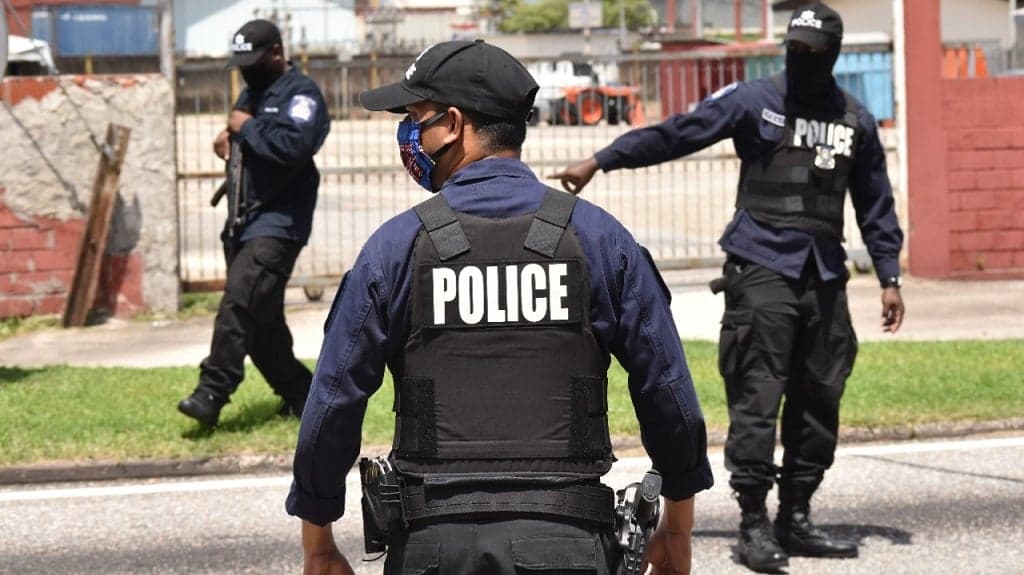
- The legislation establishes seven policing districts across Trinidad and Tobago and allows specific locations within those districts to be declared closed areas for limited periods as part of operations targeting criminal activity.
- Authorities would be able to impose curfews, cordons and checkpoints, close roads and restrict movement into and out of designated areas.
Trinidad and Tobago’s House of Representatives has passed legislation giving authorities expanded powers to conduct security operations in designated areas, despite Opposition arguments that the measure infringes constitutional rights and should have required a special majority.
The Special Operations Bill, 2026 was approved shortly after midnight Saturday following more than 13 hours of debate in the House on Friday. All 26 clauses and the schedule were approved without amendment, and the bill now moves to the Senate.
The legislation establishes seven policing districts across Trinidad and Tobago and allows specific locations within those districts to be declared closed areas for limited periods as part of operations targeting criminal activity.
Authorities would be able to impose curfews, cordons and checkpoints, close roads and restrict movement into and out of designated areas. The legislation also provides for searches without warrants in specified circumstances.
Closed areas and curfews would be declared by the President through an order following an application from the minister responsible for national security. The legislation includes a two-year sunset provision.
The bill is the government’s latest attempt to introduce special security zones after its Zones of Special Operations legislation failed to secure the required three-fifths majority in the Senate earlier this year.
That legislation had passed the House in January by a 27-11 vote before reaching the Senate.
Unlike the earlier measure, the new Special Operations Bill does not expressly seek to override the fundamental rights provisions in sections 4 and 5 of the Constitution and is not being pursued under section 13, meaning it can be approved by a simple majority.
That distinction dominated parts of Friday’s debate.
Opposition MPs argued that the powers contained in the bill would nevertheless interfere with constitutionally protected rights and therefore should require a three-fifths majority.
Opposition MP Stuart Young described the legislation as unconstitutional and raised concerns about the speed with which it was brought before lawmakers, saying MPs had less than 48 hours to examine it.
Young also warned that the powers could lead Trinidad and Tobago toward what he called a “police state,” particularly criticizing provisions governing permits for people living in or traveling through closed areas.
Attorney General John Jeremie rejected the Opposition’s characterization but acknowledged that the legislation could interfere with rights including liberty, enjoyment of property, privacy and family life, and freedom of movement.
Jeremie maintained that any interference with those rights would be reasonable and proportionate. He cited previous court rulings in support of the government’s position while acknowledging that legislation passed by a simple majority would face a higher burden of justification if challenged in court.
The attorney general also pointed to safeguards in the legislation, including human rights and use-of-force training for police officers and Defence Force personnel involved in special operations. The bill requires monthly reports on special operations and military assistance, as well as an annual report to Parliament.
Other safeguards cited by Jeremie include limits on searches and seizures, judicial oversight of arrests and detention, permits allowing movement despite curfews or cordons, and the use of body-worn cameras.
Energy Minister Roodal Moonilal also pushed back against the Opposition’s concerns, stressing that declaring a policing district does not mean the entire district would become a closed area. He said a designation could apply to an area as small as a single street or several streets.
The Special Operations Bill was introduced in the House on Sept. 16 and debated on Sept. 18. Parliament describes its purpose as establishing policing districts and providing for police-led special operations, with possible assistance from the Trinidad and Tobago Defence Force, to combat criminal activity.