This Day in History: Port Royal Earthquake
Key Points(5)
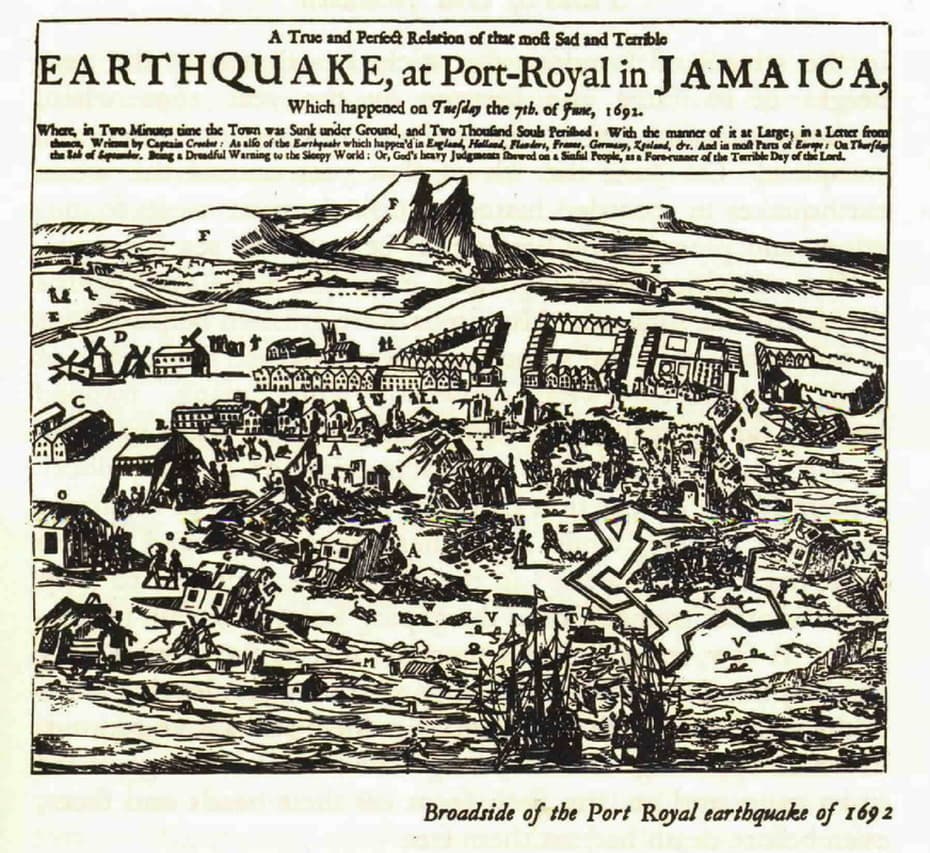
- <h2>Port Royal Earthquake</h2> <strong>By: Cerone White</strong> On this day in Caribbean history, June 7, 1692, a deadly earthquake struck Port Royal, Jamaica.
- According to researchers, a stopped pocket watch was found in the harbor of 1669 which led researchers to believe that the earthquake took place around 11:43 a.m.
- During that era Port Royal was the unofficial capital of Jamaica, it was also one of the wealthiest ports in the Wes Indies.
- The earthquake of 1692 was like no other most of the city sank to sea level and it is estimated that over 2,000 people died during the earthquake and about 3,000 people later succumbed to their injuries.
- The earthquake sank over 33 acres of Port Royal immediately after the main shock.
Port Royal Earthquake
By: Cerone WhiteOn this day in Caribbean history, June 7, 1692, a deadly earthquake struck Port Royal, Jamaica. According to researchers, a stopped pocket watch was found in the harbor of 1669 which led researchers to believe that the earthquake took place around 11:43 a.m. During that era Port Royal was the unofficial capital of Jamaica, it was also one of the wealthiest ports in the Wes Indies. The earthquake of 1692 was like no other most of the city sank to sea level and it is estimated that over 2,000 people died during the earthquake and about 3,000 people later succumbed to their injuries.
The earthquake sank over 33 acres of Port Royal immediately after the main shock. According to historians like Robert Renny in his ‘A History of Jamaica” (1807): the wharves close to Port Royal all sank in less than two minutes, nine-tenth of the city was covered with water. There were over 6,500 people living in Port Royal at the time, the houses were constructed of bricks, had over two stories attached to it, and most importantly the houses were built on loose sand.
During the earthquake the sand liquefied and all the building collapsed. During what is now called a version of Tsunami, historians said the sand was said to have formed waves after the earthquake opened the earth and closed it back. The city was never rebuilt because it was no longer the capital of Jamaica. Spanish Town was considered the capital under the Spanish rule. By the late 18th century, Port Royal was largely abandoned.


.JPG&w=3840&q=75)