

The Professional Welder's Guide to Welding Optics
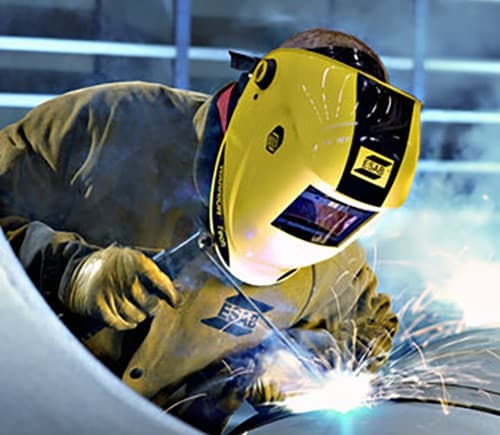
Key Points(5)
- Welding is one of the few skilled trades where a single piece of equipment can directly determine both the quality of your work and the safety of your eyesight.
- Among all the gear a welder carries, the lens is arguably the most consequential choice.
- A poor lens leads to eye strain, arc eye, distorted color perception, and ultimately, subpar welds.
- Yet many welders, including experienced professionals, default to whatever lens came bundled with their helmet rather than selecting optics suited to their specific application.
- Understanding how to evaluate and choose the right welding lens is a skill that pays dividends across every project.
Welding is one of the few skilled trades where a single piece of equipment can directly determine both the quality of your work and the safety of your eyesight. Among all the gear a welder carries, the lens is arguably the most consequential choice. A poor lens leads to eye strain, arc eye, distorted color perception, and ultimately, subpar welds. Yet many welders, including experienced professionals, default to whatever lens came bundled with their helmet rather than selecting optics suited to their specific application.
Understanding how to evaluate and choose the right welding lens is a skill that pays dividends across every project. This guide walks through the key factors that distinguish average lenses from high-performance ones and explains why the right optic setup matters far more than most welders realize.
Why Lens Quality Directly Affects Weld Quality
The relationship between visual clarity and weld precision is direct. When a welder cannot clearly see the puddle, the arc, or the joint geometry, compensations begin, and those compensations introduce error.
What a Poor Lens Actually Costs You
- Inconsistent bead placement due to reduced clarity around the arc
- Eye fatigue that compounds over a full shift, reducing concentration
- Difficulty distinguishing material edges in low-contrast environments
- Increased spatter from poor arc control caused by obscured sightlines
High-quality optics, particularly auto-darkening lenses with accurate shade transitions, allow a welder to maintain focus on technique rather than compensating for visual limitations. This is especially relevant in precision applications like pipeline welding, where joint integrity is non-negotiable.
Understanding Shade Numbers and When to Use Them
Shade numbers indicate how much light a lens filters. Higher shade numbers block more light and are used for higher-amperage processes. Selecting the wrong shade is more common than the industry acknowledges.
Shade Selection by Process
- Shades 9 and 10: Suitable for lighter MIG and TIG work at lower amperages
- Shades 11 and 12: Common for medium-amperage MIG welding and arc welding
- Shade 13: Used for high-amperage processes and heavy arc welding
Working at the wrong shade creates two problems. A shade that is too light exposes the eyes to harmful UV and IR radiation. A shade that is too dark makes the puddle difficult to read, which pushes the welder to overcompensate with arc length or travel speed. Neither outcome is acceptable on a professional jobsite.
The Case for Auto-Darkening Lenses
Passive lenses have served welders for decades, but auto-darkening technology addresses one of the most persistent frustrations in the trade: positioning before the arc strikes.
How Auto-Darkening Lenses Work
Auto-darkening lenses use sensors to detect arc light and darken within milliseconds. The welder can position accurately with a clear or lightly shaded view, then the lens transitions to the correct shade automatically when the arc is established.
Key Advantages Over Passive Lenses
- Improved positioning accuracy, particularly in tight spaces or overhead work
- Reduced neck strain from repeatedly flipping a hood
- Faster setup time on multi-pass welds
- More consistent shade activation compared to manual shade selection errors
For pipeline welders and fabricators who work in awkward positions or confined spaces, the ergonomic benefit alone justifies the investment. Brands that focus specifically on this product category, such as Ridge Products Welding, engineer their auto-darkening lenses with professional use cases in mind rather than entry-level hobbyist applications.
Specialty Lenses: Gold, Silver, Cobalt Blue, and Color-Filtered Options
Beyond standard, clear, and shaded lenses, a category of specialty lenses offers performance advantages that standard optics cannot match. These are frequently overlooked outside professional welding circles, but they address real problems.
For professional welders evaluating lens options, ridgeproductswelding.com offers a focused catalog of auto-darkening lenses, specialty color-filtered optics, and shade-specific lenses from a brand built by a former professional welder who understood what the industry was missing.
Specialty Lens Types and Their Applications
- Gold Lenses: Reflect infrared radiation more effectively than standard lenses, reducing heat exposure to the eyes during prolonged welding
- Silver Lenses: Offer high reflectivity and are commonly used in plasma cutting and heavy fabrication environments
- Cobalt Blue Lenses: Provide strong contrast enhancement for gas welding applications, particularly useful for oxy-acetylene work where flame characteristics must be read accurately
Each of these options exists because standard green-tinted lenses were not designed for every application. A pipeliner or structural fabricator working across multiple processes throughout the day benefits from having the correct lens for each context, not a single compromise option.
Choosing a Helmet and Hood That Supports Your Lens
The lens is only as effective as the hood or helmet that holds it. Certain hood designs are built around specific use cases, and matching the hood geometry to the work environment matters.
Hood Design Considerations
- Sugar Scoop Hoods: Designed with a deep front profile that positions the lens further from the face, giving a wider field of view and better heat clearance for welders working in fixed or pipe positions
- Pipeliner Hoods: A standard in the pipeline industry, built for flexibility and durability in outdoor, high-production environments
- Standard Fixed-Shade Helmets: Appropriate for shop environments where processes and amperages are consistent throughout the shift
Ridge Products Welding carries both Sugar Scoop and Pipeliner hood styles, recognizing that lens and hood selection should be made together. The lens shade and coating must match the environment, but the hood geometry determines whether the lens is positioned correctly to do its job.
Rod Ovens, Storage, and the Full Equipment Picture
Lens and hood selection exist within a broader equipment ecosystem. For welders using low-hydrogen electrodes, rod storage is a technical requirement, not an optional accessory. Hydrogen absorption in electrodes leads to porosity and cracking in the finished weld, which is why properly maintained rod ovens are standard practice in pipeline and structural work.
Why Rod Ovens Matter
- Low-hydrogen rods absorb moisture from the atmosphere quickly
- Moisture contamination leads to hydrogen-induced cracking in the heat-affected zone
- Rod ovens maintain the temperature necessary to keep electrodes within specification
Treating lens selection in isolation from the rest of your equipment setup is a mistake. A professional welder working with precise optics but poorly stored consumables will still produce defective welds.
Conclusion
Welding equipment decisions compound over time. A welder who invests in properly matched lenses, a hood designed for their primary application, and correctly maintained consumables operates with fewer variables and more consistency.
The core principles that guide smarter equipment choices are straightforward: match the shade to the process, choose auto-darkening when positioning accuracy matters, consider specialty lens coatings for specific applications, and treat hood selection as part of the lens decision rather than separate from it.


