St. Lucia PM urges urgent global action to limit warming to 1.5°C at COP31
Key Points(5)
- Lucia Prime Minister Philip J.
- Pierre has called on the international community to intensify efforts to limit global warming to 1.5 degrees Celsius, warning that Caribbean nations cannot afford another decade of inadequate responses to the climate crisis.
- Addressing the 2026 United Nations Climate Change Conference (COP31) in Antalya, Türkiye, on Thursday, November 12, Pierre said progress toward the climate goals established under the Paris Agreement has been far too slow.
- Pierre, who also serves as chairman of the 15-member Caribbean Community (CARICOM) and its Prime Ministerial Sub-Committee on Climate Change and Climate Finance, recalled the efforts of Small Island Developing States (SIDS) to secure the 1.5-degree target during negotiations in Paris in 2015.
- “Eleven years later, progress has been too slow.
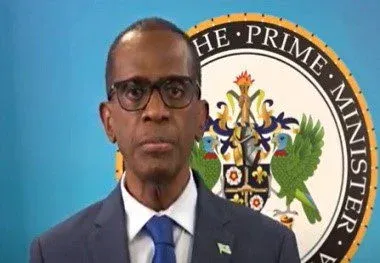
St. Lucia Prime Minister Philip J. Pierre has called on the international community to intensify efforts to limit global warming to 1.5 degrees Celsius, warning that Caribbean nations cannot afford another decade of inadequate responses to the climate crisis.
Addressing the 2026 United Nations Climate Change Conference (COP31) in Antalya, Türkiye, on Thursday, November 12, Pierre said progress toward the climate goals established under the Paris Agreement has been far too slow.
Pierre, who also serves as chairman of the 15-member Caribbean Community (CARICOM) and its Prime Ministerial Sub-Committee on Climate Change and Climate Finance, recalled the efforts of Small Island Developing States (SIDS) to secure the 1.5-degree target during negotiations in Paris in 2015.
“Eleven years later, progress has been too slow. However, the prospect of exceeding the 1.5° threshold is not a reason to recalibrate the goal. It is a reason to act with greater urgency,” he said.
The prime minister emphasized that climate change continues to affect Caribbean communities even in the absence of major hurricanes, placing increasing pressure on national budgets and livelihoods.
“Every dollar we spend repairing climate-related damage is a dollar diverted from education, healthcare, housing, poverty reduction and other critical national development priorities,” Pierre said.
“Climate change is the farmer losing crops to drought. The household without reliable water. The fisher whose livelihood is threatened by warming seas, coral bleaching and deteriorating marine ecosystems. The small business whose survival and hopes for the future rise and fall with the health of our coastlines.”
Pierre argued that Caribbean nations bear a disproportionate financial burden from climate change despite contributing relatively little to global emissions.
He said Caribbean people pay three times over: through the destruction caused by climate-related disasters, the development opportunities lost when resources are redirected toward recovery, and the debt incurred to rebuild damaged infrastructure.
“This is the fundamental injustice confronting countries that have contributed so little to the problem,” he said.
Pierre also pointed to recent international court decisions reinforcing the legal responsibilities of states to protect the climate system.
“So, both the law and the science are on our side,” he said.
Highlighting St. Lucia's national efforts, Pierre said the country is pursuing renewable energy development and cleaner transportation as part of its strategy to reduce emissions and strengthen climate resilience.
“Our ambition is not only to reduce emissions, but to build a more resilient nation, with more secure energy, stronger communities and greater opportunity for our people,” he said.
However, he stressed that national resources alone are insufficient to address the global climate crisis.
“We are not asking to escape responsibility. We are demanding that responsibility be shared fairly; major emitters must move beyond the usual promises. They must reduce emissions that the climate crisis demands,” Pierre said.
He called for predictable climate adaptation financing, including increased grants, affordable financing and simplified access to funding for vulnerable countries.
Pierre argued that financial support should reflect countries' exposure to climate risks rather than being determined primarily by national income.
“We cannot build resilience on promises. We need finance, technology and partnerships that reach our communities, protecting water supplies, supporting farmers and fishers, and strengthening the infrastructure on which daily life depends,” he said.
The prime minister also urged greater financial support for the fund established to respond to climate-related loss and damage, emphasizing the need to ensure assistance reaches the most vulnerable communities.
“Success in Antalya will not be judged by the declarations we make, but by the action we take, the commitments we honour, and the lives we improve. These are not unreasonable demands. They are the foundations for a more certain future,” Pierre said.
He warned that St. Lucia and the wider CARICOM region cannot afford another decade of prolonged negotiations without meaningful implementation of climate commitments.
“We must turn the commitments contained in successive COP decisions into urgent, decisive action. In Paris, we fought to put 1.5 degrees at the heart of the global response. In Antalya, we must put delivery at its heart,” Pierre said.
“Our young people deserve to inherit a healthy, stable planet on which they can build their futures with confidence and hope,” he added.