Remembering the Jamaicans lost in the 9/11 attacks, 25 years later
Key Points(5)
- Twenty-five years ago, they went to work on what began as an ordinary Tuesday morning in New York City.
- They were sons, daughters, parents and friends, Jamaicans who had built lives far from home.
- By the end of September 11, 2001, they were among the thousands of people killed in the deadliest terrorist attack on American soil.
- A quarter-century later, as the United States and the world mark 25 years since the attacks, Jamaica also remembers those with ties to the island whose lives were lost at the World Trade Center.
- Their names form part of the nearly 3,000 lives lost on September 11, 2001, when 19 al-Qaida terrorists hijacked four commercial airplanes in a coordinated attack on the United States.
Twenty-five years ago, they went to work on what began as an ordinary Tuesday morning in New York City. They were sons, daughters, parents and friends, Jamaicans who had built lives far from home. By the end of September 11, 2001, they were among the thousands of people killed in the deadliest terrorist attack on American soil.
A quarter-century later, as the United States and the world mark 25 years since the attacks, Jamaica also remembers those with ties to the island whose lives were lost at the World Trade Center.
A list provided by the Consulate General of Jamaica in the aftermath of the attacks identified 22 Jamaican victims: Andrea Binns, Balewa Albert Blackman, Keith Broomfield, Lloyd Brown, Delrose Cheatham, Kerene Gordon, Derrick Greene, Denise Gregory, Vaswald Hall, Neil Hinds, Damion Mowatt, Michelle Nelson, Michael Parkes, Carol Rabalais, Harry Ramos, Michael Richards, Venesha Richards, Joyce Smith, Rochelle Snell, Nichola Thorpe, Courtney Walcott and Crossley Williams Jr.
Their names form part of the nearly 3,000 lives lost on September 11, 2001, when 19 al-Qaida terrorists hijacked four commercial airplanes in a coordinated attack on the United States.
Two of the planes were flown into the North and South towers of the World Trade Center in New York, causing both towers to collapse. A third plane struck the Pentagon in Arlington, Virginia, while a fourth, United Airlines Flight 93, crashed in a field near Shanksville, Pennsylvania, after passengers and crew members attempted to regain control of the aircraft.
The attacks transformed the United States and reverberated around the world, ushering in sweeping changes to aviation security and US foreign policy and beginning a decades-long period of war and counterterrorism operations.
For Jamaica, the tragedy was also deeply personal.
The island has long shared close ties with New York, home to one of the largest Jamaican communities outside the Caribbean. In the days after the towers fell, families waited desperately for news of relatives who worked in and around the World Trade Center, while Jamaicans at home followed reports of the missing and dead.
The loss was felt across the wider Caribbean diaspora as well, with people from several Caribbean nations among those killed in the attacks.
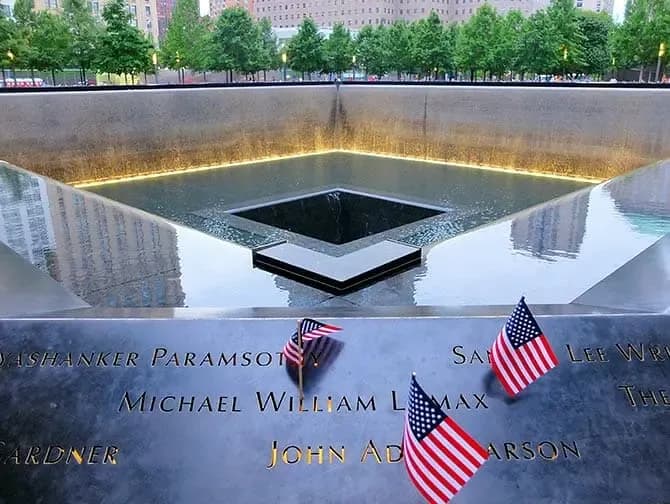
In the years since, the names of the victims have been preserved at the National September 11 Memorial in Lower Manhattan, where the footprints of the former Twin Towers now contain two reflecting pools surrounded by bronze parapets inscribed with the names of those who died in the 2001 attacks, as well as the victims of the 1993 World Trade Center bombing.
Each September 11, the names of the victims are read aloud during an annual commemoration at the site, ensuring that behind the staggering scale of the tragedy, individual lives are remembered.
This year carries particular significance. A generation has now passed since the attacks, and millions of people alive today were either children in 2001 or were not yet born.
For the families who lost loved ones, however, September 11 is more than a chapter in history.
Twenty-five years later, the names of Jamaica's victims remain a reminder of the island's place in the story of that day — and of the Jamaicans who left home, built lives in America and never returned.