Opinion: Solutions to land squatting needed fast
Key Points(5)
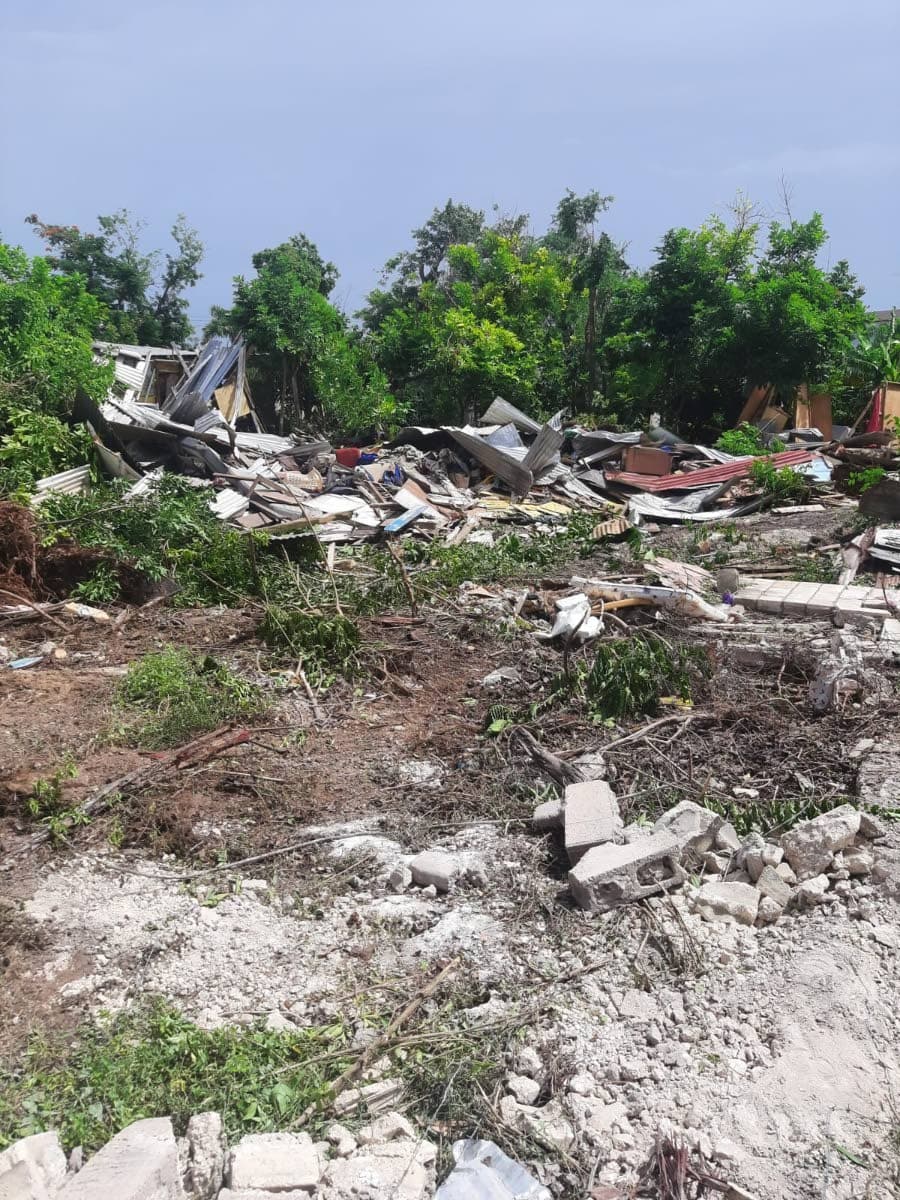
- Most people in the Jamaican diaspora may have seen the devastating images circulating on social media of homes being bulldozed at Cooper’s Pen in the Jamaican parish of Trelawny.
- The demolition of more than 20 residences has left several families homeless, resulting in considerable controversy.
- Some people are sympathetic toward the residents, while others are not because they were squatters on private land and were aware of the risks of being forcibly removed.
- Squatting and informal settlements are significant problems in Jamaica and other Caribbean countries, but the Trelawny situation cannot be treated simply as “landowners’ rights versus squatters.” There are legitimate rights and responsibilities on both sides.
- Some of the displaced residents reportedly lived there for decades and received little or no warning.
Most people in the Jamaican diaspora may have seen the devastating images circulating on social media of homes being bulldozed at Cooper’s Pen in the Jamaican parish of Trelawny. The demolition of more than 20 residences has left several families homeless, resulting in considerable controversy. Some people are sympathetic toward the residents, while others are not because they were squatters on private land and were aware of the risks of being forcibly removed.
Squatting and informal settlements are significant problems in Jamaica and other Caribbean countries, but the Trelawny situation cannot be treated simply as “landowners’ rights versus squatters.” There are legitimate rights and responsibilities on both sides.
Some of the displaced residents reportedly lived there for decades and received little or no warning. The controversy has prompted calls for an inquiry into how land rights are established.
Legally, the answer regarding land rights differs from the humanitarian answer.
If someone knowingly occupies another person’s private property without permission, the owner has a legitimate right to recover the property. Otherwise, private property rights become almost meaningless. Jamaica has not established a system in which occupying somebody else’s land gives occupiers the right to it.
But there should be a distinction between removing new trespassers and demolishing the homes of families who have lived on the land for up to 30 years.
If people established homes on the land, raised children, invested their life savings in those homes and have nowhere else to go, demolition should be the last step.
The troubling questions in Trelawny are what happened before the bulldozers arrived: Was adequate notice given? Were individual circumstances considered? Were alternative accommodations offered? Was there an opportunity to challenge the action? The government should provide answers.
Squatters can be divided into three groups.
First, there are deliberate land grabbers who see vacant private land, move onto it, build quickly and hope eventually to obtain the property. This should be stopped. Waiting 10 years makes the problem enormously harder.
Second, there are long-established communities of poor families who live on private land for many years because they cannot afford legal land or housing. These people should be treated very differently. The government should first determine whether the community can be regularized or relocated.
Third, there are people occupying dangerous or strategically important land, such as riverbeds, gullies, unstable hillsides, drainage areas or land needed for schools and other infrastructure. Relocation is then genuinely necessary but should be accompanied by a humane relocation program.
According to reports, successive Jamaican governments have been aware of the conundrum related to the squatters at Cooper’s Pen. In 2015, the then government attempted to purchase land from the property owners to legally relocate the residents, but the proposal was denied following an Appeal Court ruling in 2016.
After the Appeal Court ruling, no additional houses should have been allowed to be built to prevent the problem from escalating. Attempts should also have been made to determine how long each family had lived there, whether the owner was still interested in reclaiming the land, whether there were elderly people, children or disabled residents, and whether the land could still be legally regularized.
It is unclear whether, since 2016, the government tried to renegotiate with the landowner so that portions of the land could be purchased and legally assigned to the residents.
If the government tried and failed to reach a renegotiated settlement with the landowners, attempts should have been made to relocate the residents before demolishing their homes.
The solution to squatting is making land available and affordable to landless people, with security of tenure.
That is essentially what Jamaica’s Operation PRIDE program was designed to accomplish: planned settlements, upgrading existing communities and providing low-income Jamaicans with secure tenure.
Prime Minister Holness has previously said that Jamaica cannot solve squatting through enforcement alone and that the country needs more houses at prices ordinary Jamaicans can actually afford, so squatting becomes unnecessary.
The housing shortage in Jamaica needs to be dealt with sensibly and urgently. Every suitable parcel of government-owned land should be identified, with parcels made available to people who want legal land.
Since not everyone can afford to build expensive houses, a program is needed to allot low-income families small, legal lots with the relevant infrastructure, allowing them to build incrementally — probably starting with a modest one-bedroom structure and adding rooms eventually. The government does not have to provide the entire house. It needs to provide the legal framework and infrastructure that make self-help housing possible.
Since some people cannot afford homeownership, the government, in association with private developers, could build affordable rental apartments with controlled rents, giving people somewhere to live while they improve their economic circumstances.
Once the government provides affordable landownership and housing alternatives, squatting should be prohibited. Not because people are poor, they should have a right to somebody else’s land. That is unfair to landowners. Neither is it right that because people are trespassing, their houses should be bulldozed, leaving them homeless.
A civilized society must be capable of protecting property rights and human dignity simultaneously.
For the displaced families in Cooper’s Pen, the priority should be permanent relocation into decent housing or serviced land.
In the long term, there should be a sustained policy ensuring that legal land and affordable housing are sufficiently available so ordinary Jamaicans do not have to squat on land in the first place.