Opinion: Caribbean-American Heritage Month hasn’t lost relevance
Key Points(5)
- Caribbean-American Heritage Month is observed annually in June in the United States.
- It was created to recognize and celebrate the contributions of Caribbean immigrants and their descendants to American history, culture, government, business, education, sports, the military, and the arts.
- The idea was largely championed by Claire Nelson, founder of the Institute of Caribbean Studies.
- Beginning in the late 1990s and early 2000s, she and other advocates pushed for official national recognition of the Caribbean-American community.
- House of Representatives unanimously passed a resolution recognizing the importance of Caribbean people and their descendants in U.S.
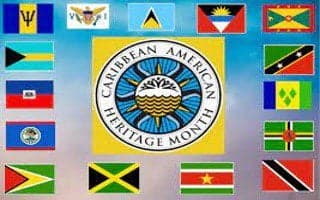
Caribbean-American Heritage Month is observed annually in June in the United States. It was created to recognize and celebrate the contributions of Caribbean immigrants and their descendants to American history, culture, government, business, education, sports, the military, and the arts.
The idea was largely championed by Claire Nelson, founder of the Institute of Caribbean Studies. Beginning in the late 1990s and early 2000s, she and other advocates pushed for official national recognition of the Caribbean-American community.
In 2005, the U.S. House of Representatives unanimously passed a resolution recognizing the importance of Caribbean people and their descendants in U.S. history and culture. In February 2006, the U.S. Senate approved the resolution, and on June 5 that year, President George W. Bush issued a proclamation officially designating June as National Caribbean-American Heritage Month. Since then, every president has continued the annual proclamation.
The main goals of Caribbean-American Heritage Month are to recognize the contributions of Caribbean Americans to the United States, educate Americans about Caribbean history, cultures, and the diaspora, highlight the longstanding ties between the Caribbean and the U.S., and inspire younger generations by recognizing the achievements of their forebears.
Many prominent Americans with Caribbean roots have been highlighted during the observance, including Alexander Hamilton, Colin Powell, Shirley Chisholm, Kamala Harris, and Madge Sinclair.
For many Caribbean Americans, the month serves as both a celebration of heritage and a reminder that Caribbean communities have played a significant role in shaping the United States.
Some people, including Caribbean Americans, believe Caribbean-American Heritage Month has lost its relevance, but this is not the case.
On one hand, critics argue that Caribbean Americans are already well established in many areas of U.S. life, pointing to the success and visibility of people such as Harris, Powell, and many others in business, education, medicine, sports, and public service. Some feel that dedicating a month to Caribbean heritage is unnecessary when Caribbean culture is already widely visible through music, food, festivals, and community organizations.
Others believe it remains important because Caribbean Americans are not a single group but a diverse collection of people with roots in countries such as Jamaica, Haiti, Trinidad and Tobago, and Barbados. They argue the month helps educate younger generations about Caribbean history and immigration, highlights contributions often overlooked in mainstream narratives, strengthens cultural identity and community connections, and recognizes the continuing influence of Caribbean people on American politics, arts, business, sports, and science.
There is also a practical argument that the month provides opportunities for schools, libraries, museums, and community groups to present stories that receive little attention during the rest of the year. Without a designated observance, some of that visibility could diminish.
Some first-generation immigrants view the month as an important recognition of their journey and contributions, while some younger Caribbean Americans, who identify as both American and Caribbean, sometimes see heritage celebrations as less central to their identity. Yet others in that same younger generation value the month precisely because it helps them maintain a connection to their roots.
What is important is the form the commemoration takes. If it becomes merely ceremonial, people may lose interest. If it actively promotes education, cultural exchange, mentorship, and recognition of contributions, it will continue to serve a meaningful purpose.
A growing legacy of Caribbean-American heritage is the increasing number of people of Caribbean descent entering U.S. politics. This trend demonstrates that Caribbean Americans are a more visible and influential part of U.S. society. This growing political participation is driven by larger Caribbean-American populations in regions such as Florida, New York, Georgia, and Maryland, as well as increasing numbers of second- and third-generation Caribbean Americans seeking leadership positions, greater voter engagement within Caribbean communities, political parties recognizing Caribbean-American voters as an important constituency, and the success of earlier Caribbean-American leaders who proved electoral success was possible.
Increased political representation is a sign of success. As a community becomes more integrated and influential, its members are elected to office in greater numbers. More Caribbean-American politicians is evidence that Caribbean heritage has become a recognized part of the American story.
Indications are that the number and influence of Caribbean Americans in U.S. politics will continue to grow over the coming decades.
Caribbean Americans now number several million in the United States, with particularly large communities in Florida, New York, Georgia, and other states. As communities grow, they naturally produce more candidates, political organizers, donors, and voters.
Earlier generations of Caribbean immigrants often focused on economic stability and education. Their children and grandchildren are increasingly entering law, public policy, government, and political campaigns.
The election and appointment of figures such as Kamala Harris, Yvette Clarke, Sheila Cherfilus-McCormick, and others demonstrate that Caribbean Americans can compete successfully at the highest levels of American politics.
Caribbean-American civic groups, professional organizations, and political action committees have become more sophisticated and effective at recruiting candidates and mobilizing voters.
One interesting development is that many Caribbean-American politicians are not elected solely because of their Caribbean heritage. They often represent highly diverse districts and appeal to voters from various backgrounds. This is a sign of increasing political maturity and influence.
The more uncertain question is not whether Caribbean-American political representation will grow, but which leaders will emerge and how much influence they will ultimately wield on national policy.