Nicholson urges CCJ judges to shun ‘public bickering’ amid internal tensions
Key Points(5)
- Nicholson did not address each of the allegations individually in his letter but stressed the importance of protecting judges from political and other external pressures while maintaining a professional working environment.
- “There was deep concern that the working environment for the judges should be accommodating, with protective guardrails provided to insulate them from political and other powerful kinds of pressure,” he wrote.
- Nicholson, who also served as Jamaica’s foreign affairs minister, was involved in the preparatory work that led to the establishment of the CCJ.
- He served as deputy to former Barbados Chief Justice Sir David Simmons and Prime Minister Mia Mottley when they chaired the Preparatory Committee for the Establishment of the Caribbean Court of Justice.
- He said he was responsible for updating meetings of Caribbean Community (Caricom) heads of government on the committee’s deliberations, which were overseen by then St.
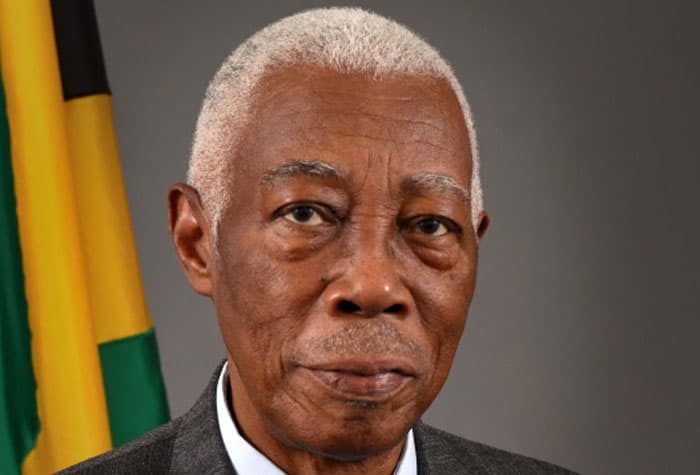
Former Jamaica Attorney General A.J. Nicholson has urged judges of the Caribbean Court of Justice (CCJ) to resolve their differences privately and professionally, warning that public disputes and leaks of confidential correspondence undermine the vision behind the regional court.
In an open letter to the Trinidad-based court’s judges, Nicholson said public disagreements among members of the judiciary were never intended to become a feature of the CCJ, which was established to serve as the Caribbean’s final appellate court and promote regional justice.
“To cut to the chase, it was never at any time a part of any thinking in those deliberations or reports to the meetings of heads of government that the CCJ was being created to provide its judges with a platform for public bickering,” he wrote.
Nicholson said disagreements among judges should be resolved in a mature and empathetic manner, drawing on their experience in handling complex and contentious legal matters.
“There was never even the slightest thought that personality issues that would normally arise between or among the judges, hardly combatants, would not be approached and resolved in mature, empathetic fashion by experienced judicial minds,” he added.
His intervention comes amid allegations of internal tensions at the court, including claims of administrative overreach and concerns about judicial panel assignments. The controversy intensified after the Trinidad and Tobago Sunday Express published emails it said were leaked from internal court correspondence.
In August, CCJ President Justice Winston Anderson rejected allegations that judicial panels had been altered to influence case outcomes. He said a decision to remove a judge from a panel was based on concerns about judicial attire rather than the judge’s views on a case.
Anderson also condemned the unauthorised disclosure of confidential court communications, warning that such leaks could undermine judicial independence and public confidence. While defending robust disagreements as part of normal appellate court deliberations, he acknowledged that some matters could have been handled differently.
The Regional Judicial and Legal Services Commission has since said a transparent and independent review would be undertaken into the allegations.
More recently, the Sunday Express reported that CCJ Justice Peter Jamadar had accused Anderson of administrative overreach following an investigation involving Jamadar’s administrative officer, identified as Ms Simmons-Peters.
According to the newspaper, Jamadar alleged that the officer was questioned about her outside activities during an inquiry into a media leak and warned that she could face up to two years in prison under Trinidad and Tobago’s Computer Misuse Act. The report also said her files and communications were scrutinised.
In a six-page email reportedly sent to Anderson and fellow judges on September 4, Jamadar described the episode as an “abuse of power” and questioned Anderson’s oversight of an inquiry involving his staff’s conduct.
The Sunday Express also reported that Justice Rajnauth-Lee received a similarly worded email in connection with the investigation, which was led by the court’s IT manager, identified as Mr Burgess.
Nicholson did not address each of the allegations individually in his letter but stressed the importance of protecting judges from political and other external pressures while maintaining a professional working environment.
“There was deep concern that the working environment for the judges should be accommodating, with protective guardrails provided to insulate them from political and other powerful kinds of pressure,” he wrote.
Nicholson, who also served as Jamaica’s foreign affairs minister, was involved in the preparatory work that led to the establishment of the CCJ. He served as deputy to former Barbados Chief Justice Sir David Simmons and Prime Minister Mia Mottley when they chaired the Preparatory Committee for the Establishment of the Caribbean Court of Justice.
He said he was responsible for updating meetings of Caribbean Community (Caricom) heads of government on the committee’s deliberations, which were overseen by then St. Lucia Prime Minister Dr. Kenny Anthony, who held responsibility for justice matters.
Nicholson said Jamaica’s failure to fully accede to the CCJ had left him particularly conscious of the court’s founding vision and the principles that guided its creation.
He praised the arrangements established for appointing judges and financing the court, saying they had earned international recognition, and argued that the region’s confidence in its own legal expertise had been justified by the court’s achievements.
During its formative years, he said, the CCJ also had to counter claims that it was being established as a “hanging court” — a reference to concerns about its potential role in death penalty cases.
Now, Nicholson said, the court had earned a respected place among apex courts worldwide in less than two decades, making the controversy surrounding leaked correspondence particularly troubling.
“The vision was that our Caribbean history and circumstance mandated that the regional final court would serve both as a temple of justice and as an example and leadership guide in all spheres of emancipatory efforts and development within our hemispheric space,” he wrote.
“There was certainly no expectation of petulant mischief-making leaks and public bickering!
“Nothing of the sort falls within the collegial functions of any judge and, respectfully, must be shunned.”