New coaching era begins as squash leaders embrace innovative training methods
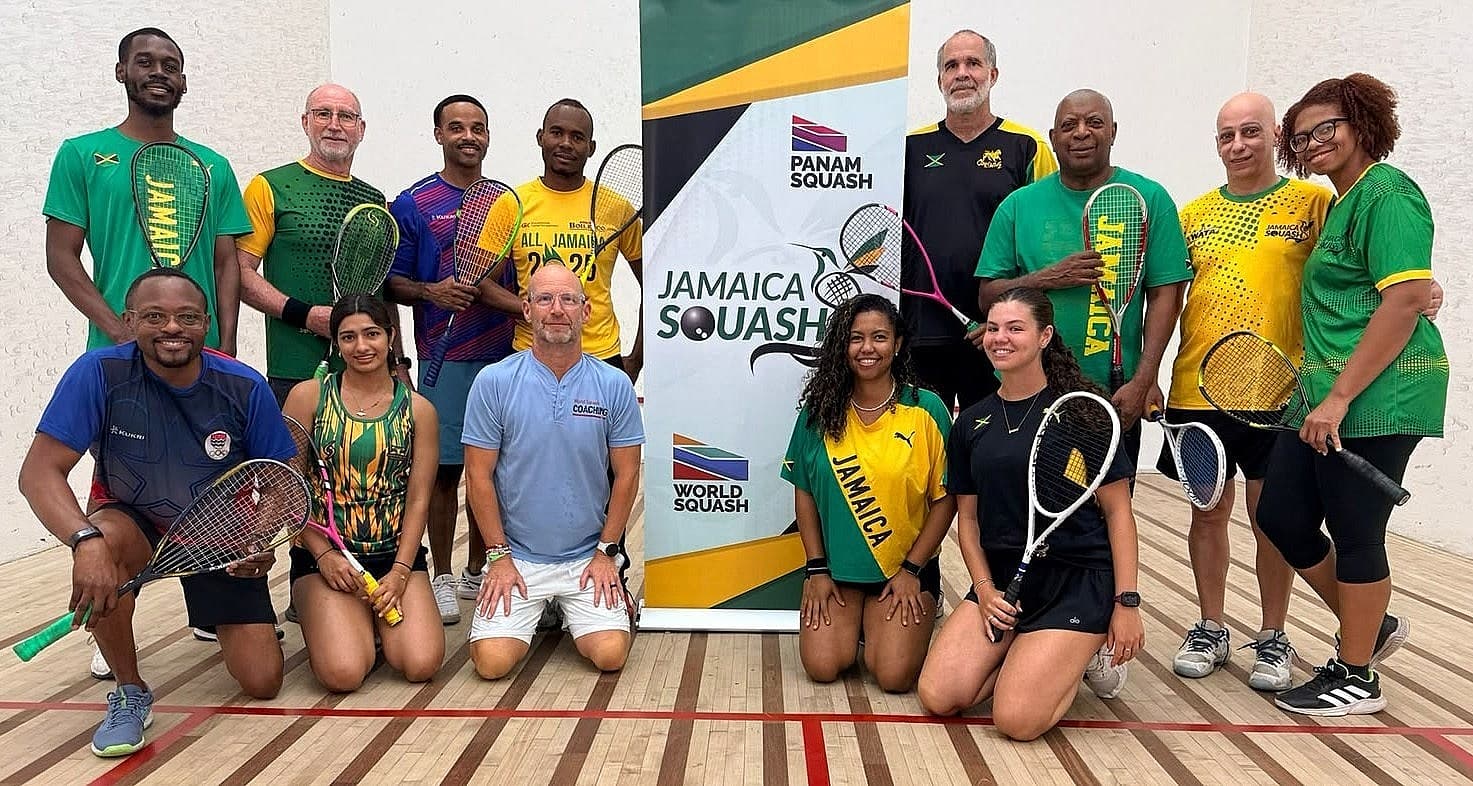
Squash Level 2 chaching course cohort with tutor Colin White
Key Points(5)
- A new wave of coaching methods is set to influence squash development across the Caribbean after 12 coaches completed an intensive World Squash Federation (WSF) Level 2 Coaching Course designed to reshape how players are trained and developed.
- The three-day programme, hosted at the Liguanea Club in New Kingston, brought together coaches from Jamaica and the Cayman Islands for a detailed exploration of modern coaching principles under the guidance of experienced instructor Colin White.
- Sponsored by PanAm Squash and facilitated by Jamaica Squash, the course introduced participants to strategies aimed at improving player engagement, lesson structure, and long-term athlete development.
- The coaches left the programme eager to apply their new knowledge in their clubs, communities, and youth programmes.
- Cayman coach sees new perspective on player development Among those inspired by the experience was Cayman Islands coach Nico Tummings, who described the course as a valuable shift in how he views the game.
A new wave of coaching methods is set to influence squash development across the Caribbean after 12 coaches completed an intensive World Squash Federation (WSF) Level 2 Coaching Course designed to reshape how players are trained and developed.
The three-day programme, hosted at the Liguanea Club in New Kingston, brought together coaches from Jamaica and the Cayman Islands for a detailed exploration of modern coaching principles under the guidance of experienced instructor Colin White.
Sponsored by PanAm Squash and facilitated by Jamaica Squash, the course introduced participants to strategies aimed at improving player engagement, lesson structure, and long-term athlete development.
The coaches left the programme eager to apply their new knowledge in their clubs, communities, and youth programmes.
Cayman coach sees new perspective on player development
Among those inspired by the experience was Cayman Islands coach Nico Tummings, who described the course as a valuable shift in how he views the game.
“It was a very intense three days. It was a lot of information to take in, but I feel like everything that I learned will be very useful when I get back to Cayman,” Tummings said.
“I feel like it gave me a whole new perspective on squash. This training allows me to look at it more through a coach’s lens and I think it’ll be very impactful when I get back to get some students and try to allow them to have a better understanding of gameplay and just a better overall understanding of the game.”
Tummings explained that one of the biggest lessons was learning how to move beyond traditional training methods and create sessions that better reflect the realities of competition.
“I think that the coaching tools that I was taught will be critical in the way that I coach my students, the way that I construct my lessons,” he said.
“When I grew up playing squash everything was formatted to where it was just drills on drills on drills. What I learned here was how to structure a lesson to where it doesn’t necessarily feel like a drill, it feels like gameplay which is what we’re training our players for, is to be efficient game players.”
Jamaica coaches look to inspire the next generation
Jamaican coach Julian Morrison also praised the programme, describing it as a valuable opportunity to gather knowledge that can immediately benefit young players.
“This Level 2 course was very informative. I felt as if from day one to day three, we’ve gotten information that we can pass on to the juniors that would be very helpful,” Morrison said.
He highlighted the importance of keeping younger players motivated, especially as efforts continue to introduce squash into more schools.
“It’s how I speak to my students, the different exercises or skills or drills that we use to keep them invested and interested in the sport,” Morrison explained.
“Sometimes you’re coming from school and then you have to do all this running up and down. It’s very daunting, you don’t really want to do it.”
Morrison said the course provided practical methods to maintain enthusiasm and create a stronger connection between players and the sport.
“He gave us a couple of pointers as to how to keep them interested, keep the energy high and keep them wanting to come back,” he said.
“With us trying to get squash into schools, it’s the best time for us to get this information to then implement it.”
White encourages coaches to focus on the person first
Leading the programme was internationally experienced coach Colin White, a World Squash Federation and European Squash Federation Level 1, 2, and 3 certified coach and tutor.
White has worked across several countries, including the United States, Austria, Hungary, and Russia, bringing a global perspective to the Caribbean coaching environment.
His message focused not only on technical improvement but also on understanding the individual behind the athlete.
“One of the things I tried to get across is that it’s person before player. It’s the behavior before the performance,” White said.
“Because we’re not just teaching these kids to play squash, we want them to be better people, better people who behave in the right way, make the right decisions.”
White emphasized that successful coaching requires recognizing that every athlete learns differently.
“They will have many students coming for many different reasons, trying to make it enjoyable for the unique person in front of them,” he explained.
“Trying to help the person in front of you, trying to get to know, make a connection with the person in front of you, because if you know a little bit more about them you can understand what makes them tick.”
According to White, that understanding allows coaches to adapt their methods rather than applying the same approach to every player.
Jamaica Squash sees course as key to future growth
Jamaica Squash president Karen Anderson said expanding the coaching base has been one of the organization’s major priorities as the sport continues to grow.
“One of the challenges we’ve had over the years in growing the sport is not having enough coaches to be able to spread the knowledge,” Anderson said.
“So this helps us a lot in growing and spreading that knowledge, and really growing the sport.”
She added that the next important step will be seeing how participants apply what they learned.
“We’re very excited about it, and I’m looking forward to see how these guys now implement all that they’ve learned here for the last three days, intense days.”
With new strategies, improved teaching methods, and a stronger focus on player development, the coaches who completed the programme now carry the responsibility of turning lessons learned into lasting growth for squash throughout the region.