More than 250,000 children in Haiti projected to face acute malnutrition
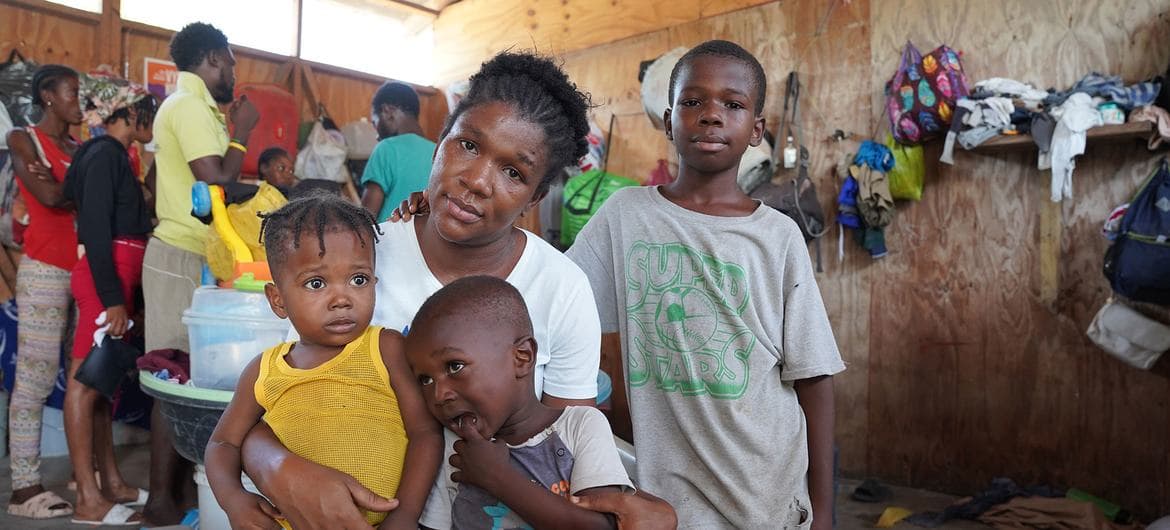
© WFP/Tanya Birkbeck A family displaced by violence has relocated to a school which has been converted into a shelter.
Key Points(5)
- More than a quarter-million young children in Haiti are projected to suffer from acute malnutrition over the next year as violence, displacement and food insecurity continue to deepen the country’s humanitarian crisis.
- An estimated 253,725 children between 6 months and 5 years old are expected to experience acute malnutrition between June 2026 and May 2027, according to a new UN-backed assessment.
- Of those, 93,873 children are projected to suffer from severe acute malnutrition, a potentially life-threatening condition requiring urgent treatment.
- Another 159,852 are expected to experience moderate acute malnutrition.
- The analysis also estimates that 25,750 pregnant and breastfeeding women will need nutritional support.
More than a quarter-million young children in Haiti are projected to suffer from acute malnutrition over the next year as violence, displacement and food insecurity continue to deepen the country’s humanitarian crisis.
An estimated 253,725 children between 6 months and 5 years old are expected to experience acute malnutrition between June 2026 and May 2027, according to a new UN-backed assessment.
Of those, 93,873 children are projected to suffer from severe acute malnutrition, a potentially life-threatening condition requiring urgent treatment. Another 159,852 are expected to experience moderate acute malnutrition.
The analysis also estimates that 25,750 pregnant and breastfeeding women will need nutritional support.
The assessment was released by Haiti’s Ministry of Public Health and Population with support from UNICEF, the Food and Agriculture Organization, the World Food Programme and other nutrition partners.
The findings come as armed violence continues to uproot families and disrupt access to food, healthcare and other essential services. Approximately 1.47 million people were internally displaced across Haiti as of mid-May, according to the assessment.
“Behind these figures are children whose lives can change when they receive the right care at the right time,” UNICEF Representative in Haiti Geeta Narayan said.
She said the findings should be used to identify children earlier, prevent malnutrition and expand access to treatment.
Conditions are expected to deteriorate further between December 2026 and May 2027, when 29 of Haiti’s 140 municipalities are projected to reach Phase 3, or “serious,” on the Integrated Food Security Phase Classification’s acute malnutrition scale.
Cité Soleil and Cabaret are projected to reach Phase 4, classified as “critical” and the second-highest level on the scale.
The worsening conditions are expected to increase demand for malnutrition treatment and add pressure to health and humanitarian services already struggling to meet existing needs.
FAO Representative in Haiti Pierre Vauthier said addressing malnutrition will require tackling its underlying causes, including families’ limited access to diverse and nutritious foods. He called for measures to protect agricultural livelihoods and strengthen local food production.
WFP Representative and Country Director in Haiti Lauren Landis also called for greater investment in nutrition and healthcare services, school meals and assistance for vulnerable households.
UN agencies are urging the Haitian government, donors, civil society groups and international organizations to expand community nutrition screening and treatment and ensure adequate supplies of therapeutic foods.
They are also calling for increased support for pregnant and breastfeeding women, improved access to safe water and sanitation, and measures to protect household food production and livelihoods.
Humanitarian organizations say safe access to affected communities and flexible funding will also be crucial as needs increase.
With insecurity continuing to drive displacement and disrupt access to food and basic services, aid agencies warn that early intervention will be critical to preventing children with moderate malnutrition from developing more severe forms of the condition and reducing preventable deaths.