
Metal Braces in the Age of Invisalign: Why Some Smiles Still Need Them
Key Points(5)
- Nine out of ten adults who ask about clear aligners walk into a consultation already sold on them.
- That's not a statistic pulled from a study.
- It's the pattern you see in any busy orthodontic office, and it's the reason so many treatment plans quietly stall six months in.
- Nobody tells these patients that a tray sitting in a case on a kitchen counter does zero work.
- So let's flip the usual question.
Nine out of ten adults who ask about clear aligners walk into a consultation already sold on them. That's not a statistic pulled from a study. It's the pattern you see in any busy orthodontic office, and it's the reason so many treatment plans quietly stall six months in. Nobody tells these patients that a tray sitting in a case on a kitchen counter does zero work.
So let's flip the usual question. Instead of asking whether metal braces are still worth it, ask which smiles actually need them. Some do, and no amount of good intentions will change the geometry involved. If you're weighing your options in British Columbia, a fair number of people land on metal braces in surrey from Dream Orthodontics after a specialist walks them through the tradeoffs honestly. That's the conversation worth having before you commit to anything.
Here's what this piece covers: the specific situations where fixed brackets outperform removable trays, what the day-to-day reality looks like for an adult wearing them, and a short checklist you can run before your own consult. You'll leave knowing which camp you probably fall into.
Where aligners quietly hit a wall
Clear aligners are genuinely impressive for mild crowding, small gaps, and cosmetic tweaks. I'd recommend them without hesitation for a teenager who needs a small rotation fixed before senior photos. The trouble starts with complexity.
Two things break the tray model. First, some tooth movements require the kind of continuous, controlled force that only a wire threaded through bonded brackets can deliver. Rotating a stubborn premolar or closing a significant extraction space falls into that bucket. Second, certain movements demand a specific sequence of pushes and pulls that a removable appliance struggles to hold with precision. Brackets don't care what you ate for lunch or whether you remembered to put them back in after brushing.
According to the National Institutes of Health, orthodontic treatment outcomes depend heavily on consistent appliance wear and clinical oversight, which is exactly the variable that slips when a patient self-manages a removable device. Compliance is the quiet failure point. You can't fix a bad wear schedule with a better app.
What a day actually looks like in brackets
Let's get concrete, because vague reassurance helps nobody.
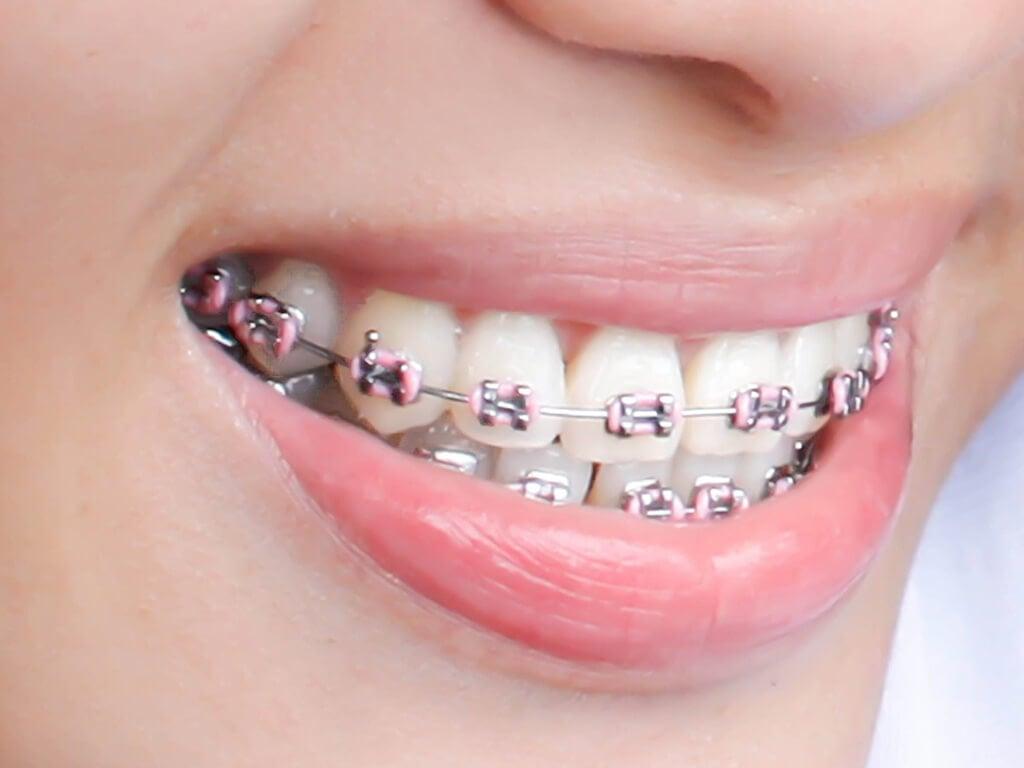
You'll eat breakfast, then brush, then spend a couple of minutes with a small interdental brush working around each bracket. Lunch follows the same rhythm. If you grab coffee at work, it comes through a straw and gets followed by a rinse. Dinner means another round of flossing that takes longer than you're used to, at least for the first few weeks. By month two, this whole routine compresses into something like five minutes a pop. I've watched people who swore they'd hate it stop noticing it entirely.
Tenderness shows up after each adjustment, usually a day or two of soft food and a slightly grumpy mood. Then it fades. The wires get swapped, the pressure resets, and you move on.
What you gain is a system you can't skip. The appliance is on your teeth, working, while you're asleep and while you're distracted at a work deadline. For anyone who has ever abandoned a gym membership in February, that matters more than aesthetics.
The questions to ask at your consultation
Walk in with these and you'll get a much straighter answer:
- How many millimeters of movement does my case require, and does it fall inside the range aligners handle well?
- What happens to my treatment plan if I fall off the wear schedule for two weeks?
- How will we handle a bracket that comes loose on a Sunday evening?
- Is the final result measured against a specific bite outcome, or just visual straightening?
- What's the total cost including retainers, and does insurance cover any of it?
The last one catches people off guard. Retainers and follow-up visits often sit outside the headline quote, and asking early saves a nasty surprise.
The case for brackets you can't misplace
Here's my honest position, and it's the one I'd give a friend: if your case is moderate to complex, choose the fixed appliance and stop agonizing over the aesthetics. Adults wear braces all the time now. Nobody at your office will remember by next quarter.
Modern brackets are smaller and smoother than what most of us remember from middle school. The archwires are more forgiving. The whole experience has shifted, even if the basic mechanics haven't changed in a century.
That longevity is worth respecting. The American Dental Association notes that orthodontic treatment has been refined over more than a century of clinical practice, and the core bracket and wire system remains in use because it produces predictable, measurable results. Predictability is the whole game when you're moving bone.
Choosing a provider without getting sold
A consultation should feel like an exam, not a sales pitch. If the first thing you see is a financing brochure and the last thing you see is a treatment plan, the order is wrong.
Look for a specialist who shows you the imaging, explains the mechanics in plain language, and tells you when a different option is a better fit. Ask how many complex cases they handle in a typical month. Ask what their retreatment rate looks like. Ask what happens if you move cities mid-treatment.
One more thing worth knowing: orthodontics is a small, specialized corner of the dental workforce. The Bureau of Labor Statistics tracks orthodontists as a distinct occupation within dental practice, which tells you the training path is separate and the expertise is specific. That's your cue to ask about credentials directly, including whether the person treating you is a certified specialist.
A concrete scenario worth picturing
Say you're 34, you have crowding on the lower arch, and one tooth sits noticeably behind the others. You get quoted for aligners and pay up front. Life happens. A busy quarter at work turns into two weeks of spotty wear. The trays stop fitting the way they should, the plan gets extended, and you're back in a consultation nine months later having spent money without gaining much.
Had that same person started in brackets, the tooth would have moved on schedule regardless of how chaotic February got. That's the entire argument in one paragraph. It's not about which option looks better in a photo. It's about which option survives your actual life.
What you're really choosing
Aligners trade visibility for dependency. Brackets trade visibility for reliability. Neither is wrong, but only one of those trades holds up when your schedule falls apart.
If your case is mild and cosmetic, trays are a reasonable pick and anyone who tells you otherwise is overselling. If your case involves rotation, significant space closure, or a bite that needs real correction, the fixed appliance earns its place. Get the assessment before you get attached to a specific product name.
Book the consultation, bring the five questions above, and listen carefully to how the specialist describes your specific teeth. The plan that fits your case and your habits will beat the one that photographs better every single time. Which of those two is yours?