
Jamaica finalizes procedures for US third-country national transit deal
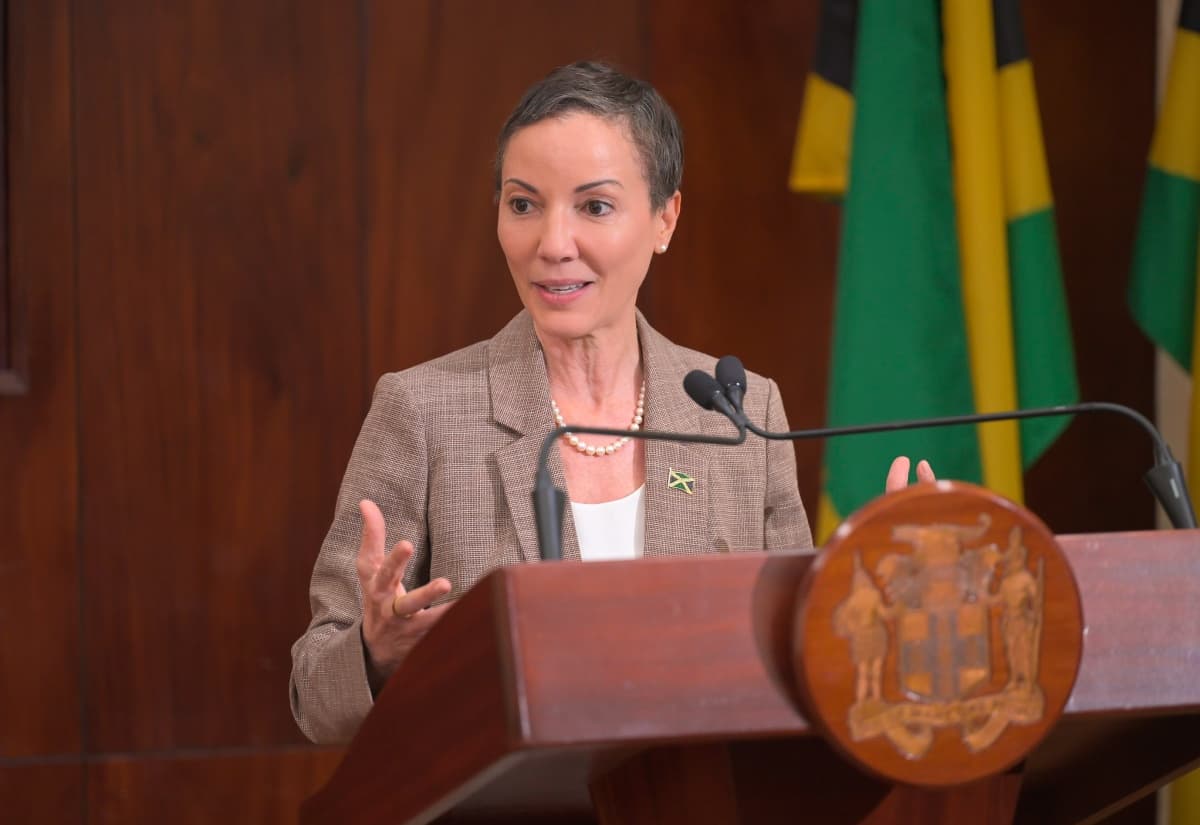
Minister of Foreign Affairs and Foreign Trade, Senator the Hon. Kamina Johnson Smith
Key Points(5)
- Jamaica has moved closer to receiving third-country nationals from the United States after the two governments finalized operating procedures for a controversial agreement that will allow some migrants to temporarily transit through the island before returning to their home countries.
- Foreign Affairs and Foreign Trade Minister Senator Kamina Johnson Smith said Wednesday that the procedures establish the safeguards and parameters under the memorandum of understanding signed between Jamaica and the United States in June.
- The arrangement will allow a maximum of 25 third-country nationals, or TCNs, to enter Jamaica every two weeks.
- The government has stressed that the individuals will not be permanently resettled in Jamaica and that anyone with a criminal record will be excluded.
- “The arrangements were also finalized taking into account Jamaica's capacity constraints and our belief in the principles of safe, orderly and lawful migration,” Johnson Smith said during a post-Cabinet press briefing at Jamaica House.
Jamaica has moved closer to receiving third-country nationals from the United States after the two governments finalized operating procedures for a controversial agreement that will allow some migrants to temporarily transit through the island before returning to their home countries.
Foreign Affairs and Foreign Trade Minister Senator Kamina Johnson Smith said Wednesday that the procedures establish the safeguards and parameters under the memorandum of understanding signed between Jamaica and the United States in June.
The arrangement will allow a maximum of 25 third-country nationals, or TCNs, to enter Jamaica every two weeks. The government has stressed that the individuals will not be permanently resettled in Jamaica and that anyone with a criminal record will be excluded.
“The arrangements were also finalized taking into account Jamaica's capacity constraints and our belief in the principles of safe, orderly and lawful migration,” Johnson Smith said during a post-Cabinet press briefing at Jamaica House.
Despite the operating procedures now being completed, there is still no date for the first arrivals.
Johnson Smith said the International Organization for Migration, or IOM, is conducting its own assessment and has been working with the Passport, Immigration and Citizenship Agency, the Ministry of National Security and Peace and other government agencies to ensure the necessary systems are in place.
Under the arrangement, the Jamaican government will receive the TCNs before transferring responsibility for them to the IOM, which will support them during their stay and arrange their return to their home countries through its Assisted Voluntary Return program.
The United States will fund the arrangement, with Johnson Smith emphasizing that the Jamaican government will not bear the cost.
The foreign minister also sought to distinguish the individuals from deportees, saying they are nationals of other countries who entered the United States illegally and are being assisted in returning home.
“This is a transit arrangement and one through which no criminals are to be sent,” she said.
The agreement contains several safeguards negotiated by Jamaica. In addition to the cap of 25 people every two weeks, the arrangement will be suspended if 10 TCNs apply to remain in Jamaica through asylum procedures or other humanitarian applications.
The government has previously said prospective arrivals will be subject to health screening, identity verification, criminal record checks and clearance from Jamaica's National Intelligence Bureau before being accepted. Jamaica also retains the authority to reject individuals proposed for transfer.
Johnson Smith again rejected suggestions that Jamaica had agreed to accept as many as 10,000 people, saying the limits were specifically negotiated because of the country's capacity constraints.
The MOU itself, however, will not be released publicly.
Johnson Smith said she consulted Cabinet colleagues and the U.S. government about releasing the document, but Washington did not agree to its publication.
“As indicated, this is not a unilateral arrangement; it is a bilateral arrangement,” she said, adding that the United States generally does not release such agreements.
She maintained that the government has disclosed the relevant and material provisions of the deal and said bilateral and security arrangements are treated differently under Jamaica's Access to Information framework.
The agreement has attracted scrutiny since it was announced in June, including questions about the number of people Jamaica could receive, how long they could remain and what would happen if they sought asylum. The government has repeatedly maintained that the program is a temporary transit arrangement rather than a resettlement program.
According to the government, Jamaica is among close to 30 countries participating in similar TCN arrangements, including several Caribbean Community member states.
Johnson Smith said Jamaica will continue working with the IOM and the U.S. government to ensure the program is implemented in accordance with Jamaican and international law.