Jamaica Council of Churches urges halt to US third-country nationals talks
Key Points(5)
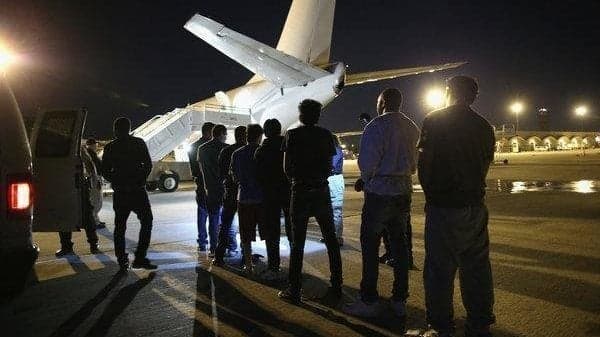
- The Jamaica Council of Churches (JCC) is urging the government to suspend negotiations with the United States over a proposed agreement to accept third-country nationals (TCNs), calling for parliamentary debate and wider public consultation before any arrangement is finalised.
- In a statement issued Monday, the council expressed concern over what it described as a “total lack of transparency” surrounding the proposed memorandum of understanding (MOU), arguing that agreements negotiated behind closed doors must be subjected to ethical and democratic scrutiny.
- The JCC questioned the rationale behind sending migrants to Jamaica rather than returning them to their countries of origin.
- “Why are persons being sent to third-party partner countries like Jamaica rather than their country of origin?
- Wouldn’t direct repatriation to their homeland have made more sense?
The Jamaica Council of Churches (JCC) is urging the government to suspend negotiations with the United States over a proposed agreement to accept third-country nationals (TCNs), calling for parliamentary debate and wider public consultation before any arrangement is finalised.
In a statement issued Monday, the council expressed concern over what it described as a “total lack of transparency” surrounding the proposed memorandum of understanding (MOU), arguing that agreements negotiated behind closed doors must be subjected to ethical and democratic scrutiny.
The JCC questioned the rationale behind sending migrants to Jamaica rather than returning them to their countries of origin.
“Why are persons being sent to third-party partner countries like Jamaica rather than their country of origin? Wouldn’t direct repatriation to their homeland have made more sense? If the sending authorities harbour genuine, legitimate safety or security concerns about the deportee’s home country, how is sending them to a third country going to help mitigate that situation?” the council asked.
It called for a “full, transparent and rigorous explanation” from the Ministry of National Security and Peace and the Office of the Prime Minister, arguing that relocating displaced people does not address the underlying causes of migration.
“Shifting human displacement from one shore to another does nothing to heal the root causes of regional and global instability; it merely outsources the logistical burden,” the council said.
The JCC also raised concerns about what it described as a “troubling structural double standard” in Jamaica’s approach to migration.
“For decades, our successive administrations have pleaded a lack of systemic capacity, fiscal room and infrastructural resources to justify the rapid, unceremonious repatriation of spontaneous regional arrivals—most notably our brothers and sisters fleeing the harrowing humanitarian catastrophe in nearby Haiti. We have been told repeatedly that Jamaica cannot absorb the vulnerable at our gates. Yet, when a proposal is brokered with a global superpower, our structural incapacity is suddenly set aside to accommodate a specialised transit apparatus,” the group said.
The council said public policy carries a responsibility to protect human dignity and warned that vulnerable populations are most affected when that responsibility is compromised.
“To turn away the desperate seafaring migrant while opening an official transit pipeline for a superpower’s unwanted populations is to be found fundamentally wanting in the scales of justice. We cannot trade our moral birthright for political expediency or foreign assistance dividends.”
The JCC referenced biblical teachings on the treatment of refugees, citing passages from Hebrew and Christian scriptures that call for compassion and protection of displaced people.
The council acknowledged that the government faces national security challenges, economic limitations and geopolitical pressures but said these considerations must not come at the expense of international humanitarian obligations.
It pointed to concerns over possible chain refoulement, referencing the 2025 case in which a Jamaican citizen was mistakenly deported to Eswatini.
The council is calling on the Andrew Holness administration to halt negotiations immediately, release the full text and operational guidelines of the proposed transit arrangement, and address questions surrounding the use of third-country processing.
It is also calling on the government to affirm its commitment to the principle of non-refoulement, which prohibits returning individuals to places where they may face serious threats to their safety.