IDB warns Guyana faces rising economic risks amid oil price volatility
Key Points(5)
- The Inter-American Development Bank (IDB) has warned that Guyana’s economic outlook remains highly uncertain as persistent geopolitical tensions continue to drive volatility in international oil prices.
- The Washington-based financial institution said Guyana remains particularly exposed to energy price shocks despite becoming a net oil exporter in 2019 because about 90% of the country’s energy is still produced from imported oil.
- “As Guyana is now an oil producer, oil shocks can lead to Dutch disease risks, spurred on by an influx of oil revenues and excessive government spending,” the IDB said.
- The International Monetary Fund (IMF) forecasts that Guyana’s GDP growth in 2026 will be lower than previously projected, although the IDB said macro-fiscal risks are expected to remain manageable.
- The government has moved to cushion the effects of higher oil prices through several measures, including maintaining a zero-rate tax on fuel under its 2026 budget, introducing a universal US$500 cash grant, maintaining electricity subsidies and providing assistance to key sectors such as education.
The Inter-American Development Bank (IDB) has warned that Guyana’s economic outlook remains highly uncertain as persistent geopolitical tensions continue to drive volatility in international oil prices.
The Washington-based financial institution said Guyana remains particularly exposed to energy price shocks despite becoming a net oil exporter in 2019 because about 90% of the country’s energy is still produced from imported oil.
“As a result, electricity and fuel prices continue to be channels through which the Guyanese economy can be negatively impacted,” the IDB said in its report, “Fiscal Resilience, Debt Reduction and Domestic Resource Mobilization in the Caribbean.”
The report also highlighted the risk of “Dutch disease,” which can occur when a surge in revenues from natural resources causes an economy’s currency to appreciate and undermines other productive sectors.
“As Guyana is now an oil producer, oil shocks can lead to Dutch disease risks, spurred on by an influx of oil revenues and excessive government spending,” the IDB said.
The International Monetary Fund (IMF) forecasts that Guyana’s GDP growth in 2026 will be lower than previously projected, although the IDB said macro-fiscal risks are expected to remain manageable.
The government has moved to cushion the effects of higher oil prices through several measures, including maintaining a zero-rate tax on fuel under its 2026 budget, introducing a universal US$500 cash grant, maintaining electricity subsidies and providing assistance to key sectors such as education.
Those measures are expected to result in a larger primary deficit than originally budgeted.
“Nevertheless, macro-fiscal risks are expected to remain largely contained,” the IDB said, pointing to Guyana’s rules limiting withdrawals of oil profits from its Natural Resource Fund, the high concessionality of its debt portfolio, a low debt-service ratio and continued strong GDP growth.
Inflation and Dutch disease risks
The IDB also expects inflationary pressures in Guyana to increase.
The IMF forecasts a further divergence between Guyana’s inflation rate and U.S. price trends, raising the possibility of continued appreciation of the country’s real effective exchange rate, a key indicator of Dutch disease risks.
The IDB noted, however, that the appreciation of Guyana’s real effective exchange rate has remained relatively subdued. It grew at an average annual rate of about 0.01% between 2019 and 2025, the same rate recorded during the previous five years.
“Proactive and vigilant policy-making is highly advisable,” the IDB said, noting that the volatile geopolitical environment could make economic forecasts less reliable than usual.
The institution said the increased unpredictability underscores the need for careful economic management, including coordination between fiscal and monetary policies.
“For Guyana, which is so exposed to external energy price risks,” the IDB said, balancing fiscal and financial sector support for development with efforts to stabilize the exchange rate and keep inflation at acceptable levels is particularly important.
The government’s efforts to reduce Guyana’s dependence on imports, particularly food and crude oil, are consistent with those objectives, the report said.
Strong economic growth
Despite the risks, Guyana’s economic performance strengthened further in 2025, helping to support socioeconomic development and provide some protection against growing global uncertainty.
Guyana’s GDP grew by 19.3% in 2025, following a 43.8% expansion in 2024. The 2024 growth rate surpassed the IMF’s initial projection of 10.1% made in October 2025.
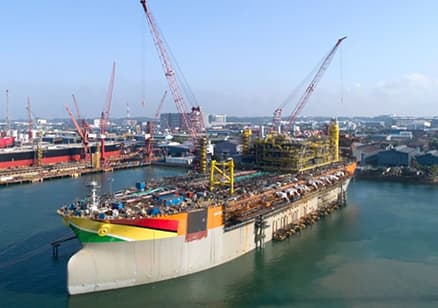
Oil output grew by 21.1% in 2025, a slower pace that the IDB said mirrored trends in international oil prices. Growth was boosted, however, by a ramp-up in production late in the fourth quarter as a new oil extraction vessel came online.
Despite the slowdown in oil GDP growth, the mining and quarrying sector’s share of the economy rose to 79% in 2025, compared with 67% in 2022 and 51% in 2021.
At the same time, the non-oil economy continued to expand, with GDP growth in the sector increasing from 13% in 2024 to 15% in 2025.
The IDB also pointed to improvements in Guyana’s labor market and population growth. Data released in April 2026 showed that the unemployment rate fell from 14.5% in the third quarter of 2021 to 6.8% in the same period of 2024.
Guyana’s population also increased to about 900,000, up from 700,000 a decade earlier.
Inflation and fiscal position
Inflation accelerated toward the end of 2025, reaching 2.9% year over year. Food prices increased 4.4%, while medical care rose 4.9% and miscellaneous items increased 6.8%.
Inflationary pressures eased somewhat early in 2026, before the latest increase in international oil prices. In February, Guyana’s annual inflation rate was 2.6%, although food prices remained a major contributor, rising 5.9%.
The government’s fiscal position also improved in 2025. The primary deficit narrowed to 5% of GDP from 6.9% in 2024.
The improvement came despite higher overall spending, including increased transfer payments associated with the government’s universal cash grants. The increase in expenditure was offset by stronger revenue, particularly non-tax revenue, of which 85.1% consisted of withdrawals of oil profits.
Lower capital spending also contributed to the improved fiscal outcome.
Guyana has invested heavily in infrastructure since the start of oil production, with capital spending rising from 21.8% of total expenditure in 2019 to 50.5% in 2023 and 53.8% in 2024.
The IMF has recommended that the government reduce capital expenditure to help bring the fiscal accounts into balance over the medium term.
In 2025, capital spending fell to 50.7% of total expenditure and declined from 11.5% to 10.2% of GDP, marking the first reduction in the government’s capital expenditure ratios since oil production began.
Debt remains sustainable
The IDB said Guyana’s overall debt levels remain highly sustainable.
A financing gap in 2025 led to increased external borrowing and a modest rise in the country’s total debt-to-GDP ratio, from 24.3% in 2024 to 28.6% in 2025. External debt accounted for 56.3% of total debt.
Despite the increase, the country’s debt portfolio remained highly concessional, with multilateral creditors holding 66.2% of Guyana’s debt.
Debt-service costs have also fallen significantly. The average debt-service-to-revenue ratio declined from about 7% during 2014-18, before oil production began, to about 5% during 2019-25.
The IDB said these factors, combined with Guyana’s strong economic growth and rules governing withdrawals from the Natural Resource Fund, should help contain macro-fiscal risks even as the country navigates an increasingly uncertain global environment.