

How to Pick Between Metal, Clear, and Removable Braces: A Practical Guide
Key Points(5)
- Four out of five adults who start orthodontic treatment pick the wrong appliance for their own habits, not their teeth.
- That's not a stat from a study.
- It's the pattern I've watched play out in conversations again and again: someone chooses clear aligners because they look better in photos, then quietly stops wearing them by month four because the discipline was never part of the decision.
- So here's the promise of this piece.
- By the end, you'll have a simple five-question filter that tells you which appliance actually fits your routine, your budget, and your tolerance for fiddling with your mouth in a restaurant bathroom mirror.
Four out of five adults who start orthodontic treatment pick the wrong appliance for their own habits, not their teeth. That's not a stat from a study. It's the pattern I've watched play out in conversations again and again: someone chooses clear aligners because they look better in photos, then quietly stops wearing them by month four because the discipline was never part of the decision.
So here's the promise of this piece. By the end, you'll have a simple five-question filter that tells you which appliance actually fits your routine, your budget, and your tolerance for fiddling with your mouth in a restaurant bathroom mirror. You'll also understand why the same set of teeth can be treated three different ways and all three answers can be correct.
Most people start by asking what's invisible. That's backwards. Start with what you'll realistically maintain for eighteen to twenty-four months, then work backward to appearance. If you're comparing types of braces in kelowna patients can choose, the range is wider than you'd guess: metal brackets, colored ties, ceramic, mixed setups, and removable trays. Each one asks something different of you.
Why appearance should be your last filter, not your first
Appearance is the easiest variable to compare and the least predictive of a good outcome. Wear time, cleaning routine, and how often brackets break are the things that decide whether treatment finishes on schedule. A nearly invisible appliance that you skip is worse than a visible one you never think about.
I'd pick traditional metal brackets for a teenager or for any adult who knows they'll be inconsistent with a removable device. That's an unpopular opinion in a market that sells discretion hard, but visible metal is durable and predictable, and a patient who never has to remember anything tends to finish on time.
What are the actual options on the table?
Here's the range in plain terms, with the trade-off attached to each one.
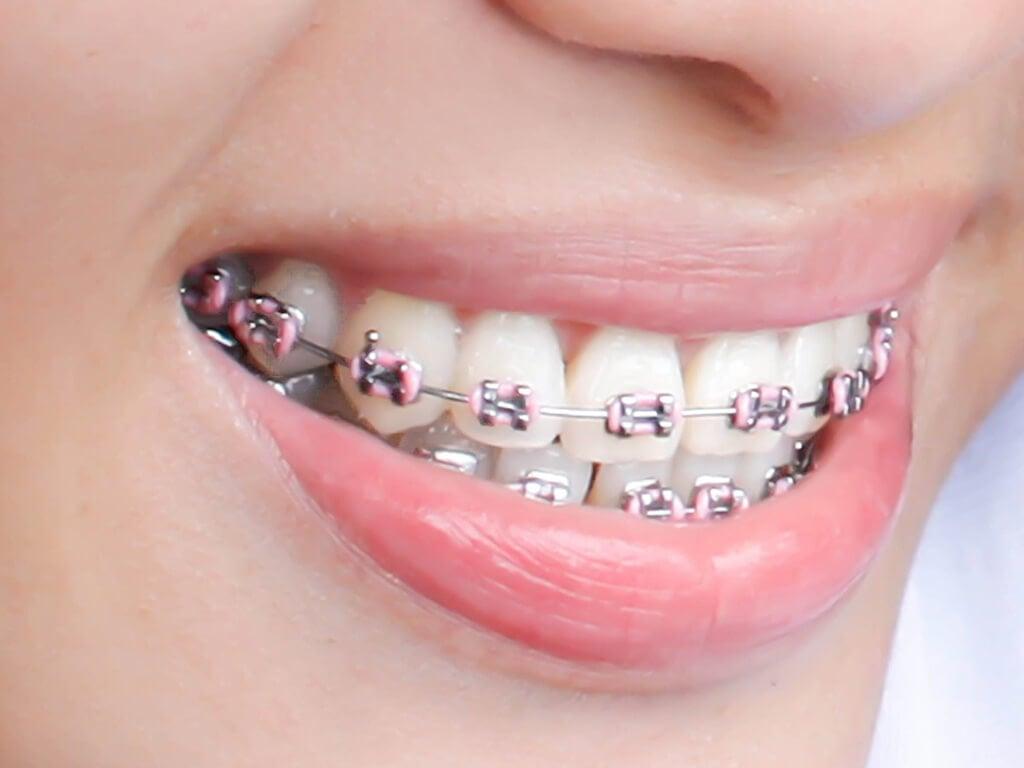
- Traditional metal brackets. The most recognizable option, and still the most reliable. Biggest strength: it works. Biggest cost: everyone can see it.
- Colored ties. Same metal brackets, but the elastic ties come in a wide palette you can swap at each visit. Popular with kids who want input and adults who'd rather own the visibility than hide it.
- Ceramic or clear brackets. Less noticeable, more expensive, and more demanding. They stain more easily and ask for careful cleaning, and they can be more brittle than metal.
- Mixed setups. Ceramic on the top row where people look, metal on the bottom where they don't. A practical compromise that trims both cost and visibility.
- Removable clear trays. No brackets, no wires, no food restrictions. The catch is that the whole system lives or dies on you wearing them roughly twenty hours a day.
Your orthodontist may also talk about lingual brackets, which sit behind the teeth, or about appliance choices tied to specific bite problems. Those are conversations about your case, not about general preference, so ask directly whether your particular bite limits your options.
The five-question filter I'd use in your chair
Answer these honestly and the shortlist builds itself. This is the part I'd hand a friend before their consultation.
- Will I actually wear something removable for twenty hours a day? If the answer is a shrug, cross trays off your list and don't look back.
- How much coffee, curry, and red wine is in my week? Ceramic brackets and clear trays both punish staining foods. Metal does not care.
- Do I play contact sports or grind my teeth at night? Durability matters more than subtlety here, and metal has the edge.
- What's my real budget, including the replacement cost of lost trays? Ask for the full number up front, including retainers after treatment ends.
- How visible am I willing to be at work? If a customer-facing role makes you self-conscious, ceramic or trays earn their premium. If not, save the money.
Score yourself and notice which two questions you answered fastest. Speed is a signal. The question you answered instantly is the constraint you actually care about.
Adults, teens, and the wear-time math
Adults make up a growing share of orthodontic patients, and the trend has been steady for years. According to the American Dental Association, adult interest in orthodontic treatment has climbed consistently as options have become less visible. Removing the social cost changes the calculus for a lot of people who would never have considered brackets in their twenties.
Adults also tend to be better candidates for removable trays in one specific way: they're often more disciplined than teenagers about wearing them. The flip side is that adult teeth move a bit more slowly, and the timeline is less forgiving if you fall off schedule for a month.
Teens are the opposite case. They want the color options, they want to not be the only kid in the room with metal, and they're honest about their own habits if you ask them without an audience. I'd let a teenager pick the tie color every visit and reserve the appliance decision for a conversation with the orthodontist.
The maintenance sideshow nobody warns you about
Brackets and wires mean a specific cleaning routine. Floss threaders, interdental brushes, a water flosser if you like gadgets. Two minutes of brushing turns into six or seven, and food restrictions are real: no hard pretzels, no biting into apples, and a careful relationship with popcorn.
Removable trays flip that. You eat whatever you want, because the appliance comes out before the meal. Then you brush and floss and put the tray back in. Sounds easier, and it is, on the days you follow through.
One detail worth knowing: the National Institutes of Health describes orthodontics as a specialty focused on diagnosing and correcting misaligned teeth and jaws, with outcomes tied closely to patient adherence. Translation: the appliance is only half the treatment. Your consistency is the other half, and no bracket design can compensate for a tray left in a case on your nightstand.
What a good consultation should sound like
You should hear a diagnosis of your specific bite before anyone shows you a brochure. You should hear a realistic timeline in months, not a range so wide it means nothing. And you should hear an honest answer when you ask, "If this were your mouth, what would you choose?"
If the answer to that last question is always the most expensive option, ask why. Sometimes it's the right call. Sometimes it's a sales reflex.
Bring your five answers with you. Ask about the retainer plan for after treatment, since retention is where a lot of good work quietly unravels. Practical advice for brushing and flossing around brackets is easy to find through MouthHealthy, the ADA's public education site, and showing up knowing the basics makes the appointment faster.
I'd also book a second consult if the first one felt rushed. You're committing to two years of showing up, so a second opinion is cheap insurance. Compare how each office handles your questions about staining, breakage, and lost trays, and notice which one gives you a straight answer without flinching.
The appliance is a tool. Your daily habits are the treatment. Pick the tool that fits the habits you already have, not the habits you're hoping to develop by spring, and the next two years get a lot simpler. Which of the five questions did you answer fastest? That's your answer.