
How to Create a Comfortable Sleep Environment During Winter
Key Points(5)
- When winter hits across the nation, turning up the heat feels like the natural response to freezing outdoor temperatures.
- Yet many people find themselves tossing and turning, waking up with a scratchy throat, or kicking off heavy blankets at 3:00 AM.
- The culprit is rarely the cold outside.
- Instead, it is the artificial environment created inside our bedrooms.
- Forced-air furnaces, space heaters, and tightly sealed windows strip moisture from the air and trap excess heat, quietly sabotaging your sleep quality.
When winter hits across the nation, turning up the heat feels like the natural response to freezing outdoor temperatures. Yet many people find themselves tossing and turning, waking up with a scratchy throat, or kicking off heavy blankets at 3:00 AM.
The culprit is rarely the cold outside. Instead, it is the artificial environment created inside our bedrooms. Forced-air furnaces, space heaters, and tightly sealed windows strip moisture from the air and trap excess heat, quietly sabotaging your sleep quality. Understanding how winter indoor conditions affect your body is the first step toward getting deeper, uninterrupted rest all season long.
Common Winter Sleep Health Problems Caused by Indoor Heating
Your body relies on specific environmental cues to fall asleep and stay in restorative deep sleep stages. When indoor heating runs nonstop, it creates three major disruptions:
- Dry Air and Respiratory Irritation: Cold winter air naturally holds very little moisture. When your furnace heats that air, relative humidity inside your home can plummet below 20%. Breathing dry air all night dries out your nasal passages and throat, leading to morning congestion, dry coughs, nosebleeds, and increased snoring.
- Overheating and Night Sweats: Your core body temperature needs to drop by about 2°F to initiate and maintain deep sleep. Cranking the thermostat to 72°F or piling on thick synthetic comforters blocks this natural cooling process, causing restless tossing, night sweats, and frequent wake-ups.
- Dry, Itchy Skin and Static: Low indoor humidity pulls moisture from your skin barrier overnight. Waking up with tight, flaky skin or constant static shock from your sheets makes it harder to relax and stay comfortable in bed.
- Shorter Daylight and Circadian Disruption: Earlier sunsets and gray winter mornings reduce your exposure to natural sunlight. Without strong light cues, your brain produces melatonin inconsistently, leaving you groggy in the morning and wide awake at bedtime.
Ideal Bedroom Temperature and Humidity for Winter Sleep
Before adjusting your thermostat or buying new bedding, it helps to know the exact numbers sleep specialists recommend:
- Target Bedroom Temperature: Keep your bedroom between 60°F and 67°F (15.6°C to 19.4°C). While this feels cool when you first walk in, it supports your body's natural thermoregulation once you are under the covers.
- Target Indoor Humidity: Aim for a relative humidity level between 30% and 50% during winter. Going below 30% causes dry air symptoms, while pushing above 50% in cold weather can cause condensation on windows and encourage mold or dust mites.
6 Practical Ways to Create a Comfortable Winter Sleep Environment
You do not need an expensive bedroom makeover to fix winter sleep troubles. A few targeted adjustments will keep your room cozy without sacrificing air quality.
Monitor Your Bedroom Climate Accurately
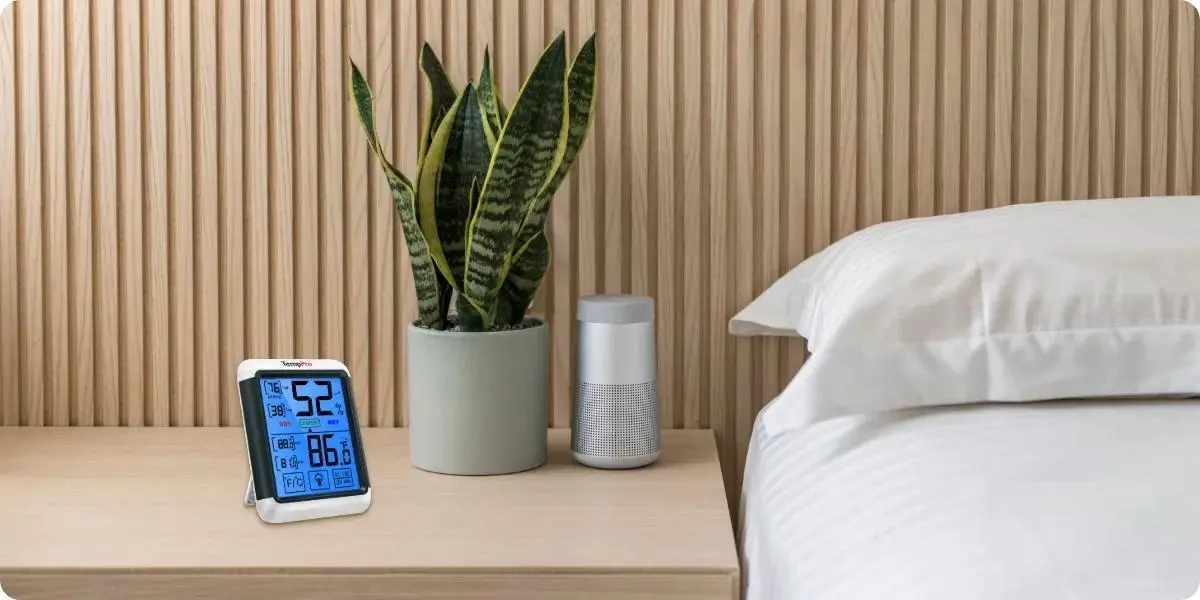
Most wall thermostats sit in hallways or living rooms, meaning they do not reflect the actual temperature or moisture level beside your bed. Placing a dedicated indoor monitor on your nightstand takes the guesswork out of winter sleep comfort.
A reliable device like the TempPro TempAir CORE TP55 Digital Indoor Thermometer Hygrometer gives you real-time visibility into your bedroom conditions so you can make smart adjustments before bed. Designed specifically for effortless home climate tracking, it offers several standout features:
- Large Touchscreen Display with Backlight: The large LCD screen displays bold, easy-to-read digits, and the touch-activated backlight lets you check the room conditions in the dark without turning on a harsh lamp.
- High-Accuracy Sensors: Built with precision sensors, it updates every 10 seconds with ±1°F temperature accuracy and ±2% to ±3% humidity accuracy, giving you dependable readings all night.
- All-Time and 24-Hour High/Low Records: Tracking overnight temperature drops and humidity dips helps you see how much your furnace dries out the room while you sleep.
- Air Comfort Indicator Icons: Simple face icons immediately tell you whether your room air is DRY, COMFORT, or WET, so you know right away when to turn on a humidifier or lower the heat.
- Flexible Placement Options: With a fold-out tabletop stand and a magnetic back, you can set it right on your nightstand or mount it near your thermostat.
Run a Cool-Mist Humidifier at Night
If your hygrometer shows humidity dropping below 30%, run a cool-mist humidifier in your bedroom for a few hours before bed or overnight on a low setting. Adding moisture back into the air protects your sinuses, reduces snoring, and makes a cool room feel warmer without raising the thermostat. Clean the water tank every few days and use distilled water to prevent mineral dust.
Layer Breathable Bedding Instead of Using One Heavy Duvet
Trapping heat under a single thick polyester comforter often leads to midnight overheating. Instead, dress your bed in breathable, natural layers that you can easily adjust:
- Start with crisp 100% cotton, bamboo, or linen sheets that wick away moisture.
- Add a medium-weight cotton quilt or wool blanket for warmth.
- Top it with a lightweight down or down-alternative duvet that can be folded back if you get warm.
Program Your Thermostat for Nighttime Drops
If you have a programmable or smart thermostat, schedule it to automatically drop 4°F to 6°F about an hour before bedtime, then warm back up 30 minutes before your alarm goes off. You will sleep deeper through the night, wake up to a comfortable room, and save noticeably on winter heating bills.
Seal Cold Drafts Around Windows and Doors
Even if your room is set to 65°F, a freezing draft blowing across your pillow will wake you up. Check window frames and bedroom doors for air leaks. Simple fixes like weatherstripping tape, a weighted fabric draft stopper at the base of the door, or thermal insulated curtains keep cold air out while preserving steady indoor warmth.
Keep Air Circulating Gently
Stagnant heated air tends to pool near the ceiling while cold air settles near the floor. Switch your ceiling fan to spin clockwise on its lowest speed during winter. This gentle upward draft pushes warm air back down into the room without creating a chilly breeze over your bed.
FAQs about Sleeping in Winter
Why do I wake up with a dry throat and stuffy nose every morning in winter?
Indoor heating systems dramatically lower relative humidity, often dropping bedroom moisture levels below 20%. Breathing dry air overnight irritates your nasal passages and throat, causing morning congestion and soreness.
Is it healthier to sleep in a cold room during winter?
Yes. Sleeping in a cool room around 60°F to 67°F aligns with your body's natural drop in core temperature at night, helping you fall asleep faster and spend more time in restorative deep and REM sleep.
What should my indoor humidity be in the winter?
Aim for 30% to 50% relative humidity. Keeping humidity in this range prevents dry skin and respiratory irritation while avoiding excess moisture that causes window condensation.
Should I leave my space heater on all night while sleeping?
No. Leaving a space heater running unattended overnight is a fire hazard and easily overheats your bedroom. Instead, warm the room briefly before bed, turn the heater off, and rely on layered bedding to stay warm.
Where Should I Place a Hygrometer and thermometer in My Bedroom?
Place your digital thermometer and hygrometer on a nightstand, dresser, or interior wall where it can measure the surrounding air accurately. Avoid placing it directly next to a heater, humidifier, window, exterior door, or direct sunlight, as these locations may affect the readings. Keep it away from direct airflow and moisture sources for more representative measurements.
Final Thoughts
Winter weather shouldn't cost you a restful night's sleep. Start tonight by checking your bedroom's temperature and humidity levels, cracking down on dry air with a cool-mist humidifier, and swapping out heavy synthetic blankets for breathable layers. With the right setup—and accurate real-time tracking from the TempPro TempAir CORE TP55 Digital Indoor Thermometer Hygrometer, you can turn your bedroom into a cozy, restorative sanctuary until spring arrives.