

How Do You Compare Different Types Of THCA Concentrates?
Key Points(5)
- Choosing a THCA concentrate sounds simple enough until you start weighing the options.
- Diamonds, sauce, rosin, and resin can have different textures, production methods, terpene profiles, and cannabinoid concentrations.
- A product with the highest THCA percentage may not be the best fit for what you are looking for.
- If you’re looking to buy THCA Concentrates, it’s good to know how one type differs from another.
- Packaging doesn’t always show the differences, especially when several products make similar claims about potency or quality.
Choosing a THCA concentrate sounds simple enough until you start weighing the options. Diamonds, sauce, rosin, and resin can have different textures, production methods, terpene profiles, and cannabinoid concentrations. A product with the highest THCA percentage may not be the best fit for what you are looking for.
If you’re looking to buy THCA Concentrates, it’s good to know how one type differs from another. Packaging doesn’t always show the differences, especially when several products make similar claims about potency or quality.
A better approach is to consider the whole product. How was it made? What are the cannabinoid and terpene profiles? Has it been tested independently? And does its texture or composition match your preferences? Knowing what to compare makes it much easier to select between the different THCA concentrates.
1. Start With The Type Of Concentrate
A good place to start if you’re looking to THCA concentrates is to understand the different types of concentrate, as they can vary greatly in texture, production method, potency and terpene content.
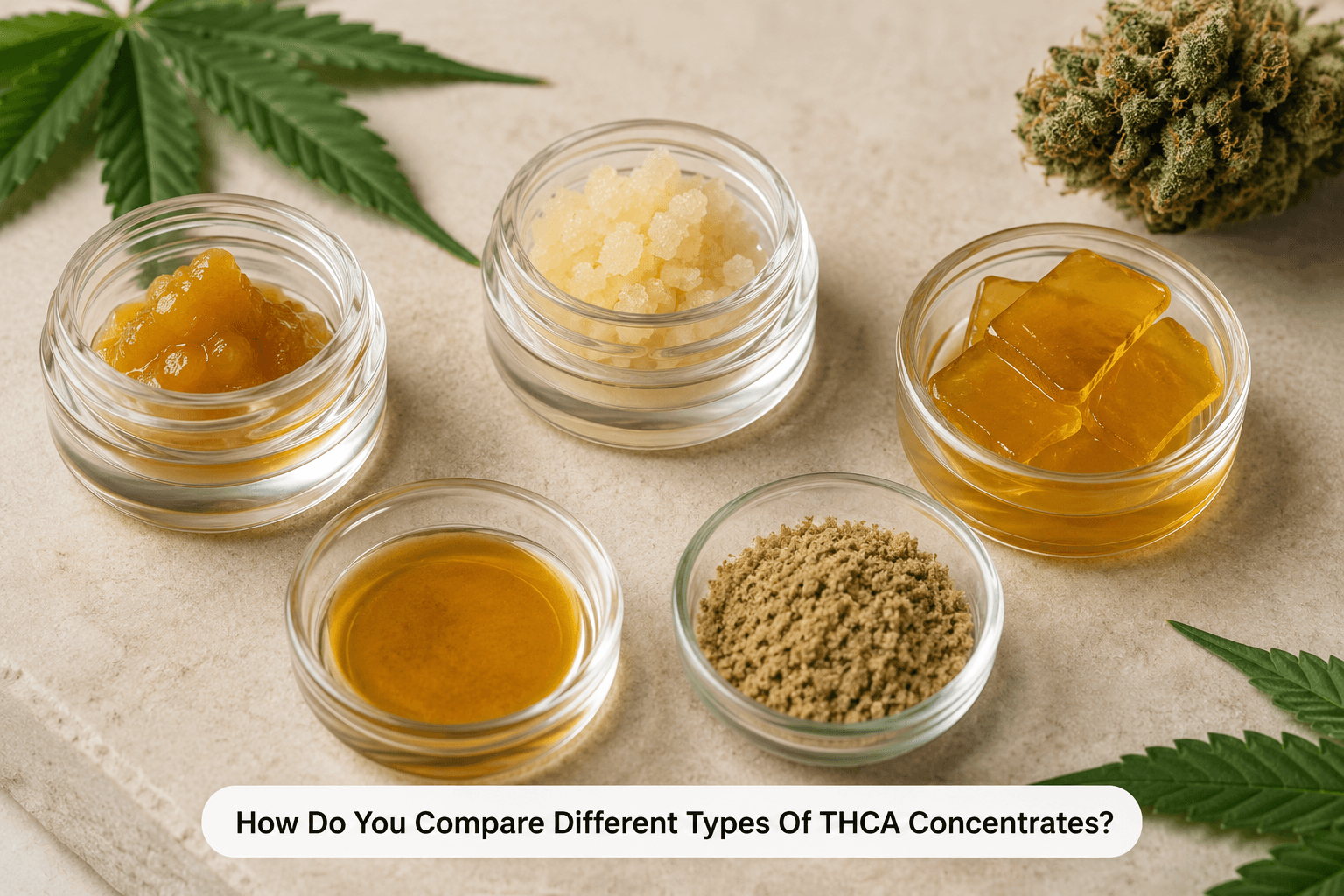
THCA diamonds are the crystallized form of highly concentrated THCA. They are typically recognizable by their hard, crystal-like appearance, and are sometimes sold on their own or mixed with terpene-rich sauce.
THCA sauce is typically more fluid and made up of THCA crystals blended with an extract rich in terpenes. This can give a more robust aroma and flavor than highly purified crystalline products.
Rosin takes a different tack. It is a concentrate made with heat and pressure and uses no solvents. Live resin is generally made from fresh cannabis that is frozen immediately after harvest to protect volatile compounds such as terpenes.
These differences give each concentrate its own characteristic taste. Instead of asking what is best for everyone, ask what you want: potency, flavor, terpene content, extraction method, or texture.
2. Compare THCA Potency Carefully
THCA percentage is important, but it shouldn’t be the only number you look at when comparing concentrates.
THCA is the acidic precursor of THC. It can decarboxylate and convert to THC when exposed to heat. That’s why a product with a high level of THCA can be intoxicating when heated.
Different concentrates may contain different levels of THCA. Crystallization can isolate THCA from other elements, including diamonds, which is why these concentrates often contain particularly high concentrations of cannabinoids.
But a big percentage on the label doesn’t tell the whole story. Look for the full cannabinoid profile when lab results are available. This may correspond to the measured levels of THCA, THC and other cannabinoids.
Consistent testing information is also useful in comparing products. Don’t just look for the biggest number; consider potency and terpenes, how it was made, how it was tested, and what you will use it for.
3. Look At The Terpene Profile
Another important factor when comparing products is the terpene profile. Terpenes are what give cannabis concentrates their taste and smell.
You might find that two concentrates with similar cannabinoid percentages have completely different aromas. Terpenes are part of that difference.
Limonene, myrcene, pinene and caryophyllene are some common cannabis terpenes. The ratios and combinations of these can differ among cannabis strains and extraction methods.
Products with high terpene content, like sauce and live resin, may appeal more to those who care about aroma and taste. Diamonds can have a purer cannabinoid profile, but are sometimes mixed with sauce to add additional terpenes.
If possible, look for actual terpene information rather than terms like “terpene-rich.” A lab report can provide a more useful picture of what is in the concentrate.
4. Consider How The Concentrate Is Made
The extraction method can affect the composition, texture and overall characteristics of a concentrate.
Some concentrates are made by using solvents to pull the cannabinoids and other compounds out of plant material, while solventless options like rosin use heat and pressure. Live resin is usually made from freshly harvested cannabis that is frozen soon after harvest to help preserve terpenes.
No method is inherently better than another. What matters is understanding how the concentrate was produced and if the process fits your tastes.
5. Pay Attention To Texture And Appearance
Texture can affect handling, while appearance can help identify a concentrate, but it does not determine quality.
Diamonds are usually hard and crystalline. Sauce is usually softer and more viscous. Resin may be sticky, and rosin may vary from butter-like to more solid.
These differences might impact storage and handling. But you can’t fully tell a concentrate’s quality by how it looks. Read the product label, cannabinoid profile, terpene profile and test results before you purchase.
6. Check The COA Before You Choose
You can use a current certificate of analysis (COA) to see what is actually in a concentrate.
A COA may include cannabinoid levels and screen for contaminants such as pesticides, heavy metals, microbial contamination, and residual solvents, depending on the testing panel.
Look for a report that matches the specific batch and verify the test date. Be wary of sellers who make strong quality claims but provide no testing information to back them up.
A COA can’t tell you which concentrate you will like better, but it can help verify that the product is what it says it is.
7. Think About Your Own Priorities
Before you compare products, set your priorities, since the most appropriate concentrate depends on what you value.
For some, the cannabinoid concentration might be the most important consideration. Others may prefer taste, smell, extraction method, or texture.
For instance, someone looking for a terpene-heavy product might prefer sauce or live resin. If you are specifically interested in solventless extraction, then the focus is on rosin. People seeking high THCA concentration might consider diamonds instead.
How you store and handle can be a factor as well. Some textures are easier to work with than others, and concentrates should generally be stored according to manufacturer’s instructions to help preserve their quality.
Things to consider before you decide:
· Potency: What can the cannabinoid profile tell you?
· Terpenes: What compounds provide the scent and taste?
· Extraction: How was the concentrate produced?
· Texture: Is it good for what you like to use it for?
· Testing: Is there a product-specific COA available right now?
· Ingredients: Does the label clearly state what’s inside?
This simple checklist can make it much easier to compare several products.
Making A Smarter THCA Concentrate Comparison
Comparing THCA concentrates is more than just the highest potency number. Diamonds, sauce, rosin, and resin differ—from how they’re made to their textures to their terpene and cannabinoid profiles.
First, identify the type of concentrate you are considering. Then look at potency, terpene content, extraction method, appearance and lab testing. Finally, consider what qualities are most important to you.
Read the fine print. Look for independent testing and specific product information, not just what’s on the package or in marketing claims. With these factors in hand, you will be in a better position to compare and better understand what separates one THCA concentrate from the others.


