Haiti government pledges neutrality ahead of December elections
Key Points(5)
- General elections, repeatedly delayed since 2019, are scheduled for December 13, marking the first time Haitians will be casting ballots since 2016 when President Jovenel Moise was elected.
- Moise was later assassinated on July 7, 2021.
- He said that it is therefore necessary to reassure the population, political parties and civil society actors of the Government’s neutrality in the electoral process.
- Suriname alleges racial abuse by Guatemala fans Football, Sports Suriname alleges racial abuse by Guatemala fans October 9, 2026 A resolution reaffirming the Government’s commitment to neutrality in the electoral process was adopted at the last meeting of the Council of Ministers.
- by TaboolaPromoted Links You May Like Small MOQ Customized Logo Curves Knit Tote Bag Polyester Jacquard Cartoon Print Travel Beach Shopping Bag Get latest price now Alibaba I Asked ChatGPT What Rich People Do Differently.
Haiti’s Prime Minister Alix Didier Fils-Aimé has instructed Cabinet members and public officials to remain neutral in the electoral process as the country prepares for general elections scheduled for Dec. 13.
Fils-Aimé said the government’s impartiality would be critical to maintaining public confidence in the elections, which have been repeatedly delayed since 2019.
“The credibility of the electoral process rests on citizens’ trust in the neutrality of public institutions and in the equal treatment of all candidates, political parties, groups, and coalitions of political parties,” he said.
A resolution reaffirming the government’s commitment to neutrality was adopted at the latest meeting of the Council of Ministers.
The resolution, which references the electoral decree issued June 2 and amended the following month, calls for executive leadership grounded in trust, balance and neutrality to facilitate inclusive and transparent elections and the installation of elected officials.
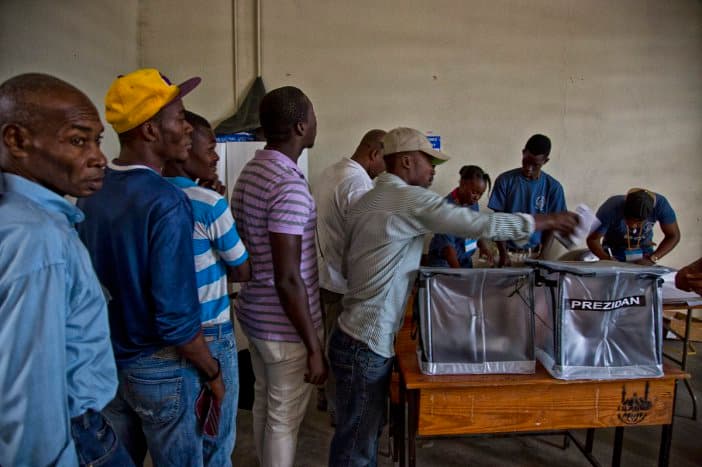
It also states that the government must take the necessary measures to establish a safe and stable environment for voting.
Under the resolution, public officials, civil servants, government employees and senior officials are prohibited from using state equipment or resources for electoral propaganda in support of candidates or political parties. Violations could result in sanctions under applicable laws and regulations.
Fils-Aimé said the government needed to reassure the population, political parties and civil society that it would remain impartial throughout the electoral process.
Meanwhile, Haiti has revised its electoral rules for the third time in four months, raising further questions about whether the Dec. 13 election date can be met.
The revised electoral decree, published in the official gazette on Thursday, establishes the framework for elections for the presidency, Parliament and local offices, as well as a constitutional referendum.
The Provisional Electoral Council (CEP) has been seeking an extension of the deadline for online candidate registration and the submission of supporting documents to Oct. 31, postponing the official start of campaigning.
The council said an updated electoral calendar would be published soon.
The revised decree continues to prohibit individuals sanctioned by the United Nations Security Council from contesting presidential, legislative and local elections. However, it does not automatically disqualify individuals sanctioned solely by individual foreign governments, including the United States and Canada, or by the European Union.
The December vote would be Haiti’s first national election since 2016, when Jovenel Moïse was elected president. Moïse was assassinated on July 7, 2021, and the country has since struggled to restore elected leadership amid prolonged political instability and insecurity.