Green leads Jamaican delegation to international irrigation congress amid drought concerns
Key Points(5)
- The congress, which runs from Oct.
- Green is accompanied by National Irrigation Commission (NIC) Chief Executive Officer Joseph Gyles and Acting Director of Projects Emile Myers.
- The delegation’s participation comes as Jamaica faces persistent water scarcity in several agricultural communities, where inadequate irrigation infrastructure limits the productive potential of otherwise fertile land.
- The government is seeking to draw on international expertise and technological advancements to improve water access for farmers and strengthen the sector’s ability to withstand drought and other climate-related disruptions.
- “The Ministry of Agriculture and Fisheries thought it very important to participate in this international dialogue around irrigation and drainage.
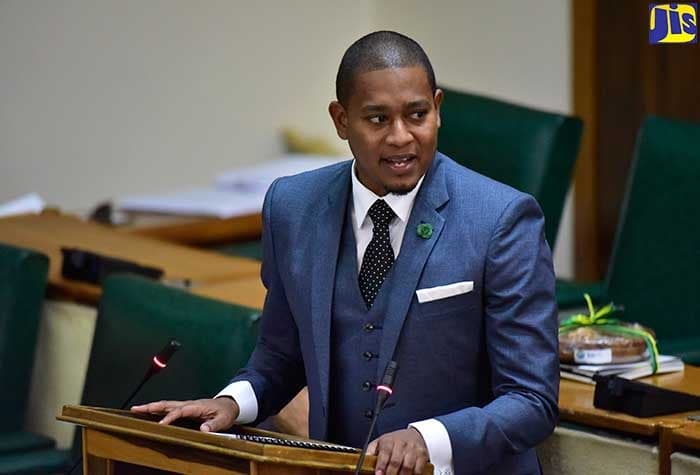
Agriculture Minister Floyd Green is leading a Jamaican delegation to the 26th International Congress on Irrigation and Drainage in Marseille, France, as the government intensifies efforts to strengthen water security and boost domestic agricultural production amid increasingly challenging climatic conditions.
The congress, which runs from Oct. 12 to 17 under the theme “Water and Agricultural Resilience in the Face of Climate Change,” brings together policymakers, researchers, technical experts and water management professionals to explore sustainable approaches to irrigation, drainage, drought management and the efficient use of water in agriculture.
Green is accompanied by National Irrigation Commission (NIC) Chief Executive Officer Joseph Gyles and Acting Director of Projects Emile Myers.
The delegation’s participation comes as Jamaica faces persistent water scarcity in several agricultural communities, where inadequate irrigation infrastructure limits the productive potential of otherwise fertile land. The government is seeking to draw on international expertise and technological advancements to improve water access for farmers and strengthen the sector’s ability to withstand drought and other climate-related disruptions.
“The Ministry of Agriculture and Fisheries thought it very important to participate in this international dialogue around irrigation and drainage. The climate has changed and clearly we are going through a terrible drought, and we have to look at best practices across the world to expand our irrigation,” Green said.
Organized by the International Commission on Irrigation and Drainage (ICID), the congress is examining strategies to improve agricultural water-use efficiency, introduce innovative irrigation technologies and explore alternative water sources, including treated wastewater reuse and desalination.
Green is also participating in high-level discussions surrounding the Marseille Call, an initiative advocating for agriculture to have a stronger voice in global water governance and decision-making.
“We have to look at best practices across the world to expand our irrigation and to also take care of things like soil health, retention of water, and to ensure that, as the Marseille Call is advocating for, that agriculture ministers are at the table when discussions about water are being had,” he said.
The discussions are particularly relevant to Jamaica, where expanding irrigation coverage has become an important part of efforts to increase domestic food production, improve farm productivity and reduce the sector’s vulnerability to unreliable rainfall.
Pedro Plains project a priority
Among the major initiatives expected to benefit from the international engagement is the Pedro Plains Irrigation Expansion Project in St. Elizabeth, which aims to bring approximately 4,103 hectares of agricultural land under improved irrigation and benefit an estimated 6,267 farm families.
The project targets an area of southern St. Elizabeth known for its fertile agricultural land and significant production potential but constrained by chronic water shortages. Improved irrigation is expected to provide farmers with more reliable access to water, supporting more consistent cultivation and greater agricultural output.
Green said the delegation intends to use the congress to engage international experts, technology providers and potential partners while advancing discussions on projects already in development in Jamaica.
“We will take the time to engage some of our providers in Jamaica who are based here, like SCP, around the Pedro Plains Irrigation Scheme and to see how we can accelerate the pace of implementation in that regard,” he said.
The engagement is intended to help advance the project while identifying practical solutions to improve water delivery and management across agricultural communities.
Beyond Pedro Plains, the delegation will explore technologies and approaches that could strengthen Jamaica’s wider irrigation network, with particular attention to improving how water is captured, stored, distributed and used on farms.
Climate resilience and water efficiency
The congress is focusing on three key areas: the role of irrigation and drainage in climate adaptation and agroecological transition; innovative technologies and practices to improve agricultural water-use efficiency; and the potential of nonconventional water sources, including treated wastewater and desalination.
These areas are increasingly significant for countries such as Jamaica, where climate variability can disrupt planting schedules, reduce crop yields and threaten farmers’ livelihoods. More efficient irrigation systems, improved water retention and the development of alternative water supplies could help reduce agriculture’s dependence on rainfall.
For Jamaica, the challenge extends beyond increasing the amount of water available to farmers. It also involves ensuring that existing and future water resources are managed sustainably, infrastructure is fit for purpose, and irrigation investments translate into measurable improvements in agricultural productivity.
The government’s participation in the congress provides an opportunity to assess international best practices and establish relationships that could support the development and implementation of local water management initiatives.
Green said the ultimate objective is to translate the discussions and partnerships pursued in Marseille into tangible benefits for Jamaica’s agricultural sector, particularly through stronger irrigation infrastructure and improved water security for farmers.
As Jamaica continues to pursue greater domestic food production, the effectiveness of these investments will be important in determining how well the agricultural sector can respond to drought, adapt to changing climatic conditions and maximize the productive capacity of the island’s farmland.