
Garden Maps: How to Build a Better Day Outdoors in San Antonio, Texas
Key Points(5)
- San Antonio Botanical Garden offers far more than a quick walk past flower beds.
- Its gardens, trails, family spaces, conservatory, and historic areas can make a visit feel wonderfully open-ended, but that also makes a plan useful.
- Reviewing the botanical garden map before arrival helps visitors choose a comfortable pace instead of spending the day backtracking.
- In San Antonio, timing matters.
- Bright sun, warm afternoons, sudden rain, and uneven outdoor terrain can all change the best route.
San Antonio Botanical Garden offers far more than a quick walk past flower beds. Its gardens, trails, family spaces, conservatory, and historic areas can make a visit feel wonderfully open-ended, but that also makes a plan useful. Reviewing the botanical garden map before arrival helps visitors choose a comfortable pace instead of spending the day backtracking.
In San Antonio, timing matters. Bright sun, warm afternoons, sudden rain, and uneven outdoor terrain can all change the best route. A map is not simply a navigation tool. It is a practical way to connect favorite sights with shade, restrooms, water, indoor stops, and the most convenient route back to the exit.
Why Garden Maps Matter
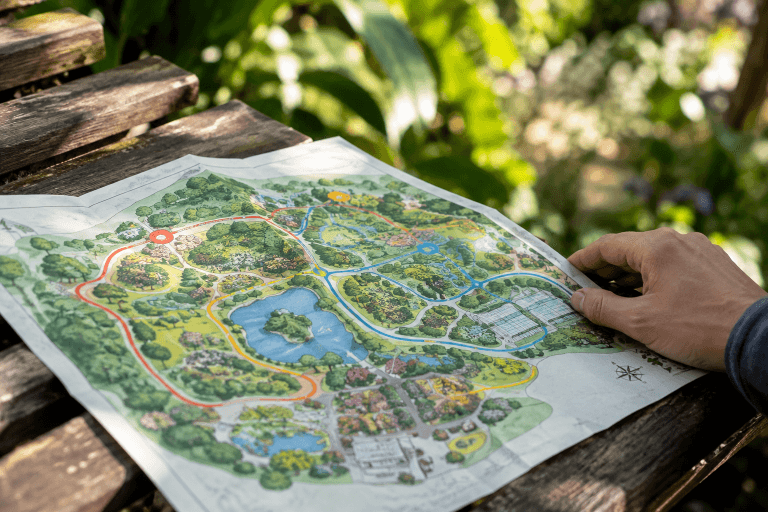
Large gardens can be deceptively spread out. A map lets visitors see how destinations relate to one another and identify useful amenities before they need them. At the San Antonio Botanical Garden, the map organizes areas including the Garden Core, Family Adventure Garden, Lucile Halsell Conservatory, The Overlook, Texas Native Trail, and Heritage Gardens.
Thoughtful access points and trail connections matter as gardens welcome more visitors. A 2026 University of Georgia project illustrates how expanded garden access can be enhanced through improved entrances, parking, pedestrian infrastructure, and trail access. For an individual visitor, the same principle applies: plan the path before walking begins.
Plan Before Arriving
A few minutes of preparation can prevent avoidable delays. Check the garden's current hours, ticket requirements, event calendar, parking guidance, and any seasonal notices before leaving home. Save a map screenshot in case mobile service is limited, and bring a portable charger if the phone will be your primary guide.
- Identify the entrance and parking area that best fits your group.
- Pack water, sun protection, medication, snacks, and a light rain layer as appropriate.
- Locate restrooms, food options, and indoor or covered spaces.
- Check whether a special event may affect crowds or access to particular areas.
Choose Three Priority Areas
Trying to see every path can turn a relaxing outing into a checklist. Choose three priorities: one signature destination, one slower outdoor space, and one indoor or weather-friendly stop. This approach leaves room for a spontaneous detour without making the schedule feel lost.
For example, a family might choose the Family Adventure Garden for play, the Texas Native Trail for a quieter walk, and the Lucile Halsell Conservatory for a change of setting. Those goals create a satisfying visit without requiring a trip across every section of the property.
Build a Simple Route
Turn the map into a loop rather than a series of separate errands. Start with the attraction that matters most, then move to nearby areas. Place a restroom, water, meal, or shaded break between longer walking segments, and finish near the welcome area, parking, or transportation pickup point.
A direct route is best when time is short or the weather is demanding. A scenic route may be worth choosing when the group wants shade, views, or slower observation. The right choice depends on energy levels, mobility needs, and the conditions that day.
Schedule Rest Stops
Build breaks into the plan before anyone feels worn out. In warm conditions or during longer walks, pausing about every 45 to 75 minutes is a sensible starting point for many groups. Use benches in the shade, on covered patios, in cafés, in picnic areas, on lawns away from busy paths, or in indoor garden spaces.
Short rests make a meaningful difference for children, older adults, visitors managing health needs, and anyone who simply wants time to notice the landscape instead of rushing through it.
Prepare for Weather and Terrain
San Antonio visitors can make the day easier by using cooler morning hours for exposed routes and reserving indoor spaces for the warmest part of the afternoon. After rain, shoes with a dependable grip are helpful on wet steps, gravel, or uneven ground. Carry water and adjust the route if heat, storms, or fatigue become a concern.
Maps show distance, but they do not always show effort. A short connection can still involve a slope, rough surface, or little shade, so leave extra time and do not treat every marked route as equally easy.
Make the Visit More Accessible
Accessibility planning works best before arrival. Check for step-free entrances, accessible restrooms, firm-surface paths, seating, wheelchair availability, sensory considerations, and service-animal policies. General garden-visit tips for accessibility can also help visitors think through mobility, sensory, and comfort needs.
Accessible features do not mean every outdoor path will suit every person or every condition. Confirm current access details directly with the garden, especially after severe weather or before visiting with equipment that requires particular surfaces.
Plan for Families and Mixed Groups
One route rarely fits everyone. Young children may need play areas, snacks, and frequent restroom stops. Older visitors may prefer nearby attractions, benches, and shade. Photography groups may want more time at scenic locations, while school groups need clear meeting points and regular headcounts.
Before splitting up, agree on a recognizable meeting place near the welcome center, café, or another obvious landmark. Set a time and a location.
Avoid Common Planning Mistakes
- Attempting to cover every feature in one visit.
- Ignoring the distance between map markers.
- Assuming every path is flat, paved, or shaded.
- Leaving no time for food, water, or rest.
- Depending entirely on a phone without a screenshot or a charger.
- Building the day around one attraction that may be closed or crowded.
Sample Garden Visit Itinerary
- First 30 minutes: Arrive, review the map, use the restroom, and confirm priorities.
- Next hour: Visit the main attraction while energy is high.
- Short break: Stop in shade, under cover, or indoors.
- Next 45 minutes: Explore a nearby trail or themed garden.
- Lunch or snack: Refill water and decide whether to shorten or extend the plan.
- Final hour: Visit one quieter or indoor area, then head back toward the exit.
Final Thoughts
A garden map is a guide, not a checklist. By choosing a few priorities, planning rest stops, accounting for San Antonio weather, and staying flexible visitors can spend less time navigating and more time enjoying the gardens around them.


