
From Dominoes to Plinko: The Games of Chance and Skill Caribbean Families Grew Up With
Key Points(5)
- You can tell a lot about a Caribbean family gathering by looking at the games people bring out after the food is served.
- There's usually a domino set somewhere, and someone is almost guaranteed to suggest a card game.
- Before long, the competition gets going.
- Players argue over a questionable move, spectators pick sides, and the person keeping score suddenly becomes the most important one at the table.
- This scene plays out in different ways across the Caribbean.
You can tell a lot about a Caribbean family gathering by looking at the games people bring out after the food is served. There's usually a domino set somewhere, and someone is almost guaranteed to suggest a card game. Before long, the competition gets going. Players argue over a questionable move, spectators pick sides, and the person keeping score suddenly becomes the most important one at the table.
This scene plays out in different ways across the Caribbean. Jamaican families have their dominoes and Kalooki, while Warri has a long history in Antigua and Barbuda. Children grow up watching older relatives play, eventually joining in and developing rivalries of their own. These days, some of the same excitement can be found in digital games, including Plinko, where a falling ball and a series of pegs decide the outcome.
Plinko brings a different kind of game to the screen
Plinko has a familiar place in American television history. The game became a feature of The Price Is Right on January 3, 1983, when contestants began dropping chips down a large pegboard for a chance to win cash prizes. The chips bounce from side to side before landing in one of several slots at the bottom. Even viewers who have never played can probably picture that satisfying drop.
The format has since found its way into online entertainment. The crypto casino plinko game from sportbet.one gives players adjustable board settings, including between 8 and 16 rows, as well as Low, Medium, and High risk options, according to the platform's product information. Players choose their settings before releasing the ball, then watch it bounce through the pegs toward a potential payout.
It's a different experience from sitting across a domino table. There are no partners to coordinate with and no opponent whose playing habits need watching. The suspense comes from following the ball as it changes direction, with the landing slot determining the result. Since real-money versions involve gambling, players should check the applicable laws, platform restrictions, and financial risks before taking part.
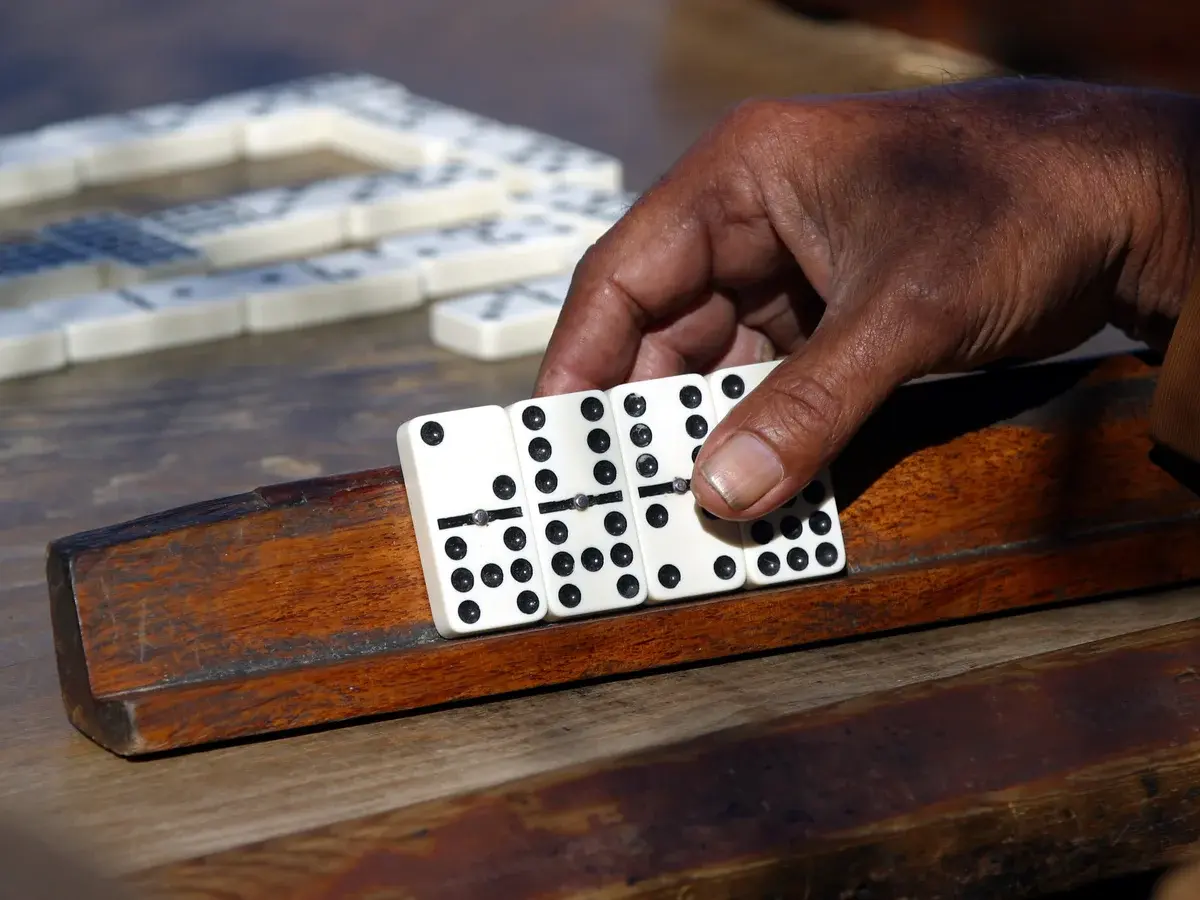
Dominoes is serious business at the family table
In Jamaica, a domino game can draw quite a crowd. The clatter of tiles against a table is familiar at family gatherings, neighborhood hangouts, and community events. Barbados has its own strong connection to the game, too. At Oistins, known for its Friday night fish fry, visitors can find locals enjoying dominoes alongside the food, music, and socializing.
One popular Jamaican variation is Partner. Four people play in two teams, with partners sitting opposite each other. Each player starts with seven tiles from a standard double-six set. The aim is to match the numbers at either end of the growing line and get rid of every tile before the other team. If play gets blocked, the team with the lower total number of spots wins.
Anyone who has played with an experienced domino player knows that memory matters. Players keep track of numbers already played and pay attention to the tiles their opponents avoid. A good partner also knows when to help keep a particular number in play. And then there's the table talk. Some players can spend half the game explaining why everyone else is making terrible decisions.
Kalooki, Ludi, and Warri bring different challenges
Card players in Jamaica have their own favorite in Kalooki, a rummy-style game that also has a following in Trinidad and Tobago. It usually involves two decks of cards and four jokers. Players build sets of matching ranks and runs of consecutive cards in the same suit, following the requirements of each round. A good memory helps, especially when keeping track of what other players have picked up or discarded.
Then there's Ludi, the Jamaican name for Ludo. It is easy to find children and adults around the same board, each trying to move their pieces home before everyone else. The dice can make or break a player's plans. Just when someone looks ready to finish, an opponent might land on their piece and send it straight back to the starting area. Cue the complaints.
Warri takes a little more patience. Part of the Mancala family of games, it uses small pits in a board and seeds or counters that players move around according to a set of rules. The game has deep African roots, and historical records trace its presence in the Caribbean back several centuries. The Royal Collection Trust, for example, documents Warri boards associated with the Caribbean during the 17th century.
Antigua and Barbuda has made efforts to pass the tradition on to younger generations. Its Warri Revival Programme, announced in 2025, included plans to train young people in traditional board-making and encourage the planting of trees that provide seeds for the game. One reported milestone was the training of five young people, aged 11 to 17, as trainers. That's a pretty practical way to keep a traditional game in circulation, which involves teaching people how to play it and how to make the equipment.
The best games usually come with a crowd
At a cookout, the games rarely need a formal invitation. Someone brings out the dominoes, a few people pull up chairs, and others gather around to watch. The players might be concentrating on their next move, but the spectators have their own entertainment. They comment on every decision, question the score, and occasionally offer advice nobody requested.
Different games tend to attract different groups, although the boundaries are hardly strict:
- Dominoes draws in relatives who enjoy reading the table, remembering played tiles, and working with a partner.
- Kalooki appeals to card players who like building combinations and keeping an eye on the competition.
- Ludi is an easy choice when children and adults want to play together, especially when everyone has time for several rounds.
- Warri gives players who enjoy a mental challenge something to concentrate on between conversations.
For Caribbean families living in the United States, Canada, and the United Kingdom, bringing these games to reunions and holiday gatherings can also mean sharing a piece of home. A child who learns Ludi from a grandparent might eventually teach it to their own children. The domino set gets passed around, too, along with all the advice that comes with it.