Fourth global coral bleaching event confirmed in the Caribbean by NOAA
In a recent announcement, the United States National Oceanic and Atmospheric Administration (NOAA) has affirmed the occurrence of the fourth global coral bleaching event, this time hitting the Caribbean region.
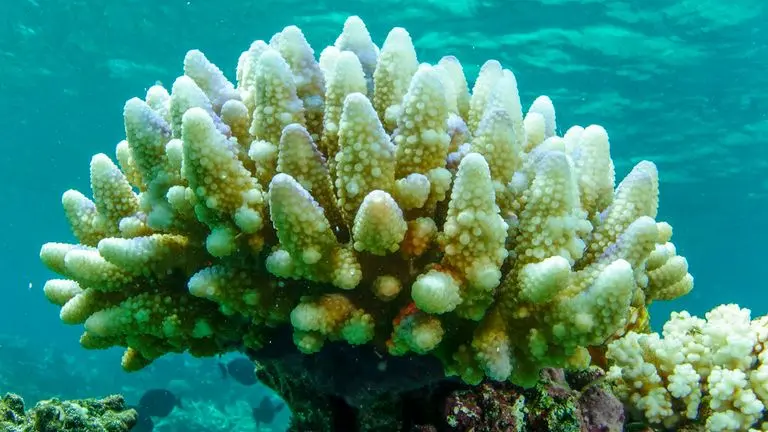
Accompanying the confirmation is a compelling three-panel image released by NOAA. The visual depicts a boulder star coral situated in the United States Virgin Islands.
The progression captured spans from a state of robust health in May of the previous year, to a bleached state by October 2023, and finally, a remarkable recovery by March of the this year.
This transformation underscores the profound impact of extreme marine heat stress that swept across the Caribbean basin throughout 2023.
Unprecedented global scale
NOAA emphasizes the global nature of this event, labeling it as the fourth recorded instance of widespread coral bleaching on a planetary scale, and notably the second within a decade.
Drawing on data provided by its Coral Reef Watch (CRW) initiative, NOAA underscores the extensive heat stress experienced across the Atlantic, Pacific, and Indian Ocean basins.
The CRW utilizes sea surface temperature data dating back to 1985, sourced from a fusion of NOAA and partner satellites.
Confirmation and analysis
Dr. Derek Manzello, coordinator of NOAA’s CRW, provides further insights. He confirms the mass bleaching of coral reefs across tropical regions, including the Caribbean, since early 2023.
Dr. Manzello underscores the escalating frequency and severity of coral bleaching events in tandem with ocean warming trends.
Despite the grim prognosis, he offers a glimmer of hope, noting that under favorable conditions, coral reefs possess the capacity for recovery, thereby maintaining their vital ecosystem services.
Long-term strategies and collaborative efforts
Jennifer Koss, Director of NOAA’s Coral Reef Conservation Programme (CRCP), highlights the proactive stance taken by NOAA in anticipation of such events.
She points to resilience-based management practices integrated into NOAA’s strategic framework since 2018, coupled with a renewed emphasis on coral restoration efforts.
Koss references a pivotal study conducted in collaboration with the National Academies of Sciences, which culminated in the publication of the 2019 report titled “Interventions to Increase the Resilience of Coral Reefs.”
Forward momentum in coral conservation
In response to the escalating challenges posed by climate change, Koss underscores NOAA’s commitment to implementing the recommendations outlined in the 2019 report.
She emphasizes the collaborative nature of these efforts, citing the active involvement of the International Coral Reef Initiative (ICRI), where NOAA holds a co-chair position.
Koss highlights the importance of shared knowledge and lessons gleaned from recent marine heatwaves in Florida and the Caribbean, signaling a collective resolve towards the preservation and restoration of coral reef ecosystems.