

Fillings vs. Dental Crowns: Knowing the Exact Moment a Tooth Needs More Help
Key Points(5)
- You sit in the dental chair, watching your digital x-rays slide up on the screen.
- A dark shadow crept over the biting surface of a lower molar.
- Your brain immediately leaps to a known, comfortable fix: a quick composite filling.
- For generations, fillings have been the ultimate dental repair, quick, simple and highly effective for routine maintenance.
- Then your dentist shoots down that train of thought, telling you a simple filling just won't cut it anymore.
You sit in the dental chair, watching your digital x-rays slide up on the screen. A dark shadow crept over the biting surface of a lower molar. Your brain immediately leaps to a known, comfortable fix: a quick composite filling. For generations, fillings have been the ultimate dental repair, quick, simple and highly effective for routine maintenance. Then your dentist shoots down that train of thought, telling you a simple filling just won't cut it anymore. Instead they recommend a restoration with full coverage.
People are often caught off guard by this sudden shift in the scale of treatment. Why go from a simple patch to a full-blown cap? Choosing a filling instead of a dental crown is not a random decision, nor is it an unnecessary upgrade. It is a critical diagnostic pivot based on structural physics, material science and bio mechanics.
Our teeth go through tremendous crushing forces every day. If a tooth has lost too much of its natural structure, trying to hold it together with a filling can actually cause the tooth to break. The trick is knowing that tipping point, when a tooth needs some more advanced help to save your natural bite and avoid an emergency extraction.
The Key Difference: Patching vs. Protecting
To understand why a tooth finally outgrows a filling, you have to understand how these two restorative treatments work with your tooth’s anatomy. They have completely different approaches to structural repair.
What goes on in a dental filling
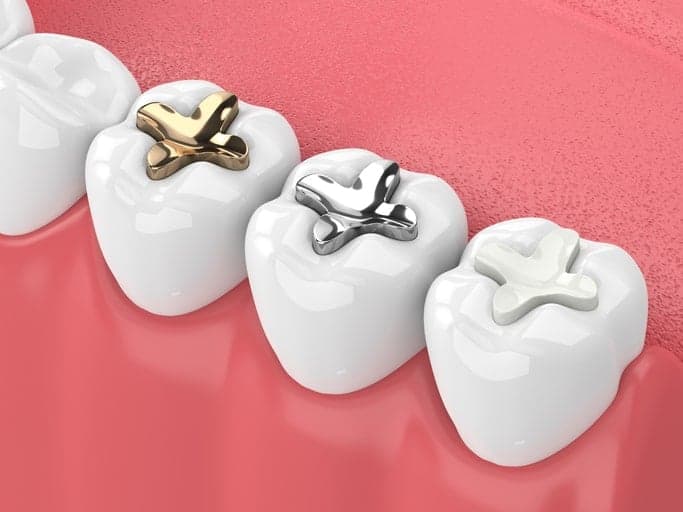
A dental filling is an intracoronal restoration, meaning it is entirely inside the confines of your natural tooth structure. When a dentist fills a small cavity, they remove the decayed, softened enamel and dentin and leave a clean, hollowed-out space. Then they fill the empty space with a material, for example composite resin or silver amalgam.
Once cured, the filling prevents bacteria from entering the tooth and provides a smooth surface for biting. The important thing to remember, however, is that a filling depends entirely on the remaining walls of your natural tooth to keep it in place and support it when you chew. It doesn’t provide you with outer strength. It just fills a hole.
A Dental Crown: Changing The Way Teeth Survive
On the other hand, a dental crown is an extracoronal restoration. It is not incorporated into the tooth, but instead covers the whole visible part above the gumline, acting as a manufactured protective helmet.
The location of the crown is shown in the anatomical diagram. For this, the dentist must carefully correct the outer walls of the enamel. It’s a custom carved core that provides a safe base. When the permanent porcelain or zirconia cap is bonded over this structure, it will completely cover the damaged tooth structure.
And rather than relying on weak tooth walls to support it, the crown takes the brunt of every bite and spreads those loads evenly down through the roots and into the jawbone.
The Tipping Point: 4 Signs That a Filling Won’t Cut It
Dentists use very specific diagnostic criteria to determine when a tooth crosses the line from a candidate for a simple filling to one that requires full-coverage protection.
- 50% Rule of Structural Integrity: When decay or an old fracture has compromised more than 50% of the original width of the tooth, then the remaining natural walls are too thin to withstand the daily chewing forces. There is a great risk of total breakdown by packing a large filling into this wide gap.
- Fracture Lines Present: Hairline cracks that extend across the chewing surface or down the sides of a cusp indicate the tooth is flexing under pressure. But a filling can’t stop this movement, a crown holds the fracturing pieces together securely.
- Loss of Vitality After Root Canal: The blood supply to the inside of the tooth is destroyed by root canal therapy and the remaining dentin becomes more and more dry and brittle over time. Back molars with root canals almost always require a crown to prevent them from shattering.
- Repeated Decay Beneath Existing Work: If a new cavity develops along the edge of a large existing filling, removal of the new decay leaves an extremely unstable shell of enamel that can no longer support a second filling.
The Physics of Failure: Why Over-Sized Fillings Endanger Tooth Survival
Of course, you want to save as much of your original tooth as possible. So many people ask themselves why they shouldn’t just try a big filling first. To understand why this can backfire we need to understand the “wedge effect”.
When you bite down on a healthy tooth, the pressure is evenly distributed across the entire structure due to its curved shape and crystalline enamel. A large filling placed into a heavily hollowed-out tooth acts as a physical wedge. With each bite you take, your jaw muscles push down on that central mass of filling, which then transmits that tremendous force against the thin, brittle walls of natural enamel that remain.
This outward pressure causes microscopic flexing over months of repetitive chewing. Eventually the tooth breaks at its weakest point and a whole wall or cusp will snap off. If the fracture line runs horizontally above the gumline, the tooth can often be saved by placing a crown on the tooth. However, if the wedge effect causes the tooth to split vertically down into the root system below the bone line, the tooth cannot be restored and must be extracted. Upgrading to a crown early will stop this dangerous outward flex.
Direct Upgrade Economic Value Long Term
A dental crown costs more initially than a composite filling, but when you look at the long-term economic picture, it is a much different story.
Choosing to patch a severely weakened tooth with a large filling often becomes a cycle of repetitive dental work. A large filling is especially susceptible to chipping or premature wear at its large margins or to leakage. Each time the filling fails and needs to be replaced, your dentist has to remove a little more of your natural tooth structure to clean the area.
You end up paying for multiple fillings on the same tooth within a few years, only to eventually need the crown anyway. Even worse, if the over-stressed tooth splits badly between appointments, you are faced with the much higher costs of an emergency extraction, a bone graft and a surgical dental implant. Selecting the right structural protection from the beginning will save your budget, your time and your natural teeth.
Planning Your Treatment with State-of-the-Art Diagnostic Technology
It takes remarkable diagnostic precision to find out exactly where a tooth sits on the spectrum from filling to crown. This decision is not made by simple visual checks or physical dental explorers by today’s dental professionals.
Advanced imaging has changed the way dentists assess your structural health.
With high-resolution intraoral cameras, you can see exactly what your dentist sees — magnified, real-time images of fracturing enamel and leaking margins displayed on a screen in the chair. Digital radiographs and 3D cone-beam imaging also uncover hidden internal decay that extends underneath old restorations and provides the precise volume of healthy dentin remaining within your tooth.
Advanced diagnostic tools are used by comprehensive oral care teams, like the specialists at Nuffield Dental, to closely examine your bite patterns and structural alignment. They can measure the exact depth of a cavity and track how your teeth interact when you chew to determine exactly where a tooth needs the full-coverage support of a crown, ensuring your treatment plan protects your smile for the long haul.
Choosing the Best Option for Long-Term Oral Health
The first step to a healthy smile is selecting the right treatment for the right situation. Fillings are fantastic, minimally invasive tools to halt early decay in its tracks and save your natural tooth structure. But they are not meant to rebuild a tooth that has lost its structural core.
If a tooth is too damaged due to extensive decay or structural cracks, trying to repair it with a filling is like putting a standard roof patch on a failing foundation. This will be replaced with a custom-made crown that will give your tooth the full support it needs to handle the wear and tear of your daily routine. Your bite will be stable, comfortable and whole for many years to come.
Frequently Asked Questions (FAQ)
How do I know if I need a dental crown or a filling?
Most definitive signs: sharp pain when you release your bite, significant loss of structure across half the width of the tooth, or a tooth that just had a root canal. Your dentist will verify this with detailed digital x-rays.
Crown or inlay on a back molar? Which is better?
A crown is very desirable for back molars where there is large decay or existing cracks and the tooth is under heavy chewing pressure. A filling will only do the job for molars if the cavity is small and the walls surrounding it are thick and strong.
Can a very large filling break a tooth easily?
Yes, large fillings exert considerable outward stress on the remaining enamel walls during mastication. This dynamic creates a wedge effect which can cause the natural tooth walls to fracture or split over time under normal biting pressure.
What If I opt for a filling instead of a recommended crown?
When filling a severely weakened tooth, it is common for the filling to leak, crack or break off completely. In the worst case, the tooth can split vertically down into the root and need to be completely removed.
Is a dental crown more durable than a conventional filling?
Yes, crowns tend to last a lot longer. A large filling on a molar can start to wear down or leak in as little as 5 to 7 years, but a good quality ceramic or zirconia crown will usually give you good protection for 10 to 15 years or more.


