
Clear Aligners Aren't Your Only Discreet Option: What to Know Before You Choose
Key Points(5)
- That's how long a friend of mine wore clear aligners before giving up, mainly because she couldn't keep them in her mouth for the required hours each day.
- Her story isn't unusual.
- Plenty of people assume clear aligners are the only way to straighten teeth without a mouth full of metal, then discover they're not a great fit for their habits or their bite.
- The truth is there's a whole category of discreet orthodontic options, and aligners are just one of them.
- Fixed clear braces, the kind made from translucent ceramic instead of metal, have quietly become a serious alternative for people who want subtlety without relying on willpower.
Three months. That's how long a friend of mine wore clear aligners before giving up, mainly because she couldn't keep them in her mouth for the required hours each day.
Her story isn't unusual. Plenty of people assume clear aligners are the only way to straighten teeth without a mouth full of metal, then discover they're not a great fit for their habits or their bite. The truth is there's a whole category of discreet orthodontic options, and aligners are just one of them. Fixed clear braces, the kind made from translucent ceramic instead of metal, have quietly become a serious alternative for people who want subtlety without relying on willpower. If you're weighing up your choices, a specialist clinic like clear braces kelowna at Mission Creek Orthodontics can walk you through what actually suits your case rather than what's trending on social media.
So let's break down the real differences, because the marketing around both options tends to blur them into one vague promise of "invisible straightening."
What Clear Aligners Actually Require From You
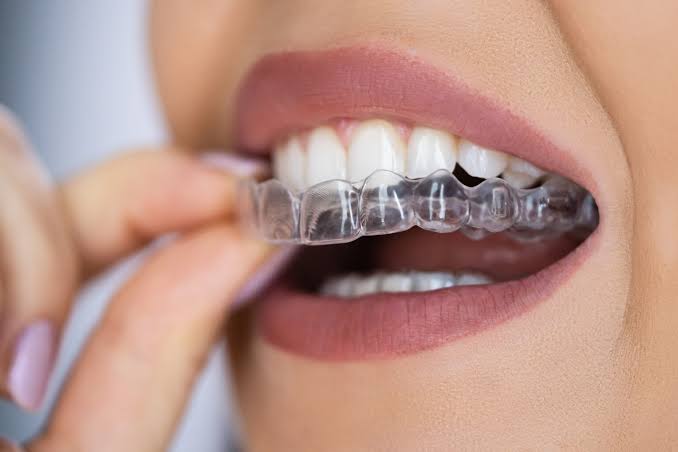
Aligners are removable trays, usually worn around 20 to 22 hours a day, swapped for a new set every week or two. That sounds easy until you factor in meals, coffee breaks, meetings, and the fact that you have to brush your teeth before putting them back in. Skip that step often enough and you're trapping sugar and bacteria against your enamel for hours.
Here's my honest take: aligners reward disciplined people. If you know you'll forget them on the bedside table, or you snack constantly, or you travel a lot and can't keep up with cleaning routines, the "removable" part stops being a feature and becomes the weak point. The trays only work if they're in your mouth, and nobody's checking but your own reflection.
That's not a knock on aligners. For straightforward crowding, mild spacing, or relapse after braces as a teen, they can be brilliant and almost invisible. NHS guidance is clear that removable aligners suit some cases well, but they depend heavily on the patient wearing them as instructed. The system doesn't fail. The habit does.
Fixed Clear Braces and Why They Beat Aligners for Some People
Ceramic braces work like traditional braces, except the brackets are made from a tooth-colored material that blends into your smile far more than metal does. The wire does the work, and unlike aligners, the whole setup is bonded to your teeth. You can't take it out, which means you can't accidentally sabotage your own treatment.
Modern versions go a step further. Some systems, like LightForce, print each bracket to fit the exact shape of an individual tooth using digital scans, which can mean fewer adjustments and a bit less irritation along the gum line. If your case is complex, meaning rotated teeth, significant bite issues, or extractions, fixed braces often give an orthodontist more precise control than a tray ever could.
Downsides exist. They're harder to clean around, you'll need to watch what you bite into, and ceramic brackets can stain if you're heavy on coffee or curry. They're also not invisible, just less obvious. But for someone who wants results without policing their own compliance, that trade is usually worth it.
Aligners or Clear Braces: A Side-by-Side Look
Here's the comparison most articles skip, laid out plainly so you can see where each option actually lands.
Factor
Clear aligners
Fixed clear braces
Removability
Removable, wear it yourself
Bonded, cannot be removed
Daily discipline needed
High, 20 to 22 hours a day
Low, nothing to remember
Complex cases
Limited control
Strong control
Cleaning
Easy, trays come out
Careful brushing around brackets
Visibility
Almost invisible
Subtle but noticeable up close
Bracket staining
Not applicable
Possible with dark drinks and foods
Notice there's no "winner" column. That's deliberate. The right pick depends on your bite, your routine, and how honest you are with yourself about keeping up with a removable device.
What to Ask Before You Commit to Either
Most people walk into a consultation and ask one question: "How much?" That's fair, but it's the least useful thing to lead with. Here's a checklist I'd work through in your shoes:
- Ask whether your specific case is suitable for aligners at all. A good orthodontist will tell you if a tray won't get the job done rather than sell you one anyway.
- Ask how many visits each option needs. Fixed braces can mean fewer check-ins because the work happens continuously, though the trade-off is that you can't take them out on a bad day.
- Ask about total timeline, not just the number of trays. A fast-sounding estimate often hides extra refinement stages.
- Ask what happens if treatment stalls. With aligners, that's often a conversation about discipline. With braces, it's rarely an issue.
The American Dental Association notes that orthodontic treatment decisions should always follow a proper clinical assessment, since the right approach varies a lot from one mouth to the next. That's why a consultation matters more than any blog post, mine included. Find out how the ADA frames the patient assessment process, and use it as a reason to ask sharper questions when you sit down with a clinician.
The Scenario That Changed My Mind
A few years back I'd have said aligners win on every count, mostly because they're the option everyone talks about. Then a colleague, a schoolteacher who talks for a living, went with fixed ceramic braces instead. Her reasoning stuck with me. She couldn't take them out at lunch, so she didn't. No lost trays, no forgotten hours, no quiet anxiety about "have I worn these long enough today."
That's the part that rarely shows up in comparison articles. The discreetness of an aligner is only useful if you're actually wearing it. If not, you've spent the money and gotten nothing. For her, showing up to class with a mild ceramic gleam beat the mental load of self-monitoring, every single time.
Which Option Would I Pick
If you're certain you'll keep up with removable trays, aligners are fantastic and genuinely less visible. If you know yourself well enough to admit you might slack, go fixed. I'd pick ceramic braces for myself, because I've seen how quickly good intentions collapse after a long day. Subtle is nice. Finished is better.
The Bottom Line
Clear aligners and clear ceramic braces both do the same job for the right patient, and the deciding factor is usually your daily routine, not the brochure. One option asks you to show up for yourself every hour. The other does the work around the clock, whether you remember it or not. Neither is automatically smarter, and no single option fits every mouth.
So here's the question worth sitting with: if you had to bet on your own consistency over the next year, which system would actually get your teeth straight? Book a proper assessment before you decide, and ask the uncomfortable questions while you're there.