

Cataract Surgery in Bonita Springs: What Medicare Covers and What It Does Not
Key Points(5)
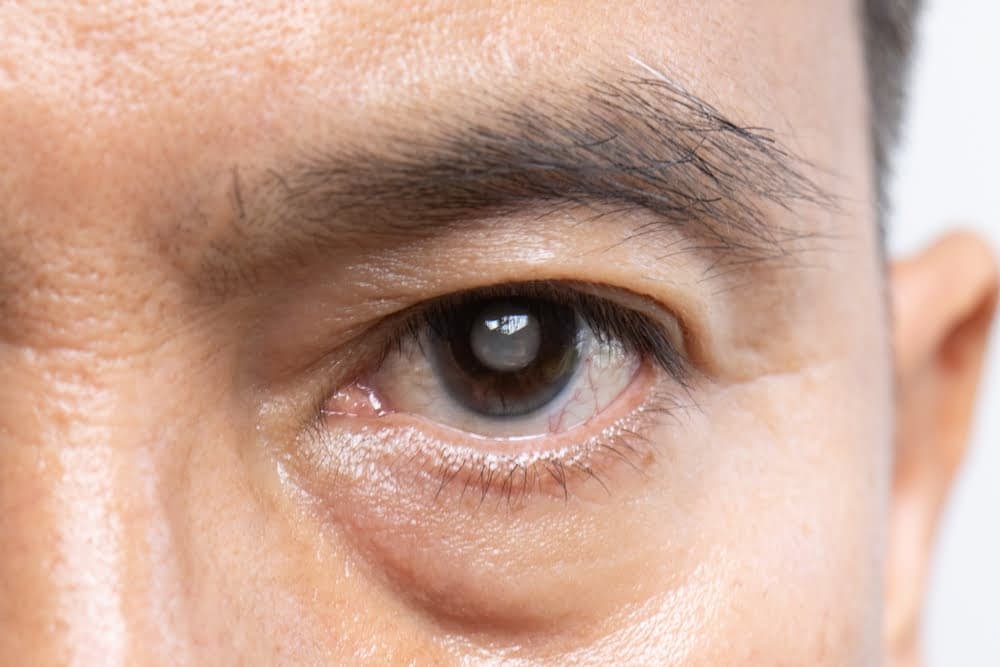
- A Medicare statement blurs in Maria’s hands, and even her grandson’s face on the video call from back home looks like a watercolor on the tablet.
- If you live in Bonita Springs, you know cataracts can turn crisp Gulf mornings into squints and make night drives feel dicey.
- That is why many of us consider cataract surgery, and why relatives often jump in as soon as the paperwork arrives.
- Before you book a date, here is what Medicare reliably pays for, what stays on your tab, and which questions cut through the haze.
- What Medicare Part B Covers for Cataract Surgery Think of Medicare Part B as the reliable base layer in your cataract-surgery budget.
A Medicare statement blurs in Maria’s hands, and even her grandson’s face on the video call from back home looks like a watercolor on the tablet. If you live in Bonita Springs, you know cataracts can turn crisp Gulf mornings into squints and make night drives feel dicey. That is why many of us consider cataract surgery, and why relatives often jump in as soon as the paperwork arrives. Before you book a date, here is what Medicare reliably pays for, what stays on your tab, and which questions cut through the haze.
What Medicare Part B Covers for Cataract Surgery
Think of Medicare Part B as the reliable base layer in your cataract-surgery budget. It pays for the essentials: removing the cloudy natural lens and placing a clear, conventional implant, as the official Medicare cataract surgery coverage page explains.
That bundle has three parts: the surgeon’s professional fee, the charge from the outpatient hospital or ambulatory surgery center, and the standard intraocular lens itself. Once you meet the 2026 Part B deductible of $283, Medicare pays 80 percent of the approved amount and you pay 20 percent. Nationally, the Medicare-approved amount for a standard cataract surgery is about $1,719, so a patient who has not met the deductible pays the first $283 and then roughly $287 more.
Ask one simple question before you sign a consent form: “Do you accept Medicare assignment for cataract surgery?” A yes means your share stays at that predictable 20 percent. A no means you could owe the difference between Medicare’s number and the surgeon’s higher charge.
Part B also chips in for one pair of conventional glasses with standard frames, or one set of contact lenses, after each surgery that implants a lens. The same deductible and 20 percent coinsurance apply, and the optical shop must participate in Medicare and accept assignment. Treat the allowance as a coupon rather than a blank check: progressive lenses, blue-light coatings and designer frames stay on your side of the ledger.
What Medicare Does Not Cover
Medicare is generous about restoring functional sight, but it draws a clean line at “standard.” Choose a premium intraocular lens, and the federal payment stops at the price of the plain model. Everything above that line, including the fancier lens itself, the extra testing it requires and any light-based adjustments after surgery, lands on your bill.
The rule does not cancel your basic benefit. Medicare still pays its share for the surgeon, the facility and a conventional lens. It simply does not pay for upgrades aimed at reducing your need for glasses.
That distinction matters because the upgrade menu keeps growing. Local practices now offer Vivity extended-range lenses for computer work, multifocal lenses for reading and toric lenses that correct astigmatism. Snead Eye Group, a Southwest Florida eye care practice with offices in Bonita Springs, Fort Myers, Naples and Cape Coral, also offers the Light Adjustable Lens, which is fine-tuned with light treatments after surgery and is not offered by most practices in the region. Each of these upgrades carries its own out-of-pocket price.
So before the office pencils in your surgery date, ask for two separate written estimates: the Medicare-covered foundation and the elective extras. Seeing the numbers side by side turns a blurry “maybe” into a clear financial choice.
Medigap, Medicare Advantage and Financing
For most people with Original Medicare, a Medigap plan covers the rest. Once Part B pays 80 percent of a standard cataract bill, any Medigap plan that covers full Part B coinsurance (Plans A, B, D, G, M and N) picks up the remaining 20 percent. Plan K pays 50 percent of that share, Plan L pays 75 percent, and the high-deductible versions of F and G start paying only after their separate deductible. Medigap follows Medicare’s rulebook, so it will not pay for premium-lens upgrades either.
With Medicare Advantage, your costs depend on the plan’s network and copay chart, not the standard 20 percent coinsurance. Some plans charge a flat copay per eye, others use a percentage, and a few waive facility fees at in-network surgery centers. The numbers change every January. Under CMS rules that took effect in 2026, Advantage plans must answer routine prior-authorization requests within 7 calendar days and urgent ones within 72 hours, and they must explain any denial. The clock starts only after your surgeon submits a complete request. If you winter in Bonita Springs and summer elsewhere, confirm that both your Florida surgeon and your out-of-state eye doctor are in network for follow-up care.
For the upgrade itself, Southwest Florida practices typically offer two financing routes. Medical credit cards such as CareCredit or Alphaeon promise 6 to 24 months of deferred interest, but if even one dollar remains when the promotion ends, interest is charged back to the first day. Personal loans or credit-union lines of credit usually carry lower fixed rates and charge interest only on the unpaid balance. Add up the upgrade, any extras and the projected interest before you decide.
Choosing a Surgeon in Bonita Springs
Credentials come first. An ophthalmologist (M.D. or D.O.) completes a surgical residency and performs the operation, while an optometrist handles exams and prescriptions. Bring a trusted family member to the consultation. Two sets of ears catch more details, and relatives often help compare the Medicare paperwork afterward.
Four questions worth printing:
- Who will operate, and is that surgeon board-certified by the American Board of Ophthalmology?
- Why does this lens suit my eye health and daily habits?
- What measurements support the choice, and may I see the printout?
- Who answers after-hours calls if I have pain or blurry vision?
Clear, confident answers point to a well-run practice. At Snead Eye Group, for example, board-certified Dr. Brad Snead is known for a precise manual technique rather than laser, and the practice relies on a $1 million imaging system to fine-tune lens choices. Notice the facts, skip the superlatives, and decide whether the approach fits your comfort zone.
Conclusion
First, confirm that Medicare covers your medically necessary cataract surgery and the standard lens you expect. Next, check those basics against your Medigap or Advantage rules, get any prior authorization in writing and study the printed estimate until every charge makes sense. Then decide whether an optional premium lens truly fits your vision goals, favorite activities and budget, and use fair-term financing only if the upgrade still feels right. Finally, bring a trusted relative to the consultation so the whole family can make a confident, well-informed choice and enjoy every Gulf sunset in sharp focus.


