Carter handed West Indies mandate to rebuild batting from the ground up
Key Points(5)
- Cricket West Indies has brought in one of New Zealand’s most experienced coaching figures to address a problem that extends far beyond the next international series: the development of West Indies batting.
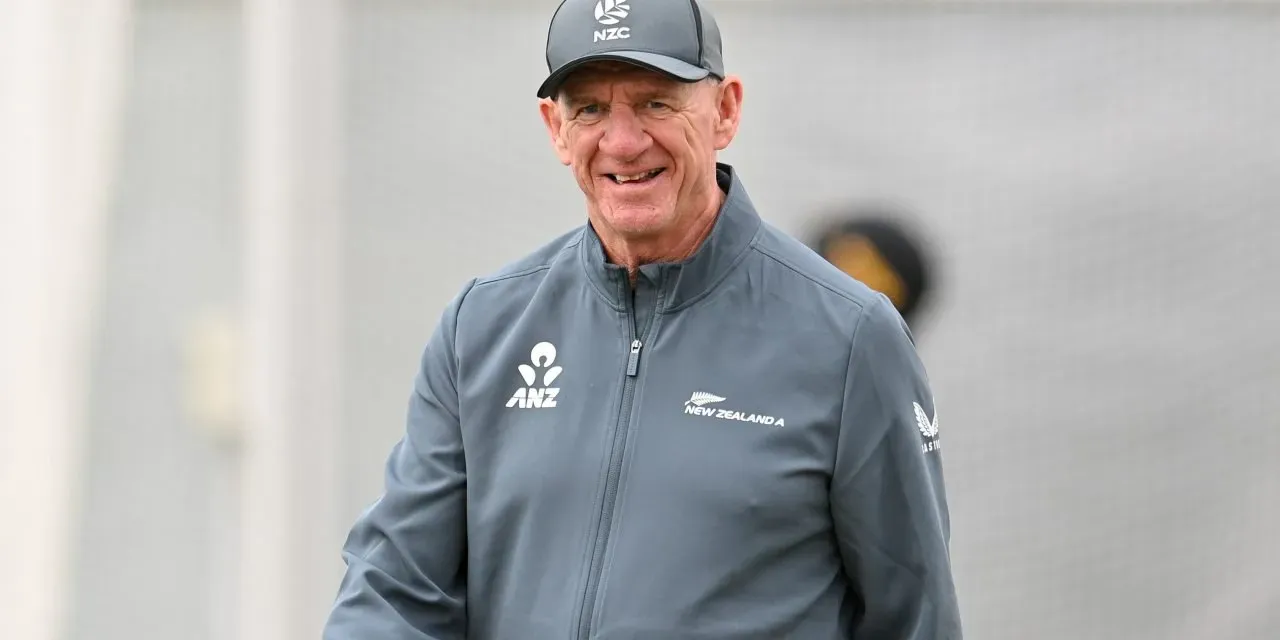
- Bob Carter, a coaching veteran with 30 years of experience, officially began a one-year assignment as CWI’s Batting Consultant on September 1, with his first major task a tour of all six first-class territories later this month.
- The appointment is designed to deliver an immediate technical boost to elite and emerging batters while also confronting a deeper issue, the quality and consistency of batting instruction throughout the regional system.
- Carter will work across the men’s, women’s and age-group programs as West Indies prepares for an increasingly demanding international calendar, beginning with the men’s ICC World Cup Qualifier in February and March 2027 and the preparation period that follows for the World Cup.
- Six territories, one development plan Carter’s first regional assignment will take him to Barbados, Guyana, Jamaica, Trinidad and Tobago, the Leeward Islands and the Windward Islands.
Cricket West Indies has brought in one of New Zealand’s most experienced coaching figures to address a problem that extends far beyond the next international series: the development of West Indies batting.
Bob Carter, a coaching veteran with 30 years of experience, officially began a one-year assignment as CWI’s Batting Consultant on September 1, with his first major task a tour of all six first-class territories later this month.
The appointment is designed to deliver an immediate technical boost to elite and emerging batters while also confronting a deeper issue, the quality and consistency of batting instruction throughout the regional system.
Carter will work across the men’s, women’s and age-group programs as West Indies prepares for an increasingly demanding international calendar, beginning with the men’s ICC World Cup Qualifier in February and March 2027 and the preparation period that follows for the World Cup.
Six territories, one development plan
Carter’s first regional assignment will take him to Barbados, Guyana, Jamaica, Trinidad and Tobago, the Leeward Islands and the Windward Islands.
Rather than limiting his work to national-team players, he will engage coaches and cricketers at each stop, with the objective of identifying technical needs and strengthening the way batting is taught across the region.
That work will eventually be formalized through batting-development modules incorporated into CWI’s coaching pathway.
It is an important distinction in the appointment: Carter is not being asked simply to improve the next generation of West Indies batters himself. He is being asked to improve the coaches responsible for producing them.
“West Indies cricket has a proud tradition of producing outstanding batsmen, and my job is to help build the base to produce future generations of world-class players,” Carter said.
“My focus has always been on supporting players and coaches to reach their full potential, and I am looking forward to working alongside the regional and high-performance coaches to help achieve that.”
A coach with broad international experience
Carter arrives with a substantial coaching résumé.
He spent 13 years as High-Performance Coach with New Zealand Cricket from 2012 through 2025, following earlier domestic assignments that included head-coaching positions with Canterbury and Wellington.
He also led the New Zealand women’s team from 2019 to 2022 and served twice as an assistant coach with the men’s national side.
His experience extends beyond New Zealand, having also worked as Director of Cricket at Northamptonshire County Cricket Club in England.
That combination of high-performance, international, domestic and women’s cricket experience gives CWI a coach whose remit can stretch across virtually every level of the regional game.
Bascombe wants impact that survives Carter’s contract
CWI Director of Cricket Miles Bascombe said the timing of Carter’s arrival reflects the scale of the challenges facing West Indies cricket.
The region is scheduled to participate in at least six global events during the next 24 to 30 months, placing considerable pressure on the development system to produce players capable of competing consistently at the highest level.
“West Indies teams will participate in at least six global events over the next 24-30 months, including the Men’s World Cup Qualifier next February. The steps we take now are intended to lay the groundwork for success. Bob’s immediate job is to raise the technical standard heading into these events,” Bascombe said.
But Bascombe stressed that the appointment should not be judged simply by whether West Indies’ leading batters produce better numbers within a year.
“But the measure of this appointment is not what our top six look like in 12 months. It is whether the coaches he works with come out of it better at teaching batting than they went in, and whether that reaches the coaching education modules the rest of the region is taught from. That is what lasts.”
Strategy committee identified the need
Carter’s appointment follows recommendations from CWI’s Cricket Strategy and Officiating Committee, which identified specialist technical intervention and stronger regional coaching structures as key priorities.
The strategy effectively gives Carter two clocks to work against.
The first is immediate: West Indies must sharpen its batting ahead of a sequence of major international assignments, beginning with the 2027 World Cup Qualifier.
The second is considerably longer.
By embedding Carter’s work into the coaching pathway and taking his expertise into all six first-class territories, CWI is seeking to create a system in which better batting instruction continues after his one-year contract expires.
For West Indies cricket, the Carter project is therefore not simply about finding runs in the short term. It is an attempt to rebuild the machinery that produces them.