Caribbean immigration advocates welcome New York court ruling limiting ICE cooperation
Key Points(5)
- Caribbean immigration advocates in New York have welcomed a federal judge’s decision upholding, at the preliminary injunction stage, state laws restricting local law enforcement agencies from participating in federal civil immigration enforcement operations.
- US District Judge Mae A.
- D’Agostino rejected a request by a coalition of more than 15 county sheriffs to temporarily block legislation prohibiting local law enforcement officers from making civil immigration arrests on behalf of federal agencies such as Immigration and Customs Enforcement (ICE).
- The judge also declined to block a separate measure granting New York Attorney General Letitia James the authority to investigate sheriffs who cooperate with federal immigration authorities.
- Both measures were signed into law by Governor Kathy Hochul in May as part of a broader budget package designed to limit the involvement of state and local law enforcement agencies in federal civil immigration enforcement.
Caribbean immigration advocates in New York have welcomed a federal judge’s decision upholding, at the preliminary injunction stage, state laws restricting local law enforcement agencies from participating in federal civil immigration enforcement operations.
US District Judge Mae A. D’Agostino rejected a request by a coalition of more than 15 county sheriffs to temporarily block legislation prohibiting local law enforcement officers from making civil immigration arrests on behalf of federal agencies such as Immigration and Customs Enforcement (ICE).
The judge also declined to block a separate measure granting New York Attorney General Letitia James the authority to investigate sheriffs who cooperate with federal immigration authorities.
Both measures were signed into law by Governor Kathy Hochul in May as part of a broader budget package designed to limit the involvement of state and local law enforcement agencies in federal civil immigration enforcement.
The New York Immigration Coalition (NYIC), an umbrella organization representing more than 200 immigrant and refugee advocacy groups, welcomed the decision, saying it would help maintain public trust between immigrant communities and local police.
NYIC President and CEO Murad Awawdeh praised the ruling, arguing that federal financial incentives and political pressure should not override the public safety responsibilities of local law enforcement agencies.
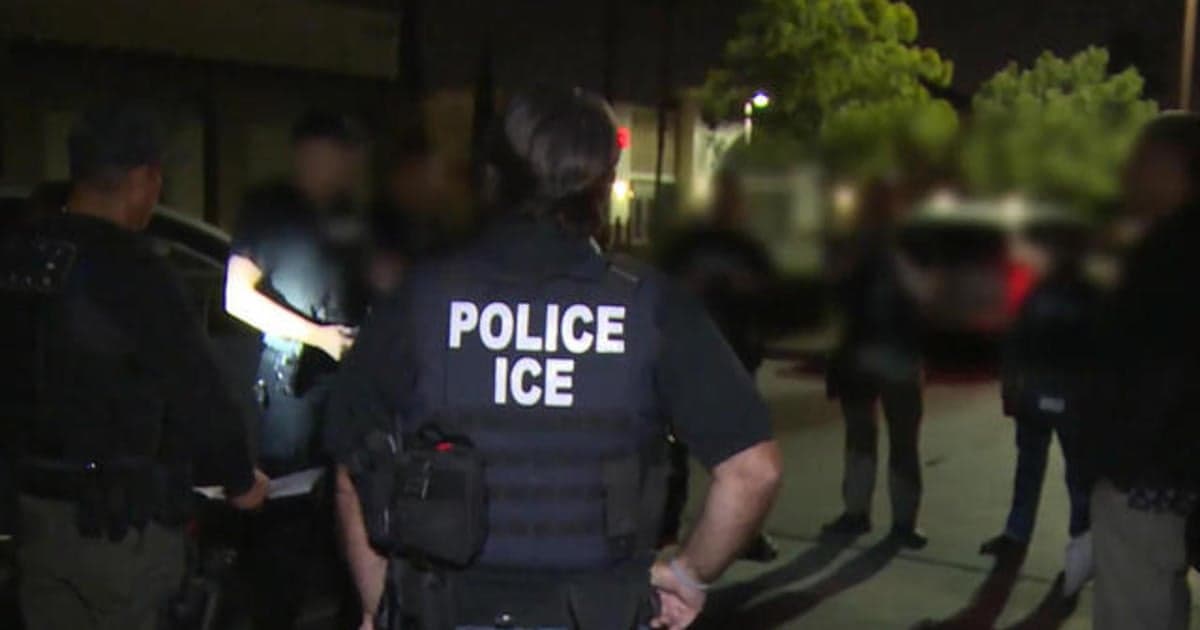
“In an environment where ICE agents are brutally attacking immigrant New Yorkers at home, on our streets, and in other public spaces, the ban prioritises the public trust that is needed to keep all New Yorkers safe,” Awawdeh said.
The ruling represents a setback for the county sheriffs challenging the restrictions, although the rejection of a preliminary injunction does not constitute a final determination of the lawsuit's merits.
Under the Local Cops, Local Crimes Act, New York law enforcement agencies are prohibited from entering into or maintaining agreements with ICE under Section 287(g) of the federal Immigration and Nationality Act.
These agreements allow trained state and local officers to carry out certain federal immigration enforcement duties, including questioning, arresting and detaining individuals suspected of violating immigration laws.
Agencies with existing agreements were required to terminate them by August 25, 2026.
In her November 4 ruling, D’Agostino found that the sheriffs had not established sufficient grounds for the preliminary injunction. The decision largely centered on legal restrictions governing when local government officials can challenge state laws, rather than a final ruling on the constitutionality of the legislation.
Rensselaer County Sheriff Kyle Bourgault, one of the plaintiffs, said officials were reviewing the decision and considering their next steps. He defended the agreements as a means of screening individuals in custody and obtaining information about criminal histories and outstanding warrants.
The ruling comes amid a separate legal dispute involving the Rensselaer County Sheriff's Office, which has refused to terminate its longstanding agreement with ICE.
In August, Hochul and James filed a lawsuit seeking to compel the sheriff's office to comply with the legislation.
According to the Attorney General's Office, Rensselaer County was the only one of 12 New York law enforcement agencies with existing 287(g) agreements that had not indicated its intention to terminate the arrangement.
Awawdeh welcomed the state's enforcement efforts, saying local law enforcement agencies should remain accountable to the communities they serve.
“We applaud Attorney General Letitia James and Governor Hochul for taking every step necessary to ensure that New York’s law enforcement agencies remain accountable to the communities they serve and focused on keeping all New Yorkers safe, not carrying out ICE and the Trump administration’s deportation agenda,” he said.
“Every law enforcement agency in New York has a duty to serve and protect every resident, while upholding state and local law.”
Meanwhile, New York authorities have announced another deadline under the legislation.
On November 6, James and Hochul said county executives and sheriffs had been formally notified that agreements allowing local correctional facilities to house individuals detained for federal civil immigration violations must be terminated by November 25.
The requirement extends the state's restrictions beyond immigration enforcement partnerships to arrangements involving the detention of individuals on behalf of federal immigration authorities.
The developments are being closely followed by immigrant advocacy organizations representing Caribbean communities in New York, including Haitian immigrants who have expressed concerns about increased federal immigration enforcement.
The state legislation does not prevent federal immigration officers from carrying out their own enforcement operations, nor does it prohibit local police from assisting federal authorities in criminal investigations. Its restrictions primarily concern local participation in federal civil immigration enforcement.