Caribbean-American lawmaker Clarke joins push against proposed English-only Head Start rule
Key Points(5)
- Caribbean-American Democratic Congresswoman Yvette D.
- Clarke has joined leaders of the Tri-Caucus in the U.S.
- House of Representatives in calling on the Trump administration to withdraw a proposed Head Start rule that would require English-only instruction and change existing language-access protections.
- Clarke, the daughter of Jamaican immigrants and chair of the Congressional Black Caucus, represents New York’s 9th Congressional District in Brooklyn.
- She joined other Tri-Caucus leaders in a letter to U.S.
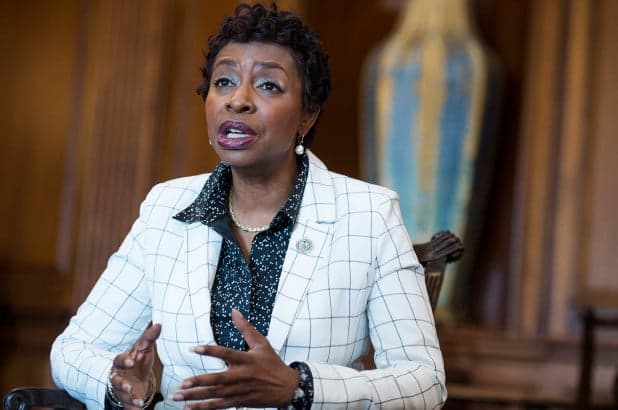
Caribbean-American Democratic Congresswoman Yvette D. Clarke has joined leaders of the Tri-Caucus in the U.S. House of Representatives in calling on the U.S. government to withdraw a proposed Head Start rule that would require English-only instruction and change existing language-access protections.
Clarke, the daughter of Jamaican immigrants and chair of the Congressional Black Caucus, represents New York’s 9th Congressional District in Brooklyn.
She joined other Tri-Caucus leaders in a letter to U.S. Department of Health and Human Services Secretary Robert F. Kennedy Jr. opposing the proposed rule, which they described as harmful to children and families who speak languages other than English.
Clarke told the Caribbean Media Corporation that Head Start is “a critical programme that provides high-quality early childhood education and comprehensive support services for low-income children and their families.”
While the lawmakers are calling for the proposed rule to be withdrawn in its entirety, Clarke said their letter focuses specifically on changes to language-access protections.
Nearly 40 per cent of children enrolled in Head Start are dual-language learners, representing almost 290,000 children nationwide, according to the lawmakers. They said 30 per cent of Head Start enrollees come from families whose primary home language is not English.
The lawmakers said dual-language instruction can help children develop English-language skills while preparing them for school.
“We share the goal of ensuring that every Head Start child develops strong English-language skills. But requiring English-only instruction is not supported by the evidence and risks undermining that very goal,” they wrote.
They argued that Head Start is often a child’s first classroom experience and that allowing children to understand, communicate and participate in a language they know supports their learning and transition to school.
The lawmakers also said the proposed rule conflicts with requirements established by Congress under the Head Start Act.
The law directs the HHS secretary to establish standards that help children with limited English proficiency acquire English while making progress in other developmental areas, including through “culturally and linguistically appropriate instructional services,” according to the letter.
The lawmakers also pointed to provisions requiring revisions to Head Start standards to avoid reducing the quality, scope or types of educational, parental-involvement, health and other services required under existing standards.
They said the law further requires literacy training for teachers that supports vocabulary development and phonological awareness in a developmentally, culturally and linguistically appropriate manner while supporting children’s development in their native language.
The lawmakers also raised concerns about developmental screenings and assessments under the proposed rule.
They noted that the Head Start Act requires assessments to be developmentally, linguistically and culturally appropriate, valid and reliable in the language in which they are administered, and conducted by appropriately trained staff. The law also requires accommodations for children with limited English proficiency.
The lawmakers warned that assessments conducted in a language a young child does not sufficiently understand could result in normal second-language development being mistaken for a developmental delay or a genuine disability or developmental concern being missed.
“Either outcome could delay appropriate early intervention at precisely the age when it can make the greatest difference,” they wrote.


%2520and%2520vice%2520principal%2520Audrey%2520Blake%2520%2520%2520%2520(1).jpg&w=3840&q=75)