

Can a Portable Power Station Run a Garage Door Opener?
Key Points(5)
- A portable power station can run a compatible garage door opener through its normal AC power cord, provided the inverter can handle the motor’s starting demand.
- For occasional opening and closing, output capability often matters more than having a particularly large battery.
- The connection also needs to be ready before an outage.
- A battery stored elsewhere in the house offers limited help if the opener’s plug is difficult to reach or the garage cannot be accessed.
- Why Horsepower Does Not Tell You Which Battery to Buy Garage door openers are often described by horsepower or a horsepower-equivalent rating.
A portable power station can run a compatible garage door opener through its normal AC power cord, provided the inverter can handle the motor’s starting demand. For occasional opening and closing, output capability often matters more than having a particularly large battery.
The connection also needs to be ready before an outage. A battery stored elsewhere in the house offers limited help if the opener’s plug is difficult to reach or the garage cannot be accessed.
Why Horsepower Does Not Tell You Which Battery to Buy
Garage door openers are often described by horsepower or a horsepower-equivalent rating. That description is insufficient for choosing an electrical backup supply.
The relevant information includes the opener’s supply voltage, electrical demand while moving the actual door, and brief demand as the motor starts. Lights and accessories may contribute additional consumption.
Chamberlain’s electrical guidance identifies 120V AC, 60Hz supply for its referenced residential equipment in the United States and Canada. It also notes that demand under load varies with factors including the door and lighting.
Multiplying a label’s voltage and amperage can help identify the apparent electrical load in volt-amperes. Motor power factor means that result should not automatically be treated as a precise measurement of real watts.
A heavily loaded or poorly balanced door creates another problem: supplying a larger inverter does not repair springs, tracks, or damaged hardware.
Starting Power and Stored Energy Answer Different Questions
The inverter must support the opener while the motor begins moving. Once the door is moving, the electrical load may fall, and the operating period is usually short.
An illustrative calculation shows the distinction. If an opener drew 600W for a combined 40 seconds of movement, that movement would consume about 6.7Wh:
600W × 40 ÷ 3,600 = approximately 6.7Wh
That is an example, not a measured consumption figure for a particular opener. Its purpose is to show why a short operation can require considerable instantaneous power while consuming relatively little energy.
Leaving the inverter and opener powered for an entire day introduces additional consumption from standby electronics, lighting, accessories, and the power station itself. Those loads can become more significant than the few door movements.
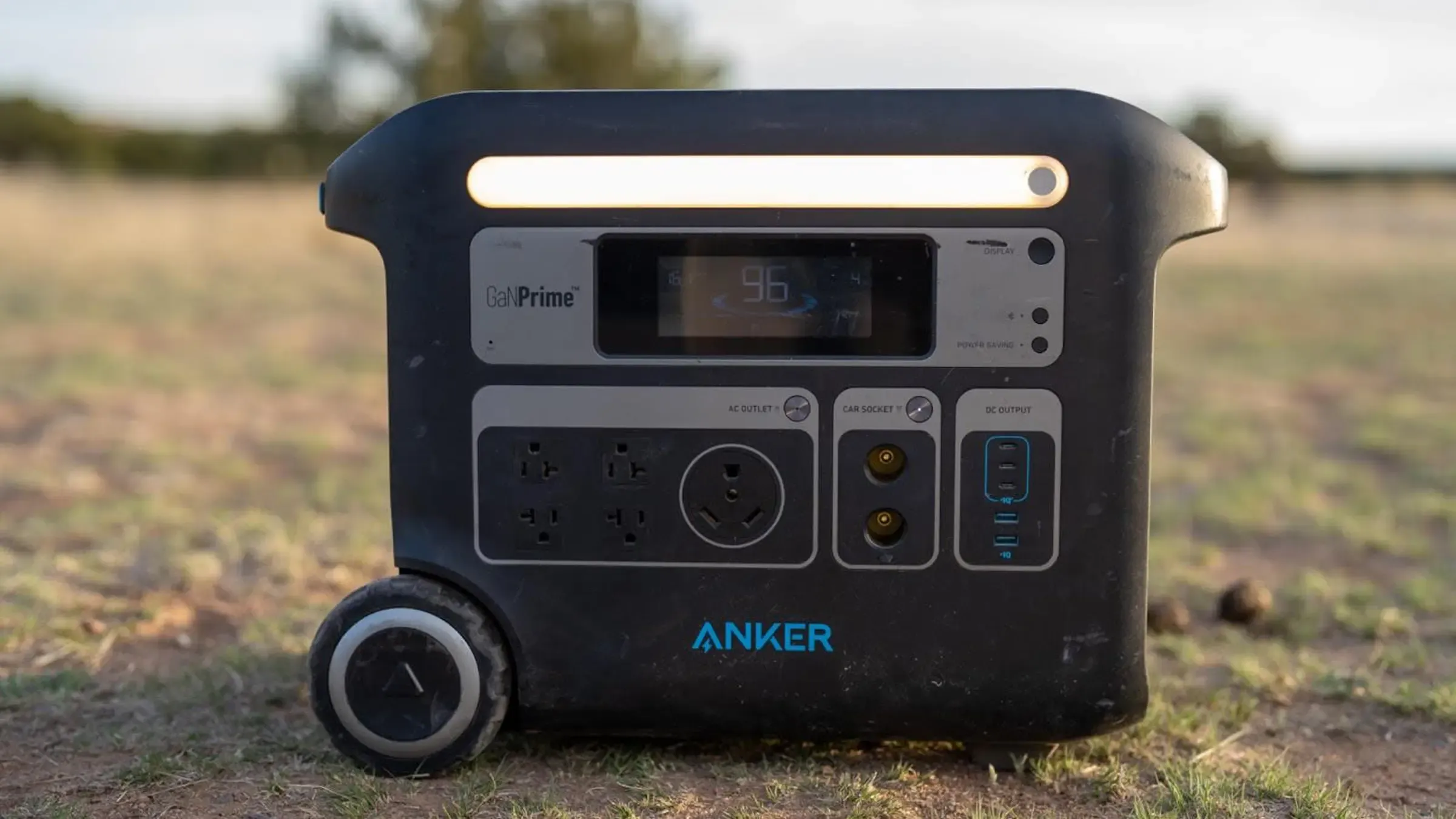
When comparing an EcoFlow portable power station, start with the normal AC output rating and the opener’s verified starting requirement. The DELTA 3 Plus provides 1,800W of rated AC output, making it a candidate for evaluation where a smaller inverter cannot support the load. Its rating alone does not guarantee that every opener will start successfully.
Use the Opener’s Existing Power Connection

For an opener equipped with an ordinary AC plug, the basic arrangement is to disconnect that plug from household power and connect it to the battery’s AC outlet.
Arrange the cable so it cannot enter the tracks, become caught in moving hardware, or obstruct the vehicle. Keep the battery stable, dry, and accessible.
If an extension cord is needed, confirm that both manufacturers permit the arrangement and use a grounded cord rated for the load and length. Powering the home’s existing garage circuit is a separate installation requiring appropriate transfer equipment; an ordinary wall receptacle is not a power input.
A useful pre-outage test includes opening and closing the door completely, checking for overload warnings, and confirming that the opener’s safety functions operate normally.
Compare a Portable Battery With the Opener’s Built-In Backup
If garage access is the only objective, a maintained manufacturer-approved backup battery is usually the most convenient solution. It stays connected and is designed to work with the opener’s controls.
For the backup battery described in Chamberlain’s support guidance, the manufacturer specifies up to 20 full cycles during 24 hours of standby at room temperature. Battery condition and operating circumstances affect that result.
A portable battery becomes more useful when an older opener lacks an approved battery option or when the same stored energy will also support household lighting and charging.
The tradeoff is preparation. A portable system may require someone to make the connection during the outage, while an integrated backup handles the transition automatically.
Conclusion
For a garage door, verify starting capability and the physical connection before paying for extra battery capacity. A successful full-cycle test, a clear cable route, and a working manual-access plan provide more confidence than a large watt-hour number alone.