Betty Ferguson, Miami Gardens founding advocate and former county commissioner, dies at 81
Key Points(5)
- Ferguson, a former Miami-Dade County commissioner and civil rights advocate who helped establish the city of Miami Gardens and transform the county's electoral system, died Saturday, November 14.
- Ferguson died while receiving hospice care, according to M•I•A Media Group.
- Her death has prompted tributes from elected officials and community leaders who remembered her decades of advocacy for political representation, education and neighborhood development.
- M•I•A Media Group+1 Born January 28, 1945, in Miami, Ferguson became a prominent voice for predominantly Black communities in northwest Miami-Dade County, championing greater local control and equitable representation in government.
- One of her most significant achievements was helping bring an end to Miami-Dade's countywide system for electing commissioners.
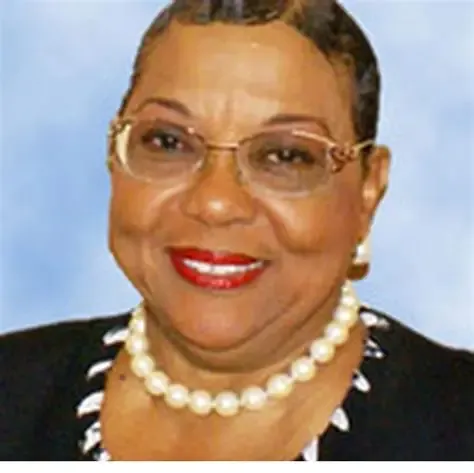
Betty T. Ferguson, a former Miami-Dade County commissioner and civil rights advocate who helped establish the city of Miami Gardens and transform the county's electoral system, died Saturday, November 14. She was 81.
Ferguson died while receiving hospice care, according to M•I•A Media Group. Her death has prompted tributes from elected officials and community leaders who remembered her decades of advocacy for political representation, education and neighborhood development.
Born January 28, 1945, in Miami, Ferguson became a prominent voice for predominantly Black communities in northwest Miami-Dade County, championing greater local control and equitable representation in government.
One of her most significant achievements was helping bring an end to Miami-Dade's countywide system for electing commissioners. After two unsuccessful campaigns for the County Commission, Ferguson joined a federal lawsuit challenging the electoral system, arguing that it diluted the voting power of Black and Hispanic residents.
In 1992, a federal judge ruled that the system violated the Voting Rights Act, paving the way for single-member district elections. Ferguson subsequently won the District 1 seat in 1993 and served for 11 years, winning reelection twice without opposition.
During her tenure, she secured funding for major community improvements, including $12 million for the Carol City Community Center and $20 million for drainage, sidewalks and safer routes to schools. She also supported the development of fire and police stations, recreational facilities and public transportation services.
Ferguson was instrumental in the movement to incorporate Miami Gardens, which officially became Miami-Dade County's 33rd municipality in 2003. The effort gave residents greater control over local government and decisions affecting their communities.
Beyond politics, Ferguson was a longtime educator. She earned a bachelor's degree from Florida A&M University and a master's degree in speech pathology and audiology from Ohio State University. She taught at Howard University and Florida Memorial College before spending approximately three decades at Miami Dade College.
She also founded the Unrepresented People's Positive Action Council, a community organization that provided residents with a forum to discuss local concerns and advocate for change.
Following her death, Miami-Dade County Mayor Daniella Levine Cava remembered Ferguson as a mentor who helped shape her own career in public service.
“She showed me how to stand up for truth and justice at County Hall, and she was a huge influence on the path to county government,” Levine Cava said in a tribute shared on social media.
Miami-Dade County Commissioner Marleine Bastien also praised Ferguson's contributions to electoral reform and neighborhood development, describing her as a pioneer whose work helped ensure residents had a stronger voice in choosing their representatives.
U.S. Rep.-elect Oliver Gilbert, a former Miami Gardens mayor, highlighted Ferguson's commitment to empowering residents.
“She was one of the forces behind single-member districts,” Gilbert told CBS Miami. “She believed in people's voices and being an amplifier of their voices.”
U.S. Rep. Frederica Wilson also paid tribute, recognizing Ferguson's role in establishing Miami Gardens and strengthening political representation for Black residents.
Ferguson's legacy is commemorated through the Betty T. Ferguson Recreational Complex in Miami Gardens and Betty T. Ferguson Boulevard, a section of Northwest 22nd Avenue named in her honor.
She was the widow of U.S. District Judge Wilkie D. Ferguson Jr., who died in 2003, and the mother of two children.
Her death marks the loss of one of northwest Miami-Dade's most influential community advocates, whose efforts helped reshape local government and expand political representation for generations of residents.