The 2026 World Cup is everything Jamaica dreamed of. The Reggae Boyz just aren't there
Key Points(5)
- Where were you on Nov.
- Every Jamaican older than 35 should remember that date: the day the Reggae Boyz qualified for the World Cup in France.
- There was so much joy and celebration across the island that Prime Minister P.J.
- Patterson declared the following day a national public holiday.
- The Reggae Boyz had become the first English-speaking Caribbean nation to qualify for a World Cup.
Where were you on Nov. 16, 1997? Every Jamaican older than 35 should remember that date: the day the Reggae Boyz qualified for the World Cup in France.
There was so much joy and celebration across the island that Prime Minister P.J. Patterson declared the following day a national public holiday. The Reggae Boyz had become the first English-speaking Caribbean nation to qualify for a World Cup. Theodore Whitmore's brace against Japan secured their one and only victory in France. For one golden summer, the whole island exhaled.
Twenty-eight years have passed. The world has not seen them again.
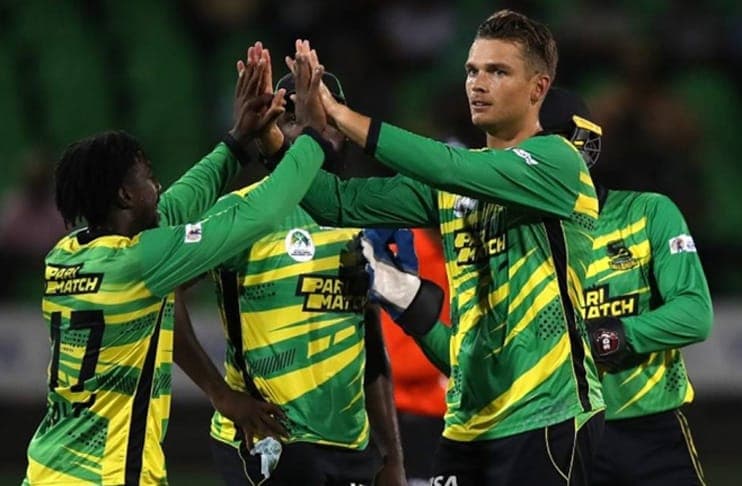
Now the World Cup has come to their doorstep — hosted across the United States, Canada, and Mexico, a tournament within driving distance of the enormous Jamaican diaspora spread across the Eastern Seaboard. The Reggae Boyz, in Bob Marley-branded kits, were ready. The rekindling of '98 for a new generation was right there for the taking.
Instead, Jamaicans at home and in the diaspora are watching the World Cup on television, hoping that Brazil, Argentina, Morocco, Ivory Coast, or Ghana takes home the top prize.
The best chance the Reggae Boyz never took
When FIFA expanded the 2026 World Cup to 48 teams, something electric stirred across the island. CONCACAF received six spots, and Jamaica wouldn't need to wrestle past the United States, Canada, and Mexico, already in as co-hosts. With Costa Rica in decline, the path was as open as it had ever been. This was Jamaica's moment.
The squad had genuine quality: Leon Bailey, Demarai Gray, Ethan Pinnock, and Andre Blake. On paper, they were more than capable. But quality alone means nothing without vision.
What unfolded instead was a roundabout journey through three managers, a disjointed squad, and a federation that leaned hard into recruiting English-born players of Jamaican heritage without ever building the chemistry that such recruitment demanded. The coaching staff kept changing. What was expected of the players changed with it. No core group ever settled. A period that should have celebrated the country's rich football history became a case study in dysfunction.
Curaçao — a tiny island nation of just 158,000 people with an unshakable sense of purpose — topped Jamaica's qualifying group and booked its ticket automatically. The team exemplified exactly what Jamaica lacked: clarity, stability, and everyone pulling in the same direction. A 2-0 defeat to Curaçao under Steve McClaren had already signaled the trouble ahead.
Jamaica stumbled into the intercontinental playoffs in Guadalajara. It scraped past New Caledonia 1-0, then faced DR Congo in the final. Andre Blake was heroic between the posts. But in the 100th minute of extra time, Axel Tuanzebe scored. The dream died in a 1-0 defeat.
This was the best chance Jamaica has ever had to qualify for a World Cup. The expanded field, the co-host advantage, the open path through CONCACAF — and the Reggae Boyz did not take it. The ghost of France '98 remains the only chapter in a book that should, by now, have many more pages.
The two who made it
Two Caribbean nations did make it — Haiti and Curaçao. Both have now been eliminated in the group stage. Their exits tell two very different stories, and neither softens the blow for Jamaica.
Haiti, ranked No. 87 and the lowest-seeded team in the tournament, was drawn into a brutal Group C alongside Brazil, Morocco, and Scotland. It lost all three games — falling 1-0 to Scotland, 3-0 to Brazil, and 4-2 to Morocco — without scoring in its first two matches. A header that flashed just wide against Scotland would have been Haiti's first World Cup goal in more than half a century. The team exits with no wins and no draws, but with the quiet dignity of a nation that simply refused to be embarrassed on the biggest stage in sport.
Curaçao's story was something else entirely. The smallest nation ever to qualify for a World Cup stunned Germany with an equalizer in its opener before ultimately losing 7-1. Then, in a match that will be replayed for generations on that small island, goalkeeper Eloy Room made 15 saves against Ecuador — equaling Tim Howard's record — to earn Curaçao its first-ever World Cup point. A final 2-0 defeat to Ivory Coast confirmed its elimination, but the team left with its head held high and a story worth telling for decades.
Both nations are home now. Yet even in defeat, they were here. They stood on the grandest stage in world sport and played. Jamaica watched all of it from a distance.
America falls in love with the 'real' football
While the Caribbean counts its costs, the host nation is in full bloom. A record 27.5 million viewers watched Team USA's opening match, surpassing the audience for the decisive Game 5 of the NBA Finals between the New York Knicks and the San Antonio Spurs. On Friday, the United States advanced to the knockout stage with a 2-0 victory over Australia, setting off wild celebrations in the streets of Seattle.
The scale of America's conversion is almost impossible to overstate, particularly given where it started. In 1986, Rep. Jack Kemp — former NFL quarterback, nine-term congressman, and later Bob Dole's vice presidential running mate — took to the House floor to argue against America hosting the 1994 World Cup. At the time, a national survey ranked soccer 67th among favorite spectator sports.
Congress passed a joint resolution unanimously in 1987. The World Cup arrived in 1994. Today, a new Economist survey shows soccer has climbed to third among Americans' favorite sports — at 10%, edging out baseball's 9%.
The cultural exchange has flowed in both directions. Ranch dressing has become so coveted among international visitors that the TSA issued warnings against packing full-size bottles in carry-on luggage. Scottish fans in kilts reportedly drank Boston's bars dry within four days. Europeans have been making social media pilgrimages to Walmart, Costco, and Buc-ee's, while late-night Waffle House runs and Chick-fil-A dipping sauce tastings have emerged as bucket-list experiences.
One tournament, three Caribbean stories
The 2026 World Cup is, in many ways, the story of who built something and who didn't. America built something over decades — through legislation, through the women's game, through morning television, through sheer generational will — and now it is reaping the reward in sold-out stadiums and record ratings. Curaçao built something, too: a small nation with a clear plan and the discipline to see it through, earning its moment on the world stage even if it ended in the group stage. Haiti built enough to get there and showed the world its heart even in defeat.
Jamaica had the talent. It did not build the structure around it. In a tournament that rewards exactly that — sustained vision, a nation pulling in one direction — talent without structure is just potential. And potential, unclaimed, becomes regret.
In Seattle, Boston, Houston, and Los Angeles, the world's game is playing out in all its improbable, ranch-drenched, Waffle House-visiting glory. Somewhere, a Jamaican fan is watching it on television — holding a ghost, a memory, and a question that has no good answer.
The ghost of France '98 remains the only chapter in a book that should, by now, have many more pages.
One Love. One chance. Gone.