Home Blog Page 64

US Congressman threatens Jamaica after PM Holness calls for dialogue on Cuba

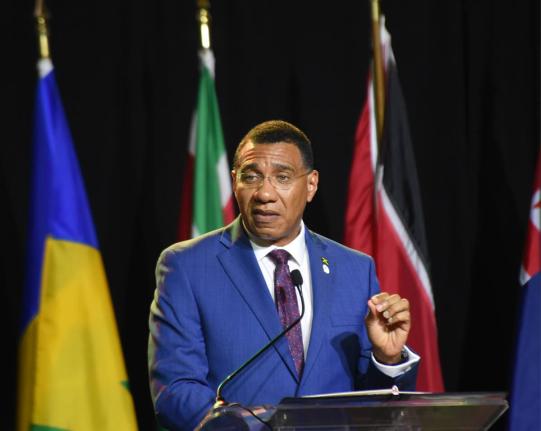
Prime Minister Andrew Holness

Prime Minister Andrew Holness’s appeal for collective Caribbean action on Cuba has prompted a pointed response from a U.S. lawmaker, who warned that Jamaica will “face the consequences.”

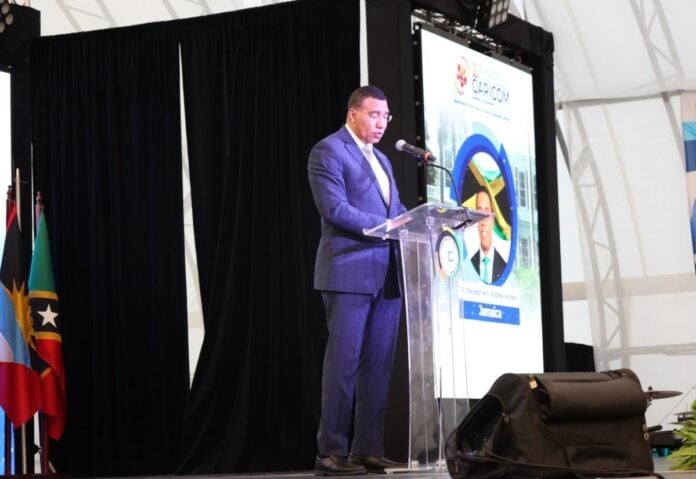
Holness, speaking Tuesday at the 50th Regular Meeting of the Conference of Heads of Government of CARICOM in Basseterre, St. Kitts and Nevis, urged Caribbean leaders to confront the humanitarian and economic challenges facing Cuba, warning that instability there could spill across the region.

“We must address the situation in Cuba with clarity and courage,” Holness said, noting that Cubans are grappling with severe economic hardship, energy shortages and mounting humanitarian strain.

Holness, the outgoing CARICOM chair, said Jamaica’s position is rooted in both solidarity and pragmatism. He highlighted Cuba’s decades-long contribution of doctors and teachers across the Caribbean, including Jamaica, but cautioned that a prolonged crisis would not remain contained within the island.

“A prolonged crisis in Cuba will not remain confined to Cuba. It will affect migration, security, and economic stability across the Caribbean Basin. It is, therefore, important that we carefully consider this matter and take collective action,” he said.

At the same time, Holness underscored Jamaica’s support for democratic governance and open-market principles.

“Let there be no doubt. Jamaica stands firmly for democracy, human rights, political accountability, and open-market based economies. We do not believe that long-term stability can exist where economic freedom is constrained and political participation is limited,” he said, adding that sustainable prosperity requires openness “to ideas, to enterprise, to investment, and to the will of the people.”

In a post on X sharing video of his address, Holness said Jamaica must “speak plainly” about what is happening in Cuba, describing the island as a Caribbean neighbour whose doctors and teachers have supported countries across the region for decades. He said Jamaica’s histories are intertwined with Cuba’s and stressed that the Government is “sensitive to the struggles of the Cuban people,” many of whom are facing serious economic hardship, energy shortages and widening humanitarian challenges.

He reiterated that while Jamaica stands in solidarity with the Cuban people, it must also recognise that a prolonged crisis could impact migration, security and economic stability across the Caribbean, including Jamaica. Holness added that lasting stability comes when people have opportunity, a voice in their governance, and the freedom to build and invest, and called for responsible leadership and constructive dialogue — particularly between Cuba and the United States — to ease tensions and promote reform and stability.

That appeal drew a sharp rebuke from Florida Republican Congressman Carlos A. Giménez, who quoted the prime minister’s video and wrote: “I harshly condemn this & find it lamentable that the JLP would cover-up for the moribund dictatorship in #Cuba, when the Castro regime repeatedly intervened in #Jamaica’s politics to exacerbate partisan tensions & undermine the JLP! Jamaica will face the consequences!”

Giménez, who represents Florida’s 28th Congressional District, was born in Havana in 1954 and immigrated to the United States with his family following the Cuban Revolution. A Republican, he previously served as mayor of Miami-Dade County before being elected to Congress.

Holness did not call for regime change in Cuba but signalled what he described as a moment for “principled realism” within CARICOM — balancing regional solidarity with a push for reform and accountability.

“This is not a moment for division in our community. It is a moment for maturity, for principled realism, and if we act wisely, for positive change in our hemisphere,” he said.

The exchange underscores the sensitivity of U.S.–Caribbean relations when it comes to Cuba, particularly at a time when economic pressures on the island are intensifying and migration remains a shared regional concern.


Kingston Showdown! Jamaica’s basketballers eye World Cup breakthrough

jamaica-basketball-FIBA

A surging Jamaica men’s national basketball team stands on the brink of a historic breakthrough as it prepares to face the Bahamas men’s national basketball team in a pivotal FIBA Basketball World Cup qualifying clash at the National Indoor Sports Centre Thursday evening.

Victory would move Jamaica within touching distance of the final qualifying round, a position few would have predicted before their recent surge. Tip-off is set for 6:10 p.m. (Jamaica time), with the contest representing both a competitive test and a symbolic homecoming for elite international basketball.

Momentum built on statement wins

Jamaica enters the matchup brimming with confidence after back-to-back victories over regional heavyweight Puerto Rico men’s national basketball team, edging them 92-90 and 97-92 in late November and early December. Those results propelled the team into a share of the Group B lead in the Americas qualifying standings and signaled their emergence as a legitimate contender.

Head coach Rick Turner has retained the core unit responsible for that breakthrough, including captain Kentan Facey, dominant center Kofi Cockburn, and dynamic guard Chase Audige, whose scoring punch proved decisive in Puerto Rico.

Home court returns to the spotlight

After being unable to host fixtures in November, Jamaica will finally compete on home soil, welcoming top-tier international basketball back to Kingston. The occasion is expected to deliver an emotional lift for a team eager to reconnect with local supporters and showcase the sport’s growing profile in the country.

Turner believes the atmosphere can be transformative, energizing his players rather than burdening them with pressure as they seek to capitalize on home-court advantage.

Formidable opponent, familiar challenge

Despite Jamaica’s momentum, Bahamas enters as the higher-ranked side in the FIBA Americas standings and the pre-game favorite. Their opening defeats to regional powerhouse Canada men’s national basketball team have done little to diminish their reputation as one of the Caribbean’s strongest programs.

Turner anticipates a stern examination, noting similarities between Bahamas and Puerto Rico, particularly their athleticism, transition speed, and guard play, while also expecting tactical adjustments that could complicate Jamaica’s approach.

Bahamas’ near-miss in Olympic qualification, falling narrowly to Spain men’s national basketball team, underscores the caliber of opponent awaiting the hosts.

A program-defining opportunity

The stakes extend beyond a single game. A Jamaican victory would lift the team to six points in Group B, placing them on the verge of advancing to the final round, where the region’s top teams compete for places at the World Cup and the Olympic Games.

Such progress would mark a significant milestone in the nation’s basketball development, sustaining momentum for future competitions and securing additional home fixtures through 2026 and 2027.

For a program long striving for global relevance, Thursday night’s encounter represents more than a qualifying match, it is a chance to redefine Jamaica’s standing in international basketball.


Young Reggae Boyz run riot to stay perfect in U-20 qualifiers

Jamaica’s Under-20 Reggae Boyz

Jamaica’s Young Reggae Boyz delivered a statement performance in Group B of the CONCACAF U-20 Qualifiers, dismantling Turks and Caicos Islands U-20 7-0 to secure their second consecutive victory on Wednesday night.

The emphatic triumph confirmed Jamaica U-20 as early favorites to top the group, following their opening 3-0 win over Bonaire U-20 just days earlier.

Early onslaught sets the tone

The Young Reggae Boyz imposed themselves from kickoff, pressing high and dictating play deep inside their opponents’ territory. Their dominance paid off in the 10th minute when Raquel Campbell-Dennis arrived in the center of the penalty area to tap home a precise cross from Marlon Van De Wetering.

Three minutes later, Campbell-Dennis struck again, rifling a powerful close-range effort to double the advantage and ignite a first-half avalanche.

Relentless pressure, ruthless finishing

Jamaica’s momentum never wavered. Jahmarie Nolan extended the lead to 3-0 in the 19th minute, before Jabari Howell produced a moment of individual brilliance, weaving past three defenders and slotting home Jamaica’s fourth on the half-hour mark.

Holding a commanding 4-0 halftime advantage, the Jamaicans had effectively decided the contest before the interval.

Second-half surge completes the rout

With the outcome beyond doubt, Jamaica continued to pile on the pressure. Giovanni Taylor struck twice in the 61st and 87th minutes, while Orel Miller added another in the 82nd to complete the seven-goal demolition.

The performance showcased the team’s attacking depth and clinical edge, qualities that could prove decisive as the tournament intensifies.

Eyes on qualification prize

Jamaica now turns its focus to a clash with Cayman Islands U-20 on Friday at 7:00 p.m. {Jamaica time}. Victory would strengthen their push to secure the group’s lone qualifying berth.

The group winner will advance to the CONCACAF Men’s U-20 Championship, joining six pre-seeded regional powers. That tournament will determine qualification for both the FIFA U-20 World Cup 2027 and the men’s football competition at the 2028 Summer Olympics.

For now, Jamaica’s young prospects have delivered a clear message: they are not merely competing, they are hunting qualification with intent.


Matthews and Taylor rewrite the script in face-saving victory

CWI strengthens Caribbean women’s cricket with landmark player contracts

ST GEORGE’S, Grenada — In a finale defined by individual brilliance rather than series consequence, West Indies Women closed their campaign with authority, defeating Sri Lanka Women by six wickets in the third One-Day International at the National Cricket Stadium on Wednesday.

The emphatic chase, however, was not enough to alter the broader narrative, as the hosts conceded the three-match series 1-2. Still, the performance offered a stirring reminder of their pedigree, driven by a commanding display from captain Hayley Matthews.

Matthews produced a captain’s innings of the highest order, crafting a magnificent 100 to anchor the pursuit of 218 and secure Player of the Match honors, ensuring her team departed the series on a winning note.

Early blow sets the tone

After choosing to bat, Sri Lanka’s hopes suffered an immediate jolt. Matthews struck in her opening over, trapping star batter Chamari Athapaththu leg-before-wicket without scoring.

Yet resistance came through Harshitha Samarawickrama, whose composed 70 anchored the innings. Contributions from Hasini Perera (27) and Vishmi Gunaratne (26) added substance, before Kavisha Dilhari delivered a late surge with an unbeaten 45 to carry the visitors to 217 for seven.

Matthews capped a complete all-round effort with economical figures of 2 for 33, while off-spinner Karishma Ramharack provided crucial support with two wickets.

From collapse to control

The chase began shakily. Qiana Joseph fell for two and Shemaine Campbelle departed for a six-ball duck, leaving the home side wobbling at 12 for two.

What followed was a lesson in composure and class.

Matthews found an ideal ally in veteran Stafanie Taylor, and together they orchestrated a match-defining 124-run stand for the third wicket, calmly reversing the momentum.

Taylor’s measured 38 carried historic significance, as she became only the second player to surpass 6,000 runs in Women’s ODI cricket, a milestone achieved amid the rebuilding effort.

Freed by Taylor’s assurance, Matthews accelerated toward her 10th ODI century, asserting her status among the format’s elite.

Finishing flourish

After Taylor’s departure, the task was completed with authority. Chinelle Henry struck an unbeaten 32, while the powerful Deandra Dottin added an explosive 24 not out. Their unbroken 49-run partnership carried West Indies to 218 for four with four overs remaining.

Though the trophy went elsewhere, the victory delivered a valuable morale boost and a timely reminder of the team’s capabilities ahead of the upcoming T20 series.

Individual honors reflect series story

In the post-match awards, Samarawickrama’s consistency earned her Player of the Series honors for Sri Lanka, underscoring the visitors’ overall superiority across the three matches.

For West Indies, however, the final encounter offered something equally significant: belief restored by their captain’s brilliance and a glimpse of the form they hope to carry forward.


26th KPMG Squash League serves off in Kingston

KPMG Squash League
Jamaica Squash joined forces with KPMG to launch the 26th KPMG Squash League recently at the Liguanea Club in Kingston. Sharing the moment were (from left) Jerazeno Bell of Saints, Al Johnson, partner at KPMG, Isabelle Robinson of Campion College, Karen Anderson, president of Jamaica Squash, Govind Venugopal also of Campion and Mario O’Connor of Saints team.

Pageantry met purpose as Jamaica Squash Association and KPMG renewed their long-standing alliance with the launch of the 26th KPMG Squash League at the Liguanea Club.

A vibrant parade of teams clad in branded gear transformed the venue into a carnival of color, setting the tone for a season thick with anticipation. Though defending champions Blown will not return to defend their crown, the field is brimming with contenders, led by last year’s runners-up, the Saints, all eyeing the trophy in what promises to be a fiercely contested campaign.

Endurance meets skill in new format

This year’s competition introduces a demanding twist: matches will be played to 21 points instead of the traditional 11, placing a premium on stamina as much as shot-making precision. Over the coming months, players will be tested not only on technique but on resilience as the longer format stretches both body and nerve.

Fourteen teams began the battle Tuesday evening at the same venue, with the league scheduled to culminate on April 10. Each squad fields four players, including a reserve, spanning a wide age range, from emerging juniors to seasoned veterans, in a handicapped structure designed to level the playing field across skill tiers.

A league for all levels

Tournament director Nathlee Boreland explained that the handicap system ensures genuine competitiveness.

“A handicap tournament basically evens the playing ground for advanced players who will play against persons of a lower level,” Boreland said, noting that lower-ranked players begin with a points advantage while elite competitors must claw back from zero or even negative starts. “So it’s for the person with the higher skill level to concentrate in order to get even… and then go on to win, so it’s not gonna be easy.”

The format underscores the league’s mission: to challenge every athlete who steps onto the court.

Tradition, talent, and youth on display

League president Karen Anderson hailed KPMG’s enduring commitment and celebrated the surge of youth participation.

“I think it’s going to be a really great tournament this year,” Anderson said. “It’s the 26th year of partnering with KPMG in this event… We have a big bunch of juniors who are playing and we are excited about them participating.”

Corporate backing remains central to the league’s longevity. KPMG partner Al Johnson emphasized the broader impact beyond sport.

“We see the benefit of the investment… They are building young minds, preparing these young people for competition locally, regionally, and internationally, and it all starts here,” Johnson said.

New names, old rivalries

The draw features an eclectic mix of team identities, Rally Royals, Racket Science, Just Hit, Dem Indians, One Of A Kind, Squashbucklers, Badmanfu, and Boast Warriors, alongside institutional entries such as Campion College, Juniors, JDF, and KPMG’s own squad, returning for a second year.

With six recently renovated courts at the Liguanea Club serving as the league’s primary stage, matches will unfold on Tuesday and Thursday evenings, typically starting at 6:00 p.m.

Saints target redemption

For Saints captain Mario O’Connor, the absence of defending champions Blown removes a formidable obstacle but not the hunger for redemption.

“You can only expect good squash,” O’Connor said. “It’s unfortunate that they are not here this year… but since they are not here we just have to make do, play everybody who comes along and see if we can make it to the finals again and win it this time.”

Opening night sets the tone

Early results hinted at the competitiveness to come. Campion College edged JDF B 2-1, Rally Royals swept KPMG 3-0, Racket Science outlasted Just Hit 2-1, and Dem Indians defeated One Of A Kind by the same margin, a fittingly tight start to a marathon season.

As rackets clash and endurance is tested, the 26th staging of this cornerstone event appears poised to deliver drama worthy of its legacy.


Shimron Hetmyer emerging as World Cup’s most dangerous force

west indies

MUMBAI, India — A thunderous display of power hitting has propelled West Indies star Shimron Hetmyer into the center of global attention, with Australian legend Ricky Ponting warning that the left-hander is fast becoming one of the most feared batters at the ICC Men’s T20 World Cup.

Hetmyer’s breathtaking assault against Zimbabwe on Monday lit up the Wankhede Stadium, where he hammered the fastest T20 World Cup half-century ever by a West Indian, a blistering 50 off just 19 balls. He powered on to a devastating 85 from 34 deliveries, launching seven sixes and seven fours to spearhead a crushing 107-run victory in West Indies’ opening Super Eights encounter.

Numbers that command respect

The innings marked Hetmyer’s second half-century in five matches at the tournament and vaulted him near the summit of the run charts. With 219 runs, he trails only Pakistan’s Sahibzada Farhan, who leads by a single run on 220.

But statistics alone do not capture the menace he now represents.

In remarks shared via the ICC’s social media platforms, Ponting, widely regarded as one of Australia’s greatest batters after amassing more than 27,000 international runs, singled out Hetmyer as a decisive figure in the tournament’s unfolding drama.

“They’ve got a few playing well at the moment, but I’m going to single Hetmyer out,” Ponting said.

“I think when I talk about experience and guys who’ve played on big stages before, Hetmyer has played a lot of IPL cricket now, so the stage and the enormity of Super Eights cricket and semi-final cricket for him shouldn’t be that big a deal,” he added.

Big-stage pedigree paying off

Ponting emphasized that Hetmyer’s extensive exposure to the pressure cooker of the Indian Premier League has forged a batter unfazed by the magnitude of knockout cricket. That composure, paired with his destructive range, is turning him into a pivotal weapon for the Caribbean side.

“I like the fact that he’s batting up the order now for the West Indies,” Ponting noted. “So I think he’s one of the more dangerous players going forward in this tournament.”

A star peaking at the right moment

With West Indies surging into the decisive phase of the competition, Hetmyer’s timing could hardly be better. His elevation in the batting order has maximized his influence, allowing him to dictate matches rather than react to them, a shift that may prove decisive in the race for the title.

If his Mumbai masterclass is any indication, opponents have been put on notice: the tournament may now run through the blade of Hetmyer’s bat.


Antigua considers stricter rules amid surge in lost passports

antigua passport

The Government of Antigua and Barbuda is weighing tougher measures after reports of lost passports surged in early 2026, officials said.

According to Director General of Communications Maurice Merchant, dozens of citizens reported missing passports in the first weeks of the year. While most cases appear to involve misplacement rather than theft, each report triggers a formal process: police must file a report, immigration authorities investigate potential misuse, and passports are cancelled in national systems to prevent fraud.

Authorities warn that lost passports can be used for identity theft or other criminal activity. Even when no misuse occurs, the administrative response strains public resources and carries financial costs. Citizens pay EC$200 for a replacement, but the government absorbs much of the expense for the secure documents.

Cabinet officials said proposals under review could include higher replacement fees and longer waiting periods for new passports, except in genuine emergencies. Emergency travel provisions would not cover discretionary trips such as holidays.

“The process is in place to protect our citizens and the integrity of our travel documents,” Merchant said, noting that the new measures aim to reduce the administrative and financial burden caused by lost passports.

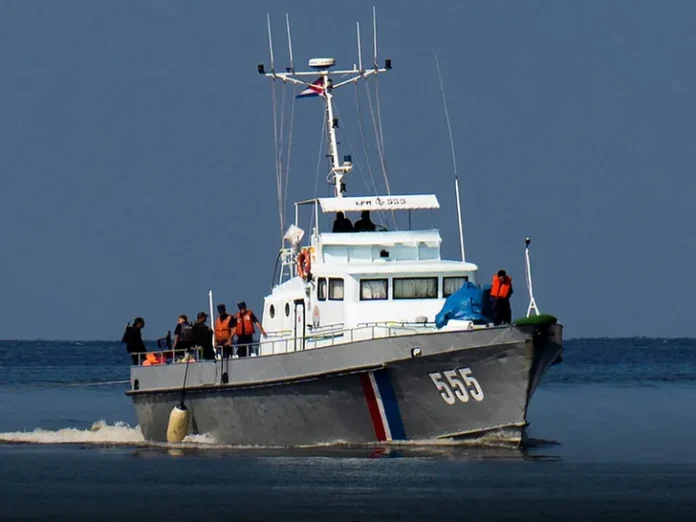
Cuban soldiers kill four, injure six in shootout with Florida‑registered boat

Photo: TMZ

Cuban authorities say soldiers onboard the Caribbean island’s northern coast killed four people and wounded six others after a Florida‑registered speed boat entered Cuban waters and opened fire first, in a rare and violent maritime incident that has prompted a U.S. government response.

Cuba’s Interior Ministry said the confrontation happened roughly 1 mile (1.6 kilometers) northeast of Cayo Falcones, off the country’s north coast. In a brief statement, officials identified one Cuban officer wounded in the exchange and said that Cuban forces acted to defend national sovereignty, but did not provide further details about the circumstances that led up to the shootout.

It remains unclear what the boat and its occupants were doing in Cuban waters at the time of the clash, or who exactly was aboard. The ministry said Cuba was “safeguarding its sovereignty and ensuring stability in the region.”

While in Basseterre, St. Kitts, U.S. Secretary of State Marco Rubio told reporters that he has been informed of the incident and that U.S. authorities are working to piece together a clearer picture of what happened.

“We have various different elements of the U.S. government that are trying to identify elements of the story that may not be provided to us now,” Rubio said, adding that officials are trying to determine whether the victims were American citizens or permanent residents.

Rubio described the shootout as unusual. “Suffice it to say, it is highly unusual to see shootouts in open sea like that. It’s not something that happens every day,” he said, without elaborating on the identities of those involved.

U.S. Vice President J.D. Vance said Wednesday afternoon that he had been briefed on the situation by Rubio and that the White House was closely monitoring developments. Speaking to reporters, Vance declined to provide further details but expressed hope that the situation “is not as bad as we fear it could be.”

At this point, neither the U.S. nor Cuban governments have released the names of those killed or wounded, and the incident has raised questions about how and why the boat entered Cuban waters and what sequence of events led to the fatal exchange of gunfire.

Rubio tells CARICOM: US and Caribbean security and stability ‘intricately tied’

U.S. Secretary of State Marco Rubio used his first appearance before Caribbean leaders in a decade to signal a renewed U.S. focus on the region, calling security, energy and economic growth shared priorities for Washington and CARICOM nations.

Speaking Wednesday at the 50th Regular Meeting of the Conference of CARICOM Heads of Government at the St. Kitts Marriott Beach Resort, Rubio framed his visit as more than symbolic.

“I am very happy to be in an administration that’s giving priority to the Western Hemisphere after largely being ignored for a very long time,” he told regional leaders, adding that the United States wants to “reinvigorate” longstanding relationships rather than reset them.

Rubio, who grew up in Miami, described the Caribbean Basin as “home” and said the region’s security and prosperity are closely linked to that of the United States. “We view our security, our prosperity, our stability to be intricately tied to yours,” he said. “The stronger, the safer, the more prosperous, and the more secure that all of your countries are, the stronger, safer, more secure, and prosperous the United States is going to be.”

Security tops the agenda

Rubio identified transnational criminal organizations as what he called “perhaps the most urgent security threat in the region,” warning that some groups now possess resources that rival those of nation-states.

He referenced U.S. actions tied to Haiti’s security crisis.

“I hope you have seen, both in the case of Haiti but in other dynamics, that we have not shied away, not just from designating groups for what they are – these are terroristic organizations – but even individuals who are responsible for being supportive of them,” Rubio said. “We’ve also gone after them, and this is something that we have as a shared dynamic.”

Rubio acknowledged that narcotics destined for the United States fuel violence and corruption across transit countries, and said the U.S. is also working to curb the flow of American weapons into the hands of criminal groups.

“Our cooperation will have to grow even deeper and our commitment to it will have to grow even stronger because these groups grow stronger,” he said.

Venezuela: From Stability to Recovery

Rubio also addressed developments in Venezuela following what he described as the capture of Nicolás Maduro, arguing that the country is “better off today than it was eight weeks ago.”

He pointed to the release of political prisoners and the closure of Helicoide prison as signs of progress, and said oil revenues are now being used to fund public services and purchase medical equipment.

“There’s a long ways to go,” Rubio said, emphasizing that democratic elections will ultimately be necessary for full legitimacy. “But our initial priority in the aftermath of Maduro’s capture was to ensure that there wasn’t instability, that there wasn’t mass migration, that there wasn’t spillover violence, and we believe we have achieved that.”

He said the United States has reopened its embassy in Caracas and is shifting from a phase of stabilization to one of recovery, arguing that a “prosperous, free Venezuela” could become an important energy partner for the region.

Energy and Investment Opportunities

Beyond security, Rubio highlighted energy cooperation and inbound investment as key areas for collaboration.

“Energy is critical for the future; it’s critical for every economy in order to prosper,” he said, noting that several Caribbean nations are seeking to develop their resources responsibly. “We want to be your partner in that regard.”

He added that Washington wants the Caribbean Basin — including the southern United States — to be seen as attractive for investment and economic diversification.

“The stronger, the safer, the more prosperous, and the more secure that all of your countries are, the stronger, safer, more secure, and prosperous the United States is going to be,” Rubio said. “We view our security, our prosperity, our stability to be intricately tied to yours.”

Rubio said his attendance at the CARICOM meeting was meant as a “real-world demonstration” of U.S. commitment to the region, pledging to make engagement with Caribbean partners a personal priority during his tenure.

Armanii releases new single ‘Fulla Gyal,’ announces 2026 Impact Tour

Armanii

Dancehall artist Armanii has released his new single, “Fulla Gyal,” offering fans a preview of the upcoming deluxe edition of his debut album The Impact, due next month.

The track follows a strong run for The Impact, which was released in December and later secured the No. 8 spot on Billboard’s 10 Best Caribbean Albums of 2025 list. The project has also amassed more than 79 million global streams to date and debuted at No. 10 on the Billboard Reggae Albums chart.

“Fulla Gyal” leans into vibrant, beat-driven production rooted in island sound, with Armanii delivering playful, confident lyrics over smooth rhythms. The single continues the artist’s blend of traditional dancehall grit and modern hip-hop influence, underscoring the style that has helped position him as one of the genre’s emerging voices.

The release comes as Armanii prepares to launch his official The Impact tour in May. The international run will begin in Canada before moving through the United Kingdom and the United States, and will conclude with a homecoming performance in Jamaica.

Canadian tour dates include stops in Hamilton (May 7), Waterloo (May 8), Vancouver (May 10), London, Ontario (May 14), Toronto (May 15), Ottawa (May 16) and Montreal (May 17). Tickets are available at www.twistedtours.ca.

Armanii has built momentum over the past year with several high-profile performances, including appearances at the Hollywood Palladium for UnitedMasters’ Celebration of Independence, Billboard Hip-Hop/R&B Live 2025, Reggae Fest Brooklyn 2025 and a closing set at Reggae SumFest in 2024.

In 2025, he was named Best Impact Dancehall Artist at the Caribbean Music Awards. Leading up to his album release, his single “U A Gwan” drew coverage from major outlets, further expanding his global reach. This month, Armanii was named Billboard’s inaugural Caribbean Rookie of the Month.

With the deluxe edition of The Impact on the way and an international tour set to roll out this spring, Armanii is continuing his push to carry Jamaican dancehall onto larger stages worldwide.

Reggae legends to be honored at Miramar’s Reggae Icon Awards 2026

Miramar’s Reggae Icon Awards 2026

The city of Miramar will spotlight the legacy and global reach of reggae music at the Reggae Icon Awards 2026 on Thursday, Feb. 26, from 6 p.m. to 10 p.m. at the Miramar Cultural Center Banquet Hall.

The awards ceremony forms part of the Afro Carib Weekend Experience, a Black History Month celebration that also includes the Afro Carib Festival signature event and Selecta Showdown. Organizers describe the evening as a tribute to reggae’s cultural impact and its influence across generations.

Hosted by Commissioner Carson “Eddy” Edwards, the event will feature Jody-Ann Gray as emcee and Dahlia Harris as keynote speaker.

“Reggae music has always been more than a sound, it is a movement, a message, and a powerful cultural force,” Edwards said in a statement. “The Reggae Icon Awards is our opportunity to honor the pioneers and visionaries who laid the foundation for this global genre while continuing to inspire unity, pride, and purpose within our community and beyond.”

This year’s honorees include Dr. Carlene Davis-Cowan and Tommy Cowan, recipients of the Marcus Garvey Award; Lloyd Parks, who will receive the Reggae Icon Award; and Clive “Tennors” Murphy, who will be presented with the Lifetime Achievement Award.

The ceremony will open with a cocktail reception at 6:30 p.m., followed by the awards presentation from 7:30 p.m. to 11 p.m. Organizers say the evening will focus on recognition, cultural celebration and community connection while highlighting reggae’s enduring influence.

The Reggae Icon Awards 2026 underscores Miramar’s continued emphasis on celebrating Black history, Caribbean heritage and the arts. The event is open to the public, and advance registration is encouraged at www.ReggaeIconAwards2026.Eventbrite.com.

Series slips away as Stafanie Taylor calls for strong final push

Stafanie Taylor fifty sees Windies Women avoid whitewash
Former skipper Stafanie Taylor.

Veteran all-rounder Stafanie Taylor has delivered a frank assessment of West Indies Women’s faltering batting displays, conceding that the unit has not measured up in the ongoing One-Day International series against Sri Lanka Women’s national cricket team.

The tourists have already secured the series with two tense victories, taking an unassailable 2-0 advantage into Wednesday’s final contest at the National Stadium.

Narrow margins, familiar problems

Both defeats followed a similar script, competitive chases undermined by an inability to convert starts into match-winning innings.

In the opener, West Indies were dismissed for 230 while pursuing Sri Lanka’s 240 for six. The second encounter proved equally frustrating: a modest target of 209 remained out of reach as the hosts were held to 194.

Speaking after Tuesday’s final training session, Taylor, one of the side’s few consistent performers alongside emerging batter Jannillea Glasgow, acknowledged that the top order has not delivered when it mattered most.

“We had starts from batters but just never really got to finish the game. I know coach always says that once you get a start, especially the top five batters, that if you do get a start, you should try and finish the game.

“I feel like in the first game I should have stayed there until the end, however, I did try but it was just an unfortunate and misjudged run out. In the second game I wanted to actually stay there and bat because it wasn’t many runs, just 200 runs,” Taylor said.

Middle order fight, but too late

Early wickets compounded the challenge in the second match, forcing the middle order into a rescue mission that ultimately fell short.

Taylor detailed the situation candidly:

“We lost the two openers quite early, so in the middle we knew that [Shemaine] Campbelle, myself, and Chin [Chinelle Henry] had to take the team as deep as possible. I thought [Jannillea] Glasgow did really well to try and get us over the line, but she just ran out of partners.

“I think as a batting group we really need to regroup and come strong for tomorrow’s game,” she added.

Playing for pride

Despite the series being beyond reach, Taylor emphasized that motivation within the camp remains high ahead of the closing fixture.

A team meeting, she revealed, would focus on identifying shortcomings and restoring cohesion across all departments.

“We have a meeting tonight and as a group we’re going to discuss where we went wrong, where we need to improve and for tomorrow’s game we just have to come out and give it our all.

“I thought in the second game the bowlers did really well to restrict them to that low total and the effort is going to be needed from all three aspects: bowling, fielding and batting, so it’s just about putting all three together and hoping that we come out on top,” Taylor said.

One last opportunity

For West Indies Women, Wednesday’s finale now represents more than a dead rubber, it is an opportunity to restore confidence, reward the bowlers’ discipline, and deliver the complete performance that has eluded them throughout the series.

If Taylor’s words resonate in the dressing room, the hosts may yet close the campaign with the statement victory their efforts have so narrowly missed.


Advocaat steps down after historic World Cup breakthrough with Curaçao

Dick Advocaat

Just months after orchestrating one of international football’s most improbable triumphs, veteran manager Dick Advocaat has resigned as head coach of the Curaçao national football team, citing serious health concerns involving his daughter.

The announcement brings a sudden close to a remarkable chapter that saw the Caribbean nation punch far above its weight on the global stage.

The miracle that changed everything

Last year, Advocaat etched Curaçao’s name into football history by guiding the island to qualification for the FIFA World Cup, making it the smallest country ever to secure a place at the sport’s grandest event.

Curaçao’s path was defined by resilience and discipline. They topped Group B in the CONCACAF qualifying campaign, completing an unbeaten six-match run and finishing with 12 points, narrowly ahead of Jamaica national football team.

The achievement stunned observers worldwide and secured their ticket to the 2026 tournament, scheduled to be staged across Mexico, Canada, and the United States from June 11 to July 19.

Personal crisis forces difficult decision

Despite the historic success, Advocaat made clear that personal priorities had to prevail.

“I’ve always said that family comes before football. This is, therefore, a natural decision. But that doesn’t change the fact that I will miss Curaçao, the people there, and my colleagues very much,” Advocaat told ESPN.

Reflecting on the magnitude of the accomplishment, he added:

“I consider qualifying the smallest country in the world for the World Cup one of the highlights of my career. I’m proud of my players, staff, and the board members who believed in us.”

Staff departures compound transition

Advocaat’s departure triggers a broader reshuffle within the national program. Longtime assistant Cor Pot and team doctor Casper van Eijck have also stepped away in solidarity, while the remaining coaching personnel will continue in their roles.

According to ESPN, experienced Dutch coach Fred Rutten is poised to assume leadership of the team.

Rutten brings an extensive résumé, having managed prominent European clubs including FC Twente, where he spent his entire playing career, as well as Schalke 04, PSV Eindhoven, Vitesse, Feyenoord, and Anderlecht.

Legacy secured, future uncertain

Advocaat departs having delivered a feat once thought unimaginable, transforming Curaçao from regional underdogs into World Cup participants. His exit leaves the federation with the delicate task of preserving belief and continuity as the nation prepares for its historic debut on football’s biggest stage.

For Curaçao, the miracle has already happened. The next challenge will be proving it was not a one-time story.


Jamaica franchise plots star-studded return with local icons

Jamaica Talawahs
Jamaica Tallawahs. (Photo by Randy Brooks - CPL T20/Getty Images)

The rebirth of Jamaica’s presence in the Caribbean Premier League is already gathering momentum, with new owners signaling their intent to assemble a roster anchored by the island’s most celebrated T20 stars.

US-based Kingsmen Sports Enterprise, whose takeover of the returning franchise was finalized last week, has identified Andre Russell, Rovman Powell, and Brandon King as cornerstone targets for the 2026 campaign.

All three previously captained the former Jamaica Tallawahs and remain among the most influential figures in Caribbean T20 cricket.

Building around proven match-winners

Kingsmen representative Faisal Mirza underscored the trio’s value, describing them as transformative figures capable of elevating any squad.

Russell, Powell and King are “very important to any team they become a part of,” Mirza told the Jamaica Observer.

The strategy reflects a clear priority: reconnect the franchise with Jamaican identity while ensuring immediate competitiveness upon its return.

Russell’s possible homecoming

Few players embody Jamaica’s T20 pedigree more than Russell, a two-time ICC Men’s T20 World Cup champion whose explosive all-round ability has made him one of the format’s most sought-after performers.

Currently contracted to the reigning CPL champions, the Trinbago Knight Riders, Russell publicly indicated last July that he would welcome a move back to a Jamaican franchise should one re-enter the competition.

Powell and King also in focus

Powell, a former West Indies white-ball captain, departed Jamaica for the Barbados Royals, but hinted in 2023 at a desire to return, saying, “hopefully, I’ll be back soon.”

King has also built a résumé across the league, representing the Royals in 2025 and the Antigua & Barbuda Falcons in 2024 after leading the Tallawahs in their final 2023 season.

Together, the trio offers a blend of leadership, star appeal, and local pride that could instantly galvanize the franchise’s revival.

Wider recruitment drive underway

Mirza confirmed that discussions extend beyond marquee players, with efforts ongoing to secure additional Jamaican talent, coaching staff, and overseas reinforcements.

The franchise aims to balance homegrown excellence with international experience, a formula historically associated with CPL success.

Countdown to the draft

Attention now turns to the upcoming player draft, scheduled ahead of the tournament window running from early August to September 20.

For Jamaica’s returning team, the selections made in the coming months will shape not only its competitive prospects but also the emotional connection with a fan base eager to see its heroes back in familiar colors.

If Kingsmen’s ambitions materialize, the franchise’s comeback could be powered by the very stars who once defined its golden era.


Young Reggae Boyz eye second straight win against Turks and Caicos

Jamaica’s Under-20 Reggae Boyz

Fresh off an emphatic opening statement, Jamaica’s Under-20 Reggae Boyz are quickly shifting their focus from celebration to consolidation.

After a composed 3-0 dismantling of Bonaire in Group B of the CONCACAF Men’s U-20 Qualifiers, Jamaica now prepares to square off against the Turks and Caicos Islands national under-20 football team in Wednesday’s final match of a triple header at the Stadion Rignaal ‘Jean’ Francisca. Kickoff is set for 7:00 p.m. (Jamaica time).

At stake is more than three points. A second consecutive victory would reinforce Jamaica’s hold atop the group and edge them closer to advancement.

Clinical opening statement

The young Boyz announced their arrival in decisive fashion in the tournament opener. Goals from Sean Leighton, Deshawn Talbert, and Raequan Campbell-Dennis powered a comfortable victory that placed Jamaica level on three points with Puerto Rico and Turks and Caicos, but ahead on goal difference.

The performance reflected both attacking sharpness and defensive discipline, hallmarks that will be required again tonight.

Turks and Caicos bring belief

Their opponents arrive with momentum of their own. Turks and Caicos secured a 2-1 victory over the Cayman Islands, rallying after conceding first to complete a determined comeback.

That resilience underscores the threat they pose, particularly in a group where margins are slim and every result reshapes the standings.

Heavy favorites, new challenges

As the top seed in Group B, Jamaica enters the contest as clear favorites. However, they will have to adjust without midfielder Jamoy Dennis, who is suspended after collecting two yellow cards in the opening match.

The absence tests the squad’s depth and tactical flexibility, qualities essential in tournament football.

A high-stakes evening

The triple-header schedule adds further intrigue to the day’s proceedings. St Kitts and Nevis will meet the Cayman Islands in the opening fixture, followed by Puerto Rico against Bonaire before Jamaica closes the night against Turks and Caicos.

Only the group winner advances to the CONCACAF Men’s U-20 Championship, where six pre-seeded regional powers await.

That championship, in turn, serves as the qualifying pathway to the FIFA U-20 World Cup and the football tournament at the 2028 Summer Olympics.

Eyes on the bigger prize

For Jamaica’s young Reggae Boyz, Wednesday night’s encounter is another step in a larger journey. The immediate objective is simple: secure three points and preserve their place at the summit. But beyond this match lies the broader ambition, returning to the continental stage and keeping alive dreams of global competition.

If their opening display is any indication, they intend to pursue both with conviction.


National Dance Theatre Company of Jamaica to stage ‘Rise’ in Miramar on April 10

National Dance Theatre Company of Jamaica

The National Dance Theatre Company of Jamaica (NDTC) will bring its production Rise: Rituals of Home, Heritage & Thanksgiving to the Miramar Cultural Center on Friday, April 10, 2026, in a two-hour gala performance celebrating Caribbean identity, resilience and artistic excellence.

The event is presented by the Miramar Cultural Center and Tallawah Cultural Productions, Inc., and will be hosted by Commissioner Carson “Eddy” Edwards. Tickets for the April 10 performance are currently on sale at www.miramarculturalcernter.org.

The program, titled Rise, features eight major works from the NDTC repertoire and highlights the company’s distinctive blend of modern dance, classical technique and traditional Afro-Caribbean folk forms. Through choreography, live music and vocal ensembles, the production explores themes of home, thanksgiving and cultural continuity.

Founded in 1962, the National Dance Theatre Company of Jamaica is regarded as one of the Caribbean’s leading dance companies. Over the decades, it has earned international acclaim for performances noted for their technical precision, storytelling and dynamic energy.

Organizers say the Miramar performance offers South Florida audiences a rare opportunity to experience the celebrated Jamaican company in an intimate setting.

A second performance is scheduled for Saturday, April 11, 2026, at 8 p.m. at the Dennis C. Moss Cultural Arts Center under the patronage of Consul General Oliver Mair. Tickets for that show are set to go on sale in March.

Two Broward Schools temporarily locked down over ‘federal immigration’ incident

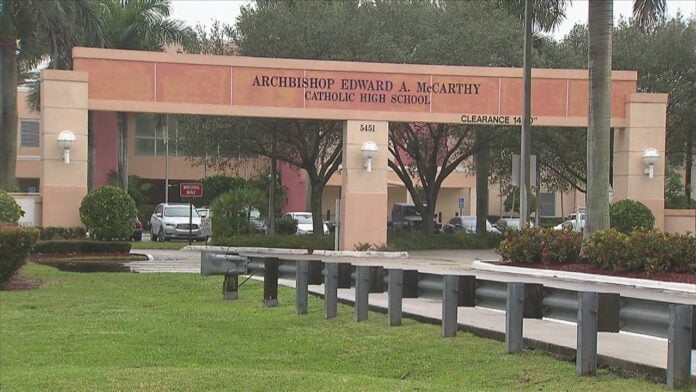
Archbishop McCarthy High School

Two private schools in Broward County were briefly placed on lockdown Wednesday morning after law‑enforcement officials responded to what the Broward Sheriff’s Office described as a “federal immigration matter” in the area. The precautionary lockdowns have since been lifted.

Officials were dispatched near Archbishop McCarthy High School in Southwest Ranches and the nearby church, The Pentecostals of Cooper City, following a traffic stop that led to the immigration‑related incident. According to the Florida Highway Patrol, the driver fled the scene and remains at large. Aviation units and other law enforcement resources were deployed to assist with the response.

As a safety measure during the nearby police activity, both Archbishop McCarthy High School and St. Marks Catholic School were placed on lockdown, the Archdiocese of Miami confirmed. The lockdowns have since been lifted, and no injuries were reported.

Can federal immigration agents operate in schools?

The Department of Homeland Security (DHS) says that Immigration and Customs Enforcement (ICE) does not raid or target schools. “The facts are DHS’s directive allowing ICE to go into schools gives our law enforcement the ability to do their jobs. Our agents use discretion. Officers would need secondary supervisor approval before any action can be taken in locations such as a school. We expect these to be extremely rare,” their website states.

Broward County is home to a sizable and diverse immigrant population, including both adults and children from Latin America, the Caribbean, Africa and elsewhere. Many families in the area include immigrants who are U.S. citizens, legal residents, or have mixed‑status households. Nationwide,

Broward and nearby South Florida counties have long been regional hubs for immigrant communities, contributing to the local economy, culture, schools and workforce.

BSO faces potential split as Pompano Beach examines policing alternatives

BSO broward sheriff's office

City leaders in Pompano Beach are weighing whether to continue contracting with the Broward County Sheriff’s Office (BSO) or to establish their own police department, following the release of a detailed 143-page standalone study examining the financial and operational implications of each option.

The report breaks down several possibilities, including staying with BSO, forming a new city police department, or adopting a hybrid system. According to the study, staffing a new department would require an estimated 424 personnel, costing roughly $89 million annually in salaries alone. Operating costs would add approximately $99.8 million, while new facilities, vehicles, and equipment could total $145.5 million.

By contrast, staying with BSO under the current contract — which is in a one-year extension for 2026 — would cost the city $75 million per year. During a transitional period, that contract would decrease from $139.5 million to $81.2 million. The sheriff’s office has also requested an additional $6.4 million to cover added deputies and salary increases.

Mayor Rex Hardin emphasized the importance of community input in the decision. “It comes down really to what the residents want. We’ve got to get the information out there to them. We got to listen to them. We got to hear what they have to say,” he said.

Commissioners expressed concern about the high cost of starting a new department. “Really an astronomical number, and it seems very complicated,” Commissioner Rhonda Sigerson-Eaton said.

Broward Sheriff Gregory Tony addressed the commission Tuesday, assuring them that BSO will continue to provide full service regardless of the city’s ultimate decision. “They’ve done an impeccable job in being professionals and giving you the data that you need to make an informed decision. And whatever that decision may be, we will stand and support this city till our last day of service,” Tony said.

Tony also criticized similar reports used by neighboring Deerfield Beach, which opted to break away from BSO last year, arguing that the consultant’s conclusions were “incomplete and wrong.” Deerfield Beach cited rising costs, population growth, and the potential for savings as reasons for creating its own police force.

The Pompano Beach study also noted that the city could adopt a hybrid approach, retaining BSO for specialized units such as the bomb squad or dive team while handling other policing functions in-house. Establishing a new department is projected to take approximately two-and-a-half years.

City officials have scheduled community review sessions to discuss the findings and gather feedback. Meetings will be held Feb. 26 at the E. Pat Larkins Community Center, 520 Dr. Martin Luther King Blvd., and March 12 at the Cultural Center, 50 W. Atlantic Blvd., both starting at 6 p.m.

Mayor Hardin cautioned that the decision will require careful deliberation. “We’ve got a lot of homework to do before we come together and make decisions,” he said, noting that no final timetable has been set.

Jamaica’s PM Holness warns Cuban crisis will ripple across Caribbean

Andrew Holness

Jamaica’s Prime Minister Andrew Holness is urging Caribbean leaders to confront the worsening crisis in Cuba with what he called “clarity and courage,” warning that the fallout will extend well beyond the island’s borders.

Speaking Tuesday at the opening of the 50th Regular Meeting of the Conference of Heads of Government of CARICOM in St. Kitts and Nevis, Holness said Jamaica supports “constructive dialogue” between Cuba and the United States aimed at easing tensions and promoting stability.

“We believe there is space, perhaps more space now than in years past, for pragmatic engagement that protects the Cuban people from any further deterioration in their circumstances and instead promotes national and regional prosperity,” he said.

His remarks come amid a deepening fuel crisis in Cuba following an Executive Order signed on January 29 by U.S. President Donald Trump restricting oil supplies to the island. The order applies trade pressure to countries that provide fuel to Cuba, tightening energy access and compounding economic strain.

Cuban authorities have responded by shortening the work week and scaling back essential public services in an effort to conserve limited oil supplies.

U.S. Secretary of State Marco Rubio is expected to travel to St. Kitts and Nevis on Wednesday for talks with regional leaders, placing the issue squarely on the CARICOM agenda.

Holness cautioned that the situation in Cuba will not remain contained.

“It will affect migration, security and economic stability across the Caribbean region. It is therefore important that we carefully consider this matter and take collective action,” he said.

He noted that Cuban health professionals have long served across the Caribbean, underscoring the depth of the island’s regional ties.

At the same time, Holness reaffirmed Jamaica’s commitment to democratic governance and economic openness.

“Jamaica stands firmly for democracy, human rights, political accountability and an open, market-based economy,” he said. “We do not believe that long-term stability can exist where economic freedom is constrained and political participation is limited.”

While acknowledging that Jamaica is “sensitive” to the struggles of the Cuban people, he stressed that sustainable prosperity requires “openness to ideas, to enterprise, to investment and to the will of the people.”

“This moment, therefore, calls not for rhetoric but for responsible statecraft even as we encourage support for humanitarian relief,” Holness added.

CARICOM leaders are meeting under the theme “Beyond Words, Action Today for a Thriving, Sustainable CARICOM,” with regional security, economic resilience and external pressures expected to dominate discussions.

‘To partner with the US is to defend the region,’ says Trinidad PM at CARICOM Summit

Prime Minister of Trinidad and TobagoPrime Minister of Trinidad and Tobago

Trinidad and Tobago Prime Minister Kamla Persad-Bissessar delivered a pointed and unapologetic defence of her government’s cooperation with the United States, while rebuking regional leaders over what she described as political interference within member states.

Speaking at the 50th Regular Meeting of the Conference of Heads of Government of CARICOM in St. Kitts and Nevis, Persad-Bissessar said the regional body must not be used to advance partisan interests across borders.

“CARICOM is an organization [that] should not be misused by anyone to benefit or protect political parties and friends affiliated with the incumbent government,” she said.

Without naming specific countries, she accused some regional governments of sending party representatives into fellow member states to campaign during national elections.

“If we have to hug up each other and cooperate, it cannot be that last week you sent your person down to St. Vincent or to Jamaica or to wherever,” she said. “No leader here sitting would want another CARICOM head of state to send people to campaign in your domain. That should never happen.”

Turning to national security, Persad-Bissessar strongly defended her administration’s partnership with U.S. President Donald Trump, Secretary of State Marco Rubio and the U.S. military in tackling narcotics trafficking and gang violence.

“I say thank you today for standing firm against narco-trafficking, human and arms smuggling originated from Venezuela,” she said.

Trinidad and Tobago had been grappling with illegal migration, arms smuggling and gang activity linked to Venezuela, she said, and credited recent policy changes — including closer security coordination with Washington — for a significant drop in homicides.

In 2024, she noted, the country recorded 623 murders in a population of roughly 1.4 million, with 40% described as gang-related and driven by narcotics and firearms. Crime, she argued, had previously been framed as a “public health issue,” a characterization she rejected.

“Because of the crime, you’re not alive to get any public health. You’re dead,” she said.

Following what she described as a shift in policy and enhanced U.S. military cooperation in the Caribbean, Persad-Bissessar said Trinidad and Tobago’s murder rate declined by 42% in 2025 — a reduction of 257 killings.

“That’s 257 less people who would have been dead had we not taken that course of action,” she said, again thanking Trump, Rubio and U.S. security forces for their assistance.

“To partner with the U.S. is not to undermine the Caribbean region, but to defend it,” she said, adding that her government would continue working with Washington “in the best interests of our citizens to drive destabilizing and destructive forces out of our country, out of our region, and out of our hemisphere.”

Persad-Bissessar also extended sympathy to the government and people of Mexico amid ongoing cartel-related violence there, warning that Trinidad and Tobago could have faced a similar trajectory without decisive action.

Her remarks introduced a sharp tone to the CARICOM meeting, blending regional diplomacy with domestic political tensions and a firm declaration of her government’s security strategy.

‘CARICOM is being tested’: St. Vincent PM pushes for deeper regional integration

Godwin Friday

St. Vincent and the Grenadines Prime Minister Godwin Friday has urged Caribbean leaders to accelerate regional integration, warning that small states face mounting global uncertainty and cannot afford complacency.

Addressing the 50th Regular Meeting of the Conference of Heads of Government of CARICOM, Friday — who also chairs the Organisation of Eastern Caribbean States (OECS) — acknowledged persistent criticism about the slow pace of regional progress. But he argued that the very existence of CARICOM and the OECS underscores their necessity.

“Today, we would feel their absence and set about working to create them. Thankfully, CARICOM remains,” he said. “But now, more than ever, we are being tested. We are challenged from inside and out.”

Friday painted a sobering picture of the global landscape, saying the world “grows more perilous daily” and that long-standing international rules and practices are shifting “in troubling ways.”

Those changes, he said, “call upon us to look to one another for support.”

“Where we thought we could safely rely on familiar roads of the road, we must now tread cautiously and maneuver as best we can to advance our individual and collective interests,” he told fellow heads of government.

Despite the challenges, Friday maintained that regionalism remains the strongest safeguard for Caribbean states.

“Our persistence on the path of regionalism, no matter the challenges, is the best way forward. Let us strengthen resolve about that,” he said.

He committed to working closely with his regional counterparts, stressing that his position is grounded in pragmatism rather than sentiment.

“I am committed to working alongside all of my colleagues, not merely out of sentimentalism, but also because there is no better alternative that I can think of for my country, St. Vincent and the Grenadines,” Friday said.

Beyond defending integration, he called for it to move faster and become more tangible to citizens. He urged leaders to address persistent barriers to trade and commerce, close skills gaps, confront climate change with adequate resilience financing, and take collective positions on pressing regional crises, including Haiti and Cuba.

He also emphasized the need to make CARICOM more visible and relevant to ordinary people, arguing that its achievements — however incremental — should be more actively promoted.

In closing, Friday challenged regional leaders to “quicken the pace” of their work, suggesting that while the road ahead may be uncertain, it is safer and more certain when traveled together.

Jamaican national arrested in Fort Lauderdale for million-dollar drug seizure

A 33-year-old Jamaican man made his initial appearance in federal court in Fort Lauderdale on Monday after authorities said he was caught transporting a large shipment of cocaine and marijuana by sea.

Prosecutors allege that Rudalph Hylton was trafficking millions of dollars’ worth of narcotics from Jamaica aboard a 45-foot Sea Ray vessel named “Lady B.”

According to a federal criminal complaint, the crew of the United States Coast Guard Cutter Richard Etheridge conducted a routine boarding of the vessel in the Atlantic Ocean, about eight nautical miles northeast of Haulover Inlet.

On board were Hylton and another man identified as Aldon Delano Brown. Authorities said both men are Jamaican nationals.

During what was described as a seaworthiness inspection, Coast Guard officers reported noticing manipulated panels and fresh fiberglass work inside the boat. The complaint states that the boarding team ultimately discovered a hidden compartment beneath the floor of the cabin, concealed with a small opening.

Inside the compartment, investigators said they found 68 bricks of cocaine weighing more than 70 kilograms — approximately 154 pounds — and 14 bricks of marijuana weighing about 12 kilograms, or roughly 26 pounds.

While the complaint does not specify a street value for the drugs, according to Local10, federal authorities have previously estimated that a 70-kilogram cocaine seizure can exceed $10 million in value, depending on the market.

According to court documents, Hylton told investigators that he and Brown had taken the vessel from Fort Lauderdale to Jamaica about a month earlier. While in Jamaica, he allegedly said he was offered $100,000 to return the boat to Fort Lauderdale knowing illegal narcotics would be concealed on board.

Hylton was arrested and charged with three federal drug trafficking offenses. He was booked into the Broward County jail on behalf of the U.S. Marshals Service and remained in custody as of Tuesday.

Court records indicate he is scheduled to return before a federal judge next Monday for a pre-trial detention hearing. Brown was not listed in Broward County or federal jail records as of Tuesday morning.

Building data-centric security models for modern enterprises

Introduction to Data-Centric Security

As digital transformation accelerates, enterprises face increasing threats to data privacy and integrity. Traditional security approaches that focus primarily on perimeter defense are no longer sufficient. A data-centric security model focuses directly on securing the data itself, wherever it resides or moves. 

This shift is essential as organizations store and process information across cloud, on-premises, and hybrid environments. By prioritizing data protection, businesses can better manage risks in a complex threat landscape.

Why Focus on Data-Centric Security?

Data is the most valuable asset for many organizations. By protecting data, companies can reduce the risks posed by breaches and unauthorized access. Data-centric security models ensure that information is safeguarded even if other parts of the system are compromised, cybersecurity strategies for data security, these models help businesses comply with regulations and protect sensitive information throughout its lifecycle. 

Additionally, focusing on data-centric protection supports business continuity and helps prevent costly data loss incidents. As cyber threats become more sophisticated, adopting this model allows organizations to stay ahead of attackers.

Core Principles of Data-Centric Security

A data-centric approach revolves around three main principles: data classification, access control, and encryption. Data classification involves identifying and labeling data based on their sensitivity. Access control ensures that only authorized users can view or use certain data. Encryption protects data in transit and at rest, making it unreadable to unauthorized parties. For detailed guidelines on handling sensitive data, organizations can review resources from the National Institute of Standards and Technology. 

These principles work together to create multiple layers of protection, reducing the risk of data exposure. Regular audits and reviews of classification policies help maintain accuracy as new data is generated or existing data is moved between systems. Organizations should also consider data masking and tokenization for added protection, especially when sharing information with third parties or using cloud services.

Implementing Data-Centric Security in Modern Enterprises

To build a successful model, organizations need to start with a comprehensive data inventory. This process identifies where data is stored, processed, and transmitted. Once data locations are mapped, security teams can apply the right protection methods for each data type. Ongoing monitoring and regular risk assessments are crucial to identify new threats and vulnerabilities. Enterprises should also provide employee training to foster a culture of security awareness. 

Educating staff on recognizing phishing attacks, proper data handling, and reporting suspicious activities is vital. In addition, clear documentation of security policies and procedures ensures everyone understands their responsibilities. According to Carnegie Mellon University’s Software Engineering Institute, effective data-centric security requires collaboration between technical and non-technical teams to ensure policies align with business objectives.

The Role of Technology and Automation

Modern tools help automate data discovery, classification, and protection. These technologies can scan networks for sensitive data, apply encryption automatically, and detect suspicious activity in real time. Automation reduces the risk of human error and ensures consistent application of security policies. The Department of Homeland Security offers insights on advanced data protection tools and their benefits at. 

Integrating artificial intelligence and machine learning can further improve threat detection by identifying unusual patterns that may indicate a breach. Automated systems can also provide real-time alerts, speeding up response times and minimizing potential damage. However, it’s important to regularly update and test these tools to ensure they remain effective against evolving threats.

Compliance and Regulatory Considerations

Enterprises must comply with various laws and regulations, such as GDPR, HIPAA, and CCPA. These rules often require organizations to implement specific safeguards for personal and sensitive data. A data-centric security model supports compliance by providing detailed control over data access and protection. For an overview of key regulations. Regular compliance audits help organizations stay up to date with changing legal requirements. 

Documentation of security measures, data flows, and access logs is essential for demonstrating compliance to regulators. Failure to comply can result in significant fines, legal consequences, and reputational damage. By embedding compliance into the data-centric security framework, organizations can reduce risks while building trust with customers and stakeholders.

Challenges in Adopting Data-Centric Security

Transitioning to a data-centric model can be complex. Organizations may face challenges such as legacy systems, a lack of visibility into data flows, and limited resources. Overcoming these obstacles requires strong leadership, clear policies, and ongoing investment in security technologies. Collaboration between IT, legal, and business teams is also essential for success. Integrating new security tools with existing systems can be difficult, especially in large organizations with diverse infrastructure. 

Employee resistance to change can also slow progress. To address these issues, organizations should prioritize effective communication, provide ongoing training, and set realistic implementation goals. It’s also important to measure progress through regular reviews and adapt strategies as needed.

Best Practices for Sustaining Data-Centric Security

Maintaining an effective data-centric security model requires continuous effort. Regularly update data classification schemes as business needs evolve and new data types are collected. Conduct routine risk assessments to identify emerging threats and vulnerabilities. Encourage a security-first mindset across all levels of the organization, from executives to entry-level employees. 

Establish clear incident response plans so teams know how to act quickly in the event of a breach. Invest in ongoing training and awareness programs to keep security top of mind. Monitor regulatory changes to ensure ongoing compliance and adjust security policies accordingly. Finally, foster a culture of transparency and accountability to build trust with customers, partners, and regulators.

Conclusion

Building a data-centric security model is vital for protecting valuable information in modern enterprises. By focusing on the data itself, organizations can address evolving threats, meet regulatory requirements, and maintain trust with customers and partners. A well-implemented data-centric approach forms the foundation of a resilient and secure digital environment. As technology continues to advance, enterprises must remain vigilant and proactive in adapting their security strategies to safeguard their most important asset: data.

FAQ

What is a data-centric security model?

A data-centric security model prioritizes protecting the data itself, rather than just the networks or devices where data is stored or processed.

How does data-centric security differ from traditional security?

Traditional security models focus on securing the perimeter, while data-centric security protects data at every stage, regardless of where it is located.

Why is data classification important in data-centric security?

Data classification helps organizations identify sensitive data and apply appropriate controls to protect it based on its level of risk.

What are some challenges in adopting data-centric security?

Challenges include dealing with legacy systems, gaining visibility into all data locations, and ensuring consistent policy enforcement across the organization.

How can automation help with data-centric security?

Automation streamlines tasks like data discovery, classification, and protection, reducing human error and ensuring security measures are applied consistently.

Jamaica’s PM Andrew Holness announces creation of Ministry of Defence

Andrew Holness

Prime Minister Andrew Holness has confirmed the creation of a dedicated Ministry of Defence, a strategic restructuring designed to enhance Jamaica’s national security and disaster response capabilities.

Previously, the Jamaica Defence Force (JDF) was overseen by the Ministry of National Security. Under the new arrangement, the JDF will be administered directly through the Ministry of Defence, which sits within the Office of the Prime Minister. Holness said the change aims to ensure stronger coordination at the highest level.

“We have now formally established a Ministry of Defence within the Office of the Prime Minister. This means the JDF is administered directly through that Ministry to ensure stronger coordination at the highest level,” Holness said, adding that the restructuring was initiated during Hurricane Melissa to improve the speed, clarity, and effectiveness of decision-making.

The move also includes relocating the Office of Disaster Preparedness and Emergency Management (ODPEM) into the Prime Minister’s Office, allowing disaster response and defence operations to work in full alignment.

Holness noted that the JDF played a critical role throughout the hurricane, supporting communities, protecting citizens, and ensuring continuity of government. “The relief phase has ended, recovery is nearly complete, and we are now entering reconstruction,” he said.

Looking ahead, the Prime Minister indicated the government is committed to strengthening the JDF’s maritime and airlift capabilities, calling them “national assets that help us secure and serve Jamaica.”

Reggae Month and Black History Month celebrations spotlight Caribbean excellence

February’s observances of Reggae Month in Jamaica and Black History Month across the United States brought a wave of tributes, awards, and historic moments highlighting Caribbean culture and Black achievement.

In South Florida, officials in Lauderhill recognized several of Jamaica’s biggest music stars on Monday, February 23, presenting them with citations for their humanitarian work following the devastation caused by Hurricane Melissa.

Among those honored were Vybz Kartel, Beenie Man, Busy Signal, Spragga Benz, and Wayne Wonder. The recognition came during a special commission meeting held as part of International Reggae Month celebrations. City officials said the artists were selected for their charitable contributions in the aftermath of the October 28 Category 5 hurricane, which prompted widespread relief efforts from members of the entertainment community to support Jamaicans affected by the disaster. Lauderdale Lakes also officially proclaimed Feb. 10, 2026, as “Buju Banton Day,” honoring the legendary deejay’s global influence.

Back in Jamaica, recognition is being given to some of the music’s most influential figures. Reggae veteran Ken Boothe is set to be inducted into the Jamaica Music Museum Hall of Fame on Feb. 27. Other honorees include producer Mikey Bennett and veteran performers Tristan Palmer, Pinchers, and Little John. Frankie Campbell, a founding member of the Fab 5 Band, will receive the Minister’s Lifetime Achievement Award.

Beyond music, Black History Month events across the United States highlighted the influence of Caribbean people in politics, art, and business. In Brooklyn, New York City opened a major new community facility named for trailblazing Caribbean-American political icon Shirley Chisholm, with officials highlighting her regional heritage and lifelong commitment to public service as central to the project’s significance. Mayor Zohran Kwame Mamdani announced the opening of the Shirley Chisholm Recreation Center in East Flatbush on February 10. The approximately 74,000-square-foot facility, located in Nostrand Playground, is the largest of its kind in Brooklyn, the first new Parks recreation centre built in more than a decade, and the first ever in Central Brooklyn’s Little Haiti community.

Caribbean creatives also made waves in the fashion world. Jamaican-born visual artist Andy Ballentine made history during New York Fashion Week 2026, held February 11–16, by becoming the first fine artist exhibitor featured by The Bureau. Ballentine brought fine art directly into the fashion arena, blending traditional painting with wearable design.

Meanwhile, Jamaican-born designer Rachel Scott took centre stage on February 15 with her Diotima Fall 2026 ready-to-wear collection, capping off a busy week that also saw her debut as creative director of Proenza Schouler. Founded in 2021, Scott’s label has developed a loyal following for its wearable craft and sensual designs that blend Jamaican, Caribbean, and European influences.

Across South Florida, cities marked the month with events honoring community leaders and entrepreneurs. In North Miami Beach, officials used their February commission meeting to recognize residents and organizations whose advocacy and community work have made a lasting impact. Honorees included community leader Anie Alerte, the Mothers of Washington Park, the Black Affairs Advisory Board, and Erika Arbulu, among others recognized for their service.

In Miramar, the Black History Month Business Awards and Fireside Chat celebrated Black excellence in business, leadership, and innovation, featuring remarks from Mayor Wayne Messam and music industry figure Teddy Riley.

In Miami, County Commissioner Eileen Higgins was recognized as a “Defender of the Dream” during the Mentoring the Dream Gala hosted by the Dr. Martin Luther King Jr. Parade and Festivities Committee. The event also highlighted the legacy of trailblazing public servant Barbara Carey-Shuler, the first Black woman to serve on the Miami-Dade County Commission and later its first Black chair.

From Kingston to New York and South Florida, this year’s celebrations underscored the lasting global influence of reggae music and the continuing contributions of Caribbean people to culture, politics, and community life.