Car accidents kill over 40,000 people in the U.S. every single year. The top causes are distracted driving, speeding, and impaired driving, and all three are preventable. These aren’t rare worst-case scenarios. They’re the everyday conditions of every road you drive on.
Most people underestimate their personal risk. Many drivers think they are above average, but crash statistics show otherwise. Serious collisions don’t mostly involve reckless strangers. They involve ordinary people on familiar roads, closer to home than anyone expects. That’s exactly why these statistics matter.
Knowing where accidents happen, who gets hit hardest, and which behaviors actually change your odds—that’s what this article covers. Not to alarm you, but to give you a sharper, more accurate read on the road.
Number of Car Accidents That Happen in the U.S. Each Year
According to the NHTSA, approximately 6.1 million police-reported crashes happen in the U.S. annually. That works out to about 16,700 crashes per day, roughly one every five seconds.
Of those crashes:
Between 38,000 and 43,000 result in fatalities each year
Nearly 2.3 million people are injured annually
Millions more involve property damage only
Globally, the WHO estimates that road traffic crashes kill approximately 1.19 million people every year, which makes them the leading cause of death for people between ages 5 and 29.
The Deadliest Times to Drive
Not all hours on the road carry the same risk. The window between 6 PM and midnight consistently produces the highest fatality rates. Reduced visibility, fatigue, and alcohol all converge during those hours.
July and August are statistically the most dangerous months. School’s out, roads are busier, and holiday weekends add volume and risk. The combination creates conditions that spike crash rates every summer without fail.
Rush hour (7–9 AM and 4–7 PM) can be especially dangerous. Heavy traffic leads to more rear-end crashes, and drivers are often distracted or stressed. Even at lower speeds, slower reaction times can quickly turn small mistakes into serious accidents.
Who Faces the Highest Crash Risk?
Age is one of the strongest predictors of crash risk, but not always in the way people assume.
Teen drivers (16–19) are three times more likely to die in a crash than drivers aged 20 and older. Per mile driven, no other demographic comes close. Inexperience is part of it, but overconfidence and peer pressure play a bigger role than most people acknowledge.
Drivers over 70 can face higher risk because of slower reaction times and health issues. Many reduce this risk by driving less and avoiding difficult situations like night driving.
Male drivers account for nearly 71% of all U.S. traffic fatalities. Researchers point to higher rates of speeding, drunk driving, and risk-taking behavior as the primary explanation.
Distracted Driving
The NHTSA linked distraction to 3,522 traffic deaths in a single study year. Texting is the most cited behavior, but eating, adjusting music, and side conversations all fragment attention in ways that matter at speed.
Here’s the number that puts it in perspective: Reading a text at 60 mph means traveling the full length of a football field without looking at the road. That’s not a metaphor—it’s the math.
Most states have their own hands-free laws with fines reaching $500 or more for repeat violations.
Speeding and Drunk Driving
Speed contributes to roughly 29% of all traffic fatalities and more than 11,000 deaths per year. The danger isn’t linear. A crash at 60 mph doesn’t just hurt more than one at 40 mph; it’s exponentially more likely to be fatal. Higher speeds shrink both reaction time and survival margin simultaneously.
Alcohol-impaired driving accounts for about 32% of all U.S. traffic deaths. The federal legal threshold is a blood alcohol content (BAC) of 0.08% or higher, standardized across all states under 23 U.S.C. § 163, which ties that requirement to federal highway funding. What’s worth noting: measurable impairment begins around 0.05% BAC, well before most people feel drunk.
What to Actually Do with This Information
Statistics change how we see risk, but habits are what keep people safe. Road danger isn’t random; it’s higher at certain times, places, and behaviors that are easy to recognize.
Putting your phone away before you start the car, staying off the road between midnight and 3 AM when tired, and treating every intersection like it deserves your full attention. These habits may seem small, but they often make the difference between staying safe and relying on luck.
Key Takeaways
In the U.S., nearly 6.1 million crashes happen every year.
Out of those, 1.19 million people die every year.
The deadliest time to drive is between 6 PM and midnight.
Drivers between the ages of 16 and 19 are 3x more likely to die in a crash.
Distracted driving leads to approximately 3,522 traffic deaths, according to NHTSA.
Crash games originally attracted players because they required almost no learning. The player places a bet, watches the multiplier rise, and decides when to cash out before the crash. But this structure quickly becomes predictable, especially for those who play in short sessions. That is why hybrid crash formats are becoming more noticeable than ordinary fast rounds: they add extra decisions, visual stages, and a more complex risk dynamic to the basic cash-out mechanic.
Why a simple crash structure no longer always feels sufficient
The classic fast round is convenient because of its directness, but that same directness limits sustained interest. After a few launches, the player understands the entire cycle: bet, multiplier growth, cash out or loss. In Vietnam, where mobile gaming has grown significantly and crash-style titles are among the most-played instant game categories, this predictability has pushed players toward formats that offer more decision points within the same short session. In a section with such games, casino Mcw is worth evaluating not only by the speed of the round, but by how much the format gives the player a meaningful choice within a compact time window.
A hybrid crash format works differently. It may add several cash-out levels, a visual progress sequence, a bonus transition stage, a choice between a safer and a riskier continuation, or dual bet panels that allow two simultaneous positions with different exit targets. Pragmatic Play’s Spaceman, released in 2022, allows the player to cash out 50% of a bet while leaving the remaining 50% in play. SmartSoft’s JetX supports dual independent bets per round, each with its own auto cash-out multiplier, plus a progressive Galaxy Jackpot that can trigger randomly when the multiplier exceeds 1.5x on a stake of at least $1. These are structural additions, not cosmetic ones.
How extra decisions change player behavior
In an ordinary crash round, the most common error is a late exit: the player waits for a x2.50 or x3.00 multiplier when a smaller result could already have been locked in. In a hybrid format, the decision set is broader. The player may split the risk across two positions, set one auto cash-out at x1.50 for consistency and another at x10 for upside, or choose to secure part of the win early while leaving the rest in play. This creates more control, but also requires more attention to stake sizing, because overconfidence in additional features tends to push session budgets higher than planned.
How to recognize a hybrid format
Before launching, it is worth examining the internal structure rather than the title alone. Key indicators of a hybrid format include:
dual bet panels — the ability to place two simultaneous bets with different cash-out targets, as in Aviator by Spribe (97% RTP) and JetX by SmartSoft (97% RTP, up to 25,000x);
partial cash-out mechanics — the option to secure 50% of a position while leaving the remainder active, as in Spaceman by Pragmatic Play (released 2022);
progressive jackpot layer — a secondary prize pool that triggers independently of the main multiplier, present in JetX’s Galaxy Jackpot;
auto cash-out with configurable targets — a preset multiplier at which the game automatically exits the position, reducing reaction-time risk in rounds that resolve in 5 to 10 seconds;
bonus stage or ladder mechanic — a transitional phase where the risk profile changes mid-round, as in Evolution’s Skyward or ladder-based formats where each step carries its own payout and bust probability;
live social layer — visible cash-out events from other players in real time, which adds a behavioral reference point that classic crash formats do not provide.
Why visual presentation increases interest in a short round
Hybrid crash games are becoming more noticeable partly because they move away from a bare rising chart. Aviator uses a plane, JetX uses a jet, Spaceman uses an astronaut, and Boom City by Pragmatic Play uses a dice-and-bonus hybrid. In Vietnam’s mobile-first environment, where sessions are often short and the interface is the primary interaction point, this visual differentiation matters. The round feels like a short scene rather than a number changing on screen, which sustains attention more effectively across repeated plays.
But visual presentation should not replace the assessment of underlying math. Aviator and JetX both carry a 97% RTP, which means an expected loss of $0.03 per $1 wagered over a long series. The house edge does not change because the animation is more engaging. A player who sizes bets based on the visual excitement of a bonus stage rather than the actual stake-to-bankroll ratio will exhaust a session budget faster than the RTP alone would suggest.
Where a hybrid can become too aggressive
Extra features are useful only when the player understands their cost. The format becomes aggressive when the round resolves in under five seconds, the multiplier rises too quickly to allow manual reaction, stake sizing increases after a loss to recover quickly, or visual effects from a bonus stage distract from the actual amount at risk. Under such conditions, the hybrid mechanic no longer diversifies the session but pushes toward more frequent decisions and sharper balance swings.
A practical example shows the difference. A player with an $80 balance allocates $20 to a crash session and bets $1 per round with an auto cash-out set at x1.50. At that target, the expected win per round is $0.50, and the position is closed automatically without manual reaction lag. If after two failed rounds the player disables auto cash-out, raises the stake to $4, and chases x5 or x7 to recover losses, the session budget moves in sudden jumps that the original plan did not account for. The hybrid feature did not cause this, but it created the conditions where that escalation felt available.
Several islands across the eastern Caribbean were shaken Saturday morning by a magnitude 6.0 earthquake, with tremors felt across a wide swath of the region but no immediate reports of damage or injuries.
According to preliminary seismic data, the quake struck around 10:50 a.m. local time and was centered roughly 43.5 miles from the village of Codrington on Antigua and Barbuda, near the island of Barbuda.
Shaking was reported across multiple territories, including the British Virgin Islands, Dominica, Guadeloupe, Martinique, Puerto Rico, the United States Virgin Islands, Sint Maarten, Saint Martin, Saint Kitts and Nevis, Montserrat, Anguilla, Saint Barthélemy, the Caribbean Netherlands, and parts of Venezuela.
Despite the wide reach of the tremor, officials reported no structural damage or injuries in the immediate aftermath. Emergency agencies across the region also confirmed there was no tsunami threat following the quake.
Seismologists noted that the Caribbean sits along a highly active tectonic boundary where the Atlantic and Caribbean plates interact, making moderate earthquakes relatively common across the Lesser Antilles arc.
While the quake was widely felt, authorities said they would continue to monitor the region for aftershocks as a precaution.
The countdown to the 2026 Republic Bank Caribbean Premier League (CPL) has officially begun, and the annual player draft has already reshaped the tournament landscape with marquee transfers, emotional reunions, and strategic roster rebuilds across all seven franchises.
Set to run from August 7 through September 20, the upcoming CPL season promises another fiercely competitive chapter, with overseas signings still to come in the weeks ahead. Yet even before the international names arrive, several franchises have already made bold statements through their local selections.
The most stunning development of the draft came with the end of an era in Guyana.
Barbados pulls off draft’s biggest move
After five seasons with the Guyana Amazon Warriors, star left-arm spinner Gudakesh Motie is headed to the Barbados Tridents in what quickly became the defining move of the draft.
Barbados not only secured one of the Caribbean’s premier T20 bowlers but also reunited with explosive Guyanese batter Sherfane Rutherford, who previously represented the franchise in 2025.
The Tridents leaned heavily into continuity as they exercised their Right to Match Options to retain Brandon King, Kadeem Alleyne, Rivaldo Clarke, Johann Layne, and Kofi James. Zishan Motara will also return in Barbados colors for the 2026 campaign.
Knight Riders keep championship core together
Fresh off their title-winning season, the Trinbago Knight Riders chose stability over sweeping change.
The defending champions used RMOs to preserve the spine of their championship squad, retaining veteran stars Sunil Narine, Nicholas Pooran, Kieron Pollard, Akeal Hosein, and Terrance Hinds.
At the same time, the franchise injected fresh energy into the line-up. Barbadian all-rounders Justin Greaves and Dominic Drakes will suit up for the Knight Riders for the first time.
There was also a homegrown success story, as Jyd Goolie returns to represent his native franchise after spending the 2025 season with the St Kitts & Nevis Patriots. Dexter Sween and Abdul Raheem-Toppin complete the list of new additions.
Patriots assemble historic opening combination
The St Kitts & Nevis Patriots may have produced the draft’s most intimidating batting partnership.
The franchise signed Johnson Charles, the CPL’s all-time leading run-scorer, and paired him with Andre Fletcher, retained through the RMO process and currently second on the league’s career scoring list.
That combination instantly gives the Patriots one of the most experienced and destructive opening duos in tournament history.
The team also retained Kyle Mayers, Alick Athanaze, and Mikyle Louis, while former title-winning captain Jason Holder returns to the franchise in a notable reunion. Kevin Wickham and Obed McCoy are set to wear Patriots colors for the first time.
Warriors respond quickly after losing Motie
Gudakesh Motie’s departure undoubtedly leaves a major void for the Guyana Amazon Warriors, but the franchise wasted little time reshaping its bowling attack.
Former Saint Lucia Kings spinner Khary Pierre was brought in as Motie’s replacement, giving the Warriors another experienced left-arm option.
Guyana also succeeded in maintaining much of its core identity, retaining Shimron Hetmyer, Romario Shepherd, Shai Hope, and rising fast-bowling star Shamar Joseph through RMOs.
The franchise doubled down on local representation as Ronaldo Alimohamed, Veersammy Permaul, Mavendra Dindyal, and Jonathan van Lange joined the roster. Impressively, 10 of the Warriors’ 12 local selections are Guyanese players.
Jamaica Kingsmen add firepower
The Jamaica Kingsmen focused heavily on explosive T20 talent during the draft, securing two of the region’s most dangerous match-winners in Rovman Powell and Andre Russell.
They will join a strong Jamaican contingent featuring Odean Smith, Vitel Lawes, Jeavor Royal, and Kirk McKenzie.
The Kingsmen also strengthened their depth with experienced CPL performers Keemo Paul, Keacy Carty, and Shaqkere Parris.
Falcons land major homecoming
The Antigua & Barbuda Falcons engineered one of the draft’s most emotional storylines by bringing Antiguan fast bowler Alzarri Joseph back home after his five-season spell with the Saint Lucia Kings.
The Falcons also secured another headline acquisition by signing destructive opener Evin Lewis, ending his lengthy association with the Patriots that stretched more than a decade.
Fabian Allen, Jayden Seales, and Amir Jangoo were retained through RMOs, while Shamar Springer, Rahkeem Cornwall, and Karima Gore all return from last season’s squad.
Anderson Mahase and Anderson Phillip round out the Falcons’ new-look roster.
Saint Lucia prioritizes continuity and youth
The Saint Lucia Kings opted for measured evolution rather than dramatic overhaul.
The franchise retained Roston Chase, Matthew Forde, and Keon Gaston while adding one of the Caribbean’s most promising young batters in Antiguan talent Jewel Andrew.
Saint Lucian McKenny Clarke also returns to the squad, while Trinidadian batter Kamil Pooran joins alongside Damion Joachim, Joshua Bishop, and Darron Nedd.
New rivalries, new expectations
Although many franchises emphasized continuity, the 2026 draft still produced enough major moves to alter the competitive balance across the league.
Motie’s departure from Guyana, Charles’ arrival in St Kitts, Alzarri Joseph’s return to Antigua, and Barbados’ aggressive recruitment strategy have already created fresh intrigue before a ball has even been bowled.
With overseas signings still pending, the foundations for another high-stakes CPL season are now firmly in place.
Trinidad and Tobago’s cycling team opened its first UCI Class 1 meet of the year in emphatic fashion on Friday night, producing two gold medal performances at the Copa Chile de Ciclismo de Pista #1 in Santiago.
Sprint standouts Makaira Wallace and Njisane Phillip led the charge at the Velodromo de Peñalolén, each climbing to the top of the podium in commanding style, while endurance specialist Teniel Campbell added a silver medal to cap an impressive evening for the twin-island republic.
Wallace surges to keirin crown
Makaira Wallace ignited Trinidad and Tobago’s medal run with a composed and explosive performance in the women’s keirin final.
Wallace outpaced a competitive field to secure gold ahead of Chile’s Daniela Colilef, who finished with silver, while Colombia’s Luna Alvarez claimed bronze.
Host nation rider Paula Molina narrowly missed the podium in fourth place, followed by Argentina’s Valentina Mendez in fifth. Colombia’s Marianis Sanchez completed the six-rider final.
The victory marked a strong international statement from Wallace as Trinidad and Tobago began the new track cycling season against elite regional competition.
Phillip dominates sprint competition
Not long after Wallace’s triumph, Njisane Phillip delivered gold number two for Trinidad and Tobago with a flawless run through the men’s individual sprint competition.
Phillip sealed the title by defeating Colombia’s Cristian Ortega in straight rides during the final, showcasing the experience and speed that have long made him one of the Caribbean’s premier track cyclists.
Spain’s Esteban Sanchez secured the bronze medal after overcoming Brazil’s Joaoa Vitor Da Silva.
Phillip’s route to gold was equally commanding.
In the semi-finals, he brushed aside Sanchez in straight rides after earlier defeating Argentina’s Tiago Rivera in the quarter-final round. His dominance began from the opening stage of competition, where he topped the qualification standings with the fastest flying 200-meter time of 0.772 seconds before dispatching Chile’s Nicolas Vergara.
Campbell adds silver in endurance battle
While the sprinters delivered gold, Teniel Campbell ensured Trinidad and Tobago also featured prominently in the endurance events.
Campbell earned silver in the women’s omnium after a tightly contested battle with Chilean rider Maite Ibarra.
Ibarra finished atop the standings with 132 points, edging Campbell, who accumulated 127. Another Chilean competitor, Scarlet Cortes, captured bronze with 122 points.
Canada’s Kimberly Chen ended fourth on 119 points, while Trinidad and Tobago’s Alexi Ramirez secured fifth with 106 points in another encouraging showing for the national program.
Momentum building early in the season
The performances in Santiago provide an encouraging start to the international campaign for Trinidad and Tobago’s cyclists as they begin another crucial season on the global calendar.
With two gold medals and a silver already secured, the team heads into the final day of competition carrying momentum and confidence at one of the region’s key UCI events.
The West Indies Women have officially entered the final stretch of preparations for the 2026 ICC Women’s T20 World Cup, arriving in Newport, Wales, for an intensive 10-day training camp designed to sharpen every aspect of their game before the tournament begins in England next month.
Cricket West Indies confirmed that a 16-member squad assembled on May 14 for the high-performance camp, which runs through May 23 and serves as a key launching point ahead of a critical tri-nation T20 series in Ireland involving hosts Ireland and Pakistan.
For the “Maroon Warriors,” the assignment represents far more than a routine training exercise. It is the next major step in a carefully structured preparation strategy aimed at returning the Caribbean side to the summit of women’s T20 cricket a decade after their historic 2016 world title triumph.
Building toward the big stage
The camp in Wales has been crafted to mirror the demands and conditions the team expects to face throughout the World Cup in England.
Over the 10-day period, players will move through an intense schedule featuring technical refinement, tactical planning, match simulations, fitness work, and team-building sessions as the squad seeks to strengthen chemistry and execution ahead of the global event.
The preparation programme comes after a productive two-year period for the regional side, which reached the semi-finals of the 2024 ICC Women’s T20 World Cup and now believes it is entering the 2026 tournament with greater maturity, depth, and confidence.
Bascombe highlights importance of UK conditions
Cricket West Indies Director of Cricket Miles Bascombe emphasized the strategic value of conducting the camp in the United Kingdom before transitioning directly into competitive action in Ireland.
“The opportunity to train in the United Kingdon and then also get the experience of playing competitive matches in Ireland in similar conditions immediately prior to the start of the June 5th tournament is invaluable,” Bascombe said.
“This period will be utilized to help the squad gel, cement gameplans and remain connected. We are looking forward to a great showing by several key veterans and the emergence of our future stars, on the back of this extended preparation.”
Ireland series to offer final competitive tune-up
Following the Wales camp, the West Indies Women will head to Ireland for a tri-nation series that management views as a critical testing ground before the World Cup opens.
The Caribbean side begins the series against Ireland on May 28 before concluding preliminary action against Pakistan on June 3. The team will then return to England for the World Cup, where their opening match is scheduled for June 13 against New Zealand.
CWI indicated that the final squads for both the Ireland series and the World Cup will be confirmed at a later date.
Blend of experience and emerging talent
The training group features a strong mix of proven veterans and developing players, led by established stars such as Hayley Matthews, Deandra Dottin, Stafanie Taylor, and Shermaine Campbelle.
The squad also includes rising talents eager to strengthen their claims ahead of final selection, among them Aaliyah Alleyne, Zaida James, Qiana Joseph, Ashmini Munisar, and Jahzara Claxton.
Also participating in the camp are Eboni Brathwaite, Afy Fletcher, Jannillea Glasgow, Shawnisha Hector, Chinelle Henry, Mandy Mangru, and Karishma Ramharack.
Eyes fixed on another historic run
With memories of the 2016 championship triumph still deeply woven into the region’s cricketing identity, the West Indies Women now enter a decisive phase of preparation intent on mounting another serious challenge on the world stage.
The coming weeks in Wales and Ireland are expected to define combinations, refine strategy, and help shape the squad that will carry Caribbean hopes into the 2026 ICC Women’s T20 World Cup.
Cricket West Indies has unveiled an ambitious high-performance training initiative aimed at sharpening the regional side’s One-Day International (ODI) ambitions, with a select group of senior players set to gather in Antigua later this month for an intensive 10-day preparation camp.
Scheduled for May 21-31 at Coolidge Cricket Ground, the programme marks the official beginning of the West Indies’ build-up toward an important ODI period that starts with next month’s home series against Sri Lanka in Jamaica and stretches toward the larger objective of securing automatic qualification for the 2027 ICC Men’s Cricket World Cup.
The camp also signals another major step in Head Coach Daren Sammy’s long-term effort to reshape the identity and consistency of the “Men in Maroon” in white-ball cricket.
More than a training camp
Cricket West Indies officials have positioned the initiative as far more than a routine pre-series gathering.
Across 10 demanding days, players will move through a detailed programme featuring technical development, tactical refinement, physical conditioning, match simulations, and team-building exercises designed to strengthen execution under pressure.
The camp will also integrate the expertise of CWI’s wider high-performance department, including coaching personnel, medical staff, sports scientists, and strength and conditioning specialists.
One of the major storylines surrounding the camp is the arrival of newly appointed fast-bowling consultant Ottis Gibson, who will officially begin his role with the West Indies setup during the Antigua sessions.
Bascombe outlines long-term vision
Cricket West Indies Director of Cricket Miles Bascombe stressed that the initiative forms part of a much broader strategic vision for the regional side.
“This camp represents far more than preparation for a single series,” Bascombe said.
“It is a strategic investment in the identity, culture, and consistency we want this team to build over the next 18 months. Every session is designed to strengthen our white-ball systems, sharpen execution under pressure, and help position the West Indies for automatic qualification to the 2027 ICC Men’s Cricket World Cup.”
Young talent included in development push
Among the most intriguing selections is emerging West Indies Under-19 prospect Vitel Lawes, who has been invited to participate as part of CWI’s ongoing player development pathway.
The inclusion highlights the organization’s intention to accelerate the integration of promising young talent into the senior environment.
Pathway coach Nikita Miller will also be attached to the camp, where he is expected to continue mentoring Lawes while assisting with the senior team’s spin-bowling programme.
IPL commitments affect availability
Several leading West Indies players currently involved in the Indian Premier League will miss the Antigua camp because of franchise obligations.
Cricket West Indies confirmed that the final squad for the three-match ODI series against Sri Lanka national cricket team, which begins on June 3, will be announced at a later date.
The training group features an experienced nucleus led by ODI captain Shai Hope alongside players such as Roston Chase, Brandon King, Gudakesh Motie, Alzarri Joseph, Jayden Seales, and Shamar Joseph.
Also named in the camp squad are Jewel Andrew, Ackeem Auguste, John Campbell, Keacy Carty, Matthew Forde, Justin Greaves, Amir Jangoo, Khary Pierre, and Shamar Springer.
Focus turns toward Jamaica series
With the ODI series against Sri Lanka fast approaching, the Antigua camp is expected to serve as the foundation for a pivotal period in West Indies cricket.
For Sammy and his staff, the objective extends well beyond immediate results. The coming months are viewed as critical in establishing the structure, discipline, and clarity needed to restore the regional side’s standing in 50-over cricket ahead of the 2027 World Cup qualification race.
Former Cricket West Indies president Dave Cameron says his commitment to regional cricket remains unwavering, declaring that he is prepared to assist the game’s development in any role where he can make a meaningful contribution.
Speaking in an interview with the Jamaica Observer, the former administrator reflected on both the successes and lessons of his tenure while emphasizing that his focus remains firmly on the future of West Indies cricket.
Cameron, 55, led Cricket West Indies from 2013 until 2019 before being voted out of office in an election won by Ricky Skerritt.
Although he declined to indicate whether he intends to pursue the presidency again, Cameron made it clear that his passion for the regional game has not diminished.
“My passion for West Indies Cricket remains strong”
Cameron outlined what he believes are the key priorities necessary to revive the fortunes of Caribbean cricket on the global stage.
“My passion for West Indies cricket remains strong. Our future success depends on critical priorities; investing in youth development to identify and nurture the next generation of Caribbean talent, ensuring financial sustainability that enables our cricket to compete globally while serving all our territories, and fostering unity among our nations in support of our shared cricketing heritage,” Cameron said.
“West Indies cricket has given much to our region and the world. I remain committed to supporting its advancement in whatever capacity I can contribute, and I hope all stakeholders will continue working collaboratively to restore our cricket to its rightful place.”
The comments reflect a notably measured tone from the former CWI leader, whose administration often operated amid intense debate over governance, player relations, and the long-term direction of the regional game.
Reflecting on leadership and lessons learned
Cameron also acknowledged that his time in office was not without controversy, admitting that some of his decisions contributed to strained relationships with important cricket stakeholders across the Caribbean.
Among those he referenced was Ralph Gonsalves, a long-time outspoken voice on regional cricket matters.
“I recognise that my approach and decisions during that period, at times contributed to tensions with stakeholders who, like Dr [Ralph] Gonsalves, cared deeply about the future of West Indies cricket,” Cameron said.
“With the benefit of reflection, I understand how my actions shaped perspectives then, and I have learned valuable lessons about leadership and collaboration that continue to guide me today.”
Future role remains unclear
While Cameron stopped short of confirming any intention to seek a return to the presidency, his comments are likely to reignite speculation about whether he could once again become actively involved in the governance of West Indies cricket.
For now, however, the former administrator appears focused less on titles and more on positioning himself as a willing contributor to the rebuilding process at a time when the regional game continues searching for greater consistency and global competitiveness.
His remarks arrive during another critical period for West Indies cricket, with both the men’s and women’s programs actively preparing for major international assignments and long-term World Cup qualification campaigns.
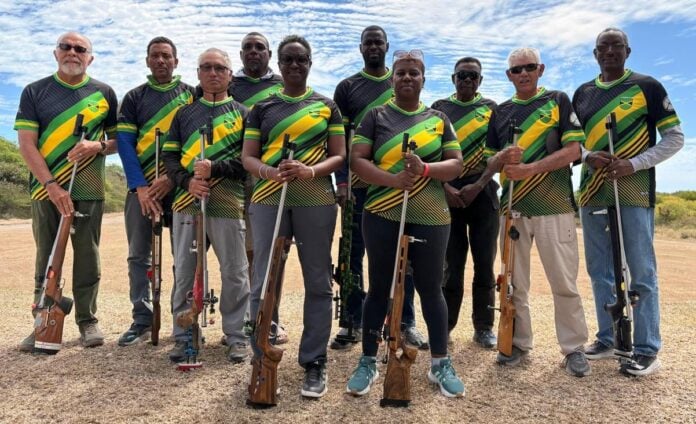
Jamaica’s contingent at the West Indies Full Bore Shooting Championship. (Back row, from left) Major (ret’d) D. John Nelson, Richard Thelwell, Denis Lee, Professor Derek Mitchell, Dr. Dwayne Ford, Canute CC Coley, Jose Nunez, and Basil Davidson. (Front row): Karen Anderson and Nicola Guy-Chin.
Jamaica’s full bore shooters returned from Antigua & Barbuda with bronze medals, renewed momentum, and another reminder that the island remains one of the Caribbean’s most reliable forces in the sport.
Competing at the prestigious West Indies Full Bore Shooting Championship at the famed Crabbs Range, the 10-member Jamaican contingent battled through five demanding days of competition against some of the region’s and Commonwealth’s strongest marksmen. The championship featured shooters from Barbados, Bermuda, England, Grenada, Guyana, Trinidad & Tobago, and host nation Antigua & Barbuda, with England fielding an imposing 22-member squad among the 76 competitors overall.
The tournament unfolded across three days of individual competition and two days of team matches, testing precision, concentration, and endurance over the 300-, 500-, and 600-yard ranges.
At the center of Jamaica’s campaign stood a blend of experience, composure, and consistency.
The team was led by Professor Derek Mitchell and included Karen Anderson, Canute CC Coley, Basil Davidson, Dr. Dwayne Ford, Nicola Guy-Chin, Denis Lee, Major (ret’d) D. John Nelson, Jose Nunez, and Richard Thelwell.
Major Nelson produces one of the championship’s finest performances
If there was a defining Jamaican moment during the championship, it came on day two.
Major (ret’d) D. John Nelson delivered a brilliant score of 74.8 out of a possible 75 at 500 yards, the highest score recorded on that range for the day and one of the standout performances of the entire tournament.
The effort helped propel Nelson into a tie for third place overall in the individual standings with an impressive aggregate score of 452.32, making him Jamaica’s highest-finishing competitor.
Major (ret’d) D. John Nelson (left) receives his bronze medal from Rev’d Daniel Olson, Antigua & Barbuda Full Bore captain.
For many within regional shooting circles, the result came as little surprise.
Major Nelson remains one of Caribbean full bore shooting’s most respected figures and currently serves as president of the West Indies Full Bore Council, the governing body for the sport in the region. His latest performance reinforced both his enduring quality and his ability to compete at the highest level against elite shooters from England and across the Caribbean.
While Antigua & Barbuda’s Laurne Benjamin ultimately captured the individual crown through exceptional marksmanship and superior range management, Jamaica’s veteran marksman ensured the black, green, and gold remained firmly in contention throughout the championship.
Ford’s consistency continues to shine
Dr. Dwayne Ford once again proved why he has become one of Jamaica’s most dependable competitive shooters.
Ford finished seventh overall with a score of 448.30, securing another top-10 finish and continuing a remarkable run of consistency that has now stretched across the last four years of competition.
Throughout the tournament, Ford displayed discipline and resilience while battling strong challenges from English competitors and the Caribbean field. His calm execution under pressure once again elevated Jamaica’s standing among the region’s elite teams.
Ford’s pedigree within the sport is already well established. He captured the 2022 Wogarth Cup, awarded to the shooter with the highest score in the West Indies short-range team match, and his latest performance further strengthened his reputation as one of Jamaica’s premier marksmen.
Anderson narrowly misses repeat crown
Karen Anderson also produced another strong championship showing, even if she fell agonizingly short of retaining her title as the region’s top female shooter.
Last year’s Amazon winner, awarded to the highest-placed female competitor, was edged by just two points this time around by Antigua & Barbuda’s Maxime James.
Still, Anderson remained among the tournament’s leading competitors, finishing 13th overall with a score of 443.25 to secure a place inside the top 20.
She also turned in an outstanding performance at 500 yards, where her score of 49.5v earned second place on that range.
Her showing added another layer of depth to a Jamaican squad that consistently featured near the top of multiple categories.
Jamaica places three shooters among championship’s best
Jamaica’s overall individual performances reflected a team capable of matching strides with the Caribbean’s traditional shooting powers.
The Jamaican individual standings were: Major (ret’d) D. John Nelson with 452.32 (tied 3rd), Dr. Dwayne Ford, 448.30 (7th), Karen Anderson with 443.25 (13th), Nicola Guy-Chin, 411.9 (25th), Jose Nunez with 410.13 (26th), Denis Lee, 406.9 (28th), Basil Davidson with 399.13 (31st), Richard Thelwell, 339.14 (43rd), Professor Derek Mitchell, 296.4 (45th), and Canute CC Coley, who did not start.
Bronze-medal finish caps strong Jamaican campaign
Jamaica’s momentum carried into the West Indies Short Range Team Match, where the squad secured the bronze medal after another composed and determined effort.
Jamaica’s bronze-medal-winning team proudly displays their trophies (from left) Dr. Dwayne Ford, Basil Davidson, Professor Derek Mitchell (captain), Karen Anderson, Major (ret’d) D. John Nelson, and Richard Thelwell.
The team of Major Nelson, Dr. Ford, Karen Anderson, Nicola Guy-Chin, Jose Nunez, Denis Lee, Basil Davidson, and Richard Thelwell combined for a total score of 1029.42.
Host nation Antigua & Barbuda successfully defended its title with 1097.57, while Guyana claimed silver with 1088.51.
This time, Ford emerged as Jamaica’s top scorer in the team event with 142.10, narrowly ahead of Major Nelson on 138.7. Anderson again featured prominently with 132.7, while Basil Davidson was close behind on 132.4.
The remaining Jamaican scores were: Nicola Guy-Chin with 126.4, Jose Nunez with 123.3, Denis Lee, 120.3, and Richard Thelwell with 116.4.
The bronze-medal performance underscored Jamaica’s depth and competitive resilience, particularly against larger and heavily experienced teams.
Building toward 2027 on home soil
Beyond the medals and rankings, the championship served as another sign that Jamaica continues to hold a strong position within Caribbean full bore shooting.
The team’s consistent representation near the top of both individual and team standings highlighted a program with experienced leadership, proven performers, and a foundation capable of challenging for future regional titles.
Attention will now gradually shift toward 2027, when Jamaica is scheduled to host the West Indies Full Bore Shooting Championship.
With home advantage on the horizon and several seasoned competitors still performing at elite levels, Jamaica’s shooters will likely enter that championship believing greater success is within reach.
Team Jamaica received sponsorship support from the Jamaica Olympic Association, Milex Security Services, Mayberry, and Pre-Mix.
Curaçao has turned once again to the steady hand of Dick Advocaat as the Caribbean nation prepares for the greatest chapter in its football history, a first-ever appearance at the FIFA World Cup.
The 78-year-old Dutchman, who initially guided the island nation to qualification for the 2026 tournament, has officially returned to the role after stepping down earlier this year because of concerns surrounding his daughter’s health.
“Advocaat is returning,” Curaçao Football Federation president Gilbert Martina confirmed in a phone message, ending days of growing speculation surrounding the national team.
The decision places Advocaat back at the center of one of international football’s most remarkable stories and ensures he will become the oldest head coach ever to manage at a World Cup finals.
Turbulent weeks end with familiar figure back in charge
Advocaat’s return follows a tense and dramatic period within Curaçao football.
After his departure, fellow Dutchman Fred Rutten was appointed to continue the team’s preparations. However, the transition quickly became turbulent after Curaçao endured two damaging friendly defeats in March, a 5-1 loss to fellow World Cup qualifiers Australia followed by a 2-0 defeat against China.
On Monday, the Curaçao Football Federation announced Rutten’s resignation following what it described as “constructive discussions” between federation officials.
Reports soon emerged suggesting mounting pressure from both players and the federation’s leading sponsor for Advocaat to resume the role, particularly after improvements in his daughter’s condition.
Initially, federation president Martina strongly defended Rutten and rejected suggestions of a coaching change. But the atmosphere surrounding the team continued to intensify.
“After it became known that Advocaat’s daughter was better, a very negative campaign was launched in the press in which Rutten was cast in a bad light,” Martina said during a press conference. “But the players have denied those negative statements.”
Martina also rejected allegations of a player-driven revolt against Rutten.
Still, the uncertainty ultimately proved too difficult to ignore.
Rutten steps aside amid growing tension
According to Martina, Rutten contacted federation officials on Sunday to indicate he believed resignation was the best course of action.
The departing coach later explained his reasoning in a written statement.
“A climate must not arise that undermines healthy professional relations, within both the squad and the staff. That is why it is wise to step down,” Rutten said.
Martina then moved quickly to reconnect with Advocaat on Monday, and by Tuesday an agreement had been finalized for the veteran manager’s return.
The development restores the architect of Curaçao’s historic qualification campaign just months before the nation makes its World Cup debut.
Small nation, massive achievement
Curaçao’s qualification already stands as one of the most compelling stories heading into the 2026 tournament.
With a population of slightly more than 180,000 people and a land area of only 171 square miles, the Caribbean territory will become the smallest nation ever to compete at a FIFA World Cup.
Their path to qualification under Advocaat captured widespread attention throughout the region and beyond, particularly because the experienced coach missed the decisive qualifier against Jamaica last November while attending to his daughter’s health situation.
Now, he returns with the opportunity to complete the journey he helped begin.
Grueling group stage awaits
Curaçao’s World Cup debut will come against elite opposition.
The team has been drawn into Group E alongside Ecuador, Germany, and Côte d’Ivoire at the 2026 tournament, which will be jointly hosted by Canada, Mexico, and the United States.
For a nation of Curaçao’s size, the challenge is immense. Yet the return of Advocaat restores belief that the underdogs can approach the global stage with organization, discipline, and valuable experience on the touchline.
Advocaat’s return also adds another remarkable milestone to one of football’s longest and most decorated managerial careers.
The Curaçao assignment will mark his third appearance at a World Cup finals. He previously guided the Netherlands at the 1994 World Cup in the United States before later managing South Korea during the 2006 tournament in Germany.
At 78 years old, he will comfortably surpass the previous record for oldest World Cup coach, set by Germany’s Otto Rehhagel, who was 71 years and 317 days old when he led Greece against Argentina at the 2010 World Cup in South Africa.
For Curaçao, the appointment represents more than nostalgia or familiarity.
It is a return to the man who delivered the impossible, and who now has the chance to lead one of world football’s smallest nations onto its grandest stage.
An elevated view of Park Avenue Development, a modern gated community in Montego Bay, St. James. The pre-diaspora conference webinar, organised by the JN Group, will provide valuable insights and practical guidance on securing or investing in properties like this in Jamaica
Jamaica’s real estate market continues to experience strong growth, fueled by increased demand for residential and commercial developments, tourism-related investments, and renewed interest from overseas Jamaicans seeking to build generational wealth at home.
With this in mind, The Jamaica National Group has organized the pre-diaspora conference webinar, dubbed “Securing Your Piece of the Rock,” to provide Jamaicans living overseas and others interested in purchasing property or expanding their investments back home with an opportunity to gain valuable insights from leading industry experts. The webinar is scheduled for Thursday, May 21, 2026, starting at 1:30 p.m. in Jamaica.
The webinar forms part of activities leading up to the 11th Biennial Jamaica Diaspora Conference, scheduled for June 14 to 18 at the Montego Bay Convention Centre in St. James.
Organized by the JN Group, the leading legacy partner for this year’s conference, the virtual session will bring together industry experts and key stakeholders to discuss the opportunities, challenges, and practical steps involved in investing in Jamaican real estate from abroad.
It will provide participants with practical guidance on the institutions, experts, and agencies they should connect with throughout the process, as well as information on how to access those resources from overseas.
Paulette Simpson, executive for corporate affairs and public policy at the JN Group and co-chair of the conference’s preparatory planning committee, said the webinar topic was informed by a survey conducted by the Ministry of Foreign Affairs and Foreign Trade among members of the Jamaican diaspora globally.
“One of the main areas that Jamaicans abroad wanted to discuss and learn more about was Jamaica’s property market. In response to this, JN has taken the lead to host this webinar,” Ms. Simpson stated. “We’re going to be discussing and guiding persons on investing in property in Jamaica because we want everybody to own a piece of the rock.”
The session will explore several key areas, including how to safely identify and purchase land in Jamaica; the process of buying a home or investing in commercial real estate; accessing mortgages; property management options available to overseas-based Jamaicans; understanding titles and resolving issues surrounding family-owned land; and legal considerations and areas to watch out for when conducting property transactions.
“Part of our role is to ensure that the correct information is given to the diaspora so they can make informed decisions that will benefit themselves, their families, and Jamaica as a whole,” Ms. Simpson shared.
Among the panelists will be Elizabeth Stair, real estate broker at JN Properties and former chief executive officer (CEO) of the National Land Agency (NLA) in Jamaica; Wanica Purkiss, mortgage broker and former mortgage executive at Jamaica National; Gabrielle Grant Gilpin-Hudson, president of the Realtors’ Association of Jamaica; and Dwayne Berbick, assistant general manager for corporate affairs and public policy at the National Housing Trust (NHT).
The webinar will also feature other industry professionals, including Dave Hanson, chief product officer for mortgages at JN Bank; Lt. Col. (Retired) Sean Prendergast, managing director for JN Properties; and Carlton Earl Samuels, chief development financing officer at the JN Group.
The webinar is expected to attract Jamaicans from across the United States, Canada, the United Kingdom, the Caribbean, and other diaspora communities who may be looking to retire, relocate, or invest in Jamaica.
The event will be moderated by mortgage specialist Karon Lewis, acting business relationship manager at JN Bank. Attendees will be given opportunities to make comments or pose questions to the panelists throughout the webinar.
The driver of a semi-truck was arrested after a crash on Florida's Turnpike that killed three people from South Florida in Fort Pierce, according to the Florida Department of Highway Safety and Motor Vehicles.
Road rash happens when your skin hits the ground and slides across a rough surface like pavement or gravel. It’s common after motorcycle crashes, bike accidents, scooter falls, and skateboarding wipeouts. Even a low-speed fall can tear through skin fast, leaving painful scrapes, burns, and cuts behind.
A lot of people brush it off as “just a scrape” until they actually get one. The truth is, road rash can range from mild redness to deep wounds that damage tissue underneath the skin. That’s why understanding the different road rash degrees matters. The severity affects how the injury heals, how painful it becomes, and whether you’ll need medical treatment.
Most road rash injuries happen in seconds. One bad turn, loose gravel, wet pavement, or distracted driving is enough. The good part is that many of these injuries can be prevented with protective gear, safer riding habits, and paying attention to road conditions before something goes wrong.
How Road Rash Happens
Road rash usually starts with a loss of control. A motorcycle slides on wet pavement. A cyclist hits loose gravel. A skateboard wheel catches a crack. Your body hits the ground, and your skin drags across a rough surface.
Friction tears away layers of skin fast. Heat from the slide can also burn the area. Dirt, glass, and asphalt often get trapped in the wound, which raises the risk of infection.
The National Highway Traffic Safety Administration (NHTSA) reported that more than 82,000 motorcyclists were injured in U.S. traffic crashes in 2022 alone. Many of those injuries involved skin abrasions and impact wounds.
Speed matters. So does exposure. Riders wearing shorts, T-shirts, or no gloves usually suffer deeper injuries because bare skin takes the full impact.
Common Causes of Road Rash
Motorcycle crashes
Bicycle accidents
E-scooter falls
Skateboarding injuries
Running or jogging falls on pavement
Pedestrian accidents
Alcohol, speeding, and distracted driving also raise the risk. Under California Vehicle Code § 27803, all motorcycle riders and passengers must wear a U.S. DOT-compliant helmet. While helmets do not stop road rash on arms or legs, they reduce severe head injuries during slides and impacts.
Road Rash Severity and Healing Time
Road rash falls into three general levels:
First-Degree Road Rash
This affects the top layer of skin. You may notice:
Redness
Minor bleeding
Stinging pain
Most cases heal within two weeks with cleaning and bandaging.
Second-Degree Road Rash
This damages deeper skin layers. Symptoms often include:
Heavy bleeding
Swelling
Scabbing
Embedded debris
Doctors may need to remove gravel or dirt to prevent infection.
Third-Degree Road Rash
This is the most serious type. Skin may expose fat, muscle, or nerve tissue. Surgery or skin grafts may become necessary.
Abrasions can lead to infection and permanent scarring, especially when debris stays trapped inside the wound.
How to Prevent Road Rash
You cannot control every road hazard. You can lower your risk.
Wear Protective Gear
Covering your skin makes the biggest difference.
Use:
Abrasion-resistant jackets
Gloves
Long pants
Closed shoes
DOT-approved helmets
The Centers for Disease Control and Prevention (CDC) states helmets reduce motorcycle death risk by about 37% for riders and 41% for passengers.
Ride Defensively
Stay visible. Leave space between vehicles. Slow down on wet roads and sharp turns.
Many states also require riders to follow lane and speed safety laws. For example, Texas Transportation Code § 545.351 prohibits driving at speeds greater than what road conditions safely allow, even if the posted limit is higher.
Check Road Conditions
Loose gravel, potholes, oil spills, and rain increase sliding risks. Watch the road ahead instead of only focusing on traffic.
Road rash happens fast. Prevention usually comes down to preparation, awareness, and keeping as much skin protected as possible.
Key Takeaways
Road rash happens when your skin slides across rough pavement during a fall or crash.
A simple slip on a bike, motorcycle, scooter, or skateboard can turn into a painful injury within seconds.
Some cases are minor scrapes. Others go deep enough to damage tissue and leave scars.
What you wear matters. Jackets, gloves, helmets, and long pants give your skin a layer of protection when you hit the ground.
Speed makes injuries worse. The faster you slide, the more damage the road can do.
Laws like California Vehicle Code § 27803 require motorcycle riders to wear DOT-approved helmets for safety.
Staying alert, slowing down in bad conditions, and watching the road ahead can help you avoid road rash altogether.
The car in which the two Americans were travelling in.
Crashing head-on into another car is a complete disaster. These wrecks are lethal because the speed from both vehicles combines the moment they impact. Airbags and seatbelts help, but your body is just not made to survive that kind of sudden, violent stop. The physical force is often enough to snap heavy metal and plastic like they are mere toys.
Metal crumples and glass shatters. But the real disaster is the harm done to the people trapped inside. Many drivers end up stuck in a hospital bed afterhead on collisions on a busy highway. You have legal rights that protect you from paying for a massive mess that you did not even cause.
When someone else causes a wreck, they are the ones who must pay. This amount includes your doctor bills. This figure includes the money you lose because you are too hurt to go to work. You have every right to demand a settlement that covers every single penny of your recovery.
The Most Common Injuries
Brain trauma is the biggest fear in these crashes. When a car stops fast, your head keeps moving until it hits something hard. That force can cause a concussion or permanent damage to your brain. It happens instantly.
Bones snap easily in a front-end hit. A dashboard or a steering wheel can shove into your legs and ribs with massive force. The tight, angry pull of a seatbelt can also bruise or even tear internal organs. Because of this shock, many victims feel fine at first but get very sick a few hours later. This delay is dangerous because internal bleeding can go unnoticed without a professional medical exam.
Your Rights and the Law
You have the right to hold the other driver accountable for their bad choices. Most crashes happen because a person was staring at a phone or driving while they were exhausted. Human error is the top cause of these dangerous events.
A lawyer will dig into the police report and the tire marks on the road to show who messed up. They use that proof to talk to the insurance company so you do not have to. If the insurance company refuses to pay what is fair, you can take them to court. A judge can then make sure you get the money you need to move on. Legal experts serve as your shield against companies that want to protect their profits instead of your health.
How to Protect Your Case:
Call for help: Get a police officer to write a report at the scene immediately.
Go to the doctor: You need a medical record to show exactly where you are hurt.
Snap some photos: Use your phone to show the broken cars and the road.
Save all receipts: Keep every bill from the pharmacy or the hospital in a safe spot.
Wait to sign: Do not sign any insurance papers until a professional checks them first.
Key Takeaways
Head-on crashes are deadly because the speeds of both cars add together.
Brain trauma and snapped bones are the most frequent injuries.
The law says the person at fault is the one who pays your bills.
You need hard proof like police reports and photos to win.
Insurance companies constantly try to pay as little as they can.
Seeing a doctor right away is vital for your health and your claim.
You have a legal right to a lawyer who will fight for you.
People search for buy aged Reddit account because Reddit can be tough on new profiles. A fresh account with no karma, no comments, and no history often looks weak or suspicious, especially in strict communities. That is why some users prefer tobuy reddit account instead of starting from zero.
But Reddit is not just another social platform. It is built around communities, habits, rules, and trust. An old profile may look useful at first, but it can also bring hidden problems: strange comment history, deleted posts, previous warnings, or behavior that no longer matches the new owner.
So the question is not only whether you can buy a Reddit account. The real question is whether it gives you trust, or only the appearance of it.
What Is an Aged Reddit Account?
An aged Reddit account is a profile created months or years ago. It may have karma, comments, posts, verified email, or activity in different subreddits. Sellers usually present these details as proof that the account looks “natural.”
The idea is simple. Many subreddits do not fully trust new users. Some communities limit posting for accounts with low karma or recent registration dates. Others do not state it openly, but moderators still watch new profiles more closely.
This makes aged accounts attractive. They seem to offer a ready-made past. A buyer gets an account that already has age, maybe some karma, and a visible history.
Still, account age is not the same as credibility. Reddit users notice tone, timing, interests, and posting style. A five-year-old profile can look fake in minutes if it suddenly changes language, starts dropping links, or joins unrelated communities.
An aged account is not a blank page. It has a trail. And that trail can help or hurt.
Why People Look for Aged Reddit Accounts
Reddit is slow if you do it properly. You need to read subreddit rules, leave useful comments, understand the culture, and build karma over time. For marketers, founders, affiliate publishers, and project owners, that process can feel too long.
That is why the phrase buy aged Reddit account attracts attention. People want faster access to discussions, fewer limits, and a profile that does not look brand new.
Common reasons include:
getting past account-age or karma filters;
joining niche communities faster;
testing Reddit as a traffic source;
making a profile look more trustworthy;
avoiding the slow work of organic activity.
But Reddit does not reward age alone. It rewards fit. A helpful comment from a small account can work well. A promotional post from an old account can still be removed quickly.
The mistake is treating Reddit like a locked door. In reality, it is more like entering a room where people are already talking. If you sound useful, people listen. If you sound fake, they notice.
The Illusion Behind Instant Credibility
The phrase Reddit account buy makes the process sound simple: choose an account, pay, log in, post. That is the appeal. It feels like buying time.
But credibility on Reddit is not just a number near a username. It comes from consistent behavior. Users trust accounts that comment naturally, understand the topic, and do not push links too hard.
A bought account can have age, but it cannot guarantee trust. Its old posts may not match your future activity. Its karma may come from low-quality comments. The original owner may have used it in communities that damage its image. In some cases, the account could even be recovered or resold.
For brands, the risk is bigger. If users discover that a company is hiding behind purchased accounts, the backlash can be worse than having no Reddit presence at all. Reddit users are good at screenshots, callouts, and connecting details.
Buying an account may save time at the start. But it can also create a fragile identity that breaks as soon as people look closer.
Reddit’s Rules and the Culture of Authenticity
Reddit expects users to participate honestly and avoid spam, manipulation, and disruptive behavior. Its official rules focus on authentic participation and prohibit behavior that harms communities or misleads users.
That is why buying an account becomes risky when it is used for hidden promotion, fake engagement, link pushing, or pretending to be an ordinary user while acting for a brand.
Steve Huffman, Reddit’s co-founder and CEO, once described a classic Reddit moment as “fascinating, funny, and, above all, human.” That idea explains the platform well. Reddit works because people believe they are talking to real people, not masks.
For anyone thinking about whether to buy a Reddit account, this is the key point: the account’s age matters less than its behavior. Reddit communities do not only ask, “How old is this profile?” They ask, “Does this person belong in this conversation?”
The Real Risks Behind Buying an Aged Reddit Account
An aged Reddit account can look harmless from the outside. It has a date, a few posts, maybe some karma, maybe nothing that seems suspicious at first glance. That is exactly why people are drawn to it. It feels like a small shortcut, not a serious risk.
The problem is that you are not starting with a clean profile. You are taking over someone else’s history.
Maybe the account was used normally. Maybe it was farmed for karma. Maybe it posted in strange communities years ago. Maybe it has already been watched by moderators. Maybe the old owner can recover it later. From the buyer’s side, it is hard to know the whole story.
There is another issue that often matters more than the account itself: the sudden change in behavior. A profile that once commented about movies, football, pets, or local news can look strange if it suddenly starts promoting a product, posting links, or joining unrelated business communities. Reddit users notice these shifts. Moderators notice them too.
For a private user, losing an account may be annoying. For a brand, it can be worse. If people connect a purchased profile to a company, the story can turn into public criticism very quickly. Reddit does not forget screenshots.
Point of comparison
Bought aged account
Naturally built account
Start speed
Quick
Slow
Trust level
Looks good only at first
Grows with real activity
Profile history
Unclear
Fully controlled
Ban risk
Higher if behavior changes
Lower with careful use
Brand safety
Weak
Much stronger
Long-term value
Unstable
Easier to protect
So a Reddit account buy is not just a login purchase. It is a bet on a profile you did not build and cannot fully explain.
Why Account Marketplaces Can Feel Safer Than They Are
Sellers know what buyers want to hear. They use words like old account, real karma, verified email, clean profile, natural activity. These phrases sound comforting, especially to someone who wants to move fast.
But labels do not prove much.
A profile page shows only part of the story. It does not always show deleted comments, old warnings, removed posts, spam patterns, or past conflicts with moderators. A buyer may see age and karma, but miss the small details that make the account risky.
The market also pushes people to care about easy numbers. Age is easy to count. Karma is easy to show. But Reddit trust is not that simple. A small account with ten smart comments in the right subreddit can look more believable than an old account with random karma from jokes, memes, or empty replies.
There is also a psychological trap. After buying an aged account, many people feel too confident. They post too soon. They add links too often. They enter communities they do not understand. That is when the profile stops looking like a real user and starts looking like a tool.
Before someone decides to buy a Reddit account, they should think past the purchase. Getting access is easy. Acting naturally is the hard part.
Safer Alternatives to Buying an Aged Reddit Account
The slower route is usually less exciting, but it gives you something more useful: control. When you build your own Reddit account, every comment belongs to the same voice. There is no old personality to hide, no strange history to explain, no sudden switch that makes people suspicious.
You do not need to spend all day on Reddit to build a decent profile. You just need to behave like a real member of the communities you enter.
A safer approach looks like this:
Pick a few subreddits that match your topic, not every subreddit with traffic.
Read posts for a while before posting your own.
Leave comments that actually answer something.
Avoid dropping links unless the link is genuinely useful.
Do not repeat the same message in different communities.
Be open about business connections when they matter.
Use Reddit Ads when the goal is direct promotion.
This takes longer, but it builds something stronger. You learn what people ask, what annoys them, what language they use, and what they already distrust. That knowledge is hard to buy.
This is why buy aged Reddit account may look faster on paper but weaker in practice. A real account grows slowly, but it grows in the right direction.
Conclusion: Is an Aged Reddit Account Worth It?
Buying an aged Reddit account can seem useful when you only look at the surface. The account is older. It may have karma. It may pass some basic filters. It may not look empty.
But Reddit is not fooled by age alone. A profile has to make sense. Its comments, interests, tone, and timing should feel like they belong to the same person. When they do not, the age of the account can even make the situation look worse.
For short experiments, some people may still accept the risk. For a business, public project, or long-term campaign, the trade-off is much harder to defend. A bought profile can disappear, get flagged, or damage trust exactly when you need trust most.
The strongest Reddit account is not always the oldest one. It is the one that feels honest, useful, and consistent. On Reddit, borrowed credibility rarely lasts as long as earned credibility.
FAQ
Is it safe to buy an aged Reddit account?
Not completely. The main risk is that you do not know the full history of the profile. It may look normal from the outside, but previous activity, deleted content, or sudden behavior changes can still create problems later.
Why do people search for buy aged Reddit account?
People usually search for it because new Reddit profiles can feel limited. Some communities are harder to enter without age, karma, or visible activity. An aged account seems like a faster start, although it does not guarantee real trust.
Can a bought Reddit account get banned?
Yes, it can. If the account is used for spam, hidden promotion, manipulation, or careless link posting, it may be restricted or suspended. The fact that it is old does not protect it from Reddit rules or subreddit moderators.
Is building a Reddit account from scratch better?
For long-term use, usually yes. A new account takes more patience, but you control the whole history from day one. That makes the profile cleaner, more consistent, and easier to use without worrying about past activity.
Does karma matter more than account age?
Not always. Karma can help, but it is not a magic shield. Reddit users also look at comment quality, topic fit, tone, and whether the account behaves naturally. Random karma from unrelated communities may not help much.
Can a business use Reddit without buying accounts?
Yes. A business can use Reddit by joining relevant discussions, answering questions, being clear about its connection to a product, and using Reddit Ads for direct promotion. Honest participation is usually safer than pretending to be a normal user.
In 2026, WhatsApp groups have become essential gathering spots for Caribbean diaspora communities in South Florida. People rely on these chats for everything from local news to updates about family and shared entertainment.
Amid this digital closeness, a new trend has caught attention—cryptocurrency betting links are surfacing more often in these group conversations.
Often, these links appear quietly, intertwined with daily exchanges and friendly banter.
This shift highlights how technology is quietly reshaping communal digital spaces, raising fresh questions about the conversations and habits forming in trusted, private group chats.
How crypto betting conversations infiltrate digital community spaces
It’s not always obvious when a gambling link slips into a WhatsApp chat, especially in groups where everyone feels at home and the conversation jumps from local news to jokes and family updates.
Sometimes, these links show up as part of a random comment—maybe someone mentions a big win or drops a suggestion to try betting for fun. Other times, you’ll notice an active member steering the chat toward trying out new betting options, nudging friends to join in.
Because WhatsApp feels private and secure, people often let their guard down. The casual tone makes it easy for promoters to mix social chat with subtle pitches, and the lines between sharing for fun and intentional promotion get blurry fast.
The technology itself adds fuel to the fire. In just a few taps, anyone can send a link to a site offering crypto-based betting, making it simple for these offers to reach the whole group. Interest in platforms like cryptocurrecny sports betting sites can spread quickly, especially when the process feels informal and anonymous thanks to cryptocurrency.
This isn’t just about the ease of sharing—it’s about how quickly group norms can shift. When gambling links become a normal part of everyday chat, it’s harder to spot concerns or push back, especially if people see it as just another topic in a trusted space.
For group members and moderators, this presents a tricky situation. The more these conversations blend in, the more challenging it becomes to set boundaries or raise questions. And with the growing number of betting-related groups reported in recent studies, the trend shows no sign of slowing down.
Attention caught: why betting links thrive in diaspora WhatsApp groups
The way messages circulate in WhatsApp groups makes it easy for crypto betting links to grab attention almost instantly. One casual share in a busy group can spark interest among dozens of people, especially when the conversation is already lively and familiar.
For many in the Caribbean diaspora, WhatsApp is more than just a chat app. It’s a trusted space for sharing local news, personal updates, and even recommendations. When a betting link pops up, it doesn’t always feel out of place—it blends into the steady stream of group chatter, making it seem like just another tip from a friend.
That sense of trust is powerful. Because people rely on these groups for advice and support, a link to a crypto betting site can feel far less intrusive than it might on a public forum or random website. Instead of standing out as obvious promotion, it gets woven into the fabric of daily conversation.
Verified reports note that hundreds of groups now share these links regularly, making the trend hard to ignore. The social nature of group chats amplifies the effect, turning a single message into a wave of curiosity or even participation. It’s no wonder resources like Crypto WhatsApp Groups have become so visible, reflecting just how common these exchanges are becoming in diaspora networks.
Personal impact: gambling risks and changing attitudes in the diaspora
For many group members, repeated exposure to crypto betting links quietly shifts what feels normal in their digital world. That wave of curiosity sparked by a single message can nudge someone to click, even if they never considered betting before.
The barriers to entry are so low—just a tap, and you’re in. Because these links come from familiar group chats, they can carry an unspoken sense of community approval, whether or not that’s truly the case.
Over time, this dynamic can lead to more members trying their hand at gambling, some sliding into more frequent or riskier bets than they ever imagined. The conversations in these groups evolve too. What started as an occasional link might turn into regular talk about wins, losses, or strategies, blurring the lines between harmless fun and real risk.
The effect isn’t just about money; it’s about mindset. Some users find themselves questioning the changing tone in their groups or noticing how their own attitudes toward betting have shifted. This has sparked interest in resources like Understanding ‘winna scam’ searches, as more people look to understand the trends shaping their online communities.
All of this points to the need for greater personal awareness and open conversations. Recognizing how these links and discussions affect both digital spaces and individual choices is the first step toward making more thoughtful decisions.
Are community safeguards keeping pace with new digital gambling trends?
For group admins and community leaders, the steady stream of crypto betting links sparks a lot of questions about how much control they really have. Even with the best intentions, it’s tough to spot every gambling-related message when it looks like any other link in the chat.
Many WhatsApp groups now have rules against spam or explicit promotions, but moderation often relies on individual vigilance. When betting links get mixed into everyday updates or friendly banter, they can slip by unnoticed. The sheer number of groups—over 350 betting-focused WhatsApp communities were active in 2024—makes monitoring a challenge that’s almost impossible to keep up with manually.
Community organizations and digital literacy advocates have started to take notice, offering educational resources and encouraging more open conversations about online risks. Still, the speed and privacy of messaging apps let gambling promotions spread faster than most safeguards can react. The shifting strategies of those promoting these links keep moving the goalposts for what counts as safe or risky content.
For group members and admins alike, the responsibility means staying alert to subtle changes in group dynamics. As more people join or share information from Betting WhatsApp Groups, the line between social sharing and targeted promotion blurs even further. The challenge ahead is figuring out how to protect the community’s trust without shutting down the real connections that make these spaces valuable.
Reflecting on gambling’s growing digital footprint in diaspora life
That tension between community trust and the spread of crypto betting links keeps growing as these WhatsApp groups stay central to how the diaspora connects day to day.
For many, these chats feel like home—yet now they also serve as a gateway for new habits and risks that didn’t use to be part of the conversation.
People are starting to talk more openly about how gambling influences group culture, and what it means for personal choices.
With digital norms shifting and more research emerging, it’s worth looking at trends like Online Keno’s digital appeal to understand just how quickly these influences can reshape the way communities interact online.
Staying alert, asking questions, and keeping space for real dialogue might be the best way to hold onto what makes these groups supportive and meaningful—even as the digital landscape changes around them.
A Jamaican man has been sentenced to three years in a United States federal prison for orchestrating a lottery scam that defrauded an elderly woman in southwest Washington out of more than US$600,000 over a four-year period.
Federal prosecutors said Carty first contacted the 73-year-old victim in 2020, falsely claiming to represent Publishers Clearing House and telling her she had won US$22 million and a car. He then convinced her she needed to pay taxes and fees before receiving the prize.
Over the next several years, prosecutors said the victim was manipulated into sending cash to money couriers across the United States, who later transferred the funds to Jamaica. Authorities said the total losses exceeded US$600,000.
At sentencing, U.S. District Judge Tiffany M. Cartwright said that even when the victim hesitated or attempted to cut off contact, Carty continued pursuing her through multiple communication methods.
First Assistant U.S. Attorney Charles Neil Floyd described the scheme as “relentless,” saying the defendant preyed on the woman’s isolation and fears of losing money she had already invested.
“He stole the money she was counting on to survive in retirement, so that he could buy luxuries and live large in Jamaica,” Floyd said in a statement.
Court records show Carty gradually increased his demands for money, initially instructing the victim to withdraw small sums and ship cash through FedEx to locations in the U.S. Prosecutors said he later persuaded her to borrow against and ultimately sell her home to cover supposed “fees” tied to the fake winnings.
Investigators said Carty contacted the woman thousands of times during the fraud. When she tried to stop communicating, authorities said he sent tow trucks and pizza deliveries to her residence and even contacted her landlord requesting welfare checks in attempts to reestablish contact.
W. Mike Herrington, head of the FBI’s Seattle field office, said the scam destroyed the victim’s financial security and abused public trust by falsely claiming the FBI was monitoring calls connected to the supposed prize.
Authorities also indicated the Washington victim was not the only person targeted. Prosecutors argued in court filings that Carty showed a pattern of persistent and deceptive conduct and could continue committing fraud after completing his sentence.
Carty was indicted in November 2024 and arrested in Jamaica in August 2025 before consenting to extradition to the United States. The case was investigated by the Federal Bureau of Investigation with assistance from Jamaican authorities and the U.S. Department of Justice’s Office of International Affairs.
The U.S. Embassy in Jamaica has repeatedly warned about Jamaica-based lottery scams, reminding the public that legitimate prizes never require advance payment of taxes or fees.
A creator posts a video that took hours to put together. Good lighting, solid editing, decent hook. It goes up and then just sits there. Forty views. Eight likes. The algorithm barely touched it.
This happens constantly on TikTok. The platform rewards content that already has momentum. Videos that collect TikTok likes quickly get treated as worth showing to more people. Videos that do not get buried fast, regardless of quality.
This difference in reach and quality content is why a lot of creators have decided to purchase TikTok likes as one of their growth strategies. Not to fake popularity but to trigger the kind of early engagement that gets the algorithm moving. The risk only comes in when the wrong platform is used. The six websites below are the ones that get it right.
1. Famoid: Most Trusted Overall
Famoid has been the go-to name for buying TikTok likes since 2017, and that has not changed heading into 2026. The platform built its reputation slowly and carefully over nearly a decade, which is about as rare as it gets in this industry.
The core reason Famoid works better than most is the delivery method. TikTok likes through Famoid come via an ad-based system. This means that it is not an engagement performed by a bot or dummy account stored in a pool somewhere, but by actual users. TikTok’s algorithm treats a real human as a real human when the interaction is with a video. The content gets pushed. The reach grows. Famoid figured that out early and built the whole service around it.
The practical side of using Famoid is just as solid. No password is ever needed, just a username. Orders start processing within minutes. All orders are guaranteed for the first 30 days. Information is available live 24 hours a day. The checkout of the site is secure and encrypted by SSL.
Famoid also provides data on TikTok followers and TikTok views, all in one place.Creators running a full growth campaign can handle everything without switching between services. Over 50,000 customers and a consistent five-star rating back all of this up. Famoid is not just good for buying TikTok likes. It is the benchmark against which everything else gets measured.
2. Twicsy: Reliable and Straightforward
Twicsy has quietly built a dependable reputation over the years. It is not the flashiest option, but it handles TikTok-like purchases consistently, and the experience from checkout to delivery is clean throughout.
The ordering process is simple and does not ask much of the buyer. Delivery holds up across different package sizes without major delays. Email support is available for anything that comes up after purchase. Creators who want a no-drama experience with reliable TikTok likes tend to land on Twicsy and stay there.
3. Buzzoid: Good Range of Options
Buzzoid has gone from Instagram to TikTok; it has been a perfect move. The platform has a top-notch package portfolio, which allows the buyers genuine flexibility depending on the requirements they have and depending on their budget.
Order sizes vary, delivery is regular across the board, and the Support staff is on hand when required. Buzzoid is a capable enough platform that can deliver what it promises to creators who wish to have a little more control over package size and spending on TikToks.
4. Celebian: Best for Tighter Budgets
Celebian is a TikTok likes service that attracts creators seeking to attract TikTok likes without investing heavily in their initial campaign. The platform is easy to use, and ordering is fast, while the price is still below the competition, without compromising the base playing experience.
However, it is an effective option for creators who are at the initial stages of their accounts, and wish to experiment with purchasing TikTok likes prior to growing their collection. The platform is straightforward and gets results without any unnecessary back and forth.
5. Stromlikes: Clean and Predictable
Stromlikes is the kind of platform that does exactly what it says and nothing more. The layout is simple, packages are clearly presented, and placing an order takes almost no time. There is something useful about a platform that does not try to overcomplicate things.
TikTok likes through Stromlikes arrive on a consistent schedule. Support handles common issues without delays. Creators who value predictability and a clean process tend to find Stromlikes fits well into their regular workflow.
6. BuzzVoice: Solid Everyday Option
Last on the list is BuzzVoice, which provides a dependable TikTok likes service for all orders, no matter how large or small they are. It’s simple to navigate through, the pricing is so transparently presented before the purchase and you get a smooth delivery experience from beginning to the end.
Does not assert it to be a competitor product to the Famoid top of the range product. It does offer creators a trustworthy and seamless platform to gain regular likes on TikTok without having to wade through complicated steps or murky policies.
Frequently Asked Questions About Buying TikTok Likes
Is buying TikTok likes actually safe?
It really is all according to the platform. Army services utilizing the delivery of adverts through genuine accounts are secure as a result of their organic appearance on TikTok’s algorithm. Examples of services which do not make use of bots are. This list includes the platforms that aren’t alarming, particularly Famoid.
Will the likes disappear after a while?
With quality platforms, their likes are held up. It’s the services based on the bots that are experiencing losses, as TikTok is constantly purging fake relationships. Real likelihoods stay on the videos from genuine users.
Do I need to give my password?
Nope, any TikTok likes platform won’t require any other details than a username when you buy a TikTok likes order. There should never be a request for a password.
How fast do likes show up?
The majority of these platforms start delivering within minutes of paying for it. Famoid, in particular, is famous for rapid processing, beginning almost right after placing an order.
What if something goes wrong with my order?
Famoid covers every order with a 30-day money-back guarantee. That safety net makes the whole process a lot more straightforward for first-time buyers and regulars alike.
When the curtains rise on this year’s Best of the Best Music Fest during Memorial Weekend on May 24, fans will not only be treated to performances from reggae and dancehall legends, but also a strong showing from the new generation currently shaping the future of Caribbean music.
While big names like Sizzla Kalonji, Capleton, and Beenie Man, remain major draws, this year’s lineup also reflects the current energy of reggae, dancehall, and soca through a younger crop of hitmakers who have been building momentum over the past few years.
Leading that charge is 450, one of dancehall’s fastest-rising stars. Known for emotionally driven hits like Imperfections, Journey, and Wild N Rich, the entertainer has carved out a lane by blending melodic delivery with deeply personal storytelling. His growth on both the local and international scenes has been difficult to ignore, with sold-out performances and streaming success helping to position him among the genre’s most promising young voices.
Also bringing hard-hitting female energy to the show is Shaneil Muir, whose fearless lyrics and unapologetic style have made her one of dancehall’s most talked-about female acts. Songs like Yamabella, Exclusive, and Blessings have turned her into a major force within the genre, while her commanding stage presence continues to win over audiences around the world.
Joining her is fellow dancehall entertainer Vanessa Bling, who has maintained relevance through consistency and versatility. With tracks like Future Guaranteed and collaborations with several major acts over the years, Vanessa Bling continues to represent a generation of female artists who helped pave the way for today’s women in dancehall.
The hardcore dancehall segment of the festival will undoubtedly get a jolt from Skeng, whose gritty, high-energy sound has become unmistakable. Hits like Likkle Miss, Gvnman Shift, and Protocol have helped Skeng build a loyal fan base both locally and overseas, especially among younger listeners drawn to his raw lyricism and electrifying performances.
Alongside him is Kraff, another rising name steadily building his reputation in the new dancehall era. Known for his edgy delivery and street anthems, Kraff has been gaining traction through viral tracks and a growing online following, adding another layer of youthful intensity to the lineup.
RajahWild is also expected to bring plenty of excitement to the festival. The deejay has enjoyed a major breakout wave thanks to tracks like Wild Out and other viral dancehall releases that have made him one of the hottest emerging names on Jamaica’s trap-dancehall scene. His rise reflects the current pulse of dancehall culture—unpredictable and heavily driven by digital momentum.
Another young act looking to make a strong impression is Kkrytical, who has steadily built recognition through socially conscious lyrics and motivational themes mixed with modern dancehall production. As his profile continues to grow, Best of the Best provides a major platform for him to connect with international audiences.
Adding a different flavor to the predominantly reggae and dancehall showcase is Trinidadian soca star Voice, the lone soca representative on this year’s lineup. The hitmaker, known for crowd favorites like Cheers to Life, Year for Love, and Out and Bad, has become one of soca’s most celebrated modern voices thanks to his uplifting songwriting and infectious energy. His inclusion adds a welcome Caribbean fusion to the event and ensures patrons get a taste of Carnival spirit amid the heavy reggae and dancehall offerings.
What makes this year’s staging particularly special is the bridge between generations. On one side are veterans whose catalogues helped define Caribbean music globally, and on the other are younger stars now carrying the torch into a new era shaped by streaming, social media, and evolving sounds.
For many of these younger performers, sharing a stage with icons like Sizzla, Capleton, and Beenie Man is a signal that they are becoming part of dancehall and reggae’s ongoing legacy.
As Best of the Best returns for another Memorial Weekend celebration in Florida, the festival continues to prove why it remains one of the Caribbean diaspora’s premier showcases for both legendary greatness and the future of the culture.
For years, Rihanna has dominated headlines through music, fashion, and business, but her latest recognition spotlights her humanitarian impact across the Caribbean and beyond.
The Barbadian superstar has been named to TIME magazine’s inaugural TIME100 Philanthropy list, alongside global figures such as Elton John and Shakira for her ongoing charitable work through the Clara Lionel Foundation.
Rihanna earned her place in the publication’s “Trailblazers” category, making her the only Barbadian artist on the prestigious list and solidifying her status as one of the Caribbean’s most influential global figures.
While the world often associates Rihanna with chart-topping hits, a billion-dollar beauty empire in Fenty Beauty, and her Super Bowl halftime performance, TIME’s recognition highlights another side of the entertainer—one dedicated to service, resilience, and regional uplift.
Founded in 2012 following the death of her grandmother from cancer-related complications, the Clara Lionel Foundation was named in honor of Rihanna’s grandparents, Clara and Lionel Braithwaite. Its first major initiative was deeply personal: donating a modern radiotherapy machine to the Barbadian hospital where her grandmother received treatment.
Over the years, that act of giving evolved into one of the Caribbean’s most impactful philanthropic organizations. According to TIME, the foundation has directed more than US$100 million toward causes including climate resilience, healthcare, education, arts and culture, and women’s entrepreneurship across the Caribbean, the United States, and East Africa.
The publication also noted Rihanna’s efforts in disaster preparedness throughout the region. Following devastating hurricane seasons in 2017 and 2018, the Clara Lionel Foundation began strengthening Caribbean health clinics by reinforcing infrastructure and introducing solar-powered systems to help communities better withstand future storms.
That mission became even more urgent following the destruction caused by Hurricane Melissa last year, which displaced thousands across the Caribbean and severely impacted several hospitals in Jamaica. The foundation has since launched support initiatives focused on rebuilding healthcare systems, improving water access, and restoring educational opportunities in affected communities.
Rihanna’s philanthropic influence has continued to gain international recognition in recent years. Earlier this year, she was announced as a recipient of the 2026 Edison Achievement Award, becoming the first woman of color to receive the honor for her contributions across music, business, and philanthropy.
For many across the Caribbean, however, Rihanna’s humanitarian work simply reinforces what Barbados officially recognized years ago. In 2021, she was conferred the title of National Hero of Barbados during the country’s transition to a republic—one of the highest honors the island can bestow.
Though she has spent nearly a decade without releasing a full studio album, Rihanna’s impact has hardly slowed. Instead, her influence has expanded far beyond entertainment, transforming her into a symbol of Caribbean excellence, cultural pride, and purposeful leadership on the world stage.
With TIME now celebrating her humanitarian contributions alongside her global success, Rihanna continues to show that her legacy is being built through music and business, as well as through the lives she continues to touch across the region she proudly calls home.
Barbados has officially established its first resident embassy in Ireland, a move aimed at strengthening diplomatic, trade, tourism and cultural relations between the two island nations.
Prime Minister Mia Mottley formally opened the chancery in Dublin earlier this week as Barbados and Ireland marked 25 years of diplomatic relations.
“Today truly is a moment where we deliberately and by choice formalise that relationship through an active presence,” Prime Minister Mottley said at the opening ceremony.
She said the ties between the two countries extend beyond formal diplomacy, pointing to shared historical experiences involving Irish indentured servants and enslaved Africans in Barbados during the 1600s.
“That early linkage, with your people coming as indentured servants and our people coming as slaves, meant that we understood together what it was to be pawns in the hands of those who had ambitions that simply did not see us, did not hear us and did not feel us as human beings,” Prime Minister Mottley said.
She added that both nations have since built resilience through their respective struggles for independence from British rule.
“It is not a coincidence that we share so much in common: our values, our aspirations, our ambitions, but equally our journey,” she said. “The Irish know about resilience, and Bajans know about resilience.”
The new embassy will be led by Barbados’ first resident ambassador to Ireland, Cleviston Haynes, and is expected to support expanded cooperation in trade, tourism, investment, education, climate resilience and cultural exchange.
Prime Minister Mottley was joined at the ceremony by Senior Minister of Foreign Affairs and Foreign Trade Christopher Sinckler, Irish officials, members of the Barbadian diaspora and supporters of Barbados living in Ireland.
Ambassador Haynes said the embassy marks a significant step in deepening political and economic cooperation between the two countries.
He noted that Irish investment already supports sectors including tourism, telecommunications and healthcare in Barbados, while partnerships with Ireland’s Marine Institute are advancing Barbados’ blue economy ambitions.
He also highlighted opportunities for increased tourism and business travel through trial Aer Lingus services between Dublin and Barbados.
The opening comes as Barbados prepares to celebrate 60 years of independence and five years as a republic.
Prime Minister Mottley said the Barbados–Ireland relationship should evolve into “a living partnership” focused on climate justice, peace, equity and the interests of small island developing states.
Former Ceann Comhairle, or Speaker of Ireland’s parliament, Seán Ó Fearghaíl, described Barbados as a stable and well-governed country attractive to Irish investors.
“We have shared visions. We have shared values,” he said. “When they look to Barbados, that is exactly what they see.”
British Virgin Islands Governor Daniel Pruce has said he would welcome the opportunity to remain in office beyond his current term, even as he continues to face public and media scrutiny over aspects of his leadership.
Speaking at a press conference last week, Governor Pruce noted that his standard three-year appointment is due to end in January 2027, though discussions are underway regarding possible flexibility around that timeline.
“So my tenure would normally be for a period of three years, so that would be until January of 2027,” Governor Pruce said. “I am in the midst of looking at what options there may be in terms of flexibility around that timing.”
He added that while no decision has been finalised, he would be pleased to continue serving in the territory if the opportunity arises.
“If given the opportunity to remain in the Virgin Islands for any longer, I’d be absolutely delighted,” Governor Pruce said, stressing that the final decision rests outside his control.
His remarks come amid ongoing public debate over his handling of several contentious issues during his tenure.
Earlier this year, reports alleged that Governor Pruce was involved in a confrontation at the Terrance B. Lettsome International Airport involving members of the public. Calls were made for an apology, though the Governor has consistently denied any involvement in a confrontation.
Another point of controversy involved his decision to remove Loriann Vanterpool from the post of Acting Commissioner of Police and return her to her substantive role as Deputy Commissioner after more than a year in the acting position.
The move drew criticism from sections of the public and political leadership, including Premier Natalio Wheatley, who called for a review of the decision. Critics argued that Vanterpool, a long-serving local officer, was effectively demoted without a full public explanation.
Media organisations have also raised concerns about increasing restrictions on information under Governor Pruce’s administration, with journalists saying press briefings often provide limited detail and questions on sensitive issues remain unanswered.
Despite the criticism, Governor Pruce has maintained an active public profile, saying he remains focused on governance reform and national security priorities in the British Virgin Islands.
Drone image captures residents navigating down a flood-scarred street in Black River, Jamaica, as recovery begins following Hurricane Melissa. Photo Credit - Maria Alejandra Cardona
Caribbean countries are now better positioned to access millions of dollars in climate grant financing aimed at strengthening resilience and addressing losses and damages from climate-related disasters.
The development follows a regional workshop hosted earlier this week in Barbados by the Caribbean Development Bank and the Fund for Responding to Loss and Damage.
The two-day session brought together government representatives and national focal points from 15 Caribbean countries eligible under the Barbados Implementation Modalities, a pilot US$250 million grant facility with a submission deadline of June 15.
President of the Caribbean Development Bank Daniel Best said the region continues to suffer severe impacts from hurricanes including Maria, Irma, Dorian, Beryl and Melissa, with some damages exceeding national gross domestic product.
He said the Caribbean must now focus on developing “bankable and scalable investment pipelines” to reduce future losses and strengthen resilience.
The region faces an estimated US$14 billion annually in climate financing needs, according to organisers, who said the workshop provided practical guidance to help countries prepare strong funding proposals ahead of the deadline.
Participating countries included Antigua and Barbuda, The Bahamas, Barbados, Belize, Dominica, Grenada, Guyana, Haiti, Jamaica, Saint Lucia, Saint Kitts and Nevis, Saint Vincent and the Grenadines, Suriname, Dominican Republic and Cuba.
Executive Director of the Fund for Responding to Loss and Damage Ibrahima Cheikh Diong said the Caribbean continues to face a disproportionate burden from climate change despite contributing minimally to global emissions.
He said the Barbados Implementation Modalities offer a direct pathway for countries to access climate financing and support recovery and resilience-building efforts.
Regional agencies, including the Caribbean Community Climate Change Centre, the Caribbean Catastrophe Risk Insurance Facility and the Caribbean Disaster Emergency Management Agency, also took part in the workshop.
The Caribbean Development Bank said the initiative supports its Strategic Plan 2026–2035, which prioritises climate resilience and expanded access to climate financing across the region.
President Dr Mohamed Irfaan Ali meeting with the President of the Dominican Republic, Luis Abinader Corona, at State House on Thursday
President of Guyana Dr Mohamed Irfaan Ali met with President of the Dominican Republic Luis Abinader Corona and a high-level delegation in Georgetown on Thursday as the two countries continue discussions aimed at expanding cooperation in oil, gas and broader energy development.
The meeting at State House also included Samuel Pereyra, along with other officials from the Dominican energy sector.
Talks centered on strengthening collaboration in energy, petrochemicals, agriculture and regional energy security, with both governments reviewing opportunities for joint investment in Guyana’s expanding oil and gas industry.
Officials said the latest engagement builds on discussions initiated in 2023, when both countries first identified strategic areas for cooperation, including energy infrastructure and supply security across the Caribbean.
Among the areas under review are potential investment interests linked to the Berbice Block—previously held by On Energy—as well as broader cooperation in refinery development, petrochemical production and regional fuel supply stability.
President of Guyana Dr Mohamed Irfaan Ali said the talks continue work begun two years ago, with a focus on building long-term energy resilience.
“At that time we spoke of the establishment of a refinery, and we would love to continue the discussions and see how we can arrive at a model that can build energy and supply security for Guyana and the rest of the region,” President Ali said.
He also pointed to Guyana’s Gas-to-Energy project at Wales as another key opportunity for collaboration between private-sector entities in both countries.
The two sides further noted growing partnerships between companies in Guyana and the Dominican Republic in agriculture, energy and petrochemicals, with several consortia already taking shape.
At the conclusion of the meeting, officials said they were satisfied with progress made since the 2023 agreements and reaffirmed their commitment to deepening economic ties.
President Ali described the engagement as “a very historic day,” saying it marked an important step toward strengthening regional energy security and expanding economic opportunities across the Caribbean.
The United States Department of State has congratulated Philip Davis on his reelection victory, pledging continued collaboration between the two countries on economic development and regional stability.
In a press statement issued Wednesday, Marco Rubio said the United States looks forward to strengthening ties with the Bahamian government through what he described as “transparent and reliable economic and infrastructure partnerships.”
“We look forward to continued collaboration with the Government of The Bahamas to advance transparent and reliable economic and infrastructure partnerships that support sustainable growth, regional stability, and increased opportunity for both Americans and Bahamians,” Rubio said.
The statement also acknowledged the role of election observers in supporting the integrity of the country’s general elections.
General elections were held in The Bahamas on May 12. Incumbent Prime Minister Philip Davis and his ruling Progressive Liberal Party were re-elected to a second term. Davis was the first incumbent Bahamian leader to secure reelection since 1997. Preliminary results showed the PLP winning 33 of 41 seats, nearly matching the results in 2021.
The United States thanked domestic and international observer groups, including the Organization of American States Electoral Observation Mission, for helping to reinforce transparency and public confidence in the electoral process in The Bahamas.