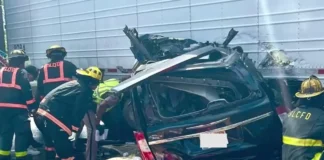
Car accidents kill over 40,000 people in the U.S. every single year. The top causes are distracted driving, speeding, and impaired driving, and all three are preventable. These aren’t rare worst-case scenarios. They’re the everyday conditions of every road you drive on.

Most people underestimate their personal risk. Many drivers think they are above average, but crash statistics show otherwise. Serious collisions don’t mostly involve reckless strangers. They involve ordinary people on familiar roads, closer to home than anyone expects. That’s exactly why these statistics matter.
Knowing where accidents happen, who gets hit hardest, and which behaviors actually change your odds—that’s what this article covers. Not to alarm you, but to give you a sharper, more accurate read on the road.

Number of Car Accidents That Happen in the U.S. Each Year
According to the NHTSA, approximately 6.1 million police-reported crashes happen in the U.S. annually. That works out to about 16,700 crashes per day, roughly one every five seconds.
Of those crashes:
- Between 38,000 and 43,000 result in fatalities each year
- Nearly 2.3 million people are injured annually
- Millions more involve property damage only
Globally, the WHO estimates that road traffic crashes kill approximately 1.19 million people every year, which makes them the leading cause of death for people between ages 5 and 29.

The Deadliest Times to Drive
Not all hours on the road carry the same risk. The window between 6 PM and midnight consistently produces the highest fatality rates. Reduced visibility, fatigue, and alcohol all converge during those hours.
July and August are statistically the most dangerous months. School’s out, roads are busier, and holiday weekends add volume and risk. The combination creates conditions that spike crash rates every summer without fail.
Rush hour (7–9 AM and 4–7 PM) can be especially dangerous. Heavy traffic leads to more rear-end crashes, and drivers are often distracted or stressed. Even at lower speeds, slower reaction times can quickly turn small mistakes into serious accidents.

Who Faces the Highest Crash Risk?
Age is one of the strongest predictors of crash risk, but not always in the way people assume.
Teen drivers (16–19) are three times more likely to die in a crash than drivers aged 20 and older. Per mile driven, no other demographic comes close. Inexperience is part of it, but overconfidence and peer pressure play a bigger role than most people acknowledge.
Drivers over 70 can face higher risk because of slower reaction times and health issues. Many reduce this risk by driving less and avoiding difficult situations like night driving.
Male drivers account for nearly 71% of all U.S. traffic fatalities. Researchers point to higher rates of speeding, drunk driving, and risk-taking behavior as the primary explanation.
Distracted Driving
The NHTSA linked distraction to 3,522 traffic deaths in a single study year. Texting is the most cited behavior, but eating, adjusting music, and side conversations all fragment attention in ways that matter at speed.
Here’s the number that puts it in perspective: Reading a text at 60 mph means traveling the full length of a football field without looking at the road. That’s not a metaphor—it’s the math.
Most states have their own hands-free laws with fines reaching $500 or more for repeat violations.
Speeding and Drunk Driving
Speed contributes to roughly 29% of all traffic fatalities and more than 11,000 deaths per year. The danger isn’t linear. A crash at 60 mph doesn’t just hurt more than one at 40 mph; it’s exponentially more likely to be fatal. Higher speeds shrink both reaction time and survival margin simultaneously.
Alcohol-impaired driving accounts for about 32% of all U.S. traffic deaths. The federal legal threshold is a blood alcohol content (BAC) of 0.08% or higher, standardized across all states under 23 U.S.C. § 163, which ties that requirement to federal highway funding. What’s worth noting: measurable impairment begins around 0.05% BAC, well before most people feel drunk.
What to Actually Do with This Information
Statistics change how we see risk, but habits are what keep people safe. Road danger isn’t random; it’s higher at certain times, places, and behaviors that are easy to recognize.
Putting your phone away before you start the car, staying off the road between midnight and 3 AM when tired, and treating every intersection like it deserves your full attention. These habits may seem small, but they often make the difference between staying safe and relying on luck.
Key Takeaways
- In the U.S., nearly 6.1 million crashes happen every year.
- Out of those, 1.19 million people die every year.
- The deadliest time to drive is between 6 PM and midnight.
- Drivers between the ages of 16 and 19 are 3x more likely to die in a crash.
- Distracted driving leads to approximately 3,522 traffic deaths, according to NHTSA.