Home Blog Page 21

What are the best strategies to revitalize a dying business?

Future-proofing your business

When it comes to the collapse of a business, it doesn’t always fail in some dramatic fashion. Instead, there is a fading that leaders find easy to rationalize at first. Perhaps revenue dips slightly, customers return less often, or marketing feels slightly less effective than it used to. Nothing to set off any alarm bells, but these signals compound into a situation that can get much harder to reverse.

The reality is that failure is common, even for businesses that once seemed stable. In this regard, the Commerce Institute highlighted some insightful data from the Bureau of Labor Statistics. It noted that about 20.4% of businesses fail in their first year. Likewise, 49.4% fail within five years, and 65.3% fail within ten years. That looks particularly bleak, but there is some variability based on your industry. 

For instance, information sector firms were the most vulnerable, with only 74.9% surviving the first year and just 29.1% lasting ten years. If you’re an entrepreneur or a business owner, you must always have a bead on the mortality of your business. While we’d all like to imagine our business will survive indefinitely, it’s crucial to know how to survive if things go south. Let’s explore some options below.

Diagnose Whether the Business Is Worth Saving Before You Try To Save It

Before thinking about marketing, branding, or expansion, there is a more basic question that needs to be answered. Is your business structurally capable of surviving if demand returns, or is it losing money on every unit it sells? This is where many attempts at revitalization go wrong because effort is applied to a model that cannot sustain itself. 

This is why it’s important to understand the concept of the shutdown point. According to Investopedia, a firm reaches its shutdown point when its market price falls below its average variable cost (AVC). That means it cannot cover even its variable expenses and should cease production in the short run. In this scenario, continuing operations only deepens losses, since fixed costs must be paid regardless.

For example, if a company’s AVC is $11 per unit, any price below that threshold signals shutdown, as revenue per unit no longer offsets variable costs. If every sale adds to the loss, then increasing sales only accelerates the problem. At that stage, revitalization should involve cutting unprofitable products, renegotiating costs, or repositioning the offering entirely.

Thus, ensure you first identify whether you’re facing a visibility problem or a viability problem. Visibility issues can be addressed with better positioning and outreach. Viability issues require bigger structural changes before anything else can work.

Rebuild Demand by Fixing Perception, Not Just the Product

Once the fundamentals are sound, your attention needs to shift to how the business is experienced. Many businesses assume that weak demand is a product issue when it is often a perception issue. The reality is that customers respond to how a business feels and whether it gives them a reason to stay longer or return.

Many people don’t seem to realize it, but a poor environment and aesthetics have killed many businesses. So, the least you can do is make an effort to keep your business attractive. If you run an online business, hire someone to audit your UI. Likewise, if you run a physical business, hire an interior designer or simply invest in a few commercial planters.

So many businesses are minimalistic to a fault or are outright cold and uninviting. Meanwhile, as PolyMade notes, your goal should be to create a space that makes customers want to linger and relax. The easiest way to do that is with shade and greenery.

This is but one aspect of perception. You can also take a meta, indirect approach and attempt to perceive from new angles. Viral marketing is a good way to do this and is particularly helpful if your customer base is on the younger side. 

According to one study on 652 Gen Z participants, viral marketing campaigns exert measurable influence on Generation Z’s purchase intentions. This was established through three key content attributes: usefulness, credibility, and informativeness.

Essentially, visibility alone is not enough. Your content and messaging need to feel worth engaging with and sharing. This is what allows your business to re-enter conversations it may have fallen out of.

Engineer a Comeback That Can Actually Sustain Itself

Short-term improvements can create the illusion of recovery, especially when a campaign performs well or a new product gains traction. The real challenge is sustaining that momentum over time without slipping back into the same patterns that caused the decline in the first place.

According to BCG Henderson Institute’s global study of 848 mature firms, only 99 companies managed to reignite momentum and achieve what they call breakout growth. This refers to growing sales at least twice as fast as peers for five years, then sustaining above-industry growth for another five years.

These rare firms delivered nearly 20% average annual total shareholder returns (TSR) during their initial breakout phase. They also continued to outperform in the sustained-growth phase while expanding margins by about one percentage point. In contrast, 144 companies attempted breakout growth but failed to sustain it.

What stands out here is how uncommon sustained recovery is. Many businesses can generate a spike in interest or revenue, but far fewer can maintain it. Why does this happen? Well, the difference often comes down to focus and alignment. Successful recoveries tend to concentrate on one clear growth engine and build operations around it, rather than trying to improve everything at once.

If you want your business to make a comeback, you need to strengthen three core areas. These include your margins, customer retention, and ensuring that growth does not come at the cost of stability. Without these three, any progress you make cannot result in long-term recovery.

Frequently Asked Questions

1. Can a business recover without additional funding or investment? 

Yes, but it depends on whether the core business is still viable. Many recoveries come from tightening operations, improving margins, and fixing positioning rather than injecting cash. If the fundamentals are broken, though, lack of funding can limit how far a turnaround can realistically go. 

2. Is it better to rebrand or rebuild the existing brand identity? 

It depends on what caused the decline. If the issue is perception or outdated messaging, rebuilding the existing identity is often enough. Similarly, if the brand carries negative associations or feels irrelevant, a rebrand can help reset how people see and engage with the business.

3. Can cutting costs too aggressively hurt a business recovery? 

Yes, especially if it affects customer experience or product quality. Cutting costs can improve short-term survival, but overdoing it can make the business less competitive. Remember, your goal is to remove inefficiencies while protecting the parts of the business that actually drive revenue and loyalty.

Long story short, revitalizing a dying business is rarely about doing more. It involves making better decisions about what to continue, what to remove, and what to rebuild. Each stage of recovery requires a different kind of clarity. You start with determining viability, then how the business is perceived, and finally ensuring that any growth can last.

The reality is that you may need to approach this process with a level of honesty that can be uncomfortable at first. You might need to acknowledge where your model is weak, where customers have lost interest, and where effort has been misdirected. That can be painful for some leaders. However, if you can see the root cause of problems, recovery does become straightforward, even if it’s not easy.

Miami Swim Week: Where Caribbean energy meets global swimwear

Miami Swim Week

Miami has long been shaped by the rhythm, color, and lifestyle of the Caribbean. Today, this connection is also influencing the evolution of the global swimwear industry, with Miami Swim Week emerging as a key meeting point for designers, buyers, and creatives from across the region and beyond.

More than just a fashion event, Miami Swim Week reflects a broader shift in how swimwear is experienced. It is no longer only about runway presentations or seasonal collections, but about creating meaningful connections between brands and buyers in an environment that reflects the lifestyle behind the products.

At the center of this dynamic is the Miami Swim Week a curated swimwear trade show which brings together international beachwear brands and US retailers in a curated and more intimate setting. This approach moves away from traditional large-scale exhibitions, focusing instead on quality, clarity, and genuine interaction.

This evolution is particularly relevant for buyers from the Caribbean. A significant number of professionals attending the event travel from across the region, from Saint Martin to Saint Barthélemy, as well as Barbados and the Bahamas. Their presence highlights the strong connection between Miami and the islands, reinforcing the city’s role as a natural bridge between the Caribbean and the US market.

Within this landscape, La Plage Miami has emerged as a distinctive concept, offering a more refined way of presenting swimwear collections. Designed as a boutique trade show experience, it creates a setting where collections can be discovered in natural daylight, allowing fabrics, colors, and textures to be appreciated with precision.

Beyond the collections themselves, the atmosphere plays a central role. The environment is designed to feel open, warm, and effortless, encouraging real conversations between brands and buyers. This approach reflects a growing demand for more human and more curated interactions within the industry.

Marc Merklen, a distribution expert with over 16 years of experience in the swimwear industry, has developed this vision through a career shaped by years of working with luxury houses and designers. His approach combines strong expertise in swimwear and resortwear distribution with a commitment to transparency, professionalism, and genuine attention to retailers.

A significant part of this dynamic lies in the relationship with international buyers. Many are not only seeking new collections, but also guidance in selecting brands that align with their identity and clientele. This curated approach helps create a more efficient and meaningful experience, particularly for retailers coming from diverse markets across the Caribbean.

Miami’s role as a gateway between North America, the Caribbean, and Latin America further strengthens its position within the global fashion ecosystem. The city naturally brings together different influences, creating a vibrant environment where fashion, travel, and lifestyle intersect.

At the same time, this vision extends beyond Miami. In Europe, La Plage Riviera offers a complementary perspective, set in the historic Palais de la Méditerranée in Nice. While Miami captures the energy and diversity of the Americas, the Riviera reflects a more timeless and elegant approach rooted in Mediterranean heritage.

Together, these two destinations create a dialogue between two shores. They connect different cultures of coastal living, from the Caribbean spirit of Miami to the refined atmosphere of the French Riviera. This dual presence allows brands to operate within a broader global narrative while maintaining a strong local identity.

Ultimately, this approach reflects a lifestyle that goes beyond geography. It is about a refined way of living by the sea, where authenticity, quality, and simplicity define both the product and the experience.

As Miami continues to grow as a global hub for swimwear, its connection to the Caribbean remains essential. The energy, creativity, and influence of the islands continue to shape the way swimwear is presented and experienced, reinforcing Miami’s role as a meeting point between cultures and markets.

For brands and buyers alike, Miami Swim Week is no longer just an event—it is a platform where business, lifestyle, and international opportunity come together in a way that feels both natural and forward-looking.


3,500 volunteers remove over 20,000 pounds of debris during Baynanza Biscayne Bay cleanup

Biscayne Bay

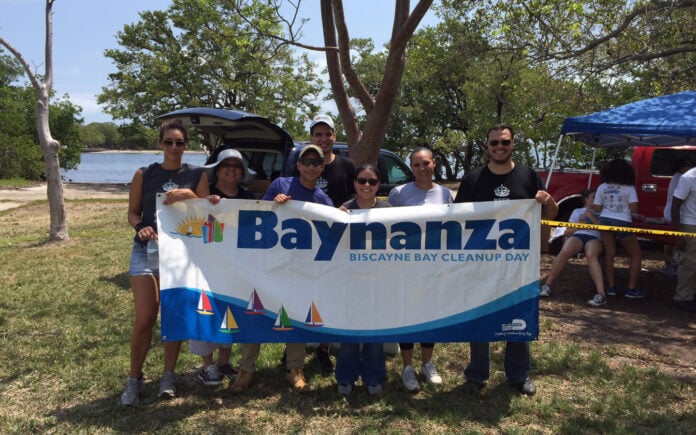
More than 3,500 volunteers collected over 20,000 pounds of marine debris during the 44th annual Baynanza Biscayne Bay Cleanup Day, marking the largest communitywide cleanup effort for Biscayne Bay and surrounding waterways.

Hosted by the Miami-Dade County Department of Environmental Resources Management (DERM), the April 11 event featured cleanup activities at 33 sites across Miami-Dade County — the first time locations were included in all 13 commission districts.

Among the most successful cleanup locations were the Julia Tuttle Causeway, where volunteers collected more than 2,000 pounds of trash, and Biscayne National Park, where 1,700 pounds of marine debris were removed from barrier islands.

Daniella Levine Cava, Mayor of Miami-Dade County, participated in cleanup efforts at Haulover Beach Park and praised the community’s involvement.

“The support for this year’s Baynanza was outstanding, and I am so proud of everyone in our community who came out to help us protect, preserve and restore Biscayne Bay, our ‘Blue Heart,’ and our waterways,” Levine Cava said.

She also noted that the event was included among the county’s signature activities marking the United States’ 250th anniversary, highlighting the historic and environmental significance of Biscayne Bay.

Several county commissioners also joined cleanup efforts across multiple locations, including Little River Park, Haulover Beach Park, E.G. Sewell Park, A.D. Barnes Park, and Central West Basin Linear Park.

Loren Parra, director of DERM, said the event’s continued growth reflects strong community commitment to environmental protection.

“Looking ahead to our 45th anniversary next year, I am excited about the new ways Baynanza will grow,” Parra said, noting that Biscayne Bay contributes an estimated $64 billion annually to the local economy while supporting jobs and quality of life.

Officials said the cleanup also targeted microplastics and other marine debris, reinforcing ongoing efforts to protect and restore one of South Florida’s most important natural resources. 🌊

Miami-Dade to break ground on major renovation of Miami Lakes Branch Library

Miami Lakes Branch Library

Miami‑Dade Public Library System is set to begin construction on a major renovation and expansion of the Miami Lakes Branch Library, with a groundbreaking ceremony scheduled for Monday, April 20.

Daniella Levine Cava, Mayor of Miami‑Dade County, will join Joshua Dieguez, Mayor of Miami Lakes, along with library officials and Vercetti Enterprises, to mark the start of the renovation and improvement project.

The initiative aims to modernize and expand the library to better serve the growing Miami Lakes community and users across the wider library system. Originally opened in February 1981, the facility will receive a comprehensive upgrade, including an additional 5,000 square feet of space.

Plans for the renovation include an expanded auditorium featuring upgraded projection and sound systems, a new children’s room, and a YOUmedia Miami technology space designed to support digital learning and creative programming.

Additional improvements will include new multipurpose rooms, study and collaboration spaces, and upgraded technology featuring Wi-Fi 6. The project will also incorporate energy-efficient features and improvements to the building’s exterior.

Outdoor enhancements are also planned, including a reading garden, courtyard seating, electric vehicle charging stations, and expanded outdoor amenities aimed at improving accessibility and community use.

The ceremony will take place from 10 a.m. to 11 a.m. at the Miami Lakes Branch Library, located at 6699 Windmill Gate Road.

Officials say the project represents a significant investment in educational, cultural, and technological resources for residents and library patrons throughout Miami-Dade County.

Three injured in Miami-Dade shooting; police continue investigation

Miami-Dade Sheriff’s Office

Authorities are investigating a shooting in Miami-Dade that left three men injured, two of them critically, on Thursday afternoon.

The Miami-Dade Sheriff’s Office said deputies from its Northside District responded around 2:09 p.m. on April 16, 2026, to reports of shots fired near Northwest 21st Avenue and Northwest 75th Street after receiving multiple 911 calls.

When deputies arrived, they found three individuals suffering from apparent gunshot wounds. Miami-Dade Fire Rescue transported the victims to a nearby hospital, where two were listed in critical condition and one in stable condition.

Police also detained one individual at the scene who was not injured. However, authorities later confirmed that the individual was released and no formal charges have been filed as the investigation continues.

Investigators identified the injured individuals as:

  • Egbert Forges, 26
  • Germaine Byrd, 27
  • Earl Baldwin, 25

All three remain hospitalized while detectives continue to gather information.

Authorities also noted that a black Tesla was associated with the incident, though further details about its involvement have not yet been released.

The shooting remains under active investigation, and officials have not yet disclosed a possible motive or whether additional suspects are being sought.

Trinidad and Tobago to exempt pension and annuity income from tax from 2026

Trinidad Prime Minister Kamla Persad-Bissessar
Prime Minister Kamla Persad-Bissessar

Trinidad and Tobago Prime Minister Kamla Persad-Bissessar has announced that the Government will move to exempt pension payments and approved deferred annuity income from income tax, describing the measure as a key reform aimed at improving financial security for retirees.

Speaking in the House of Representatives on Friday afternoon, Persad-Bissessar said the proposal will be included in the upcoming Finance Bill, 2026, as part of a wider effort to reduce the cost of living and deliver on campaign commitments.

The exemption will apply to income received from approved pension fund plans and approved deferred annuity plans under the Income Tax Act, Chapter 75:01.

“This Government was elected on a clear promise: to put people first, to ease the burden on working families and to ensure that after a lifetime of contribution, our citizens can retire with dignity and peace of mind,” she said.

Under the proposed policy, pension income from approved schemes will be exempt from income tax effective January 1, 2026, covering both existing and future qualifying plans.

The Prime Minister said the reform is intended to reward long-term savings and ensure retirees retain more of their retirement income.

“A pension is not a windfall. It is not a bonus. It is the result of years, sometimes decades, of sacrifice, discipline and commitment,” she said. “This Government believes that such responsibility should be rewarded, not penalised.”

Persad-Bissessar added that the measure is expected to benefit thousands of citizens, particularly middle-income earners who rely on pensions and annuities as their main source of retirement income.

Citing tax data, she said more than 39,000 taxpayers claimed annuity contributions in the 2024 income year, though most were modest savers.

The Government also confirmed that early withdrawals from pension or annuity plans will remain taxable, in an effort to prevent misuse of the exemption.

“We are ensuring that the system remains fair, balanced and sustainable,” she said, stressing that the reform is not designed as a tax avoidance mechanism.

The Prime Minister said the proposal reflects a key election pledge and forms part of the administration’s broader fiscal agenda.

“This is what accountable governance looks like,” she said. “We believe that trust is earned through action.”

The Finance Bill, 2026, which will include the proposed amendment, is expected to be laid before Parliament before the end of the current session.

Over half of Haiti population faces acute food insecurity

Haiti food insecurity

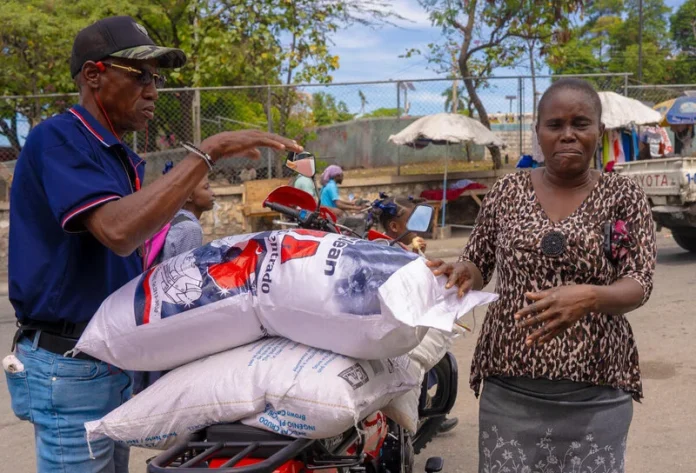
The United Nations World Food Programme (WFP) is calling for urgent international support after new data showed that more than half of Haiti’s population continues to face acute food insecurity, warning that recent fragile gains in the fight against hunger could quickly be reversed.

An updated assessment from the Integrated Food Security Phase Classification (IPC) found that 5.8 million people in Haiti—about 52 per cent of the population—are currently experiencing crisis levels of food insecurity or worse (IPC Phase 3 and above).

Of those, more than 1.8 million people are facing emergency levels of hunger (IPC Phase 4) for the March to June 2026 period, meaning they are depleting their remaining assets and are unable to meet basic food needs.

Despite the challenging operating environment, the WFP said it assisted 2.7 million people in Haiti in 2025 through emergency food aid, school feeding programmes, social protection initiatives, and support for smallholder farmers. The agency said these efforts contributed to a slight improvement in food security compared to earlier projections, but warned that progress remains fragile.

Rising global fuel prices, driven in part by the ongoing conflict in the Middle East, are now adding further pressure by increasing transportation and food costs.

“These small improvements to food security numbers must not lead to complacency,” said Wanja Kaaria, WFP Haiti Country Director. “Elevated fuel prices and the resulting rise in food costs risk rolling back these gains, pushing already vulnerable families deeper into crisis and further destabilising the situation.”

The WFP stressed that hunger remains a central driver of instability in Haiti, urging both national and international partners to scale up emergency relief while also investing in long-term solutions.

“Tackling hunger is vital to restoring stability in Haiti. We cannot build peace when families have nothing to feed their children,” Kaaria said, warning that armed groups exploit food insecurity to recruit vulnerable people, including children and young mothers.

Haiti’s food crisis has deepened over nearly a decade, fuelled by armed violence, political instability, economic challenges, and repeated climate shocks, including Hurricane Melissa, which struck the country’s south in late 2025. According to the WFP, more than 1.4 million people have been displaced, with around 300,000 currently living in overcrowded temporary shelters in the capital.

The agency said it requires US$332 million over the next 12 months to sustain operations and aims to reach more than 2.7 million people with emergency assistance and resilience-building support if sufficient funding is secured.

France signals support for Martinique’s CARICOM associate membership pathway

CARICOM Caribbean general elections

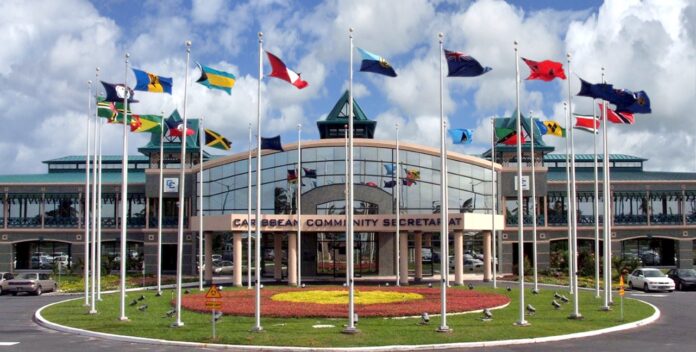
France says it will continue working with its overseas territories to support regional integration efforts, following Paris’ approval of Martinique’s accession to the Protocol on the Privileges and Immunities of the Caribbean Community (CARICOM).

In a statement issued by the French Embassy in Guyana, the approval of the CARICOM Agreement on Privileges and Immunities was described as “a decisive step towards the regional integration of overseas territories.”

The statement said France’s Minister for Europe and Foreign Affairs Jean-Noël Barrot and Minister for Overseas Territories Naïma Moutchou welcomed the National Assembly’s approval of the agreement on Thursday. It noted that the Senate had already voted in favour of the measure in January, allowing Parliament to complete final approval within a relatively short timeframe.

According to the statement, the decision marks “a major step forward in strengthening relations between France and CARICOM, as well as in furthering the regional integration of French overseas communities in the Americas.”

The agreement will allow the Territorial Collectivity of Martinique to join CARICOM as an associate member, following the signing of the arrangement on February 20, 2025, in Bridgetown, Barbados. It also opens the door for other French territorial collectivities in the Antilles-Guyana region to pursue associate membership.

France said it has supported Martinique throughout what it described as a complex legal process involving domestic law, European Union rules and CARICOM regulations.

The statement added that the development creates “concrete prospects” for Martinique and other potential associate members, including participation in CARICOM meetings and agencies, improved access to regional information, and greater capacity to engage in the Caribbean space.

It also said the move complements the involvement of French territories in other regional bodies such as the Organisation of Eastern Caribbean States (OECS) and the Association of Caribbean States (ACS).

“This development forms part of France’s ambitious policy aimed at strengthening the regional integration of its overseas territories,” the statement said, linking the initiative to broader goals of economic development, resilience and regional influence. It referenced policy directions set out in France’s 2023 Interministerial Committee for Overseas Territories and reaffirmed in 2025.

Earlier this year, the French Senate gave its backing for Martinique to pursue associate membership within CARICOM, with the vote in January 2026 described as opening a new phase for the territory’s regional engagement.

Commenting on the development, the French-based platform Richès Karayib said the move represents a shift from symbolic inclusion toward practical cooperation.

“The challenge now is to transform this institutional framework into tangible projects and useful cooperation for the territory and its stakeholders,” it said, adding that CARICOM membership should serve as a foundation for Martinique’s development and deeper Caribbean integration.

Bermuda suspends planned fuel price increase for six months

Some Motorists to Get Gas Grants from Jamaican Government

The Government of Bermuda has suspended for six months a planned increase in retail fuel prices that was due to take effect last Thursday.

Home Affairs Minister Alexa Lightbourne issued the Retail Fuels (Consumer Protection Standstill) Ministerial Direction 2026, which keeps fuel prices at current levels and is intended to shield households facing rising costs for groceries, electricity and other essentials.

Under the Regulatory Authority’s proposed monthly adjustment, consumers would have seen increases of 11.1 cents per litre for gasoline, 15.3 cents per litre for diesel, and 18.8 cents per litre for kerosene beginning April 16.

Lightbourne said the decision responds to ongoing global conditions affecting energy markets, including sustained volatility in oil and refined-product prices.

“Global oil and refined-product markets have experienced sustained volatility driven by the ongoing war in Ukraine, disruption to maritime shipping routes, and the cumulative effects of climate-related supply shocks,” she said.

She added that small island economies such as Bermuda are particularly exposed because they import nearly all refined fuel and must absorb costs related to freight, insurance and currency fluctuations.

“For small island economies, they import virtually all of their refined fuel and absorb the full cost of freight, insurance, and currency movement, and that volatility hits consumers harder, faster, and with fewer buffers than in larger markets,” Lightbourne said.

The minister said the direction was issued in consultation with the Regulatory Authority and in coordination with the Premier and Minister of Finance David Burt.

As part of the arrangement, the Ministry of Finance will provide targeted customs-duty relief to licensed fuel importers to offset any verified revenue shortfall resulting from the price standstill.

Lightbourne said the measure is designed to stabilise prices without disrupting the fuel supply chain.

“As a result, Bermudians will benefit from prices being held at current levels for up to six months, and government backing through the Ministry of Finance will provide customs-duty relief, thereby ensuring stability,” she said.

Jamaica launches Medical Cannabis Special Permit programs

Antigua to amend law to fine those who use marijuana in Public

The Cannabis Licensing Authority (CLA) in Jamaica has officially launched its Medical Cannabis Special Permit Programmes, aimed at expanding access and inclusion for traditional ganja growers within the country’s legal medical cannabis industry.

The initiative will operate under recently gazetted regulations governing the CLA’s functions. Cabinet has approved the promulgation of the Dangerous Drugs (Cannabis Licensing) (Interim) (Amendment) Regulations, 2025, which introduce a series of changes intended to strengthen Jamaica’s licensing framework and widen participation in the regulated sector.

The programmes were formally launched at the AC Hotel by Marriott Kingston on Thursday, April 16.

Minister of State in the Ministry of Industry, Investment and Commerce, Delano Seiveright, said the cannabis industry represents more than an emerging commercial sector, describing it as a tool for economic empowerment, job creation, scientific advancement and social equity.

He said the Government is working to develop a regulatory system that is “transparent, efficient, and supportive of businesses,” while balancing public safety with innovation and investment.

Seiveright added that reforms are intended to remove unnecessary barriers and create opportunities for entrepreneurs, farmers, researchers and investors. He also said the Government is engaging international partners to position Jamaica as a competitive player in the global cannabis market.

He noted that with proper standards and quality assurance, Jamaica could expand its reach internationally, while maintaining strong regulatory oversight to prevent misuse and protect consumers.

“These amendments provide Jamaicans with alternative and sustainable avenues for enterprise beyond traditional industries,” he said, adding that the changes also support the development of roles across the cannabis value chain, including cultivation specialists, trimmers, packagers and extraction technicians.

CLA Chief Executive Officer Farrah Blake highlighted several key amendments, including the introduction of a special community permit allowing traditional and small-scale farmers to enter the industry collectively.

She said the permit significantly reduces financial barriers and provides technical support through the Cannabis Specialisation Unit. Importantly, she noted, there are no fees attached to the permit.

Blake also outlined a cultivators’ transitional special permit, which allows small farmers to enter the regulated space and transition over a two-year period toward full cultivation status.

She said applicants will have access to technical support and the licensed market during the transition period, again without fees.

Another amendment introduces identification cards for employees within the sector, allowing smoother movement between employers and helping formalise employment while police records are processed.

Blake also explained changes to licence extensions, allowing full operations during extension periods, including the ability to sell crops—something previously restricted.

Standardisation of licence tenure was also introduced, with all authorisations now set at three years instead of one for cultivation licences, reducing administrative burdens and improving business planning.

Additional amendments standardise fence height requirements across cultivation tiers at six feet, aimed at reducing costs and easing compliance, particularly after natural disasters.

A new provision also allows licensed retailers to deliver cannabis products directly to customers, which the CLA says will improve market access, strengthen brand loyalty and provide convenience for clients.

The CLA says it expects the reforms to improve operational efficiency, increase participation and further strengthen Jamaica’s international cannabis brand.

TTPS reports major enforcement gains under State of Emergency as detention orders executed rise to 170

trinidad police

The Trinidad and Tobago Police Service (TTPS) says it has reached what it describes as a “significant operational milestone” on the 45th day of the current State of Emergency (SoE), reporting that 170 of 258 detention orders issued have been executed to date.

Deputy Commissioner of Police (Operations) Suzette Martin said the figures already exceed those recorded at the end of the previous State of Emergency, when 205 detention orders were approved and 153 executed.

The nationwide SoE was declared on March 2, 2026, by the Government of Trinidad and Tobago in response to a spike in violent criminal activity, which authorities say has largely been driven by organised criminal gangs.

This marks the second major emergency period in recent months. A prior State of Emergency was declared in December 2024 following an outbreak of gang-related violence. Overall, Trinidad and Tobago has been under emergency measures for roughly 10 of the past 14 months, with the opposition People’s National Movement (PNM) arguing that the government has not succeeded in bringing violent crime under control despite the measures.

In her update, Martin said that alongside the execution of detention orders, the TTPS has carried out 3,694 operations, resulting in 1,588 arrests and 355 charges.

Authorities also reported the recovery of 90 firearms, seizure of 2,196 rounds of ammunition, 3,146 kilograms of cocaine, and 337.040 kilograms of marijuana.

“These figures are not incidental. They are the result of deliberate, intelligence-led policing, coordinated national operations, and a sustained focus on priority offenders and organised criminal networks,” Martin said.

She added that the TTPS is “strategically targeting individuals and groups who pose the greatest threat to the safety and stability of our communities” and doing so “with precision and purpose.”

However, Martin cautioned that the effort is entering a critical phase, stating that consistency, execution, and accountability will determine the overall impact of the State of Emergency.

She reaffirmed that operations would continue with intensity and discipline, saying: “We will not relent. We will not ease the pressure. We will continue to deliver results in the interest of national security.”

Meanwhile, Commissioner of Police Allister Guevarro told business leaders that fear, rather than crime itself, is increasingly affecting economic confidence and public sentiment.

Speaking to the Trinidad and Tobago Chamber of Industry and Commerce, he said the national conversation around crime is often distorted despite what he described as measurable improvements in official statistics.

“Economic stability and public confidence are more interconnected than ever,” Guevarro said, adding that “fear is not just a feeling, it is a force that shapes behaviour.”

He noted that 370 murders were recorded last year, which he said was the second-lowest annual figure in nearly two decades. He also highlighted a 42 per cent reduction in homicides, calling it “the second largest annual percentage reduction in the world,” behind only El Salvador.

According to the Commissioner, serious reported crimes fell from 3,413 in 2025 to 2,397 in the comparable period, a 30 per cent decrease.

“These are not opinions or political talking points. These statistics tell a different story,” he said, adding that public perception remains heavily influenced by fear, which he suggested is amplified by certain narratives.

He questioned whether some of those narratives are driven by self-interest, asking whether they benefit from ongoing concern about crime or from a safer national environment.

Saint Lucia to host inaugural CTO Latin American Market Summit in 2027

Saint Lucia has been selected to host the first-ever Caribbean Tourism Organization (CTO) Latin American Market Summit, scheduled for May 5–6, 2027.

The announcement was made this week during World Travel Market (WTM) Latin America in Brazil.

The one-and-a-half-day summit is intended to strengthen ties between Caribbean tourism stakeholders and the rapidly expanding Latin American travel market. It will bring together Latin American airlines, tour operators, travel agents, media representatives and destination partners to explore opportunities, build commercial relationships and support regional cooperation.

Key objectives of the summit include positioning the Caribbean as a leading destination for Latin American travellers, sharing market data through panels and keynote presentations, facilitating direct business-to-business meetings, and strengthening collaboration with CTO Allied Members, ACI-LAC and other industry stakeholders. The event will also feature destination showcases from across the Caribbean.

A central focus will be improving air connectivity between the Caribbean and Latin America. Organisers plan to build on findings from the CTO Air Connectivity Study, which identified capacity gaps and strong potential for new air routes into South American markets such as Argentina, Chile and Brazil.

South America was the Caribbean’s strongest-performing source market in 2025, recording a 23.7 per cent increase to 2.4 million arrivals. Officials attributed this growth to improved air links, targeted marketing efforts and rising outbound demand, which has helped diversify traditional visitor markets.

Saint Lucia’s Deputy Prime Minister and Minister of Tourism, Dr. Ernest Hilaire, said the island is “honoured to host the 2027 CTO Latin American Market Summit with a strong focus on connectivity and strengthening ties with Latin America.”

Speaking in São Paulo at WTM Latin America, he added: “By targeting new direct links, we can open fresh markets, boost visitor numbers and revenue, and drive sustainable economic growth across the region’s communities.”

CTO Secretary-General and CEO Dona Regis-Prosper said the summit would help convert research and insights into action.

“Hosting the 2027 summit in Saint Lucia with a dedicated focus on Latin America will allow us to turn insights into action — identifying new routes, forging partnerships, and delivering tangible benefits for our member countries,” she said.

The event will take place just ahead of the Saint Lucia Jazz & Arts Festival and is expected to include sessions on air route development, market intelligence and partnership-building initiatives

Guyana surpasses one million mobile phone subscriptions in 2025

Cellphone

Guyana’s telecommunications sector has reached a major milestone, with mobile phone subscriptions surpassing one million users in 2025, according to the Public Utilities Commission (PUC).

In a detailed report on the country’s telecommunications sector, the commission said mobile subscribers grew significantly from about 560,000 in 2011 to over one million in 2025. The increase was attributed to network upgrades, competitive service offerings and improved nationwide coverage.

PUC Chairman Dr. Nanda Gopaul said the rise in mobile subscriptions, along with mobile tele-density increasing by more than 120 per cent, reflects widespread device ownership and the use of multiple SIM cards by consumers.

The report also showed continued growth in fixed broadband services, which surpassed 130,000 subscribers during the period.

“These figures underscored Guyana’s accelerating digital transformation and the increasing importance of telecommunications to economic and social life,” Gopaul said.

He noted that the telecommunications sector experienced “remarkable growth” in 2025, supported by the successful rollout of number portability on February 10, 2025. The system allows customers to switch between service providers while retaining their existing phone numbers.

According to Gopaul, the introduction of number portability strengthened competition in the sector and gave consumers greater choice and flexibility. He added that the PUC closely monitored the service throughout the year, including its performance and emerging issues.

Competition in the sector further intensified in April 2025 with the entry of Starlink (Guyana) Inc., which received a licence to provide fixed satellite broadband services, expanding internet options for consumers.

In February 2025, the PUC also ordered the implementation of the third tranche of termination rate reductions under the Telecommunications (Interconnection and Access) Regulations 2020. Dr. Gopaul said the adjustments were designed to promote fair competition, reduce prices and prevent anti-competitive pricing practices. The rates will remain in effect until further notice from the commission.

Gopaul added that changes in service plans reflected competitive repositioning in response to evolving consumer demand, while noting that capital expenditure and investment levels across the sector remained high. Operators continued expanding fibre networks, upgrading backhaul infrastructure and extending coverage into developing regions.

He further stated that despite the rapid expansion of Guyana’s oil economy, the information and communications technology (ICT) sector has remained stable and resilient.

According to him, the sector’s impact extends beyond its direct economic contribution, with connectivity supporting productivity, innovation and key sectors such as education, healthcare, commerce and national security.

Gum Air introduces US$25 fuel surcharge on Guyana route

Gum Air

The Suriname-based airline Gum Air has announced a US$25 fuel surcharge for one-way travel to Guyana, citing the “ongoing increase in international aviation fuel prices” as the primary reason for the adjustment.

The privately owned carrier is part of the Gummels Group of companies, which also operates the Eduard Alexander Gummels International Airport (SMEG) and the agricultural aviation service Surinam Sky Farmers.

In a statement to customers and stakeholders, Gum Air said the surcharge takes effect on Friday. It added that, “in order to continue providing you with safe, reliable and consistent service a temporary fuel surcharge will be introduced on all Gum Air and Trans Guyana Airways between Paramaribo and Georgetown.”

The airline also confirmed that cargo shipments will be subject to a 10 per cent fuel surcharge.

The move comes amid broader pressure on regional carriers due to rising global fuel costs, influenced in part by geopolitical tensions involving the United States, Israel, and Iran.

Trinidad-based state-owned Caribbean Airlines (CAL) has also introduced an immediate fuel surcharge on all tickets, stating it is intended to offset rising operational costs linked mainly to the conflict. CAL said the surcharge ranges between US$15 and US$25 per sector depending on the route, while noting that there has been no increase in base fares.

Meanwhile, Dominican Republic-based Sky High Dominicana has launched its inaugural flight from Santo Domingo to the Johan Adolf Pengel International Airport in Suriname late Thursday.

Passengers on the inaugural flight included Foreign Affairs, International Trade and Cooperation Minister Melvin Bouva, Transport, Communications and Tourism Minister Raymond Landveld, and the Dominican Republic’s non-resident Ambassador to Suriname, Ernesto Torres Pereyra.

Bouva described the launch as a milestone in bilateral relations, saying it “not only signifies the opening of a new flight route but also symbolises the further strengthening of the historical ties between the Republic of Suriname and the Dominican Republic.”

He added that the new service should mark the beginning of “many safe journeys – journeys of business, of friendship, of cultural exchange,” noting that both countries have maintained friendly relations for more than 46 years based on shared values, including respect for sovereignty and regional cooperation.

Jamaica overpowers Guyana to complete unblemished qualifying campaign

Reggae Girlz

The Reggae Girlz completed their Concacaf W Qualifiers campaign in emphatic fashion, securing a perfect record and top spot in Group B with a 2-0 victory over Guyana on Saturday night at the National Stadium.

With four wins from four matches, Jamaica advanced to the Concacaf W Championship carrying both momentum and authority, underlining their status as one of the region’s most formidable sides.

Captain sets the tone early

It took just eight minutes for Jamaica to stamp their authority on the contest. Captain Khadija Shaw, once again the focal point of the attack, delivered a clinical finish at the back post, rising above the defense to guide home a corner from Deneisha Blackwood.

The goal was emblematic of Shaw’s predatory instincts and immediately set the tone for a night that would be played almost entirely in Guyana’s half.

Despite the early breakthrough, Jamaica’s dominance far outpaced the scoreline. From kickoff to the final whistle, the Reggae Girlz dictated tempo, territory, and possession.

They fired off 36 attempts at goal, with 17 on target, and registered an astonishing 68 touches inside Guyana’s penalty area while controlling 76 percent of possession.

Yet, the flood of chances yielded just one first-half goal, owing to a mix of wasteful finishing, hurried decisions in the attacking third, and a resolute Guyanese defense anchored by an inspired goalkeeper, Arden La-Rose.

Shaw came close to doubling her tally with a powerful long-range strike that rattled the far post, while Kalyssa Van Zanten forced a sharp save from La-Rose with a well-struck effort from the edge of the box.

Second half, same story

The pattern remained unchanged after the restart. Jamaica pressed relentlessly, probing for openings while Guyana absorbed wave after wave of attack.

Trudi Carter threatened down the right flank but saw her effort drift into the side netting, another near miss in a match defined by Jamaica’s dominance without decisive finishing.

Persistence finally paid off in the 88th minute. Shaw turned provider, slipping a pass to substitute Vyan Sampson on the left flank. Sampson delivered a precise ball into the box, where fellow substitute Shania Hayles arrived unmarked to head home Jamaica’s second.

The goal provided the cushion Jamaica’s performance had long deserved and effectively sealed the victory.

In stoppage time, Sampson nearly added a third, weaving past her marker with skill before firing over the crossbar, an effort that neatly encapsulated the night’s theme of brilliance paired with missed opportunities.

Group B standings and what lies ahead

With the win, Jamaica finished atop Group B with the maximum 12 points. Nicaragua claimed second place with nine points, followed by Guyana on six. Antigua and Barbuda edged Dominica for fourth, both finishing with one point but separated by goal difference.

The Reggae Girlz now shift their focus to the Concacaf W Championship in November, which will serve as the qualifying pathway to both the 2027 FIFA Women’s World Cup and the 2028 Los Angeles Olympic Games.

Teams: Jamaica – Rebecca Spencer, Chantelle Swaby, Amelia Van Zanten, Allyson Swaby, Deneisha Blackwood, Drew Spence, Kalyssa Van Zanten (Shaneil Buckley 79th), Trudi Carter (Shania Hayles 70th), Atlanta Primuc, Solai Washington (Paige Bailey-Gayle 79th), Khadija Shaw

Booked: Chantelle Swaby (50th)

Subs not used: Sydney Schneider, Liya Brooks, Tianna Harris, Vyan Sampson, Kayla McCoy, Natasha Thomas, Kameron Simmonds, Olufolasade Adamoluken

Guyana – Arden La-Rose, Rylee Traicoff, Hope Windebank (Savannah Singh 83rd), Brianne Desa, Otesha Charles (Myanna Fernandes 89th), Annalisa Vincent, Heike Clarke, Savanna Mondesir-Singh (Jalade Trim 84th), Sandra Johnson (Shamya Daniels 70th), Jenea Knight, Stefanie Kouzas (Samantha Banfield 70th)

Booked: None

Subs not used: Deekola Chester, Ludesha Reynolds, Dylana Makarowski, Niomie Williams, Hannah Baptiste, Glengie Lewis, Glendy Lewis

Referee: Vimarest Diaz (Dom Rep)
First Assistant Referee: Santa Medina (Dom Rep)
Second Assistant Referee: Melissa Nicholas (T&T)
Fourth Official: Nathalya Williams (T&T)
Match Commissioner: Rene Parra (Canada)


At least 50 infant remains discovered at cemetery in Trinidad and Tobago

trinidad police

Authorities in Trinidad and Tobago are investigating the discovery of the remains of at least 50 infants and six adults that were found discarded at a cemetery on Saturday, in what police say may involve the unlawful disposal of unclaimed bodies.

According to the Trinidad and Tobago Police Service (TTPS), the remains were discovered at Cumuto Cemetery, located approximately 40 kilometers from Port of Spain.

Preliminary investigations suggest the discovery “may be a case involving the unlawful disposal of unclaimed corpses,” police said in a statement, noting that the matter remains an active and developing investigation.

Authorities reported that the six adult remains included four males and two females. All but one of the male bodies had identification tags attached. Additionally, two of the adult bodies — one male and one female — showed signs that autopsies had been performed.

Police Commissioner Allister Guevarro described the discovery as “deeply troubling,” and said investigators are handling the case with urgency and sensitivity.

“The TTPS stresses that this is an active and developing investigation, and further forensic analysis is underway to determine the origin of the remains and any associated breaches of law or procedure,” the police statement said.

The discovery comes amid ongoing concerns about crime and public safety in Trinidad and Tobago, an English-speaking archipelago located just off the coast of Venezuela. The country recorded 623 murders in 2024 among a population of approximately 1.5 million people.

A report from the United States Department of State previously noted that Trinidad and Tobago recorded a murder rate of 37 per 100,000 people in 2023, placing it among the world’s highest. While the rate fell by 42 percent the following year, Prime Minister Kamla Persad-Bissessar declared a state of emergency in March following another rise in violent crime.

Investigations into the cemetery discovery remain ongoing as authorities work to determine how the remains ended up at the site and whether any laws or procedures were violated.

US House passes bill to extend Temporary Protected Status for Haitians

Haitian American Professionals Coalition responds to TPS termination

Caribbean and immigrant advocacy groups are welcoming the US House of Representatives’ passage of legislation aimed at extending Temporary Protected Status (TPS) for Haitian nationals, calling it a significant step toward shielding hundreds of thousands from deportation.

The bill, introduced by Democratic Congresswoman Ayanna Pressley, passed the House with a 224 to 204 vote and would protect more than 300,000 Haitians currently living in the United States under TPS provisions.

Pressley, who represents Massachusetts’ 7th Congressional District and co-chairs the House Haiti Caucus, described the outcome as the result of sustained advocacy efforts over several months.

“This win marks an essential step forward in the fight to defend our Haitian neighbours from deportation,” she said, noting that the measure received support from both Democrats and Republicans.

She said the initiative was driven by a wide coalition that included affected families, labour unions, civil rights organisations and business groups.

“We organised, held hearings, and built a movement powered by impacted families and community advocates,” Pressley said. “Today, we are closer than ever to protecting our Haitian community and their many contributions.”

Pressley also highlighted the procedural significance of the vote, noting that her discharge petition secured the required 218 signatures, a relatively rare occurrence in recent legislative history.

Labour leaders also praised the decision. Manny Pastreich, president of 32BJ SEIU, said the measure was important for protecting Haitian workers who play essential roles across sectors such as building services and transportation.

“Protecting their basic rights helps protect us all,” he said.

Advocacy groups, including the Haitian Bridge Alliance (HBA), said the passage reflects sustained grassroots mobilisation but warned that the process is not yet complete.

Executive Director Guerline Jozef said the vote demonstrates the impact of collective action.

“This is what people-powered advocacy looks like,” she said. “While this is not the finish line, it is a powerful step forward.”

She urged continued bipartisan cooperation as the legislation moves to the US Senate, stressing the urgency of the situation in Haiti.

“Without TPS protections, hundreds of thousands of Haitian families face the risk of deportation to a country experiencing profound instability, violence and humanitarian crisis,” she said.

Caribbean-American Congresswoman Yvette Clarke, co-chair of the Haiti Caucus, also welcomed the vote, saying it moves the process closer to securing protections for Haitian nationals.

“This brings us closer than ever to extending TPS for Haitian nationals,” she said, adding that the legislation would help “save lives and keep families together.”

Temporary Protected Status allows nationals from countries facing conflict, disaster, or other extraordinary conditions to live and work legally in the United States.

The bill now advances to the Senate, where supporters are urging swift approval to extend protections for Haitian migrants currently covered under the programme.

PM Andrew Holness honored with Legacy Award at AFUWI Gala in New York

Andrew Holness

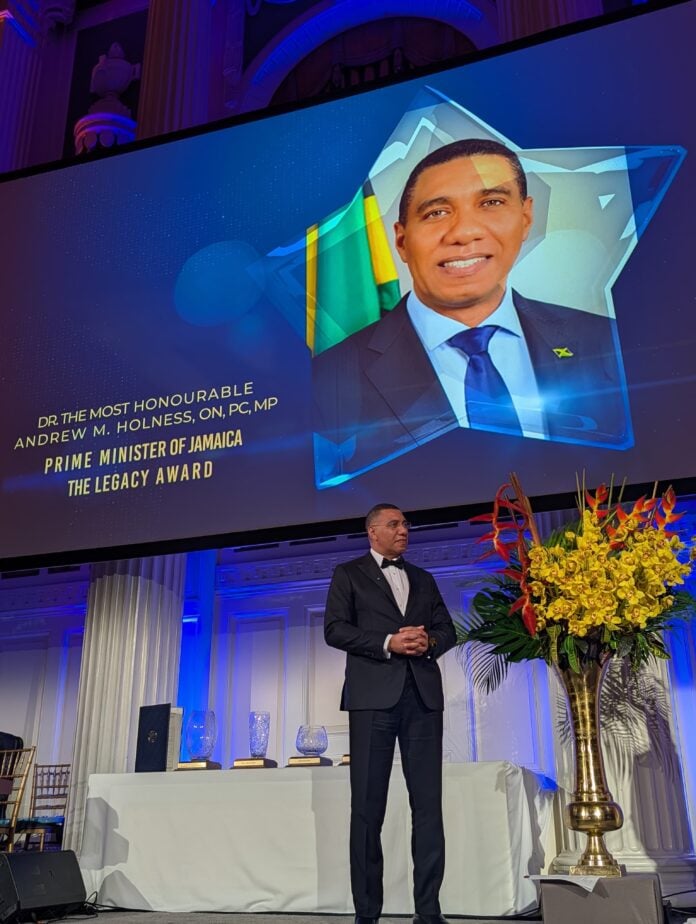
Jamaica’s Prime Minister Andrew Holness was honored Friday night with the Legacy Award at the 29th Annual “The Legacy Continues” Awards Gala hosted by the American Foundation for The University of the West Indies in New York City.

The Legacy Award, one of AFUWI’s highest honors, recognized Holness for his leadership and commitment to education, economic resilience, and regional collaboration — key pillars of Jamaica’s national development.

Prime Minister Andrew Holness later reflected on the recognition in a social media post, emphasizing humility and continued service following the honor.

“I am honoured to accept the Legacy Award from the American Foundation for The University of the West Indies at its 29th Annual Gala,” Holness wrote. “The journeys and stories we celebrated last night were truly deserving of recognition. They are defined not only by personal achievement, but by the lives you have touched, the doors you have opened, the opportunities you have created, and the paths you have helped to shape.”

Holness added that recognition should not signal the end of service, particularly for public officials.

“At the same time, I remain mindful that recognition, particularly for those of us in public service, must always be approached with humility. Awards can sometimes give the impression that the mission is complete or that the journey is nearing its end. But for me, and I believe for many of us, this moment is not a conclusion; it is a call to continue, to do more, and to serve with even greater purpose,” he said.

The annual gala brought together leaders from business, academia, public service, and philanthropy to raise funds for scholarships that increase access to higher education for Caribbean students attending The University of the West Indies. Proceeds from the event support talented students across the region, helping them pursue university degrees and contribute to Caribbean development.

Chairman of AFUWI, Dr. Cyrus McCalla, said previously that the event celebrated leaders whose service shapes the future of the Caribbean.

“The Legacy Continues Gala celebrates leaders whose vision and service help shape the future of our community and region,” McCalla said. “Through their leadership — and the generosity of those who support this event — we can open doors of opportunity for talented but financially disadvantaged Caribbean students whose aspirations for higher education deserve every chance to flourish.”

Several other distinguished leaders were also recognized at the event.

Anthony Belinfanti and Gregory Belinfanti received the Pathfinder Award for Generational Impact in Education, acknowledging their dedication to expanding educational opportunities across generations.

Dr. Kevon Rhiney received the Pelican Award, a peer recognition honor for alumni of The University of the West Indies.

Dr. Wayne A. I. Frederick received the Caribbean Luminary Award for leadership in higher education and healthcare, while Dr. Wayne J. Riley was awarded the Chancellor’s Award for Excellence in Institutional Impact.

Also receiving the Chancellor’s Award, along with the Corporate Award for Excellence in Global Business Leadership, was Dr. A. Norman Sabga, recognized for his leadership in business and enterprise development.

Camille Joseph-Goldman received the Vice-Chancellor’s Award for Excellence in Public Service and Community Impact, while Jacky Wright received the Phoenix Award for Global Digital Leadership.

The annual gala continues to serve as one of AFUWI’s flagship fundraising events, supporting scholarships that help Caribbean students access higher education and contribute to regional growth and development.

Over 130 candidates nominated for Bahamas May 12 general election

More than 130 candidates are expected to contest the May 12 general election in The Bahamas, according to Parliamentary Commissioner Harrison Thompson, who said the nomination process proceeded largely without major issues.

Thompson reported that nominations across the country’s 41 constituencies went mostly as expected, with only limited challenges in a few areas.

“From all indications, my team did what they were supposed to do, and it would appear that everything went well,” Thompson said, noting that no applications were rejected. He acknowledged minor issues in Fort Charlotte, Pinewood, and Garden Hills, including questions surrounding the qualifications of some candidates.

“The conclusion was that everybody who appeared to be nominated was nominated. They presented the documents that they needed to be nominated with, and the returning officers accepted them,” he added.

Early indications suggest approximately 130 nominees across the 41 constituencies. Thompson said the number of independent candidates was lower than anticipated.

“We thought it would be more independents, but the amount of independents didn’t move up to what we expected,” he said, adding that another party initially expected to field candidates ultimately did not nominate anyone.

Meanwhile, Prime Minister Philip Davis, who is leading the ruling Progressive Liberal Party (PLP) into the elections, expressed optimism about the party’s chances.

“I’m exhilarated by the fact that I’m taking another step and to be amongst a unique group of persons, or could be, who would next be elected to Parliament,” Davis said after his nomination in the Cat Island, Rum Cay, and Salvador constituency.

Flanked by his wife Ann Marie and grandchildren, Davis expressed gratitude to constituents and highlighted the party’s candidate mix.

“Our team is experienced. We have young candidates as well. So we have a mix of experience and neophytes who will bring with them the energy and vision of the youth to mix with the experience that we already have,” he said.

Opposition Leader Michael Pintard, who is contesting the Marco City constituency for the Free National Movement (FNM), also expressed confidence heading into the polls.

“We are confident that the people will speak and that they will speak for change and that change will be the Free National Movement,” Pintard said, adding that the party would continue to hold the government accountable for unmet promises.

Pintard said the FNM would also present its vision for Grand Bahama and the wider country during the campaign.

In the September 16, 2021 general election, Davis led the then-opposition PLP to a decisive victory over the FNM, winning 32 of the 39 parliamentary seats.

Meanwhile, controversy has emerged surrounding the PLP’s Fort Charlotte candidate Sebas Bastian, who has declined to respond to claims that his nomination may violate constitutional disclosure requirements related to government contracts.

The issue was raised by Lincoln Bain, leader of the Coalition of Independents, following Bastian’s nomination.

Under Article 48(1)(j) of the Bahamian Constitution, candidates with interests in government contracts must disclose those interests in the Gazette within one month before election day.

Bain argued that Bastian should have disclosed such interests by April 12. However, PLP spokesman Latrae Rahming said the party believes Bastian has not breached the constitution.

The PLP’s lead elections attorney Valentine Grimes also maintained that the disclosure requirement applies within the one-month period before the election, not prior to it.

“We will ensure that it is complied with. It is an issue we have looked into, and we have always sought to comply with that provision,” Grimes said, adding that candidates with government contracts in New Providence would make the necessary disclosures.

He added that if the Parliamentary Registration Department does not publish Bastian’s disclosure on Nomination Day, the party will ensure it is gazetted within the constitutionally mandated timeframe.

Maine Coon cats for sale in the USA

The Maine Coon is one of the most beloved and recognizable cat breeds in the United States. Known for their impressive size, luxurious coats, and gentle personalities, these cats have earned the nickname “gentle giants.” Originally bred in the northeastern United States, Maine Coons are well adapted to colder climates thanks to their thick, water-repellent fur and bushy tails.

What truly sets Maine Coons apart is their temperament. They are friendly, intelligent, and highly social without being overly demanding. Unlike many other breeds, they often enjoy interactive play, learning tricks, and even walking on a leash. Their dog-like loyalty makes them excellent companions for families, singles, and seniors alike.

If you are currently searching for Maine Coon cats for sale, it is important to understand what makes this breed such a rewarding choice. Maine Coons are typically great with children and other pets, including dogs. They are known for their distinctive chirping and trilling sounds rather than standard meowing, adding to their unique charm.

Physically, Maine Coons can weigh between 10 and 25 pounds, with males generally being larger than females. Their expressive eyes, tufted ears, and strong, muscular bodies give them a majestic appearance. With proper care, these cats can live 12 to 15 years or longer, offering many years of companionship.

Available Maine Coon Kittens for Sale

When choosing a Maine Coon kitten, responsible breeding and proper early socialization are essential. Healthy kittens should be active, curious, and comfortable around people. They should also receive proper veterinary care, vaccinations, and health screenings before joining their new home.

Reputable breeders typically offer kittens in a variety of coat colors and patterns, including classic tabby, solid, bi-color, and shaded variations. Each kitten has a unique personality, so spending time learning about their temperament can help you find the perfect match for your household.

Male Maine Coon Kittens

Male Maine Coon kittens are often slightly larger and may develop a more pronounced mane as they mature. They are typically playful, confident, and affectionate. Many owners describe male Maine Coons as outgoing and sociable, often forming strong bonds with all family members.

Because of their larger adult size, male Maine Coons may require more space and sturdy cat furniture. However, their calm and adaptable nature makes them suitable for both houses and spacious apartments, provided they receive enough stimulation and playtime.

Female Maine Coon Kittens

Female Maine Coon kittens are usually a bit smaller and may mature slightly faster than males. They are often described as intelligent, observant, and independent while still being loving companions.

Many families appreciate the balanced temperament of female Maine Coons. They tend to be graceful and gentle but still enjoy interactive play sessions. Their manageable size and affectionate personality make them an excellent choice for first-time cat owners.

Maine Coon Cat Price & What’s Included

The price of a Maine Coon kitten in the United States can vary depending on pedigree, breeder reputation, coat color, and location. On average, prices may range from $1,000 to $3,000 or more for show-quality kittens.

When evaluating price, it is important to understand what is included. A reputable breeder typically provides:

  • Initial vaccinations and deworming
  • Health certificate from a licensed veterinarian
  • Genetic health testing of parents
  • Registration papers (if applicable)
  • Starter food package
  • Socialization from an early age

Some breeders also offer a health guarantee and ongoing support after adoption. While the initial investment may seem significant, choosing a responsible breeder can help reduce long-term veterinary costs and ensure a healthy companion.

How to Adopt a Maine Coon from Happy Paws

At Happy Paws, we are committed to connecting loving families with healthy, well-socialized Maine Coon kittens. With over 10+ years of experience in professional operations and client-focused services, our team has successfully completed 3,500+ projects and served 600+ happy clients worldwide.

Operating in more than 35+ countries with 50+ trusted partners worldwide, Happy Paws follows a structured and transparent adoption process. We provide a full production cycle approach, meaning every stage — from breeding and care to documentation and delivery — is handled in-house. Our direct studio model ensures there are no middlemen, allowing us to maintain competitive prices and full quality control.

Our reputation is built on high client satisfaction, with top ratings on platforms such as Clutch and Google. We are proud to be trusted by global brands including Canon, McDonald’s, Huawei, AXA, and Pioneer. With millions of video views across our media platforms, our commitment to quality and transparency is visible to a worldwide audience.

The adoption process typically includes:

  1. Consultation to understand your preferences and lifestyle
  2. Presentation of available kittens
  3. Reservation with a deposit
  4. Veterinary check and documentation preparation
  5. Safe and secure delivery arrangements
  6. 24/7 support before and after adoption

Our dedicated team is always available to answer questions and provide guidance throughout the process, ensuring a smooth and stress-free experience for every new pet owner.

Maine Coon Care Tips for New Owners

Bringing a Maine Coon kitten home is an exciting milestone. To ensure a smooth transition, preparation is key.

First, create a safe and comfortable space for your new kitten. Provide a cozy bed, scratching posts, food and water bowls, and a litter box placed in a quiet area. Maine Coons enjoy climbing, so investing in a tall and sturdy cat tree is highly recommended.

Nutrition plays a vital role in healthy growth. Choose high-quality cat food rich in protein to support their muscular build. Fresh water should always be available. Regular veterinary check-ups are essential to monitor development and prevent potential health issues.


Record producer Jahvy Ambassador and podcaster Jaii Frais charged after Big Wall shooting

Jahvy Ambassador Jaii Frais

Jamaican music producer Jahvel Morrison and podcaster Jhaedee Richards Richards — popularly known as Jaii Frais — have both been charged in connection with the shooting incident at the Big Wall carnival party held Sunday night at the Ranny Williams Entertainment Centre in St Andrew.

Morrison, also known as Jahvy Ambassador, was charged with wounding with intent, using a firearm to commit a felony, and assault occasioning bodily harm. Richards faces charges of shooting with intent, wounding with intent, possession of prohibited weapon, and using a weapon to commit a felony.

The charges were laid hours after the court ordered police to either charge or release both men by 6:00 p.m. Friday, following their detention since the incident.

Morrison is represented by King’s Counsel Peter Champagnie, along with attorneys Sayeed Bernard and Richard Lynch. Richards is being represented by attorneys Isat Buchanan and D’ondre Buchanan, who confirmed the charges following their appearance in the Kingston and St Andrew Parish Court. An application for bail is expected to be made for Richards, while court dates for both men are pending.

The charges stem from an altercation during the Big Wall Revolution event that reportedly involved Richards and members of dancehall artiste 450’s entourage, including Morrison, who serves as the entertainer’s manager and producer.

Police reports indicate that about 9:30 p.m., a physical confrontation developed among patrons at the post-Carnival event. The dispute escalated, resulting in an exchange of gunfire between two individuals.

When the shooting subsided, three persons were found suffering from gunshot wounds — Richards, a member of 450’s entourage, and a United States citizen who was reportedly a bystander.

All three were transported to hospital for treatment. Richards was later treated and released into police custody.

Police also confirmed that two firearms were seized in connection with the incident.

In the aftermath, the Jamaica Constabulary Force said restrictions on firearms at entertainment venues will soon be implemented as part of measures to strengthen public safety following the shooting.

Minister Grange urges compassion as Government backs World Athletics decision

Jamaica’s Minister of Sport, Olivia Grange, has called for calm, balance, and compassion in the wake of a far-reaching decision by World Athletics to reject multiple athlete transfer requests.

While affirming the Government’s respect for the ruling, Grange made it clear that the human impact of the decision cannot be overlooked.

“As a Government, we are duty bound to show regard for the ruling of the international governing body for the sport of track and field. As the process of adjudication is not yet completed, we do not wish to make extensive comments at this time,” she said.

A decision with wide-reaching impact

The ruling, handed down on Thursday, denied applications from 11 athletes seeking to switch allegiance to Turkey, including four high-profile Jamaicans – Roje Stona, Rajindra Campbell, Wayne Pinnock, and Jaydon Hibbert.

Each athlete represents a significant part of Jamaica’s growing strength in field events, and their attempted transfer had drawn widespread attention both locally and internationally.

Even as the Government aligns with the governing body’s authority, Grange emphasized the real-life consequences of the decision, particularly for the athletes and their families.

“We know that the decision of World Athletics could have real life consequences for these athletes and by extension their families and loved ones. The Government of Jamaica will continue to support our athletes as much as possible and lobby for more to be done in this regard.”

Her remarks shift the focus from policy to people, underscoring the personal stakes behind a globally significant ruling.

A call for restraint in public discourse

In a climate where opinions have been swift and, at times, harsh, the minister issued a direct appeal to the public.

“This is a serious and sensitive issue and should not be used as an opportunity to condemn anyone. I make that appeal to the public, including users of social media. I am confident that all stakeholders will work through the present circumstances.”

It was a plea not just for understanding, but for responsibility in how the issue is discussed and judged.

The Government’s position reflects a careful balancing act: upholding the authority of international sport while advocating for the welfare of national athletes.

The message is clear, respect the rules, but do not lose sight of the individuals affected by them.

A moment that demands unity

As the situation continues to evolve, Jamaica finds itself navigating both principle and emotion.

Grange’s response offers a pathway forward, one rooted in respect for governance, but equally grounded in compassion.

In a moment charged with consequence, her call is simple:

Stand by the system, but stand by the athletes, too.


Reggae Girlz eye qualification showdown against Guyana

Reggae Girlz

Everything comes down to Saturday night. The Jamaica women’s national football team, the Reggae Girlz, will face Guyana women’s national football team at 7:00 p.m. (Jamaica time) inside the National Stadium, with qualification to the next phase of the CONCACAF W Qualifiers hanging in the balance.

Jamaica sit atop Group B with a flawless nine points from three matches, but their place in the CONCACAF W Championship is not yet secured. A positive result guarantees advancement. A loss, however, could open the door for both Guyana and Nicaragua, each on six points, to leapfrog them on goal difference.

In short: control the outcome, or risk everything.

Pressure meets preparation

Head coach Hubert Busby Jr understands the stakes, and the opponent.

“Guyana are a strong, organised team,” he said ahead of kickoff.
“At the end of the day, mathematically, they’re not out so we’re expecting a very challenging match from them tomorrow.”

For Busby, the equation is simple. Respect the threat, but trust the process.

“We respect each and every opponent. I’ve been saying that from day one,” he explained.
“They’re an organised group. They’ll come here looking to impose their will on us and for us, it’s really about ensuring that we stick to our tactical plan.”

Home advantage, clear intent

Backed by a home crowd and carrying the momentum of an unbeaten campaign, Jamaica will lean on both quality and discipline.

Busby made it clear that the focus remains internal.

“Like I said, we respect what they need to do but it’s really about us looking to go out there and executing the things that we want to do on our home pitch.”

The message: impose identity, not react to pressure.

Setting the tone from the first whistle

Senior player Deneisha Blackwood believes the tone must be established long before kickoff.

“I think going into this final one as players, and as a senior player, is just making sure we’re setting the standard even from the warm-up,” she said.
“The other team’s coaches are watching the warm-ups so [we have to] make them fear us from then.”

For Blackwood, dominance begins with presence, and carries into performance.

“[They] see how we’re warming up, how we’re approaching the warm-up and the standard is set from there,” she continued.
“I think from then it is just going in the game with quality and pride and dominating from the first whistle.”

A rare advantage: Time

Unlike the compressed turnaround typical of tournament play, Jamaica enter this fixture refreshed.

A full week since their last outing has allowed for recovery, refinement, and renewed intensity.

“The training sessions have been good, lively, and very competitive, which has been great to see,” Busby said.
“The players have had a chance to take a little bit of time off and recharge. I think that’s done them wonders because they’ve been back in training, the energy’s been high, the focus has been good.”

More importantly, it has provided time to sharpen execution.

“We’ve had some time to work on some of our match plan and implement some of the things as it pertains to our playing model, which has been good.”

What’s at stake?

The reward is significant.

The group winner advances to the CONCACAF W Championship, a gateway tournament that determines qualification for both the 2027 FIFA Women’s World Cup and the 2028 Olympic Games in Los Angeles.

For Jamaica, the path is clear.

One more result. One more performance. One more step toward the global stage.


Roje Stona eyes legal route after eligibility blow

Roje Stona

Olympic gold medalist Roje Stona is not accepting the verdict quietly.

Days after World Athletics denied his request to switch international allegiance to Turkey, the Jamaican star has signaled his intention to challenge the ruling, setting the stage for a potentially far-reaching appeal.

The decision, handed down by the governing body’s Nationality Review Panel, blocked Stona and 10 other athletes from representing Turkey, citing concerns over what it described as a “coordinated recruitment effort by the Turkish government, operating through a state-funded club.”

For Stona’s camp, the response was swift, and resolute.

“We’re going to appeal it and see where it can go. We’re prepared to take it to the highest level,” said his agent, Paul Doyle.

Shock and disbelief

According to Doyle, the ruling has left the 24-year-old stunned, particularly given past precedents.

“Athletes in the past have been approved, and now all of a sudden, these ones aren’t,” he said.

Beyond the procedural frustration lies a deeper sense of confusion, especially given what Doyle described as Stona’s personal investment in his intended new sporting home.

“I can speak for Roje because he’s the only one that I represent. They’ve really truly embraced Turkish culture, so to me it doesn’t make sense.”

Emotional toll of the ruling

While preparing for a legal fight, Stona is also grappling with the emotional impact of the decision.

“He’s not happy, obviously, but he understands that it’s a process. Hopefully, we can get through this and it’ll work out as favourably as possible for him.”

The timing adds to the disappointment. The expectation had been immediate eligibility, an outcome now firmly off the table.

“The hope was that he would be eligible right away. That’s obviously not going to be the case now, but he’s pretty devastated.”

Part of a wider crackdown

Stona is not alone.

The ruling affected 11 athletes globally, including fellow Jamaicans Jaydon Hibbert, Rajindra Campbell, and Wayne Pinnock.

Also denied were athletes from Kenya, Nigeria, and Russia, among them established names such as Brigid Kosgei and Favour Ofili, underscoring the global scope of the panel’s decision.

Stona’s case carries particular weight.

The Jamaican rewrote history at the 2024 Summer Olympics, setting an Olympic record in the men’s discus on his way to gold, cementing his status as one of the sport’s brightest talents.

Now, instead of building on that triumph under new colors, he faces a different kind of contest, one fought through appeals and regulatory frameworks.

The road ahead

The appeal process could prove lengthy and complex, with significant implications not just for Stona, but for the broader landscape of athlete transfers in global track and field.

For now, however, the message from his camp is unmistakable:

This fight is far from over.

KFC Jamaica commits $14M to Reggae Girlz in renewed push toward World Cup history

From left: Reggae Girlz defenders Deneisha Blackwood and Allyson Swaby join KFC Jamaica Marketing Manager Andrei Roper, alongside forward Kameron Simmonds and midfielder Atlanta Primus during the cheque handover presentation at the official Reggae Girlz sponsorship announcement at the Courtyard Marriott Hotel.

Leading quick service food giants, KFC Jamaica, has reaffirmed its commitment to national football with a new two-year sponsorship of the Reggae Girlz valued at a combined J$14 million ($12 million cash + $2 million in KFC meal products), as the team sets its sights on qualifying for a historic third consecutive FIFA Women’s World Cup.

The partnership, which will see KFC invest J$6 million cash, plus $1 million in meals annually, marks a renewed show of confidence in the programme at a time when the Reggae Girlz continue to elevate Jamaica’s presence on the global stage. 

KFC’s investment in the Reggae Girlz reflects its strong support for women’s football locally. Now in its second year of supporting the Jamaica Women’s Premier League (JWPL), the brand most recently renewed its commitment last month for the 2025/2026 season with a contribution of J$3.5 million in cash and meal support. The brand also supported the Reggae Girlz during their 2023 FIFA Women’s World Cup campaign, including a two-year partnership with national captain and leading goal scorer Khadija “Bunny” Shaw. This latest return strengthens the team’s journey ahead while reinforcing KFC’s ongoing investment in the growth and visibility of women’s football in Jamaica.

“For those familiar with KFC Jamaica’s mindset, you know we are no strangers to supporting sports development across all levels, especially at the youth level,” said Andrei Roper, Marketing Manager at KFC Jamaica. “Over the past two years, we’ve paid close attention to the growth of women’s football and we see the talent and potential coming through the Women’s Premier League. We’re excited about what that pipeline can mean for the national programme and, ultimately, the world stage.”

He added, “we believe in long-term development, in building platforms and setting strong foundations for growth. That is why we are proud to be back on board, supporting a team that continues to represent the country with pride as they move closer to another historic World Cup appearance. To the Reggae Girlz, thank you for what you continue to do for Jamaica. You are true ambassadors for the sport and for the nation.”

The Jamaica Football Federation (JFF) welcomed the renewed partnership, noting its importance as the team continues its preparations.

“We welcome KFC’s strong return and continued belief in the Reggae Girlz,” said Michael Ricketts, President of the Jamaica Football Federation (JFF). “This support comes at an important time as we continue to build on our momentum. Their commitment allows us to strengthen our systems, better support our players and remain competitive at the highest level.”

As the Reggae Girlz continue their campaign, KFC’s investment signals not just support for a team, but belief in a movement, one that continues to inspire a new generation of players and fans across Jamaica. The team returns to action on Saturday, April 18, as they face Guyana in the FIFA Women’s World Cup qualifiers.