Home Blog Page 177

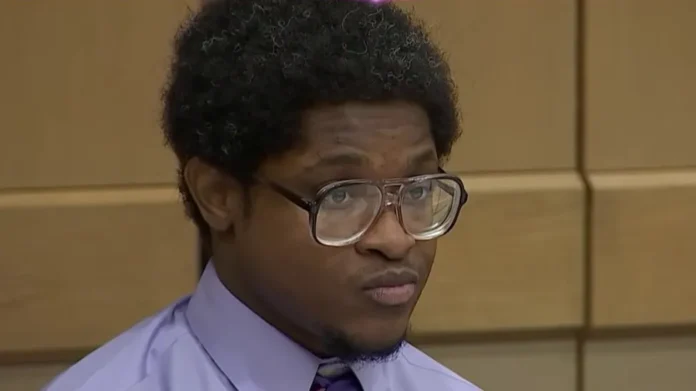
Jury convicts Miramar man in 2020 murder of roommate

A Broward County jury on Monday convicted 26-year-old Marvin Jean-Pierre of first-degree murder in the 2020 killing of his roommate, 52-year-old Jose Mondelus.

The guilty verdict came nearly a week after the trial began. Jean-Pierre was immediately sentenced to life in prison. He has 30 days to appeal.

Defense attorney Gabe Ermine said his team plans to challenge the ruling. “While we respect the jury’s verdict, we disagree with it. Of course, we respect it, and we plan to appeal,” he said.

Jurors weighed Jean-Pierre’s claims of self-defense against the prosecution’s case for premeditated murder. Jean-Pierre testified that he acted after waking up to unwanted sexual advances from Mondelus, throwing an iron at him and fearing he was about to be assaulted.

But prosecutors presented grim evidence that told a different story. Mondelus’ body was found inside a closet at the Miramar apartment in January 2021. His feet were bound with a necktie, a bag was over his head, and his body had been wrapped in a carpet.

A medical examiner testified that while Mondelus suffered blunt force trauma, the cause of death was asphyxia from manual strangulation and plastic bag suffocation.

Mondelus, a longtime family friend, had been living with Jean-Pierre after the younger man’s mother arranged the housing following his eviction from their home for smoking marijuana. His sister reported him missing after he failed to answer his door or attend church band performances in late December 2020.

Police discovered his body on Jan. 1, 2021, during a welfare check.

Convicted double-murderer mistakenly released from Miami-Dade jail

murderer Miami-Dade

A man serving a life sentence in federal prison for a brutal double-murder is on the run after being mistakenly released from a Miami-Dade jail, authorities confirmed.

Miami-Dade Corrections said 60-year-old James Edward Daniels was freed Saturday from the Turner Guilford Knight Correctional Center because of a procedural error now under internal affairs investigation.

Daniels was convicted last year of kidnapping three men from an Opa-locka truck yard in 2020. Investigators said the victims were bound and tortured during the attack, which left two dead and one survivor. He was sentenced to life in federal prison earlier this year.

The Miami-Dade Sheriff’s Office issued a flyer Monday warning Daniels should be considered armed and dangerous. Deputies are working alongside federal agents to locate him. A $5,000 reward is being offered for tips leading to his capture.

Anyone with information is asked to call M-DCSO Homicide Detective C. Santos at 305-471-2400 or Miami-Dade County Crime Stoppers at 305-471-8477.

Miami-Dade Corrections’ complete statement reads:

“The Miami-Dade Corrections and Rehabilitation Department is committed to the highest standards of public safety, transparency, and accountability.

On Saturday, September 27, 2025, Inmate James Daniels, 60, was released from the Turner Guilford Knight Correctional Center due to a procedural error. The top priority of MDCR is to ensure his swift apprehension and safe return to custody. All available resources are being utilized, including the assistance of our local and federal law enforcement partners.

A full internal affairs investigation is underway to review the circumstances surrounding this incident and any potential failures to follow departmental policy. MDCR is committed to ensuring that those responsible for failing to follow policy are held accountable to the fullest extent possible.

Due to the ongoing nature of this investigation, no further details are available at this time.”

Guyanese police destroy over $409 million in cannabis

Antigua to amend law to fine those who use marijuana in Public

The Guyana Police Force’s Narcotics Branch and Regional Division Six conducted two major eradication operations on Sunday in the Upper Berbice River, destroying more than $409 million worth of cannabis and seizing two illegal shotguns with ammunition.

The first raid took place at Zion, Upper Berbice River, where officers discovered a two-acre plot being prepared for cultivation. Nearby, a 30×20 ft. makeshift camp with living and kitchen areas was uncovered. Inside the camp, police found a drying section containing approximately 350 lbs of dried cannabis, valued at over $142.8 million. Both the camp and the cannabis were destroyed by fire.

Later that morning, between 5:00 a.m. and 10:20 a.m., officers launched a second operation at Kalkuni, Upper Berbice River. There, another two-acre cannabis farm was discovered, with roughly 3,000 plants ranging from two to seven feet in height. A camp of similar size, complete with a drying section, was also uncovered. Officers seized 650 lbs of dried cannabis, along with two unlicensed twelve-gauge shotguns and 19 matching cartridges.

The weapons, which bore no visible serial numbers, have been submitted to the Ballistics Section for analysis. Cannabis plants, dried marijuana, and the camps at both sites were destroyed at the scene.

Police estimate the value of the seized narcotics from the Kalkuni raid alone to be more than $266 million, bringing the total value of cannabis destroyed in both operations to $409,249,200.

The Guyana Police Force reported that both exercises were carried out without incident, marking a significant blow to the illegal drug trade in the Berbice River region.

Miami-Dade authorities arrest 21 in major ‘credit bust out’ investigation

Miami-Dade law enforcement officials announced Monday that 21 suspects have been arrested as part of “Operation Lien to Clean,” targeting a scheme in which vehicles are fraudulently purchased using manipulated credit, known as “credit bust outs.”

Authorities said the operation has uncovered at least 100 vehicles valued at over $5.5 million that were allegedly obtained through the scam. So far, 53 vehicles worth approximately $4.38 million have been recovered.

“Credit bust outs” occur when individuals purchase multiple vehicles over a short period before they appear on credit reports or manipulate their credit history to hide negative activity, officials explained. Stolen or fraudulently obtained vehicles are often illegally subleased or have their liens washed and retitled in other states.

Miami-Dade Sheriff Rosie Cordero-Stutz highlighted the broader impact on the community:

“When financial institutions lose millions, those costs are passed down to families, small businesses, and consumers through higher prices and insurance premiums. Small family-owned dealerships, the backbone of our neighborhoods, are especially hard-hit.”

NBC6 has previously reported on several credit bust out cases in the county, including a $700,000 fraud involving 14 vehicles, a $464,000 fraud involving seven vehicles, and a case involving a social media influencer obtaining multiple BMWs. Officials said more arrests are expected as the investigation continues.

“Make no mistake, Miami-Dade is a prime target for credit bust-out fraud. But we will not let organized criminals or corrupt insiders treat our county like an open marketplace. Not on my watch,” Cordero-Stutz added.

Dominica PM wants more CARICOM countries to join free movement initiative

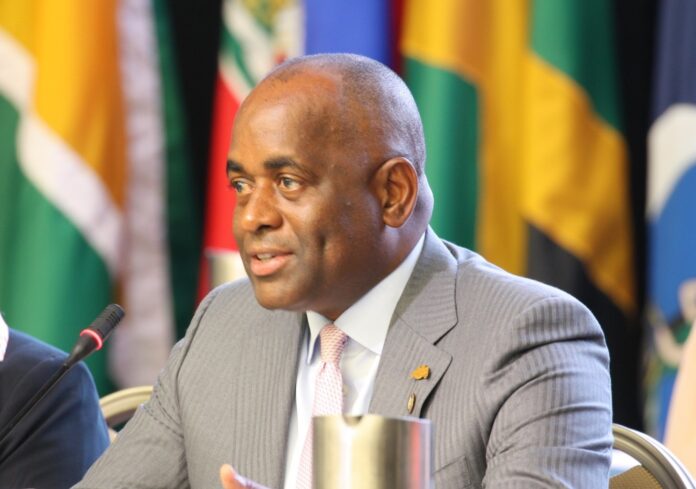
Dominica Prime Minister Roosevelt Skerrit

Dominica Prime Minister Roosevelt Skerrit expressed optimism Monday that additional Caribbean Community (CARICOM) countries will follow Barbados, Dominica, St. Vincent and the Grenadines, and Belize in implementing full free movement, a key feature of the CARICOM Single Market and Economy (CSME).

Speaking at a news conference, Skerrit said, “I remain hopeful that other CARICOM countries will join us so that we can realize the full promise of a true Caribbean Community.” The initiative, set to take effect Wednesday, October 1, allows nationals of the four countries to move freely, live, work, and remain indefinitely in participating states without residency or work permits. They will also have access to public primary and secondary education, as well as emergency and primary healthcare.

Skerrit described the move as “a decisive step forward on a matter that has been on the regional agenda for decades,” and emphasized its mutual benefits. “Free movement allows us to fill gaps in critical areas, while giving our own citizens greater access to opportunities across the region. It is a win-win for all,” he said.

Acknowledging concerns about security and jobs, Skerrit reassured that regional cooperation, vetting, and security systems will remain strong. “We are not lowering our guard. We are removing unnecessary barriers that have, for too long, held back our collective progress,” he said.

The Prime Minister encouraged Dominicans to embrace the change, highlighting the opportunities it presents. “Learn as much as you can about what free movement means, and the opportunities it can bring for you and your families,” he added.

The Guyana-based CARICOM Secretariat confirmed that the arrangement falls under the Enhanced Cooperation Chapter of the Revised Treaty of Chaguaramas, which allows groups of member states to advance integration among themselves when broader regional objectives cannot be achieved quickly.

By opening borders for citizens across these four states, the initiative represents a historic step in advancing economic, social, and human integration within CARICOM.

PNP leader Mark Golding unveils new Shadow Cabinet

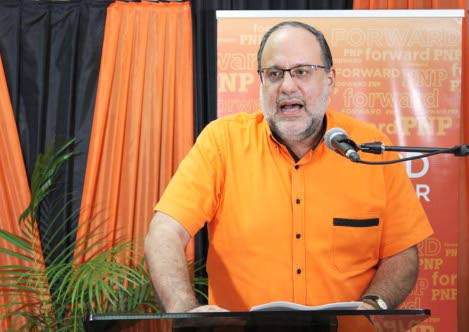
pnp mark golding

Mark Golding, leader of the opposition People’s National Party (PNP), on Monday announced his new Shadow Cabinet, less than a month after the party’s loss in the September 3 general election.

In a statement, the PNP said the team of spokespersons and deputies has been tasked with providing oversight, holding the Government accountable, and presenting alternative policies aligned with the party’s vision for “a just, inclusive, and progressive Jamaica.”

Golding, who also serves as PNP president, described the group as a blend of “bright minds, experienced leaders, and energetic new voices” ready to serve the country. He emphasized that the Shadow Cabinet carries no cost to taxpayers.

“This is not about salaries or perks. Our Spokespersons serve without pay in these roles,” Golding said. “The Shadow Cabinet provides a platform for MPs to engage meaningfully on national issues and demonstrate their readiness to assume responsibility in a future government.”

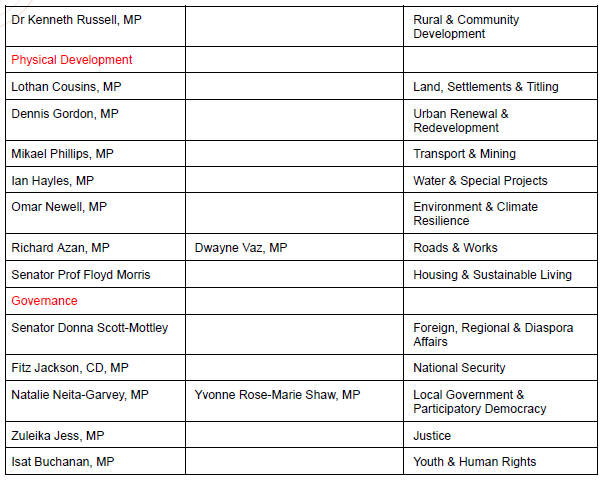
According to the PNP, the Shadow Cabinet has been structured around four central pillars of national life: economic development, human development, physical development, and governance. The party said this framework will guide its approach to addressing Jamaica’s most urgent challenges while offering the public a clear view of its policy direction.

Grenada announces changes to Cuban medical missions after US pressure

Cuban medical missions
Cuban medical brigade

The Grenadian government has announced a series of “important changes” to the Cuban medical missions, following a request from the United States to review the long-running initiative.

In a statement, the Ministry of Foreign Affairs said the new measures are aimed at strengthening the administration and oversight of the programme. The announcement came after high-level talks in Havana earlier this month, led by Foreign Affairs, Trade and Export Development Minister Joseph Andall and Health Minister Philip Telesford.

According to the statement, Grenada and Cuba agreed that all Cuban professionals serving in the country will now operate under conditions equal to those of their Grenadian counterparts. “The Government of Grenada expresses its appreciation to the Government of Cuba for its cooperation in the matter and for agreeing to the changes,” the release said, while also acknowledging Washington’s role in raising the issue.

The Dickon Mitchell administration underscored that the Cuban Workers Programme has played a vital role in supporting Grenada, particularly in the delivery of healthcare. “The Government and people of Grenada are grateful for this support,” the statement continued. At the same time, the government emphasized its commitment to strengthening national health capacity through training, scholarships, and incentives to expand the cadre of Grenadian professionals working in the system.

The announcement follows a move by the U.S. State Department in August to impose visa restrictions on African, Cuban, and Grenadian officials — and their families — over what it described as complicity in Cuba’s medical mission scheme. Washington alleges that the program exploits medical professionals by sending them abroad at high prices while the Cuban government retains most of the revenue, depriving Cubans of essential medical care. Caribbean leaders have strongly rejected that characterization, arguing the missions provide much-needed health services to the region and beyond.

“The United States aims to support the Cuban people in their pursuit of freedom and dignity and promote accountability for those who perpetuate their exploitation,” the State Department said in its August statement. It urged governments to pay doctors directly rather than, in its words, “the regime’s slave masters.”

Earlier this month, Washington imposed visa restrictions on Grenada’s Finance Minister Dennis Cornwall. Still, Grenada’s government stressed that both St. George’s and Havana remain committed to their long-standing relationship, agreeing to continue addressing matters of concern through diplomatic channels.

Suspected cholera cases climb in Port-au-Prince, Haiti

Cholera haiti
Haiti experiencing decline in cholera cases

Health officials in Haiti are reporting a sharp increase in suspected cholera cases in the capital, raising fresh concerns just days before schools reopen.

According to the UN Office for the Coordination of Humanitarian Affairs (OCHA), 66 suspected cases have been recorded in Port-au-Prince and surrounding communes in recent days, with Pétion-Ville—an economic hub with a high concentration of schools—emerging as the main hotspot. Between September 21 and 25 alone, 40 suspected cases and three deaths were reported in the area.

Young adults, who account for most of the recent cases, are believed to be driving the spread across Pétion-Ville, Delmas, Tabarre, and Carrefour. The rise comes against the backdrop of more than 3,100 suspected cholera cases reported nationwide so far this year.

Local health teams are carrying out investigations, collecting samples, and distributing water purification tablets. Awareness campaigns have also been launched in at-risk neighborhoods, including Brisetoux and Bobin.

OCHA said it is working alongside Haitian authorities and partners to strengthen case monitoring and ensure health workers can be rapidly mobilized to prevent further spread.

Weak primary health care could cost Caribbean, Latin America 165,000 lives

patient health care

A new report from the World Bank and the Pan American Health Organization (PAHO) warns that Latin America and the Caribbean face staggering health and economic losses unless urgent action is taken to strengthen resilience within primary health care (PHC).

The study, No Time to Wait: Resilience as the Cornerstone of Primary Health Care in Latin America and the Caribbean, was launched today during PAHO’s 62nd Directing Council in Washington, D.C., where ministers of health and regional delegates gathered. It projects that a disruption in PHC delivery of 25–50%—whether from a pandemic, natural disaster, or other crisis—could result in up to 165,000 preventable deaths and between US$7–37 billion in economic losses.

Those deaths could include more than 11,000 maternal fatalities, 10,000 child deaths, and nearly 150,000 deaths from noncommunicable diseases, alongside as many as 14 million unintended pregnancies.

“There is no trade-off between building strong primary health care and building resilience—they go hand in hand,” said Dr. Jarbas Barbosa, Director of PAHO. “Without resilient PHC, the next crisis will again hit the poorest and most marginalized communities the hardest.”

The report defines resilience as the ability of health systems to maintain equitable access to essential services before, during, and after crises, including pandemics, hurricanes, floods, heatwaves, and disease outbreaks.

COVID-19 Exposed Vulnerabilities

The Commission highlights how the COVID-19 pandemic underscored the fragility of health systems in the region. Although Latin America and the Caribbean account for only 8.5% of the world’s population, the region registered 30% of all COVID-19 deaths. Essential services, including maternal care, immunizations, and treatment for chronic illnesses, fell by as much as 50%, with some disruptions lasting two years.

Adding to the challenge, the region is among the most disaster-prone globally, yet health systems remain fragmented, hospital-centered, and underfunded at the primary care level.

“Strengthening primary health care is one of the greatest health challenges of Latin America and the Caribbean,” said Jaime Saavedra, Director of Human Development for the region at the World Bank. “Governments need to place primary health care at the heart of their agendas, invest in it urgently, and ensure universal coverage so that protecting lives and economies is not optional but a priority.”

A Five-Point Plan for Resilience

The Commission’s report outlines a five-point roadmap to build resilience in PHC:

  1. Expand equitable and comprehensive care models to ensure culturally sensitive services for all communities.

  2. Embed essential public health functions like surveillance, vaccination, and health promotion at the primary care level.

  3. Place communities at the center by involving them in decisions and building trust through accountability and communication.

  4. Work across sectors, recognizing the links between health, education, housing, climate resilience, and social protection.

  5. Secure sustainable financing, with a focus on public investment and rapid funding mechanisms during emergencies.

The Commission stressed that resilient PHC is not only a health priority but also central to social stability and economic growth. The report urges governments to act decisively, closing financing gaps, strengthening governance, and investing in a digitally supported health workforce to ensure people-centered care can withstand future shocks.

From Soca to South Beach: Miami Carnival Sunday

Every October, Miami takes center stage as the capital of Caribbean culture in the U.S., and while Carnival week builds anticipation, the spotlight shines brightest on Carnival Sunday, happening October 12, 2025, at the Miami-Dade County Fairgrounds.

With dazzling costumes, pulsating soca rhythms, and an international crowd of more than 100,000, it’s the grand finale of Miami Carnival. But Carnival Sunday is more than feathers and music—it’s the perfect lens to see Miami in full color.

The Parade and Concert

At the heart of the day is the Parade of Bands, where thousands of masqueraders flood the Fairgrounds in sequins, feathers, and jewels. Each mas band tells its own story, moving to the sounds of soca blasting from the music trucks. The road becomes living art, with high-energy costumes and dancing that celebrate Caribbean pride and unity. Once the bands cross the stage, the celebration shifts to the Mega Concert, featuring international soca stars. Together, the parade and concert form one of North America’s largest cultural showcases and a highlight of Miami’s annual calendar.

Cultural Delights

Food is another star of the day. More than 50 vendors serve up authentic dishes from across the Caribbean, from jerk chicken and doubles to flavors of the Bahamas, Haiti, Guyana, Jamaica, and the Dominican Republic. These flavors are part of Miami’s story too—step outside the Fairgrounds and you’ll find Creole specialties in Little Haiti, Cuban classics in Little Havana, and global dining in Brickell. Carnival Sunday is a feast for the senses, where culture, cuisine, and performance come together.

Family-Friendly Fun

Carnival Sunday is a celebration for all ages. Families can enjoy cultural displays, live performances, and an Arts & Crafts Village showcasing traditional works and hands-on experiences. Kid-friendly areas and museum-style exhibits add to the multigenerational appeal, ensuring that Carnival connects everyone to Caribbean culture, from the youngest masqueraders to longtime participants.

Local Businesses

The Arts & Crafts Village also highlights Miami’s vibrant small business community. Visitors can browse and support Caribbean-owned vendors, artists, and entrepreneurs who bring the culture to life with handmade goods, unique fashions, and local flavors. Beyond the Fairgrounds, neighborhoods such as Liberty City and North Miami also reflect the entrepreneurial spirit and cultural richness that Carnival celebrates.

Accessible for All

Miami Carnival is committed to ensuring the celebration is inclusive. The Parade and Concert are ADA-compliant, with accommodations that make it possible for participants of all abilities to experience the joy and energy of Carnival Sunday.

A Miami Experience

What makes Carnival Sunday uniquely Miami is how seamlessly it connects to the city around it. From sunrise on South Beach to an evening stroll through Wynwood’s murals or the Design District’s nightlife, the celebration continues beyond the Fairgrounds. Carnival reflects the diverse cultures that shape Miami, making it more than an event—it’s an experience woven into the city itself.

Miami at Its Most Vibrant

Carnival Sunday is Miami at its peak. From the Fairgrounds to the neighborhoods, beaches, and nightlife, it’s a day when culture and destination collide. Visit during Carnival and you’ll see why Miami is the Caribbean capital of the U.S.—a place where the celebration doesn’t end when the parade does.

Learn more about Miami Carnival Sunday at https://www.miamiandbeaches.com/event/miami-carnival-parade-and-concert/35.


Jamaica featured in Season 2 premiere of CBS’ The Visioneers with Zay Harding

The Visioneers
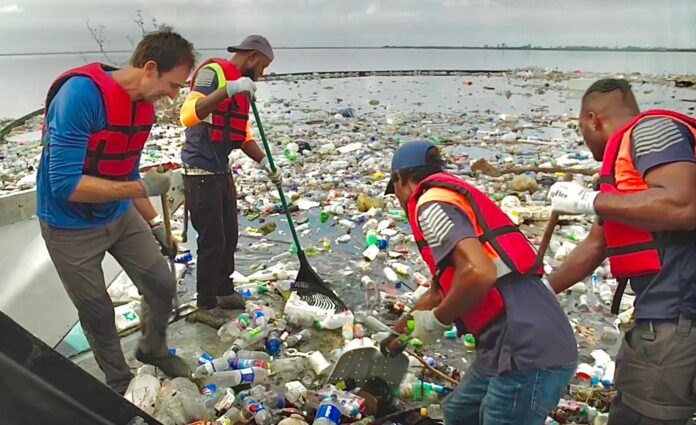
Zay Harding joins members of Clean Harbours Jamaica Limited in cleanup efforts at Kingston Harbour. CREDIT- TJ YERKE

Jamaica will take center stage once again when the eco-adventure series The Visioneers with Zay Harding returns for its Season 2 premiere on CBS. The episode airs Saturday morning, October 4, as part of the network’s “CBS WKND” educational programming block.

Hosted by international explorer and veteran adventure presenter Zay Harding, the 30-minute weekly series highlights groundbreaking initiatives around the globe, led by scientists, engineers, and everyday innovators tackling real-world environmental challenges. Produced by Hearst Media Production Group in partnership with the VoLo Foundation, the show aims to inspire viewers with actionable solutions for a sustainable future.

This season opener follows Harding and his crew to Jamaica, where they documented the work of The Ocean Cleanup and its local partner, Clean Harbours Jamaica Limited. Together, the organizations are leading the Kingston Harbour Cleanup Project—an ambitious effort to reduce domestic waste entering Jamaica’s Kingston Harbour, the seventh-largest natural harbor in the world.

In the episode, Harding interviews Erik Holbom, Operations Manager at The Ocean Cleanup, and Michael McCarthy, Managing Director of Clean Harbours Jamaica Limited. They discuss their shared mission to remove harmful plastic pollution and demonstrate the innovative “interceptor,” a floating fence deployed at drainage gullies where they meet the ocean to trap debris before it reaches the harbor.

“This is a wonderful opportunity for our viewers to see how Jamaica, often celebrated for reggae, cuisine, and world-class athletes, is also committed to protecting its natural environment,” Harding said. “We were so inspired by our experience that Jamaica will be featured again in another episode later this season. It’s exactly the type of story I envisioned when creating the series.”

Harding, a Hawaii native raised on Kauai and Oahu, co-created the show with high school friend David Vogel, founder of the VoLo Foundation. Motivated by a shared desire to raise awareness about climate change, the duo developed a series spotlighting innovators shaping a sustainable future. The pilot attracted Hearst Media Production Group, whose partnership with CBS brought the project to air.

Season 2 will expand its global reach, covering destinations across the U.S. and internationally, including Portugal, Germany, Switzerland, Kenya, and the U.K., while revisiting Jamaica later in the season.

Trinidad and Tobago’s economy contracts in Q1 2025

Newly released Statin data shows Jamaica’s Q3 output at 5-year low

Trinidad and Tobago’s economy shrank in the first quarter of 2025, with both energy and non-energy sectors posting declines, according to the Central Bank’s September Monetary Policy Announcement.

The Bank maintained its repo rate at 3.50 per cent, warning that growth prospects remain fragile despite low inflation and stable domestic prices.

Citing data from the Central Statistical Office (CSO), the Central Bank reported that real GDP contracted by 2.1 per cent year-on-year in the first quarter. Output fell 4.8 per cent in the energy sector and 1.0 per cent in the non-energy sector, reflecting weakness across key industries.

Preliminary figures for the second quarter show a mixed picture. Natural gas production slipped 2.1 per cent year-on-year, while crude oil output rose slightly by 0.3 per cent. Petrochemical production was uneven, with ammonia and urea output climbing 6.9 per cent and 26.7 per cent, respectively, but methanol plunging 28.1 per cent.

Non-energy activity remained sluggish. The Bank said a slowdown in the distribution sector and tepid construction and manufacturing activity likely dampened growth heading into mid-year. “While inflation is likely to remain low, growth prospects are fragile,” the Central Bank cautioned, pointing to softer labour conditions, potential adjustments in government programmes, and uneven energy gains from new natural gas fields.

Despite the weak growth outlook, inflation remains contained. Headline inflation stood at 1.4 per cent year-on-year in August, unchanged from three months earlier. Core inflation edged up to 1.0 per cent, while food price increases eased to 2.9 per cent due to falling vegetable prices. Building material prices rose 2.4 per cent, and wholesale prices increased 1.2 per cent in the second quarter.

Liquidity in the financial system tightened to $3.9 billion in September from $4.2 billion in August, driven by robust credit growth, government financing operations, and Central Bank foreign exchange sales. Private sector credit expanded 7.7 per cent in July, down from 9.1 per cent in April, with business lending up 8.1 per cent and consumer credit up 9.9 per cent. Real estate mortgage loans grew 6.3 per cent.

External pressures also weigh on the outlook. Crude oil prices averaged US$64.08 per barrel in August, down from US$75.55 a year earlier, while natural gas benchmarks slipped amid a global slowdown and geopolitical tensions. The International Monetary Fund projects global growth to slow to 3.0 per cent in 2025, from 3.3 per cent in 2024.

Global monetary easing, including the U.S. Federal Reserve’s September rate cut to 4.00–4.25 per cent, has narrowed interest rate differentials with Trinidad and Tobago, even as local short-term treasury yields rise with tighter domestic liquidity.

Given these conditions, the Monetary Policy Committee opted to keep the repo rate unchanged. The next policy announcement is scheduled for December 31, 2025.

S&P upgrades The Bahamas’ credit rating to ‘BB-’ with stable outlook

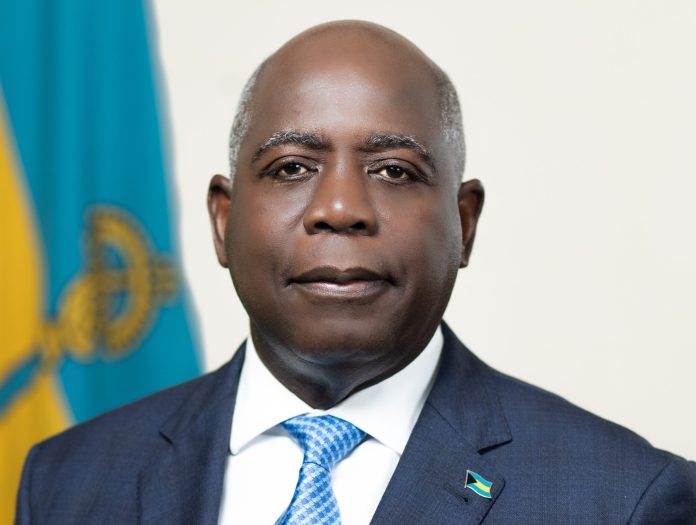
Bahamas PM

S&P Global Ratings has upgraded The Bahamas’ long-term foreign and local currency sovereign credit ratings to ‘BB-’ from ‘B+’, citing stronger economic performance and steady fiscal management.

The outlook remains Stable, reflecting confidence in the country’s ability to maintain recent economic gains.

The September 26 rating action comes as The Bahamas posts stronger-than-expected growth driven by robust tourism and increased investment across the Family Islands. “The stronger economy, propelled by strong cruise tourism and large-scale investment projects, and the government’s tax compliance efforts have helped reduce the fiscal deficit and contained the sovereign’s debt burden,” S&P said.

The agency credited several key factors for the upgrade:

  • Stronger economic performance, with GDP expanding 3.4% in 2024 and projected to grow 2.1% in 2025, aided by improved data collection from the Bahamas National Statistical Institute.

  • Record tourism arrivals, reaching 11.2 million visitors in 2024 and 6.3 million in the first half of 2025.

  • Fiscal improvements, as the deficit narrowed to 1.3% of GDP in FY 2023/24, returning to pre-pandemic levels.

  • Energy sector reforms aimed at strengthening the finances of Bahamas Power and Light and other public entities.

S&P also highlighted the government’s commitment to fiscal discipline, noting that refinancing risks have eased and projecting public debt to fall to 66.3% of GDP by the end of 2025, down from 77.8% in 2020.

Looking ahead, the agency expects GDP growth to remain solid and align with peers of similar development levels, provided the government maintains prudent fiscal policies. Further upgrades could follow if The Bahamas sustains balanced budgets and strong growth, in line with targets set in the 2025 Fiscal Strategy Report.

The upgrade builds on a series of recent positive ratings developments, including Moody’s revision of The Bahamas’ outlook to Positive from Stable and Fitch’s inaugural BB- / Stable rating earlier this year. It also follows the country’s successful return to international capital markets in June, signaling improving investor confidence and strengthened credit perception.

Puerto Rican star Bad Bunny to headline 2025 Super Bowl Halftime Show

Bad Bunny

Puerto Rican superstar Bad Bunny will bring his Latin trap and reggaeton flair to the NFL’s biggest stage next year, headlining the Apple Music Super Bowl halftime show at Levi’s Stadium in Santa Clara, California, on Feb. 8, the NFL, Apple Music, and Roc Nation announced Sunday.

The selection comes amid another career-defining run for Bad Bunny. He recently completed a historic Puerto Rico residency that drew more than half a million fans and is leading all nominees at the Latin Grammys this November. His album Un Verano Sin Ti, sung entirely in Spanish, has cemented his status as one of the world’s most-streamed artists.

“What I’m feeling goes beyond myself,” Bad Bunny said in a statement. “It’s for those who came before me and ran countless yards so I could come in and score a touchdown… this is for my people, my culture, and our history. Ve y dile a tu abuela, que seremos el HALFTIME SHOW DEL SUPER BOWL.”

Roc Nation founder Jay-Z praised the artist’s influence, saying, “What Bad Bunny has done and continues to do for Puerto Rico is truly inspiring. We are honored to have him on the world’s biggest stage.”

The 31-year-old, born Benito Antonio Martínez Ocasio, has won three Grammys and 12 Latin Grammys. Beyond music, he has starred in films such as Bullet Train, Caught Stealing, and Happy Gilmore 2, and has collaborated with top fashion houses worldwide. He will enter the Latin Grammys as the leading nominee, dethroning producer and songwriter Édgar Barrera.

“His music has not only broken records but has elevated Latin music to the center of pop culture,” said Oliver Schusser, vice president of Apple Music and Beats. “We are thrilled to once again partner with the NFL and Roc Nation to deliver this historic performance to millions of fans worldwide. We know this show will be unforgettable.”

Miami ranked the most expensive US city for dining out; Kingston among top 10 globally

dining out

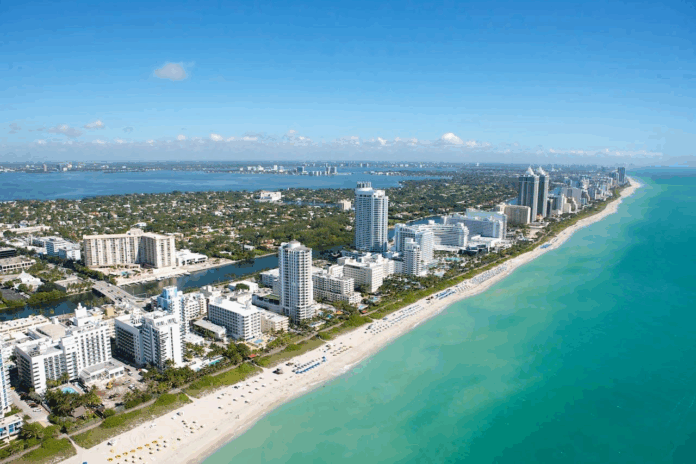
Dining out in Miami isn’t just tough on your wallet—it’s globally recognized as such. A new analysis by Chef’s Pencil, using cost-of-living and wage data from Numbeo, places Miami 71st out of more than 170 cities worldwide when it comes to restaurant affordability.

Miami is ranked as the most expensive city in the United States to dine out.

The study compared the cost of a mid-range three-course meal to the average monthly net wage in each city to gauge how affordable eating out is for locals. In Miami, a dinner for two at a mid-range restaurant averages $60, which represents about 1.4% of the average monthly salary of $4,230. Compared to other major U.S. cities:

  • Los Angeles: A mid-range three-course meal averages $50, which is about 1.1% of the average monthly salary ($4,421).
  • New York: A mid-range three-course meal averages $71, which is about 1.3% of the average monthly salary ($5,358).
  • Dallas: A mid-range three-course meal averages $35, which is about 0.7% of the average monthly salary ($4,687).

Top 10 most expensive cities

Several cities in the Caribbean, Latin America, and Africa rank among the top 10 world’s most expensive for dining relative to income. Kingston, Jamaica, comes in at 172nd globally, where a $34 mid-range meal represents 4.7% of the average monthly salary ($733).

Latin American cities like Caracas, Venezuela (9.9%) and Georgetown, Guyana (6.5%) similarly see locals spending a significant portion of their income on a single meal. African cities such as Cairo, Egypt (5.7%) and Lagos, Nigeria (20.7%) highlight how low wages can make even moderately priced meals prohibitively expensive, placing them in the top 10 most unaffordable cities worldwide for dining out.

Rank City Region Meal-to-Salary Ratio Avg. Meal Cost Avg. Monthly Salary
1 Lagos Africa 20.7% $25 $121
2 Caracas South America 9.9% $30 $303
3 Georgetown South America 6.5% $36 $550
4 Cairo Africa 5.7% $10 $179
5 Beirut Asia 5.1% $30 $593
6 Kingston North America 4.7% $34 $733
7 Nairobi Africa 4.6% $19 $423
8 Guayaquil South America 4.5% $25 $556
9 Yerevan Europe 4.5% $26 $583
10 Amman Asia 4.5% $28 $631


Globally, Asia offers striking contrasts. Wealthy cities such as Singapore, Tokyo, Shenzhen, Doha, and Seoul rank high for dining affordability, while South and Southeast Asian cities, including Mumbai (73rd), Bangkok (95th), and Manila (145th), lag far behind their East Asian counterparts.

Miami also fared poorly in other food-related measures. The city ranked 56th for coffee affordability, with residents spending about 3.9% of their monthly income on coffee, and boasts an average beer price of $8 per glass.

The findings confirm what many Miamians already know: enjoying a meal out in the Magic City can come with a hefty price tag, even when compared with other global hotspots.

JCF reports mid-year surge in suicides despite overall decline in 2025

jamaica crime violence

Jamaica has recorded a troubling mid-year surge in suicides even as overall numbers for 2025 remain lower than last year, according to new data released Sunday by the Jamaica Constabulary Force (JCF).

Between January and September, the country logged 44 suicides — a 16.9 per cent decrease from the 53 cases recorded during the same period in 2024. But the JCF warned that the decline masks a worrying pattern, with suicides rising sharply in recent months.

“Suicides were consistently lower in the first six months of 2025 compared with 2024, but the second half of the year has seen a reversal,” the JCF said in a statement. July recorded eight suicides, a 33 per cent increase over July 2024, while August and September posted respective increases of 20 and 25 per cent.

The JCF also highlighted a geographic shift in the data. Last year, spikes were seen in St James, St Elizabeth, St Catherine South, and St Thomas. This year, however, St Catherine North has emerged as a hotspot, with four cases reported in July alone.

“This underlines that suicide is not a uniform national issue, but often reflects localised socio-economic or community pressures,” the statement noted.

Gender disparities remain stark, with men making up the overwhelming majority of cases. However, police said there are signs of a slight uptick in suicides among women. The warning follows last week’s death of 26-year-old Tyra Spaulding, a former Miss Universe Jamaica contestant, who was found hanging in her home. Police are investigating her death as a suspected suicide.

“This signals the need for urgent gender-sensitive interventions, as women’s experiences with self-harm often differ and may be linked to domestic, relational, and social factors,” the JCF said, calling suicide a “broader public health and social challenge” rather than solely a policing matter.

The force urged public health agencies, social workers, educators, community leaders, and faith-based groups to strengthen outreach and counselling services to stem the trend.

A total of 67 suicides were reported in Jamaica in 2024, the highest figure since 2000, when 77 cases were recorded. Previous years saw 66 cases in 2023, 63 in 2022, 50 in 2021, 43 in 2020, and 58 in 2019.

Individuals struggling with mental health issues are encouraged to call the Mental Health and Suicide Prevention Helpline at 888-639-5433 for confidential assistance.

Jamaican-American Violet Edwards Celebrates 100th Birthday in South Florida

Violet Edwards

Jamaican-American Violet Edwards, who made history by graduating college at the age of 96 in 2022, celebrated her 100th birthday with family, friends, and community leaders on Saturday night in Broward County.

Dressed in a ruby red gown, Edwards radiated joy as she reflected on her extraordinary life. “I am very happy,” she said.

The centenarian received proclamations from the Jamaican Consulate General and Parkland Mayor Rich Walker in recognition of her achievements and community impact.

Her daughter, Dr. Christine Edwards, described her mother as a source of inspiration. “She always taught me that you can do anything and be anything that you want, which shows me what she did at 96. She’s my role model… she’s always positive. She’s my best friend,” she said.

The celebration also honored the scholarship fund established in her name, which has already benefited six students. Guests at the party donated to the fund in lieu of gifts. “When you have such a remarkable person to care for, it’s very easy to get so many people together. Every person who was invited came,” said Edwards’ son-in-law, Everett Smith.

A Remarkable Academic Journey

Edwards’ path to her college degree spans decades. She began her studies in the 1980s at the College of New Rochelle but paused to support her family, including helping fund her daughter’s medical school. When her original college closed, Edwards transferred her credits to Mercy College and completed her coursework online. She graduated in 2022 at the age of 96, earning an Associate of Science degree with a perfect 4.0 GPA. This achievement made her the fifth-oldest college graduate in the world and the oldest Black American to graduate from college.

Her extraordinary accomplishment earned her recognition from the University of the West Indies, which announced a scholarship in her honor, and from the City of Parkland, which formally acknowledged her contributions at a City Commission meeting in August 2022. The city noted that while it frequently recognizes students for academic and athletic accomplishments, Edwards’ story is truly exceptional.

“Parkland is a community that isn’t short on good people doing things that make us all proud. But every now and then, someone emerges in an exceptional way…someone who makes us think about our own goals and what we want to accomplish,” the city commission said.

Defying Generational Barriers

Completing a degree online in her 90s is particularly remarkable given the historical context: Edwards was born just 11 years after Alan Turing proposed the concept of modern computing, and the internet only became widely accessible in the 1990s. Her story is a testament to resilience, determination, and the power of lifelong learning.

Her life continues to inspire her family, her community, and the students who benefit from the scholarship created in her honor.

Usain Bolt statue illuminated for World Heart Day 2025 in Jamaica

Usain Bolt statue

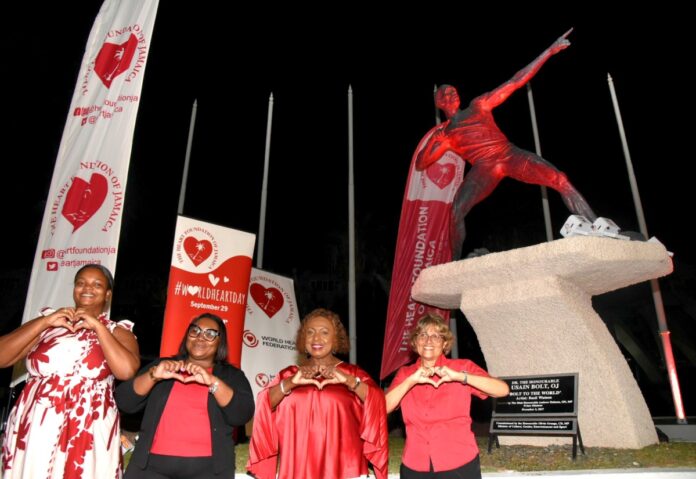
The iconic Usain Bolt statue at the National Stadium was illuminated on Thursday, September 25, to kick off Jamaica’s observance of World Heart Week 2025, culminating on World Heart Day, today, September 29.

The initiative promotes cardiovascular health awareness and encourages Jamaicans to adopt heart-healthy lifestyles.

Minister of Culture, Gender, Entertainment and Sport, Hon. Olivia Grange, who attended the lighting ceremony, described the event as a symbolic reminder of the heart’s essential role in daily life.

“This occasion is reflective of an athletic career that has been a light to the world, and a lighting up that brightens the focus on one of the body’s most important organs, the heart,” she said.

Minister Grange highlighted the urgency of this year’s World Heart Day theme, ‘Don’t Miss a Beat’, stressing that preventing heart disease is not a distant goal but a necessity today.

“Preventing heart disease is not a future goal but a necessity—right here, right now—to save lives. It also encourages global participation in campaigns and activities aimed at reducing premature deaths from cardiovascular disease,” she stated.

The Minister further underscored the link between heart health and daily life, particularly in sports performance. “Being here at Statue Park at the National Stadium, we are reminded that a healthy heart is a prerequisite for sports performance,” she said.

Minister Grange urged Jamaicans to let the illuminated statue serve as inspiration: “Let this statue, bathed in light, inspire us to make our hearts stronger, our communities healthier, and our nation brighter.”

She also commended the Heart Foundation of Jamaica for its ongoing efforts to raise awareness and promote preventative measures. “Your work, no doubt, contributes to the saving of lives and a healthier Jamaica overall. I wish the Heart Foundation of Jamaica every success in this World Heart Week and beyond,” she said.

World Heart Day, a global initiative led by the World Heart Federation, aims to increase awareness of cardiovascular disease, the leading cause of death worldwide. In Jamaica, the observance expands into a week-long campaign featuring public engagement activities, coordinated by the Ministry of Health and Wellness in partnership with the Heart Foundation of Jamaica, and supported by a broad coalition of stakeholders including private sector partners, health professionals, educators, and community leaders.

Miami Beach unveils nearly 20-acre Bayshore Park to public

Bayshore Park

Miami Beach residents celebrated the grand opening of a new park this past weekend.

Bayshore Park, one of the largest public parks in the city, officially opened Sunday morning along Pine Tree Drive near 24th Street. The nearly 20-acre park features a lake, dog park, six competition-level tennis courts, and multiple recreational areas.

Attendees enjoyed live music and wellness activities throughout the morning, taking in the park’s new amenities.

“Bayshore Park is a transformational milestone for Miami Beach and a once-in-a-generation investment that redefines how we live, play, and connect as a community,” said Miami Beach Mayor Steven Meiner. “At nearly 20 acres, it is one of the most significant public spaces in our city’s history and shows that in Miami Beach, health, safety, and quality of life are not distant goals — they are the foundation of our community every single day.”

Funded in part by the 2018 voter-approved General Obligation Bond, the park includes an earthen amphitheater, playground, jogging trail, serpentine boardwalk, pavilion, butterfly garden, vita course, fitness cluster, and a linear water feature. Sunset Hill, a popular vantage point, now offers one of the best spots in the city to watch the sunset.

“After decades of planning, we transformed what was once a par 3 golf course into a beautiful park — now a model of sustainability and environmental stewardship thanks to extensive remediation,” added Miami Beach Commissioner Alex Fernandez.

The park’s central lake incorporates a circulation system with oxygenated water, multiple lake overlooks, and infrastructure to collect and retain a portion of stormwater runoff from surrounding neighborhoods. For added security, Bayshore Park is equipped with motion-activated lighting and security cameras.

During the opening, parking was available at nearby Miami Beach Senior High School, with free shuttles transporting visitors to the park.

Tropical Storm Imelda near Bahamas likely to strengthen into Hurricane

Tropical Storm Imelda

Tropical Storm Imelda formed Sunday near the Bahamas and is expected to strengthen into a hurricane by Monday or Tuesday as it moves northward, the National Hurricane Center (NHC) reported.

As of 8 p.m. EDT Sunday, Imelda was about 30 miles (45 kilometers) southeast of the northwest Bahamas and roughly 355 miles (570 kilometers) southeast of Cape Canaveral, Florida, moving north at 9 mph (15 kph) with maximum sustained winds near 40 mph (65 kph).

The storm brought heavy rain and rough seas to parts of the Bahamas and Cuba and briefly prompted a tropical storm watch along Florida’s Atlantic coast, which was later discontinued Sunday afternoon.

Forecasters say Imelda is most likely to slowly turn northeast off the Southeast U.S. coast beginning Tuesday, tracking toward Bermuda and out into the open Atlantic. Early forecasts that suggested a possible landfall in the Carolinas have been largely ruled out.

Because the storm is expected to linger near the Bahamas, the risk of flooding remains even though a direct U.S. landfall is unlikely. Deep, warm ocean waters—including the Gulf Stream—and favorable upper-level winds are expected to fuel modest strengthening, with Imelda forecast to reach high-end Category 1 hurricane status by midweek.

Eventually, factors such as shearing winds and dry air are likely to limit further intensification, keeping Imelda a low-end hurricane as it passes offshore of the Southeast.

Meanwhile, Hurricane Humberto remained a powerful Category 4 storm further out in the Atlantic, slightly weaker than earlier in the day but still posing a potential threat to Bermuda. The Bermuda Weather Service issued a tropical storm watch, warning that tropical-storm-force winds could reach the island within 48 hours.

The NHC continues to urge residents along the southeastern U.S. coast and in Bermuda to monitor the progress of both storms and remain prepared for potential hazardous conditions.

Shelly-Ann Fraser-Pryce urges young athletes to chase their dreams

Shelly-Ann Fraser-Pryce

Jamaican sprint legend Hon. Shelly-Ann Fraser-Pryce returned home to a hero’s welcome Monday (Sept. 22), using the occasion to encourage young athletes to pursue their dreams with determination and perseverance as she officially closed the curtain on her historic international career.

Speaking at a welcome reception at Norman Manley International Airport, the five-time 100-metre world champion urged aspiring athletes to stay strong and fearless, even in the face of obstacles.

“Sometimes our blessings come, but they are bottled or wrapped in thorns, and some obstacles and some hurdles and storms, but they don’t last forever. It’s up to us to find our way through them,” she said.

Fraser-Pryce returned from the World Athletics Championships in Tokyo, Japan, where she won silver in the 4×100-metre relay—her final race on the global stage. The meet marked the end of an extraordinary 18-year career that saw her become the most decorated 100-metre sprinter in history, amassing 10 World Championship gold medals, six silver, one bronze, and eight Olympic medals (three gold, four silver, and one bronze).

The 37-year-old, affectionately known as the “Pocket Rocket,” said it was fitting to end her career in Japan, where her first international competition took place at the 2007 World Championships in Osaka.

Reflecting on her journey, Fraser-Pryce expressed gratitude to her supporters and sponsors, including GraceKennedy and the company’s late former CEO Don Wehby. “He would always tell me that I’m the greatest of all time and those are the things that ultimately propel you to go forward, even if things are not looking how you want it to look,” she said.

Fraser-Pryce, who in 2008 became the first Caribbean woman to win Olympic gold in the 100 metres and later the third woman in history to defend the title in 2012, noted that her accomplishments are part of a larger Jamaican sprint legacy. “As much as I have created my own legacy, I have partnered with [other Jamaican athletes] on their legacies,” she said.

Sharing the track in Tokyo with Jamaica’s next generation of sprint stars added special meaning to her farewell. “I’m hoping that with me being there in that moment, they will feel inspired to understand that there’s so much more for them to achieve… they only have to go for it,” she said.

Calling the end of her career “an amazing chapter,” Fraser-Pryce said she takes pride in knowing her journey will inspire future “queens of sprinting” to chase greatness.

Pedestrian critically injured in Miami train collision

miami train

One person was taken to the hospital in critical condition after being struck by a train Saturday night in Miami, authorities said.

The collision occurred at Northwest First Avenue and 14th Street, according to Miami Police. Investigators are still working to determine the circumstances surrounding the incident.

Local resident Andrae Nelson, who witnessed the aftermath in Overtown, said the crash was a tragic reminder of ongoing safety risks. “It’s very tragic to know that it continues to happen,” Nelson said. “It’s very sad because it’s not the first time something like that has happened.”

Saturday’s crash is the latest in a series of train-related incidents in South Florida. Data from the Federal Railroad Administration shows four crashes in Miami in 2025 so far, compared with 11 in 2024, resulting in no deaths and one injury. Saturday’s incident is not yet included in the federal data.

Nelson added a cautionary note to the public: “You have to be careful going across the tracks because it’s literally trains passing through every day…[It’s] shocking because a person should be aware that it’s a train track at the end of the day, so you have to be careful, but it’s sad though.”

Guyana airport police officers arrested for extorting passenger

Cheddi Jagan International Airport Guyana
Cheddi Jagan International Airport.

The Guyana Police Force (GPF) has confirmed that several officers stationed at the Cheddi Jagan International Airport (CJIA) have been placed under close arrest after allegedly demanding money from a passenger before releasing her belongings.

According to a GPF statement issued on Sunday, closed-circuit television (CCTV) footage and other evidence support the passenger’s claim, prompting an immediate investigation by the Office of Professional Responsibility (OPR). The GPF stressed that it maintains a zero-tolerance policy on corruption and warned that any officer found guilty of extortion or bribery will face the full force of the law.

The incident has spurred swift action from the Government of Guyana. Officials announced that beginning Monday, September 29, 2025, all law enforcement officers operating at ports of entry—including airports, seaports, and border crossings—will be required to wear body-worn cameras to strengthen accountability and transparency.

“The Guyana Police Force has zero tolerance for corruption,” the statement read. “Any officer found guilty of extortion or bribery will face the full force of the law.”

Authorities also reminded the public that no payment of any kind is required to clear lawful items at CJIA or any other entry point. Passengers who encounter demands for money are urged to report such incidents immediately to the nearest police authority.

The investigation by the OPR remains ongoing as the government moves to reassure travelers and reinforce oversight of law enforcement personnel at the country’s major gateways.

Moving from Los Angeles to Florida: A complete guide for families and professionals

moving from Los Angeles to Florida

Relocating across the country is a big decision, especially when moving from Los Angeles to Florida. For many families and professionals, the process feels overwhelming at first. Choosing a professional moving company is one of the best ways to reduce stress and ensure that every detail is handled properly. But beyond the logistics, the shift from California’s West Coast lifestyle to Florida’s East Coast culture comes with unique opportunities, challenges, and adjustments.

This guide explores what to expect when making the move, from practical planning tips to lifestyle differences, along with real experiences from people who have already transitioned from LA to the Sunshine State.

Why People Move from Los Angeles to Florida

Thousands of Californians have been relocating to Florida over the past decade. The reasons vary, but some of the most common include:

  • Lower cost of living– Housing, utilities, and everyday expenses are often more affordable in Florida.
  • No state income tax– Florida’s tax benefits are especially attractive to business owners, retirees, and remote workers.
  • Warmer climate– While LA offers great weather, Florida’s tropical climate, beaches, and sunshine year-round are a strong draw.
  • Job opportunities– Florida’s economy has been expanding, particularly in tourism, healthcare, logistics, and technology.
  • Family and lifestyle– Many families with Caribbean roots find Florida closer to their culture and extended communities.

“I moved from Glendale to Fort Lauderdale in 2022. What struck me most was how far my money goes here compared to California. My family now lives in a house twice the size, and we’re saving more every month.” – Jamal, former LA resident

Planning a Long-Distance Move

Moving from Los Angeles to Florida is a cross-country relocation of nearly 2,700 miles. This requires more planning than a local move. Here are some essential steps:

Hire a Professional Moving Company

Cross-country moves involve heavy logistics, from packing and loading to coordinating delivery across state lines. A professional moving company with long-distance expertise will:

  • Provide licensed and insured services.
  • Offer detailed cost estimates with no hidden fees.
  • Supply packing materials and safe handling for fragile or oversized items.
  • Manage the schedule so your belongings arrive on time.

Create a Moving Timeline

Most families need 8–12 weeks of planning. A timeline should include:

  • Decluttering and donating unwanted items.
  • Scheduling packing services and movers.
  • Coordinating travel for family members (flights, hotels if driving).
  • Transferring utilities, school records, and medical files.

Budget Properly

The cost of moving from LA to Florida varies based on home size, distance, and services. On average:

  • One-bedroom apartment:$3,000–$4,500
  • Three-bedroom home:$6,000–$9,000
  • Large homes/extra services:$10,000+

Lifestyle Differences: California vs. Florida

Adjusting to a new state goes beyond unpacking boxes. Here are some of the biggest differences between Los Angeles and Florida:

Housing and Cost of Living

  • California:High housing costs, especially in Los Angeles. Renting a two-bedroom apartment often exceeds $3,000/month.
  • Florida:More affordable housing. In cities like Tampa or Orlando, similar rentals average $1,800–$2,200/month.

Climate and Weather

  • Los Angeles:Mild Mediterranean climate with little humidity.
  • Florida:Humid subtropical climate, with hot summers and frequent thunderstorms. Hurricane preparedness is essential.

“In LA, I never worried about storms. In Miami, hurricane season was an adjustment, but locals are well-prepared, and now I feel confident every year.” – Sophia, former LA resident

Lifestyle and Pace

  • California:Fast-paced, competitive, trend-driven culture. Strong entertainment and tech industries.
  • Florida:Relaxed, family-friendly pace in many cities, but still vibrant in Miami and Orlando. Strong Caribbean and Latin American cultural presence.

Cost of Living Comparison

One of the first things people notice after relocating from Los Angeles to Florida is the difference in the cost of living. Housing is the most obvious factor. In Los Angeles, renting a modest two-bedroom apartment often costs around $3,000 or more per month, while in many Florida cities, similar rentals average between $1,800 and $2,200. That means families often save over $1,000 each month just on rent.

Gas prices are also lower in Florida. Californians are used to paying over $5.00 per gallon, while Florida drivers typically pay closer to $3.70 per gallon. Groceries and utilities are more affordable too, with monthly grocery bills averaging 20–25% less and utilities often running $100 less per month than in LA. Families with young children benefit even more, since childcare in Florida can cost $500–$700 less per month than California.

Job Market Insights

When comparing job opportunities in Florida vs California, the industries differ significantly. Los Angeles is world-famous for its entertainment industry, and also has strong job markets in technology, aerospace, and media. Florida’s job growth, on the other hand, has been strongest in tourism, hospitality, healthcare, construction, and logistics.

Remote workers are also flocking to Florida for its lower taxes and affordable lifestyle. While California offers higher salaries in some industries, many professionals find that Florida’s lower cost of living balances out the income difference.

Education and Schools

Education is another major consideration for families moving across the country. Los Angeles is home to world-class universities like UCLA and USC, but many families feel frustrated with the overcrowded public school system. The Los Angeles Unified School District is one of the largest in the country, and while it has excellent magnet programs and charter schools, competition for spots can be intense.

Florida offers a different experience. Public schools vary by county, with areas like Broward, Palm Beach, and Orange County known for strong academic programs and extracurricular opportunities. For higher education, Florida boasts respected institutions such as the University of Florida, Florida State University, and the University of Miami, which consistently rank among the nation’s best. Parents often appreciate the balance of affordability and quality in Florida’s college system compared to California.

Transportation and Commute

  • Los Angeles:Heavy traffic, long commutes, car dependency.
  • Florida:More spread out depending on the city, but traffic in Miami can rival LA. Other areas like Jacksonville or Tampa are easier to navigate.

Taxes and Finances

  • California:State income tax up to 13.3%.
  • Florida:No state income tax, which can mean significant savings.

Cultural Adjustments

Perhaps the most exciting — and sometimes challenging — part of relocating is adapting to a new culture. The shift from Los Angeles to Florida comes with both differences and opportunities:

  • Food:Los Angeles is known for its Mexican cuisine, Asian fusion, and thriving vegan scene. Florida, on the other hand, offers strong Caribbean and Latin American influences. Dishes like Cuban sandwiches, plantains, jerk chicken, and fresh seafood are everyday staples.
  • Entertainment:In California, entertainment is centered on Hollywood, concerts, film festivals, and celebrity-driven events. Florida’s version is different, with family-focused attractions like Disney World and Universal Studios, vibrant nightlife in Miami, and cultural festivals tied to Caribbean traditions.
  • Sports Culture:Californians are passionate about teams like the Lakers, Dodgers, and Rams. Florida offers its own strong sports identity, with fans supporting the Miami Heat, the Miami Dolphins, and the Florida Panthers.

For many families, these cultural shifts bring a refreshing change of pace and new experiences, while still allowing them to maintain their California roots.

Community and Culture in Florida

Florida has one of the most diverse populations in the United States, and for many Caribbean families, it feels closer to home. Cities like Miami, Fort Lauderdale, and Orlando have thriving Caribbean and Latin American communities, rich with music, cuisine, and cultural events.

Los Angeles, on the other hand, offers incredible diversity but with stronger influences from Mexican, Central American, and Asian communities.

“I grew up with Caribbean culture in my family, but living in LA meant I rarely saw it outside my home. After moving to Miami, I feel surrounded by familiar food, music, and traditions. It feels like home in a new way.” – Andre, moved from LA to Miami in 2021

Hidden Costs to Watch Out For

While Florida can feel more affordable overall, there are certain hidden costs newcomers from California should be prepared for:

  • Toll Roads: Florida has a more extensive toll road system than California. Daily commuting in areas like Miami or Orlando can add up quickly.
  • Hurricane Insurance: While California residents are used to earthquake preparedness, Florida homeowners must plan for hurricanes. Standard home insurance often doesn’t cover hurricane or flood damage, so additional policies may be required.
  • Storage Fees: Long-distance moves sometimes involve delays in housing availability. If you arrive before your new home is ready, you may need to pay for storage services, which can add unexpected costs.

Understanding these expenses ahead of time helps families avoid surprises after they arrive.

Tips for a Smooth Transition

  1. Visit First– If possible, spend a week in your Florida city before moving. Explore neighborhoods, schools, and local shops.
  2. Weather Prep– Invest in storm shutters, flood insurance, and know your evacuation routes.
  3. Community Involvement– Join local Caribbean associations, churches, or cultural groups to build connections.
  4. Compare SchoolsFlorida’s school systems vary by county. Research ratings and extracurriculars before choosing a neighborhood.
  5. Healthcare Providers– Transfer medical records and find local providers early.

Choosing the Right City in Florida

  • Miami: Vibrant nightlife, strong Caribbean culture, global business hub.
  • Orlando: Family-oriented, affordable housing, major employer (Disney/Universal).
  • Tampa: Growing tech hub, coastal living, affordable neighborhoods.
  • Jacksonville: Largest city in land area, affordable cost of living, quieter pace.
  • Fort Lauderdale: Laid-back lifestyle, great beaches, strong Caribbean community.

Voices of Experience

“Leaving California wasn’t easy, but Florida gave me opportunities to buy a home and live closer to family. It’s a different pace, but it works for us.” – Maria, moved from Pasadena to Tampa

“I miss LA’s weather and food scene, but in Florida, my kids have more outdoor space and we’re saving on taxes. It was the right move financially.” – Devon, moved from West LA to Orlando

Final Thoughts

Moving from Los Angeles to Florida is a major life decision that blends logistical planning with cultural adjustment. The process becomes much easier when working with a professional moving company experienced in cross-country relocations. Beyond the move itself, families and professionals will discover a new way of life — from affordable housing and tax savings to vibrant cultural communities.

While California offers glamour, opportunity, and diversity, Florida presents sunshine, family-friendly communities, and strong Caribbean cultural connections. With the right planning, this move can open the door to a more affordable, fulfilling lifestyle.


 

Jamaica police vows full deployment of body-worn cameras amid criticism

jamaica crime violence

The Jamaica Constabulary Force (JCF) has again sought to clarify its position on the roll-out of body-worn cameras (BWCs), pushing back against what it describes as “misleading commentary” in some sections of the media and reaffirming its commitment to full deployment of the technology.

In a strongly worded statement, the JCF High Command said it has repeatedly shared updates on the BWC programme and disclosed budgetary and operational details—information that is not typically made public because of national security concerns. The Force said the transparency was intended to keep Jamaicans informed, not to respond to external pressure.

“For several months, we have publicly acknowledged that the Force is actively engaged in the procurement of an additional 1,000 BWCs, a process that is lengthy and complex,” the statement read. “Yet, rather than recognising this as an update in the spirit of transparency, some outlets have chosen to reframe this information as a response to public pressure. This is not only inaccurate, it is disingenuous.”

The JCF emphasised that calls from advocacy groups for the mandatory use of BWCs create a false impression of resistance. “The reality is that we cannot be mandated to use tools that we do not yet have,” the Force noted, explaining that the limited deployment of cameras reflects the financial and logistical challenge of outfitting more than 8,000 frontline officers. The JCF said it does not control the government’s procurement process or budget allocations.

Even after the arrival of the additional 1,000 cameras, significant coverage gaps will remain, the Force admitted, pointing to the high costs and infrastructure needs associated with a national roll-out. “The national roll-out of BWCs is an extraordinarily expensive and time-consuming endeavour, one that requires careful planning, infrastructure development, and sustained budgetary support,” the statement said.

The JCF also rejected what it called attempts by advocacy organisations such as Jamaicans for Justice (JFJ) and the Independent Commission of Investigations (INDECOM) to dictate operational strategy. “Let it be clearly stated: The JCF will not be dictated to by JFJ, INDECOM, or any other group on matters of operational deployment,” the Force said, while adding that it remains open to “meaningful dialogue grounded in facts.”

At the same time, the JCF acknowledged a shared concern with civil society groups: the high number of fatal police shootings. “We have never shied away from this fact, and we have said repeatedly that we would prefer that number to be zero,” the Force said.

According to the statement, reducing police-involved fatalities requires a three-pronged approach:

  1. Reducing operational output to avoid armed confrontations — which the Force insists is not an option given Jamaica’s security challenges.

  2. Appealing to criminals to stop using deadly force against police officers, a call the JCF urged all stakeholders to support.

  3. Investigating fatal encounters thoroughly and holding officers accountable when misconduct is found, a process the JCF said it already supports and cooperates with.

The JCF stressed that the “overwhelming majority” of INDECOM investigations have cleared officers of wrongdoing and reaffirmed its commitment to accountability and modernisation. “This is the mature posture of a Force committed to modernisation, not a Force resisting change,” the statement concluded.

The JCF’s remarks come amid ongoing national debate over police accountability and the pace of technological reforms. While the Force’s plan to expand its body-camera programme continues, officials caution that full implementation will require time, funding, and sustained public support.