Home Blog Page 138

Grenada moves to avert US ban on fish exports with New Fisheries Act Amendments

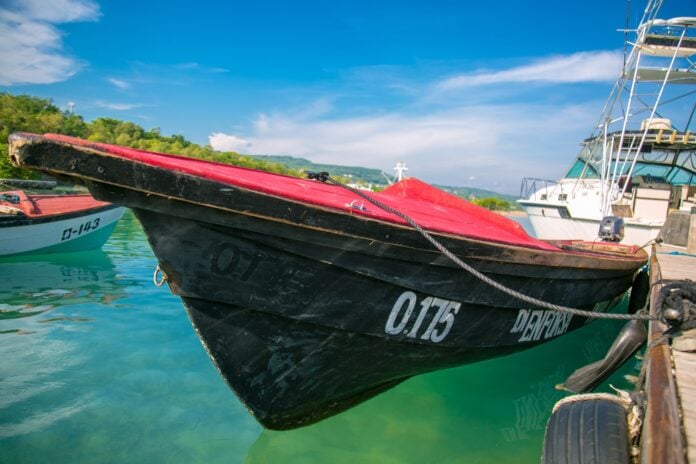
Grenada is racing to prevent a U.S. ban on its fish and fish product exports, with Marine Affairs Minister Lennox Andrews expressing optimism that newly approved amendments to the Fisheries Act will bring the island into compliance with U.S. marine protection standards.

The amendment bill, which faced no objection in the Lower House on Wednesday, is scheduled for approval by the Senate on 21 November. Andrews told lawmakers that the changes put Grenada in a position to submit the required documentation to U.S. authorities by 1 January 2026, the deadline to reverse Washington’s decision.

“We are now in a position to submit the additional information for NOAA’s fisheries reconsideration and reversal of this determination by 1 January 2026,” Andrews said during the debate. He stressed that the updated legislation is “extremely paramount” to averting the impending ban, which is set to take effect early next year.

The United States’ National Oceanic and Atmospheric Administration (NOAA) Fisheries announced in August 2025 that Grenada was among 12 countries facing a ban due to the absence of a comparability finding. To obtain such a finding, a nation must demonstrate that its fishing regulations and practices — particularly protections that prevent accidental capture of marine mammals — are equivalent to those of the United States under the Marine Mammal Protection Act.

Following NOAA’s announcement, the Grenadian government established a special Task Force made up of senior fisheries officials and legal counsel. Their mandate was to complete all necessary assessments, reviews, and recommendations by 21 November to bolster the country’s case for compliance. Andrews confirmed that the Task Force met its deadline, and that the presentation of the amended Fisheries Act was among its key recommendations.

The minister acknowledged that a recent shutdown of the U.S. federal government briefly stalled communication with NOAA but said efforts have resumed. “America is open for business and we are working with our ambassador in Washington, Tarlie Francis, to have that direct contact with NOAA,” he said. The goal, he added, is to present Grenada’s updated regulations not only in writing but also in person.

The U.S. ban would pose significant consequences for Grenada’s fisheries sector, which supports roughly 6,000 jobs directly and indirectly, according to Phillip Telesford.

Government officials say they remain hopeful that the strengthened legal framework — once passed by the Upper House — will satisfy U.S. standards and protect one of the country’s most critical export industries.

Miami-Dade School Board endorses National Special Education Day for Dec. 2

Miami-Dade County Public Schools

The Miami-Dade County School Board has approved an initiative from Board Member Mary Blanco recognizing National Special Education Day on December 2, 2025, across Miami-Dade County Public Schools.

Blanco introduced agenda item H-4 during the School Board’s November 19 meeting, calling for the district to join the national observance, which commemorates the anniversary of the Individuals with Disabilities Education Act (IDEA). Signed into law on December 2, 1975, IDEA guarantees students with disabilities the right to a free and appropriate public education.

National Special Education Day highlights the importance of eliminating barriers to learning and emphasizes the need for inclusive practices that ensure all students can reach their potential. The observance also promotes integrating students with disabilities into general education classrooms, strengthening equity and representation across school communities.

“Our endorsement of National Special Education Day reaffirms the School Board’s commitment to fostering an inclusive environment where all students are supported and provided the resources they need to reach their full potential,” Blanco said. “It underscores our shared responsibility to ensure every child can succeed in school and in life.”

Antigua and Barbuda PM writes to President Trump over growing military activity in Caribbean

Antigua and Barbuda says it will accept nationals deported from the US

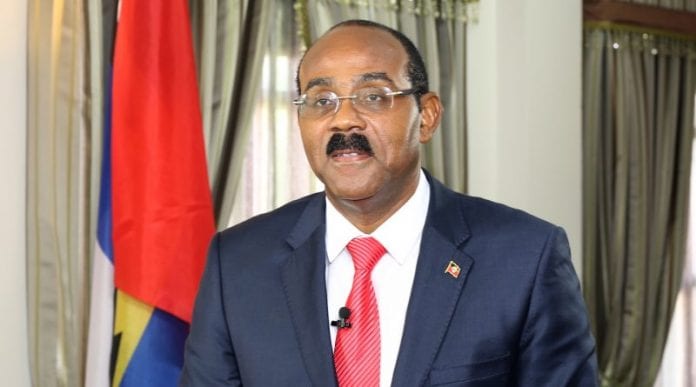
Antigua and Barbuda Prime Minister Gaston Browne has written to U.S. President Donald J. Trump warning that the growing military build-up in international waters near Caribbean states threatens regional stability and could undermine the economic security of small island nations.

In the letter, Browne called for renewed diplomatic engagement between Washington and Caracas, stressing that dialogue is essential to preventing any escalation between the United States and Venezuela in waters shared with Caribbean nations.

Browne reaffirmed the Caribbean’s longstanding designation as a Zone of Peace, saying the region has worked hard to maintain its reputation as one of the few remaining areas of calm in an increasingly volatile world.

He warned that Caribbean economies — especially those reliant on tourism — are acutely sensitive to geopolitical shocks. “A hint of armed confrontation in our waters reverberates instantly through hotel bookings, airlines, foreign investment, and the livelihoods of hundreds of thousands of families,” he wrote. Military activity near the region, he cautioned, could cast “a long shadow” over an industry central to development across the islands.

The prime minister urged Trump to “follow your instincts which, as far as I have seen, are rooted in dialogue and negotiation,” noting that Venezuelan President Nicolás Maduro has indicated a willingness to engage directly. Diplomacy, Browne wrote, may be slow and imperfect, but “delivers fewer sorrows than the alternatives.”

Antigua and Barbuda, he added, stands ready to support any international efforts aimed at reducing tensions and opening space for constructive negotiation. The country’s only objective, he emphasized, is the protection of regional peace and the preservation of the Caribbean as “your near-shore neighbour and long-standing friend.”

Browne closed the letter by underscoring his government’s respect for the United States and the enduring friendship between the two nations. “We value the United States as a friend and as a force for good,” he wrote, urging diplomacy to prevail.

The government said it will continue engaging regional and international partners in pursuit of peace, security, and stability throughout the Caribbean.

Haitian-American Congresswoman charged with stealing $5 million in FEMA funds

Sheila Cherfilus-McCormick the first Haitian American Democrat elected to Congress.
Sheila Cherfilus-McCormick

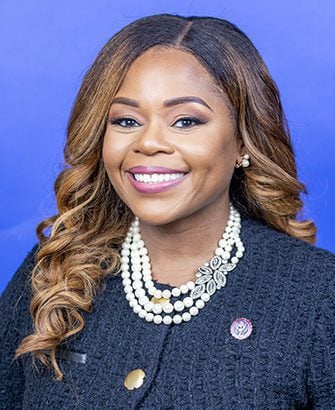
Haitian-American Congresswoman Sheila Cherfilus-McCormick was indicted Wednesday on federal charges accusing her of stealing US$5 million in disaster relief funds, laundering the money, and funneling a substantial portion of it into her 2021 congressional campaign.

A federal grand jury in Miami returned the indictment against Cherfilus-McCormick, 46, along with her brother Edwin Cherfilus, 51, and several associates. Prosecutors say the case stems from a FEMA-funded COVID-19 vaccination staffing contract awarded in 2021 to the family health-care company operated by the Cherfilus siblings in Miramar. That July, the company received an overpayment of US$5 million in FEMA funds — money prosecutors allege the group then conspired to steal.

According to the indictment, the defendants moved the funds through multiple accounts to disguise their origin. Investigators say a sizeable share of the misappropriated money ended up as contributions to Cherfilus-McCormick’s 2021 campaign, while the rest benefited the defendants personally.

The indictment also accuses Cherfilus-McCormick and Nadege Leblanc, 46, of Miramar, of orchestrating additional donations using straw donors. Prosecutors allege they funneled other funds from the FEMA-backed COVID-19 contract to friends and relatives, who then made campaign contributions in their own names to conceal the source of the money.

Cherfilus-McCormick and her 2021 tax preparer, David K. Spencer, 41, of Davie, are separately charged with conspiring to file a false federal tax return. Prosecutors say they falsely claimed political spending and other personal expenses as business deductions and inflated charitable contributions in an effort to lower her tax bill.

“Using disaster relief funds for self-enrichment is a particularly selfish, cynical crime,” said Attorney General Pamela Bondi. “No one is above the law, least of all powerful people who rob taxpayers for personal gain. We will follow the facts in this case and deliver justice.”

U.S. Attorney Jason A. Reding Quiñones for the Southern District of Florida echoed that message, saying: “Today’s indictment shows no one is above the law. This indictment reflects our Office’s commitment to follow the facts, apply the law, and protect the American taxpayer. Public money belongs to the American people. When FEMA funds are diverted for personal or political gain, it erodes trust and harms us all.”

If convicted, Cherfilus-McCormick faces up to 53 years in federal prison. Her brother faces up to 35 years, Leblanc up to 10 years, and Spencer up to 33 years.

Born in Brooklyn to Haitian parents and raised in Queens, Cherfilus-McCormick moved to Florida at age 13 to attend high school. She later emerged as a persistent political contender in Florida’s 20th Congressional District, repeatedly challenging longtime Democratic incumbent Alcee Hastings.

She first ran against Hastings in the 2018 Democratic primary, losing 73.6%–26.4%. She mounted another challenge in 2020, citing ethics concerns and Hastings’ health, but again lost, 69.3%–30.7%.

After Hastings died in April 2021, Cherfilus-McCormick launched a third campaign for the seat. Following a recount, she won the Democratic primary by just five votes over Jamaican-American then-Broward County Commissioner Dale Holness — a political upset that sent her to Congress after an easy victory in the January 2022 special election. She became the only Haitian-American Democrat ever elected to Congress and only the second Haitian-American overall, after Utah Republican Mia Love.

She went on to win the August 2022 Democratic primary decisively, defeating Holness 66%–27%, and secured 72% of the vote in the November general election. Cherfilus-McCormick began her first full term in Congress on Jan. 3, 2023.

FBI Miami and the IRS Criminal Investigation Florida Field Office are leading the ongoing investigation.

US$8.8B disaster bill will ‘likely’ push Jamaica to borrow, PM Holness says

Prime Minister, Dr. the Most Hon. Andrew Holness

Prime Minister Andrew Holness says the Government will “likely” need to borrow to fund Jamaica’s reconstruction after Hurricane Melissa, which caused widespread destruction when it made landfall on October 28.

Speaking at a hurricane recovery press conference at Jamaica House on Wednesday, Holness said the country will begin its rebuilding effort using the National Natural Disaster Recovery Fund (NNDRF). The fund pools proceeds from Jamaica’s disaster risk instruments, including the catastrophe bond, policies with the Caribbean Catastrophe Risk Insurance Facility, and contingent credit with the Inter-American Development Bank and the World Bank.

“Recovery and reconstruction activities will be financed initially from the National Natural Disaster Recovery Fund,” Holness said. “These amounts will total approximately US$650 million. It is likely that the government of Jamaica will have to borrow to finance reconstruction beyond what will be available in our NNDRF.”

Holness noted that Jamaica has “immediate access to approximately US$500 million from the IMF rapid financing facility (RFI),” emphasizing that the facility “does not come with policy conditionality.” In total, he said the country will start the reconstruction effort with “approximately US$1.15 billion in immediate funds.”

Despite that, he warned that the road ahead remains financially daunting. “Under normal circumstances, it would take us three fiscal years to spend such funds in capital expenditure,” he said, pushing back against claims that the Government is awash with cash. “There’s a lot of misinformation to suggest the government is receiving huge funds. The infrastructure damage alone is US2.9 billion and then there is the relief and recovery expenditure.”

Citing preliminary assessments, Holness said, “Just from the assessment here, which is not the final assessment, there is US$8.8 billion of damage for which the government would more likely be responsible for at least half. So there is still a gap that will have to be funded, and that will have to be funded by additional borrowing. So those who are of the view that the government can engage in a spending spree, thank God they are not the government.”

The updated damage estimate — US$8.8 billion, or nearly JMD$1.5 trillion — was presented at the same briefing by World Bank Country Director for the Caribbean, Lilia Burunciuc. She said the figure represents 41 per cent of Jamaica’s 2024 gross domestic product.

“This number assumes only physical damage,” Burunciuc stressed, noting that economic losses could be even greater. “Often, from our experience, it is a larger damage than the physical damage.” She added that this broader impact will be assessed once the valuation process is completed.

According to the World Bank’s breakdown, St. James, Westmoreland, and St. Elizabeth suffered the most severe effects of the storm, together accounting for US$5.5 billion, or 63 per cent, of total losses.

Residential buildings sustained the greatest hit, with US$3.7 billion in damage — 41 per cent of the overall figure — covering homes, their contents, and mixed-use structures classified as residential. Damage to non-residential buildings stands at US$1.8 billion, spanning commercial, industrial, tourism, and public facilities. Infrastructure losses total US$2.9 billion, while the agricultural sector absorbed an estimated US$389 million in damage.

Burunciuc said the World Bank will continue to work with the Government as Jamaica refines its assessments and begins the long process of rebuilding after one of the most destructive hurricanes in its modern history.

Steve McClaren resigns after Reggae Boyz stumble; scripted farewell fuels speculation

Reggae Boyz Head Coach Steve McClaren

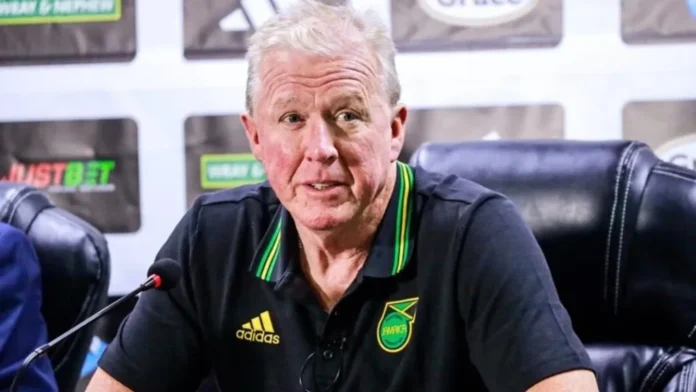
Steve McClaren’s tenure as head coach of the Reggae Boyz ended not with a roar, but with a carefully scripted farewell, one that raised as many questions as it gave answers.

Moments after Jamaica failed to secure the result it needed in its final group match, the 64-year-old Englishman stepped before the cameras, reading word-for-word from a prepared text that signaled a departure neither spontaneous nor entirely voluntary.

The timing was striking. Even as he assured the nation that he believed Jamaica would still qualify through the Intercontinental Playoffs in March, McClaren resigned before leading the team into that decisive window. The contradiction, expressing confidence in the team’s future while removing himself from that future, has already fueled speculation that he expected to be sacked or had been nudged toward the door by the Jamaica Football Federation (JFF).

McClaren, once dismissed as England’s manager after failing to reach Euro 2008, has long understood the unforgiving nature of international football. This departure, however, carried a tone of resignation in both senses of the word, acceptance and abdication.

The burden of results and the weight of the badge

In summarizing his decision, McClaren pointed to the harsh arithmetic of football. Eighteen months of work had culminated in a failure to advance directly from the group stage, and for him, accountability meant stepping aside.

He framed the move as an act of service, an attempt to clear space for “a fresh voice, new energy and different perspective,” even as he maintained that the team remains capable of reaching the World Cup.

His gratitude toward players, staff, supporters, and the JFF was expansive and sincere, yet the structured care of the statement left little doubt that this was a prepared retreat, likely coordinated behind the scenes. The coach’s tone was earnest, but the delivery suggested expectation, perhaps even inevitability.

A leader departing at the edge of a new battle

McClaren’s departure lands Jamaica in a precarious position. The Boyz now move toward March’s Intercontinental Playoffs without the man who helped shape their recent evolution. His exit, read from paper on a tense night in Kingston, invites the uncomfortable question: if he truly believed the team would succeed, why not stay for the fight?

Still, his message to Jamaica was unmistakably affectionate. He praised the talent on the island and in the diaspora, asserted his faith in their eventual success, and closed with words of gratitude, respect, and “one love.”

Full statement from Steve McClaren

“Over the last 18 months I have given everything I have to this job, to this role. I carried the weight and the pride of this job with the deepest respect. Leading this team really has been one of the greatest honors of my career, but football is a results business and tonight we’ve fallen short of our goal, which was to qualify from this group.

“It is the responsibility of the leader, myself, to step forward, take accountability and make decisions in the best interest of the team for them to go forward. After deep reflection and an honest assessment of where we are and where we need to go, I’ve decided to step down as the head coach of the Jamaican National Team.

“This decision comes from respect, always the respect of the badge, always the supporters and the players, and sometimes the best thing a leader can do is to recognize when a fresh voice, new energy and different perspective is required to move this team forward.

“I want to take this moment to really thank the players and wish them luck in the playoffs in March, it really has been a privilege to coach them in all the camps and to have the ups and downs, which is football, the luck, unlucky, everything we’ve been through, as the players have been fantastic, bring great energy and attitude to the job.

“I want to thank the staff and the staff really are the engine room behind the scenes; they have been absolutely fantastic from day one; I enjoyed working with them, I know they are all disappointed like we are.

“I want to thank the fans for supporting us through the ups and downs and as I said before, I’m positive this team will succeed in March. I want to thank the JFF for their support, especially Mr. Speid (Rudolph), who, he brought me here 18 months ago and I’ve worked with him, especially closely over the last few months, and I thank him for his support as well as the president, whose always been there for me and my staff when we come over, day in day out.

“Finally, I want to make it clear I’ve always said that leadership is a service, that’s what we do and tonight I think I can best serve this team by stepping aside and allowing someone else to take this team forward which I know they’ll succeed in March and in the future.

“There is so much talent and ability on this island and in the diaspora that it’s only a matter of time, things are developing, that they will succeed.

“So I thank you Jamaica and will be forever grateful to have led the Reggae Boyz. Really has been an honor. Respect and one love to you all and hope in the future to see you in the World Cup. Thank you very much.”


From struggle to stability: My journey to homeownership

homeownership

I remember the first time I bought a house — it was the best feeling ever. When I moved in, I felt a level of comfort and peace I had never known before.

Growing up in the Caribbean wasn’t easy. As a teenager, I often moved from place to place, house to house, never having a room to call my own. I longed for stability — a space that was mine, a key that fit my own door. But that dream always felt so far away.

I got married young, and for the first time, I had a place and a key. That small piece of independence gave me a glimpse of the stability I’d always desired. But life, as it often does, brought challenges. A family conflict forced me to move again, this time to a tough inner-city community called Riverton City.

When I had my first child, something deep within me — and everything around me — said it was time to leave “the land.” I knew I had to fight tooth and nail to give my children the stability I never had. At 27, seven years into my marriage and pregnant with my third child (which is none of your business, by the way 😉), I made a decision: I would become a homeowner.

My husband and I started saving for a deposit, even though it seemed impossible at first. We cut back drastically, joined what we called a “partner” (our local saving system), and refused to let our circumstances define us.

Within a year and a half, we had enough for a deposit. We bought a piece of land, and with help from the NHT, we built our first home. Holding those keys in my hand for the very first time was pure euphoria. It was more than a house — it was proof that with faith, focus, and persistence, dreams do come true.

I’m sharing this because I want to shift your mindset if you think owning a home is just a fantasy. I’ve been there — I know the feeling of “impossible.” But I also know the joy of making the impossible possible.

So today, I want to share five practical tips to help you start saving for your own home deposit. Trust me, it’s closer than you think — and I want you to feel that same joy I felt when I held my own keys for the first time.

1. Set a Clear Goal and Write It Down

The first step to owning a home is to know exactly what you’re working toward. Don’t just say, “I want a house one day.” Be specific — what kind of home do you want? How much will you need for a deposit? Where would you like to live? When you give your dream a name, a price, and a timeline, it stops being a fantasy and starts becoming a plan. Write it down, visualize it, and remind yourself daily why it matters — whether it’s for your children, your peace of mind, or the stability you’ve always longed for.

When I first set my goal, I didn’t even know how it would happen. But once I wrote it down and spoke it out loud, something inside me shifted. I stopped seeing it as “maybe” and started treating it as “inevitable.” Clarity attracts action. When your goal becomes clear, your habits, choices, and mindset start lining up with it — and before you know it, small steps start leading you to big change.

2. Create a Realistic Budget and Track Every Dollar

You can’t save what you don’t measure. Creating a budget isn’t about restriction — it’s about awareness. Start by listing your income and every expense, even the small ones. Seeing where your money goes gives you power over it. You might be surprised how much leaks out through impulse buys or little luxuries that add up. Once you know your numbers, you can start cutting what’s unnecessary and directing more toward your home fund.

When my husband and I started budgeting, we realized we could save far more than we thought. We cooked more at home, reduced entertainment costs, and used public transportation when possible. It wasn’t easy, but it was worth it. A budget isn’t punishment — it’s a map to your dream. The tighter you hold that map, the sooner you’ll arrive at your destination.

3. Join a Partner or Savings Group

In Caribbean culture, the partner or susu system has helped generations achieve financial goals. It’s a simple, disciplined way to save where a group of people contribute a set amount weekly or monthly, and each person gets their lump sum when their turn comes. This method forces accountability — you can’t back out or spend the money prematurely. It’s a powerful tool for people who might struggle to save alone.

That’s exactly what helped me. Joining a partner gave me structure and support. It also gave me a sense of community — we were all working toward something important. Whether it’s a partner, a credit union savings plan, or a formal housing savings account, find a system that works for you and stick with it. Consistency, even in small amounts, always leads to growth.

4. Cut Back Without Cutting Joy

Saving doesn’t mean you stop living; it means you start living intentionally. You don’t have to eliminate everything you love — just learn to prioritize what truly matters. Maybe that means fewer takeouts, smaller celebrations, or buying clothes only when necessary. Redirect the money you’d normally spend on short-term pleasures toward your long-term security. Every sacrifice you make now builds the foundation of your future comfort.

When I was saving for my first home, I didn’t stop enjoying life. I just became more creative. Instead of expensive outings, we had family picnics and home-cooked dinners. We learned to find joy in simplicity. The truth is, financial discipline doesn’t steal your happiness — it deepens it, because you start finding peace in progress.

5. Stay Focused, Even When It Feels Impossible

There will be moments when you feel discouraged, when the dream feels too far, and life throws unexpected bills or setbacks your way. In those moments, remind yourself why you started. Look at your children, your vision board, or the picture of the home you want — and remember that stability and comfort are worth fighting for. Progress may be slow, but as long as you keep moving, you’re still moving forward.

When I was saving, there were times I wanted to give up. Emergencies came, things got tight, and I wondered if it was even realistic. But every time I pushed through, I got closer. The road to owning a home is not just about money — it’s about mindset. Stay determined, stay patient, and celebrate every small win along the way. Because one day, those small wins will turn into a key in your hand and a door that opens to your very own home.

Owning a home isn’t just about bricks and mortar — it’s about stability, dignity, and the joy of creating a safe place for yourself and your family. I’m living proof that even when life starts hard, dreams can still come true with focus, faith, and persistence. No matter where you’re starting from, your story can change. If I could do it, so can you.

If you’re ready to take that first step toward homeownership — whether you need guidance, encouragement, or a plan — I’d love to help you start that journey. My name is Carone Gordon with Treasure Coast Realty Group, and I’m here to help you make your dream of owning a home a reality. You can reach me at 772-282-5862. Let’s make it happen — one step, one plan, and one key at a time.


Agony in Kingston! Woodwork, VAR, and chaos doom Jamaica’s World Cup hopes

Jamaica World Cup Reggae Boyz
Photo: CONCACAF

There are nights when football wounds a nation, when the contest on the field somehow becomes a mirror reflecting every misstep, every misplaced hope, every squandered opportunity.

Tuesday at the National Stadium in Kingston was one of those nights. Before more than 35,000 anguished supporters, Jamaica’s Reggae Boyz failed to find the one moment of quality they desperately needed, stumbling to a goalless draw that surrendered automatic qualification to the 2026 FIFA World Cup.

The result sealed a monumental national disappointment. Jamaica, seeded and heavily favored in Group B, finished with 11 points—one shy of the total required to win the group. Curaçao, steely and disciplined, claimed top spot with 12 and, in doing so, became the smallest nation ever to reach the FIFA World Cup Finals. History was theirs; heartbreak was Jamaica’s.

A performance that never rose to the moment

Jamaica entered the night knowing that only victory would send them directly to the World Cup. But nothing in their rhythm, urgency, or structure hinted at a team prepared to seize destiny. Instead, they were hesitant in possession, disjointed in attack, and reliant on hopeful long balls that were easily dismantled by their composed opponents.

The opening warnings came early. Curaçao, quicker to settle, produced the first shot on target when Juninho Bacuna drove a tame effort into Andre Blake’s grateful arms. Jamaica’s few early half-chances were improvised rather than engineered, with Shamar Nicholson’s deflected effort falling kindly to Bobby Reid, whose follow-up was smothered, and a through-ball from Demarai Gray that Nicholson could not convert.

As the minutes ticked by, unease tightened its grip on the stadium. The Reggae Boyz lacked fluency and ideas, and the longer the match dragged, the clearer it became that only a set play or a moment of individual brilliance might rescue them. Neither arrived.

The woodwork becomes the villain

Three times, Jamaica struck metal, each moment twisting the knife deeper.

Greg Leigh’s back-post header from an Ethan Pinnock long throw rattled the base of the upright. Nicholson rose majestically to thunder a header off the crossbar. Then, in the 87th minute, substitute Bailey Cadamarteri guided a glancing header off the post, prompting groans that felt like grief.

Even these chances, however, did little to disguise a larger truth: Jamaica never played with the cohesion, bravery, or tactical clarity expected in a winner-takes-all finale.

Disappointment in the dying embers

Desperation produced chaos. Jonathan Russell, introduced in the 64th minute, picked up two yellow cards in six frantic minutes and was expelled before stoppage time.

Still, hope flickered briefly. Deep into added time, Dujuan Richards went down in the box and Salvadoran referee Ivan Barton pointed to the penalty spot. The stadium erupted in raw, delirious relief. But VAR intervened. American official Allen Chapman summoned Barton to the monitor, and the penalty, Jamaica’s lifeline, was overturned. A stadium that had soared moments earlier collapsed into disbelief.

Curaçao seals history as Jamaica faces the void

When Barton blew the final whistle, Curaçao’s bench and travelling supporters poured onto the field. The Blue Wave had crested at the perfect moment. Even without veteran Dutch coach Dick Advocaat, who departed days earlier for personal reasons, they held firm, defended bravely, and earned the point that delivered their first-ever World Cup Finals berth.

For Jamaica, the final scene felt like a requiem. The dream had dissolved, the performance had wilted, and the enormity of the failure was impossible to escape. Minutes later, Jamaica Football Federation President Michael Ricketts confirmed that Head Coach Steve McClaren had tendered his resignation, which he delivered from a written statement at what should have been a post-game presser. The outgoing coach did not take questions.

A chasm between expectations and reality

That resignation captured the night’s tone. Jamaica, drawn alongside Curaçao, Trinidad and Tobago, and Bermuda, had been labeled overwhelming favorites. But early inconsistencies, especially the costly draw against Trinidad, gifted advantage to Curaçao, who needed only a point in Kingston and managed the occasion with authority.

Jamaica now faces the harsh road of the intercontinental playoffs in March 2026. Their path will run through Bolivia or New Caledonia before a possible final against one of the seeded teams, DR Congo or Iraq. A place at the World Cup is still possible, but now burdened with doubt, tension, and a haunting sense of what should have already been secured.

Elsewhere in the group

Trinidad and Tobago defeated Bermuda 2-1 to finish on nine points. Bermuda ended bottom of the group without a single point. Curaçao, Haiti, and Panama claimed the region’s automatic berths.

The night Jamaica will not forget

In the end, it was not only a draw, it was a symbolic unraveling. A night when courage faltered, luck fled, and a smaller nation seized its moment while Jamaica let theirs slip away. The sorrow that swept the National Stadium will linger, not merely because Jamaica failed, but because Curaçao succeeded with the discipline, hunger, and clarity of play Jamaica could not summon.

The Reggae Boyz will play on. But the shadow of this night will follow them.

Teams: Jamaica – Andre Blake, Ethan Pinnock, Richard King, Dexter Lembikisa (Dujuan Richards 78th), Gregory Leigh, Isaac Hayden, Ian Fray (Jonathan Russell 64th), Bobby Reid (Bailey Cadamarteri 78th), Renaldo Cephas, Demarai Gray (Kaheim Dixon 58th), Shamar Nicholson
Booked: Fray (61st), Russell (83rd, 89th – ejected), King (90+2)
Subs not used: Jahmali Waite, Tafari Chambers, Damion Lowe, Mason Holgate, Rico Henry, Jahshawn Anglin, Karoy Anderson, Tyreece Campbell

Curaçao – Eloy Room, Shurandy Sambo, Roshon Van Eijma, Sherel Floranus, Juninho Bacuna, Livano Comenencia, Jurgen Locadia (Jordi Paulina 90+2), Leandro Bacuna, Sontje Hansen (Julien Gaari 81st), Kenji Gorré (Jeremy Antonisse 69th), Armando Obispo
Booked: Antonisse (83rd), Roemeratoe (90+7)
Subs not used: Tyrick Bodak, Trevor Doombusch, Godfried Roemeratoe, Deveron Fonville, Ar’jany Martha, Jearl Margaritha, Tyrese Noslin, Joshua Brenet, Kevin Felicia

Match Officials

Referee: Ivan Barton (El Salvador)
Assistant Referee 1: David Moran (El Salvador)
Assistant Referee 2: Juan Zumba (El Salvador)
Fourth Official: Keylor Herrera (Costa Rica)
VAR: Allen Chapman (USA)
AVAR: Ekaterina Koroleva (USA)
Match Commissioner: Egbert Lacle (Aruba)


Hurricane Melissa damage in Jamaica now estimated at US$8.8 billion

Hurricane Melissa
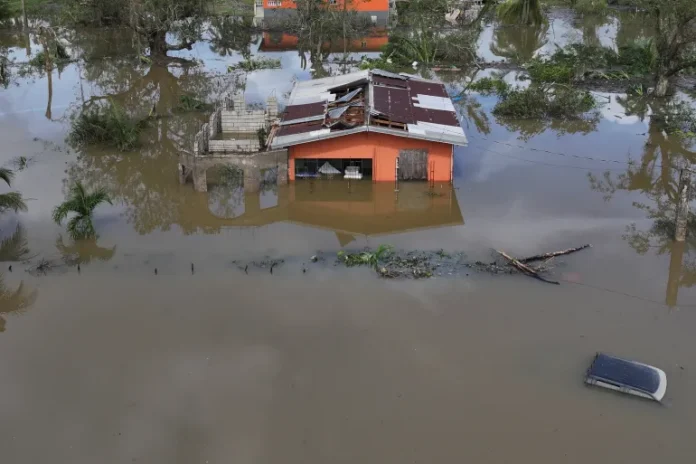
An aerial view shows widespread flooding in St. Elizabeth, Jamaica, after Hurricane Melissa made landfall. Photo Credit - Maria Alejandra Cardona

An updated estimate of the damage to residential and non-residential buildings, housing, infrastructure, and agriculture from Hurricane Melissa, which tore through Jamaica’s southwestern coast on October 28, has been placed at US$8.8 billion (nearly JMD$1.5 trillion)

The figure was presented by World Bank Country Director for the Caribbean, Lilia Burunciuc, at a Jamaica House press briefing on Wednesday. She said the number represents 41 per cent of Jamaica’s 2024 gross domestic product.

“This number assumes only physical damage,” she stated. Burunciuc warned that the economic damage will also be large, adding that “often, from our experience, it is a larger damage than the physical damage.” She said this wider impact will be assessed once the dollar estimate is completed.

Burunciuc noted that St. James, Westmoreland, and St. Elizabeth suffered the worst of the storm, with these three parishes accounting for US$5.5 billion, or 63 per cent of the total estimate.

Damage to residential buildings stands at US$3.7 billion, or 41 per cent of the overall figure, making it the largest category. That includes houses, their contents, and mixed-use buildings classified as residential. Damage to non-residential buildings is estimated at US$1.8 billion and covers commercial, industrial, tourism, and public buildings and their contents. Infrastructure losses total US$2.9 billion, while agricultural damage is estimated at US$389 million.

The figures will be detailed in an upcoming joint report by the Inter-American Development Bank (IDB) and the World Bank.

Prime Minister Andrew Holness said the storm has affected about 900,000 people, with around 100,000 homes damaged. He stressed that the Government is committed to fiscal discipline and transparency throughout the recovery and rebuilding effort.

“One of the reasons we are able to galvanise the multilateral community is because of the sacrifice and great effort that we, as a people, have collectively made in ensuring that we have fiscal discipline rooted in our political culture, in our economics and in our civic and social affairs,” Holness said. “It is well appreciated and understood that the Government of Jamaica must be fiscally responsible and that as a country we will use resources from the international community and our own taxes in the best and most frugal way, in the smartest way. So, we intend to continue this through the development process.”

Holness, who chairs CARICOM, was speaking during a tour with regional Heads of Government and international donor partners in Whitehouse, Westmoreland, on Monday (Nov. 17).

Tessanne Chin set for triumphant return to the USA at Jamaica Strong concert

Tessanne Chin Announces New Album in the Works

More than a decade after winning Season 5 of The Voice, Jamaican songbird Tessanne Chin is set to make a triumphant return to the United States for a highly anticipated performance at the Jamaica Strong concert at UBS Arena in Queens on Friday, December 12.

Tessanne will share the stage with reggae and dancehall heavyweights, including Shaggy, Sean Paul, KES, Inner Circle, Ky-Mani Marley, Aidonia, Chronic Law, T.O.K., Gramps Morgan, Richie Stephens, Mikey Spice, Reggae Queen Marcia Griffiths, I-Octane, and gospel singer Kevin Downwell.

“It’s a tremendous honour to be able to use my voice for our country even though I wish the circumstances were different,” Tessanne told Caribbean National Weekly. “I feel like every Jamaican believes that it is our duty to answer our country’s call, particularly when the need is so great.”

Following her victory on The Voice in 2013, Tessanne performed at the White House for President Barack Obama and First Lady Michelle Obama. She also appeared at the 42nd Daytime Emmy Awards and was a featured performer on The Voice Tour, which traveled across the United States. Her television appearances include NBC’s Today Show, Kathie Lee & Hoda, Live with Kelly & Michael, Access Hollywood, and New York Live. In 2013, she was named Caribbean Journal’s Artist of the Year and received a Luminary Award from the University of the West Indies.

Tessanne’s winning performances included an emotional rendition of Simon & Garfunkel’s “Bridge Over Troubled Water”, which earned her the #1 spot on the iTunes USA Top 100 charts, and a stirring rendition of Bob Marley’s “Redemption Song”. She also topped the iTunes singles chart with “I Have Nothing” and her duet with Adam Levine, “Let It Be”.

“New York and the entire tri-state area are excited to welcome Tessanne to our beloved city for what promises to be an emotionally charged performance at UBS Arena that will benefit Jamaica,” said event co-producer Bobby Clarke, CEO of Irie Jam Radio.

Speaking about her upcoming performance, Tessanne shared, “I get to do something I love in a place that I love (NYC).”

Kacy Rankine, CEO of Roadblock Radio in New York, added, “Having Tessanne Chin on stage in the USA, back where she was so embraced by fans during her Voice run, adds another incredible layer of excitement to the UBS Arena Jamaica Strong benefit concert. We’re uniting the best of reggae and dancehall music for what promises to be a December to remember.”

Fans have taken to social media to welcome Tessanne to New York.

“I chose her as my winner on The Voice from Day 1. See you on 12th December at UBS in my hometown,” an Instagram fan wrote. Another Facebook user said, “Absolutely amazing,” adding, “Yes yes yes… awesome, love me some Tessanne Chin.”

One fan asked whether Tessanne’s sister Tammy Chin and husband Wayne Marshall would be in New York to cheer her on. They, along with thousands of fans, will have to be inside UBS Arena on December 12 to find out.

Preparations in high gear for I Love Jamaica Telethon and Virtual Concert

I Love Jamaica Telethon

Preparations are in full swing for the I Love Jamaica Telethon and Virtual Concert, organized by the Ministry of Entertainment and Culture, set to take place this Sunday, November 23. Local and international Jamaican entertainers will unite to raise urgently needed funds for national hurricane-relief efforts.

The six-hour, online-only event will stream live from 1 p.m. to 7 p.m. on major broadcasters and Facebook. It forms part of the government’s wider post-Melissa recovery strategy. The initiative was announced by Minister of Entertainment, Culture, Gender and Sport Olivia “Babsy” Grange, who emphasized the scale of need following the storm’s devastating impact, particularly across the western parishes.

Speaking at the official launch at the ministry’s head office on November 6, Minister Grange underscored the role of creative talent in national rebuilding.

“The need is great, and we must answer the call to show care, compassion, and love by using our gifts and talents to make a difference in the lives of those Jamaicans who have been worst affected by hurricane Melissa,” she said. “We intend to leverage the power of the creative and sports sectors to source the necessary resources to assist our brothers and sisters.”

A star-studded lineup

The telethon will feature a powerhouse roster of Jamaican entertainers, including Tarrus Riley, D’Angel, Ding Dong, Alaine, Tanya Stephens, Tommy Lee, and many more. Headliners Tessanne Chin, Christopher Martin, and Kevin Downswell will anchor the musical programme, with artists at home and across the diaspora ramping up promotion ahead of Sunday’s broadcast.

In addition to musical performances, sports legends Usain Bolt, Shelly-Ann Fraser-Pryce, and Asafa Powell are expected to make special appearances, with some even manning the phone lines as donations and pledges roll in.

This weekend’s local staging is presented by Red Stripe and powered by Digicel, both long-standing supporters of cultural and philanthropic initiatives across the island.

Sunday’s telethon marks the first major instalment of the broader Jamaica Strong Benefit Concert series, which will extend across key diaspora hubs in the coming weeks.

Upcoming concerts in the diaspora

Miami/Miramar will host its concert on December 7, led by Shaggy and Roger Lewis of Inner Circle, alongside an impressive lineup of supporting acts. New York is set to follow on December 12 at the UBS Arena, in a production spearheaded by Bob Clarke. Additional stops, including Toronto, Washington, D.C., and Los Angeles, are currently being explored to further bolster fundraising efforts.

As Jamaica continues its path to recovery, Sunday’s I Love Jamaica Telethon aims to channel the strength, pride, and creativity of the nation and its diaspora into real, tangible support for those hit hardest.

Mark Bogen returns as Broward County Mayor

Mark Bogen

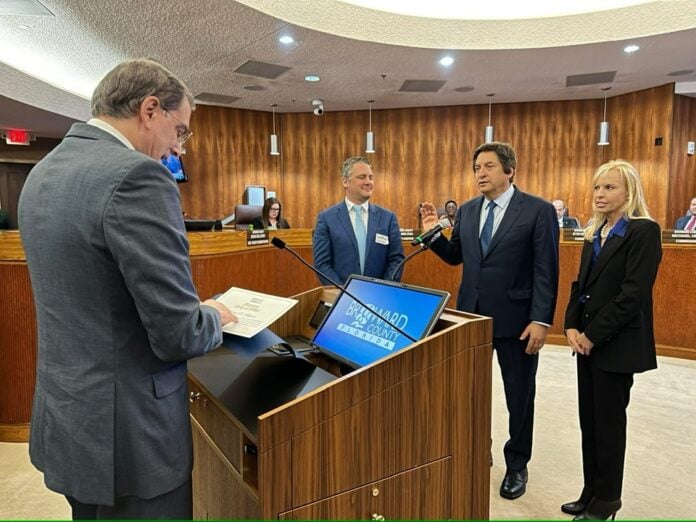
Broward County has once again turned to a seasoned veteran to lead, as Commissioner Mark Bogen was unanimously elected Mayor by the County Commission during their annual reorganization.

Bogen steps into the mayoral role previously held by Beam Furr and will serve a one-year term. District 8 Commissioner Robert McKinzie was selected to serve alongside him as Vice Mayor.

Bogen represents District 2, a diverse area encompassing Coconut Creek, Margate, and portions of Coral Springs, Deerfield Beach, and Pompano Beach. He previously served as Mayor starting November 27, 2018, and is now returning to the position after being elected again on November 18. Unlike in neighboring Miami-Dade County, where the mayor serves in an executive role, the position of Broward County Mayor is largely ceremonial and rotates annually among the commissioners.

Since first being sworn in as a commissioner in January 2015, Bogen has tackled a wide range of initiatives. He helped create precedent-setting regulations to fairly govern emerging companies like Uber, brokered an agreement to improve operations at the Monarch Hill landfill in Coconut Creek, and allocated funds for economic development programs across his district.

Bogen also implemented a practical change for voters: absentee mail-in ballots no longer require postage, a policy he championed to streamline the voting process.

A veteran attorney, Bogen has practiced law for 30 years and is managing partner of the Bogen Law Group, which represents condominium and homeowner associations of all sizes. He has expertise in securities, consumer, and anti-trust class action lawsuits and previously served as a Special Assistant to the State Attorney’s office. Bogen also taught business law as an adjunct professor at Florida Atlantic University and authored What Every Condo Owner Should Know. He remains a frequent speaker and columnist, advising community associations on legal and regulatory matters.

“I am so grateful to everyone who put their trust in me, voted for me and helped make this a reality,” Bogen said, reflecting on his career in public service.

Haiti qualifies for first World Cup in 51 years despite no home matches

Haiti world cup
Photo: CONCACAF

Haiti is heading back to the FIFA World Cup for the first time since 1974, securing a long-awaited return with a 2–0 victory over Nicaragua in the final round of Concacaf qualifying on Tuesday.

The win at Stadion Ergilio Hato in Willemstad, Curaçao, clinched the top spot in Group C and marked just the second World Cup qualification in the nation’s history.

Haiti struck early. Louicius Deedson opened the scoring in the 9th minute with a left-footed strike from the top of the box after a setup from Josué Casimir. Moments before halftime, Les Grenadiers doubled their lead when Ruben Providence headed home a Carlens Arcus cross in first-half stoppage time.

The result capped a resilient qualifying campaign played entirely away from home. Haiti has been unable to host matches due to the country’s ongoing conflict, forcing the team to stage its “home” fixtures 500 miles away in Curaçao. Their 52-year-old French manager, Sébastien Migné, has never set foot in Haiti since his appointment 18 months ago, saying security risks make travel impossible. International flights into the country have ceased, and the Haitian federation has operated under extraordinary circumstances — even relying on phone calls to provide Migné with updates on local players.

The crisis in Haiti has deepened over the past decade, especially since the 2010 earthquake. Armed gangs have seized large parts of Port-au-Prince, displacing more than a million people and worsening food insecurity. In March 2024, the national stadium, Stade Sylvio Cator, was overtaken by gangs and vandalized, halting all events.

Despite those challenges, Haiti’s squad — a mix of Haiti-born players and talent from the diaspora — pushed through. The group includes Wolves midfielder Jean-Ricner Bellegarde, who was born in France to Haitian parents. The team is also looking to bring in Sunderland forward Wilson Isidor, who has Haitian heritage.

Nicaragua finished its qualifying campaign in fourth place with four points and a 1-1-4 record.

Haiti now joins Panama, who defeated El Salvador 3–0, and Curaçao, who qualified after a draw with Jamaica, as Concacaf’s latest representatives for the 2026 World Cup in the United States, Mexico and Canada.

In their only previous World Cup appearance in 1974, Haiti exited in the first round after facing Italy, Poland and Argentina. This time, they arrive under far different circumstances — and with a story shaped by perseverance far beyond the field.

Curaçao makes history with first-ever World Cup qualification as Jamaica misses out

Curaçao
Photo: CONCACAF

Curaçao has become the smallest nation ever to qualify for a FIFA World Cup, securing its spot at the 2026 tournament after a tense 0–0 draw against Jamaica in Kingston on Tuesday.

The Caribbean side, with a population just over 150,000 and a land area smaller than the Isle of Man, surpassed Iceland’s 2018 record as the smallest country to reach football’s biggest stage.

The stalemate at National Stadium capped the final round of Concacaf qualifiers, with Curaçao finishing atop Group B to seal direct qualification. Jamaica, needing a win to return to the World Cup for the first time since 1998, saw their hopes dashed — including an injury-time penalty that was overturned by VAR. Shortly after the match, Steve McClaren resigned as Jamaica’s head coach.

Jamaica created several chances throughout the night. Greg Leigh struck the right post with a header in the 54th minute, Shamar Nicholson clipped the crossbar in the 70th, and Bailey Cadamarteri hit the woodwork again in the 87th. Curaçao nearly stole the lead in the 66th, but Jürgen Locadia’s close-range effort was pushed away by Andre Blake.

While Curaçao’s qualification is historic on its own, it also comes with another milestone: their head coach, Dick Advocaat, will become the oldest manager ever to lead a team at a World Cup. The 78-year-old, absent from Tuesday’s match for personal reasons, will break Otto Rehhagel’s previous record set with Greece in 2010.

Curaçao’s rise has been striking. The nation only became a country within the Kingdom of the Netherlands in 2010 and was ranked 150th in the world a decade ago. Today, they sit at 82nd — and are heading to the World Cup.

Jamaica finishes second in the group and now shifts focus to the FIFA Play-Off Tournament, where one last route to the 2026 finals remains.

Miss Universe Jamaica hospitalised after stage fall during preliminary competition

Miss Universe Jamaica

Miss Universe Jamaica, Dr Gabrielle Henry, was hospitalised on Wednesday after falling during the evening gown segment of the preliminary competition for Miss Universe 2025.

The incident occurred shortly after Henry showcased her gown, sending immediate alarm across the venue and on social media. While the exact cause of the fall has not been confirmed, the swift response by on-site medical personnel ensured she received immediate care. Photos circulating online show Henry being attended to by a team of staff before being carefully removed from the stage on a stretcher.

Dr Henry was transported to Paolo Rangsit Hospital in Bangkok, accompanied by her mother, sister, and representatives from the Miss Universe Organisation. A statement from the Miss Universe Jamaica Organisation confirmed that the ophthalmologist, who is also a prominent advocate for the visually impaired through her See Me Foundation, did not suffer any life-threatening injuries. Medical professionals are conducting preliminary tests to monitor her condition.

“We kindly ask everyone to stay upbeat, lift her up in prayer, and send positive thoughts as she receives the necessary medical care,” the organisation said, thanking supporters for their outpouring of love and concern.

Henry had already participated in the national costume and swimwear preliminary competitions earlier in the week, representing Jamaica with her trademark poise and energy. The coronation for Miss Universe 2025 is set to take place Thursday, November 21, at the Impact Challenger Hall Arena in Pak Kret, Nonthaburi, Thailand, with delegates from 120 countries in attendance.

Dr Henry, who balances her medical career with advocacy work, is widely respected for her contributions to education and economic opportunities for people who are blind or have low vision. Supporters across social media have rallied behind her, sending messages of encouragement and hope for a speedy recovery


Sir Ronald Sanders to receive honorary doctorate from University of Guyana

Sir Ronald Sanders

Antigua and Barbuda’s Ambassador to the United States and Permanent Representative to the Organization of American States (OAS), Sir Ronald Sanders, will be conferred with the Doctor of Laws (Honoris Causa) degree by the University of Guyana (UG) during its 2025 Convocation. The award will be presented at the Faculty of Social Sciences graduation ceremony on Saturday, November 22, at the Turkeyen Campus in Georgetown.

The University’s Special Conferral Committee described Sir Ronald as “a transformative figure in diplomacy, business, and academia,” noting his decades-long commitment to diplomacy, good governance, and Caribbean advancement. The recognition follows his earlier award of an Honorary Doctor of Letters (D.Litt) from the University of the West Indies, highlighting his status as one of the region’s most accomplished diplomats and public intellectuals.

Over a five-decade career, Sir Ronald has served as Ambassador to the United States and the OAS, former High Commissioner to the United Kingdom, Ambassador to the World Trade Organization, and as an elected member of the Executive Board of UNESCO. He has been a leading advocate for the rights of small states in global affairs, with leadership in constitutional resolution missions, Commonwealth reform, and international governance.

UG has also announced eight other honourees who will receive 2025 honorary doctorates across various fields, including business, literature, engineering, sport, agriculture, music, and education. Among them:

  • Komal Samaroo, Executive Chairman of Demerara Distillers Limited, recognised for shaping DDL into a globally respected enterprise and pioneering the “Authentic Caribbean Rum” mark.

  • Nicolette Fernandes, Guyana’s most decorated female squash athlete, praised for her historic World No. 19 ranking, 2006 CAC Games gold, and recent World Masters titles.

  • Egbert Carter, legendary civil engineer, acknowledged for six decades of work on major infrastructure and heritage projects, including the Berbice River Bridge.

  • Grace Nichols and John Agard, celebrated literary icons, noted for works that bridge cultures and generations, and for bringing Guyanese literary expression to the global stage.

  • Mohindra Persaud, Executive Chairman of the Nand Persaud Group, credited with modernising rice production and advancing community development in Region Six.

  • Terry Gajraj, iconic Chutney singer and cultural ambassador, recognised for expanding Guyanese music internationally and philanthropic contributions.

  • Professor Clement Sankat, Director of the Guyana Technical Training College Inc., honoured for contributions to engineering education and vocational training.

The University explained that honorary recipients are selected through a year-long, research-driven assessment process, with nominees required to demonstrate decades of consistent excellence. This year, 27 submissions were reviewed, with nine honourees chosen due to the limited number of awards that can be conferred annually.

A total of 3,700 students from 180 diploma, degree, and postgraduate programmes will graduate during the 2025 ceremonies. UG said the honorary recipients “exemplify the values of leadership, innovation, and service, inspiring the next generation of Guyanese and Caribbean citizens.”

Grenada MP Charles Peter David named local agent for Citizenship by Investment programme

Charles Peter David

Grenada Member of Parliament for the Town of St George, Charles Peter David, has been officially licensed as a local agent for Grenada’s Citizenship by Investment (CBI) programme, now rebranded as the Investment Migration Agency (IMA).

A notice dated October 13 and published in the November 14, 2025, Government Gazette confirmed that David was granted the license in accordance with the 2013 Citizenship by Investment Act. His license number is GCBI-LA-046. The notice states:

“Notice is hereby given that pursuant to Section 4 of the Grenada Citizenship by Investment Act, 2013, as amended, Mr Charles Peter David, Tempe, St George, Grenada, W I, has been granted the license of a Local Agent, and is therefore authorised to conduct business in the State of Grenada, pursuant to the terms and conditions specified in the Grenada Citizenship by Investment Act, 2013, as amended.”

David, who previously served as a government minister under both the Tillman Thomas National Democratic Congress (NDC) Administration and the Dr Keith Mitchell New National Party (NNP) Administration, launched his own political party, the Democratic People’s Movement, last Sunday.

As a licensed local agent, David is authorised to act on applicants’ behalf, managing and submitting applications for citizenship. Under the CBI Act, applicants cannot apply directly to the government processing unit; a local agent is a mandatory intermediary responsible for document preparation, submission, and liaising with the CBI Unit throughout the process.

According to the IMA website, there are currently more than 20 licensed local agents. Since the programme’s launch 11 years ago, it has generated millions in revenue for the government and facilitated citizenship for nearly 20,000 people from various countries.

WIN Party threatens legal action over delay in electing Guyana’s leader of the Opposition

Azruddin Mohamed
Azruddin Mohamed

The We Invest in Nationhood (WIN) party, led by Guyana businessman Azruddin Mohamed, has threatened to take legal action against Speaker of the National Assembly Manzoor Nadir for failing to convene a meeting of opposition members to elect the Leader of the Opposition.

In a letter dated November 17, 2025, WIN’s attorney Siand Dhurjon said the 16 non-governmental members of parliament—including Mohamed, Natasha Singh-Lewis, Tabitha Sarabo-Halley, Dawn Hastings-Williams, Odessa Primus, Duarte Hetsberger, Tonshana Famey-Corlette, Vishnu Panday, Beverley Cornelius, Gobin Harbhajan, Deon La Cruz, Nandranie Singh, Dr. Gordon Barker, Janelle Sweatnam, Dr. Ryan Richards, and Dr. Andre Lewis—requested that the Speaker convene the meeting within 14 days, warning that failure to do so would result in proceedings being instituted in the Supreme Court.

“On behalf of my clients, I do hereby require that you take all steps necessary to convene a meeting among the non-governmental members of the National Assembly for the purpose of electing the Leader of the Opposition under Article 184(1) of the Constitution within fourteen (14) days, failing which I shall institute proceedings in the Supreme Court to compel you to act accordingly and to seek all other reliefs necessary to vindicate my clients’ interests,” Dhurjon wrote.

The attorney noted that at the first sitting of the 13th Session of Parliament on November 3, 2025, several MPs handed the Speaker a letter requesting the meeting. Dhurjon said the Speaker responded verbally to Ms. Singh-Lewis, stating that he would not convene the meeting that day, adding ambiguously, “it doesn’t have to be until the next sitting.”

Dhurjon argued there was no impediment to holding the meeting on November 3, since all opposition MPs were present at the Arthur Chung Conference Centre, and he criticised the lack of response to subsequent inquiries. He emphasised that the Leader of the Opposition is a constitutionally significant officeholder with responsibilities including consultation on major appointments, and described the delay as “inconceivable.”

Following the convening of parliament earlier this month, political analyst Isaacs explained that while the Constitution outlines the process for electing the Opposition Leader, it does not specify exactly when the meeting must occur, leaving it to the discretion of the Speaker.

WIN expressed concern that the Speaker’s silence “calls into question the impartiality of the parliamentary process” and accused the administration of deliberately stalling the election. “The Leader of the Opposition is not symbolic; the Constitution requires that the holder of this office be consulted on major appointments, including the Police Commissioner, Chancellor, Chief Justice, and members of the Judicial Service Commission. Delaying this office undermines the balance of power and signals a disregard for constitutional governance,” the party said.

Hundreds displaced by armed attacks in Tabarre, Haiti

Tabarre, Haiti
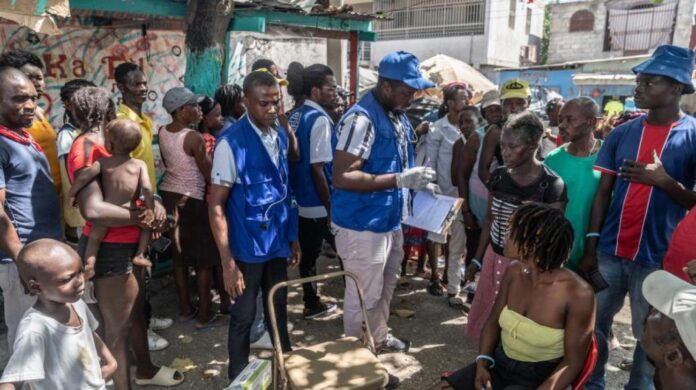
At Place Clercine in Tabarre, Port-au-Prince, Haitians displaced due to gang violence gather for free medical treatment at a mobile clinic of the International Organization for Migration. Photo: © UNOCHA/Giles Clarke

Hundreds of residents in Tabarre, a commune in the metropolitan area of Port-au-Prince, have fled their homes following armed attacks last week, as insecurity continues to escalate in the Haitian capital.

The International Organization for Migration (IOM) reports that attacks on November 13 and 14 displaced more than 600 people, most of whom remain in Tabarre, hosted by local families. The violence comes amid heightened tensions between law enforcement and gangs operating in the city.

The leader of the “Viv Ansanm” gang coalition, Jimmy Chérizier, also known as “Barbecue,” issued a warning to residents in a video message released Sunday, urging people to stay indoors. “This message is addressed to the Haitian people in general. Starting this Monday, November 17, 2025, unless absolutely necessary, do not go out… Leave the streets to ‘Viv Ansanm’ and the police so that we can confront them,” Chérizier said.

Chérizier’s warning follows a joint operation earlier this month by the Haitian National Police (PNH), the Armed Forces of Haiti (FAD’H), and the Gang Suppression Force (GSF) targeting the “400 Mawozo” gang in Tabarre and nearby Croix-des-Bouquets. The operation led to at least seven gang members being fatally wounded, numerous others injured, and the seizure of a large cache of weapons, including a .50-caliber Barrett sniper rifle. No security personnel were reported injured.

Attacks in other previously stable residential areas, including Thomassin and Fermathe, have forced over 1,800 people to seek refuge elsewhere. By the end of October, the total number of people displaced by violence nationwide had reached 1.4 million, the highest level recorded in Haiti and more than a third higher than last year.

OCHA has called on all parties to protect civilians and ensure safe, rapid, and unhindered humanitarian access to communities in need, warning that the worsening security situation is compounding the humanitarian crisis.

Every dollar will be accounted for in post-Melissa rebuilding, PM Holness says

Prime Minister Andrew Holness
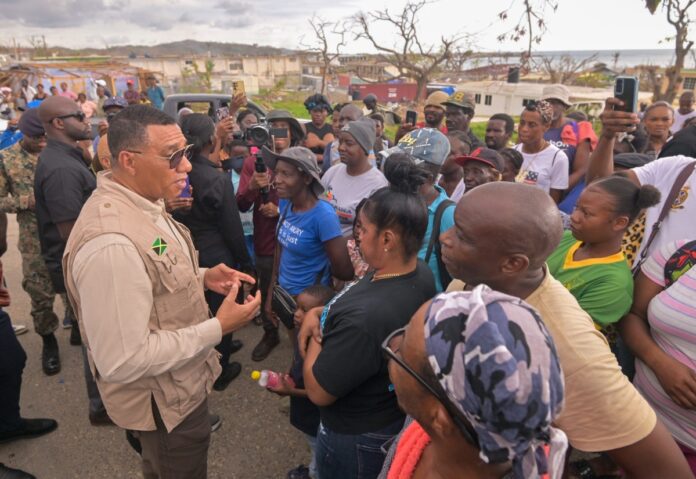
Prime Minister, Dr. the Most Hon. Andrew Holness (left), interacts with residents of Whitehouse in Westmoreland during a visit by CARICOM Heads of Government and government ministers to the community on Monday (November 17).

Jamaica’s Prime Minister Andrew Holness says the Government is committed to fiscal discipline and transparency in the recovery and rebuilding process following Hurricane Melissa. He stressed that every dollar spent, including private contributions, will be accounted for and measured by tangible results.

“One of the reasons we are able to galvanise the multilateral community is because of the sacrifice and great effort that we, as a people, have collectively made in ensuring that we have fiscal discipline rooted in our political culture, in our economics and in our civic and social affairs,” the Prime Minister noted.

“It is well appreciated and understood that the Government of Jamaica must be fiscally responsible and that as a country we will use resources from the international community and our own taxes in the best and most frugal way, in the smartest way. So, we intend to continue this through the development process,” he added.

Dr. Holness, who is also Chairman of CARICOM, spoke during a tour with CARICOM Heads of Government and international donor partners in Whitehouse, Westmoreland, on Monday (November 17). He expressed regret that after making progress in reducing Jamaica’s high debt-to-GDP ratio—on track to fall to 60 per cent—the hurricane has devastated half the country’s infrastructure, requiring significant relief and recovery spending.

He further noted that lost revenues from setbacks to business and commerce make careful financial management essential.

“We will spend to relieve human suffering, but every dollar that is spent will be accounted for… and not just from an accounting point of view, meaning adding up the dollar spent. It will be accounted for from an efficiency point of view, which is really the greater accountability. Every dollar spent, every aid given, every commitment made, will be used in a way that quickly advances the recovery, but at the end of it makes Jamaica stronger,” Dr. Holness declared.

Damage from Hurricane Melissa is estimated at US$6 billion to US$7 billion, according to the Prime Minister, equivalent to about 28–32 per cent of last fiscal year’s GDP. In a statement to the House of Representatives on November 4, he noted the hurricane has struck the heart of Jamaica’s productive belt, severely affecting tourism, agriculture, roads, housing, and other critical infrastructure across multiple parishes.

“I want the country to appreciate that we have never had a disaster of this magnitude with this economic footprint in terms of the impact, not Gilbert, not Ivan,” the Prime Minister pointed out. “All of those were relatively small to our GDP. To lose 30 per cent of your GDP is significant,” he added, noting that approximately 900,000 lives and 100,000 homes have been impacted.

Dr. Holness welcomed support from regional and international partners, emphasising that the Government is following a coordinated, transparent approach prioritising the most vulnerable communities and ensuring resilient reconstruction. Short-term measures focus on shelter, food security, healthcare, and essential services, while longer-term plans address housing reconstruction, critical infrastructure, and climate-resilient development.

Executive Director of the Jamaica Accountability Meter Portal (JAMP), Jeanette Calder, praised the real-time audits of Hurricane Melissa relief efforts being conducted by Auditor General Pamela Munroe Ellis, aimed at assessing accountability mechanisms for resources received and utilised during the disaster response.

The audits seek to ensure internal controls are adequate to prevent fraud, waste, and abuse of public resources, addressing public concerns about accountability in the spending of recovery funds.

Issa Trust Foundation launches emergency relief fund for Couples Resorts staff

Chairman of the Issa Trust Foundation, Paul Issa

The Issa Trust Foundation, the philanthropic arm of Couples Resorts, has established an emergency relief fund to support employees affected by Hurricane Melissa, reaffirming its longstanding commitment to education, healthcare, and community support.

In a message to staff, guests, and the broader community, Foundation Chairman Paul Issa said the organisation is focused on providing immediate relief and long-term recovery assistance.

“We’re deeply saddened by the devastation caused by Hurricane Melissa and want to assure our employees, guests, and the broader community that we’re committed to supporting relief and recovery efforts,” Mr. Issa told JIS News.

He detailed the distribution of care packages containing essential items such as food, water, and batteries to affected staff. Temporary housing has also been arranged for more than 100 employees who lost their homes, while financial support has been pledged to cover wages during an expected slowdown in visitor arrivals over the next two to three weeks.

The relief fund has reached US$350,000, bolstered by donations from supporters and a US$100,000 contribution from Couples Resorts. Aid will be allocated using predefined categories to ensure fairness and transparency, with additional support for home repairs and reconstruction.

“We also have collaborations with local suppliers, World Central Kitchen, and water suppliers to provide essential resources, including meals and clean water, during the recovery period,” Mr. Issa added.

Lee Issa, Chairman of Couples Resorts, encouraged community members, guests, and supporters to continue contributing to the relief fund through official channels. He stressed that the coordinated efforts between the Foundation, Couples Resorts, and local partners demonstrate the importance of solidarity, swift action, and shared responsibility in responding to Hurricane Melissa.

Bounty Killer and DJ Khaled donate $8M to Western Jamaica hospitals post-Hurricane Melissa

bounty Killer donation
Chief Executive Officer of the Savanna-la-Mar Public General Hospital in Westmoreland, Roan Grant (second from right), accepts a cheque from Dance Hall recording artiste “Bounty Killer” (Rodney Price), second left, during a handover at the institution on Monday (November 17). They are joined by (from left) Chairman of the Hospital’s Management Committee, Jamie James; and Head of the Accident and Emergency Department at the Savanna-la-mar Hospital, Dr. Jevayne Mills. Entertainers Provide $8M Post-Hurricane Philanthropic Support to Four Western Jamaica Hospitals Photo: Okoye Henry Chief Executive Officer of the Savanna-la-Mar Public General Hospital in Westmoreland, Roan Grant (right), greets Dance Hall recording artiste, “Bounty Killer” (Rodney Price), during a cheque handover at the institution on Monday (November 17). Photo: JIS

Four hospitals in western Jamaica have received a combined $8 million boost through a philanthropic initiative following Hurricane Melissa.

Dancehall artist Bounty Killer (Rodney Price), through his Bounty Foundation, and American music producer DJ Khaled, via his We The Best Foundation, each contributed $2 million on Monday, November 17. The donation benefits Savanna‑la‑Mar Public General Hospital in Westmoreland, Black River Hospital in St. Elizabeth, Falmouth Public General Hospital in Trelawny, and Cornwall Regional Hospital in St. James.

Savanna‑la‑Mar Hospital CEO Roan Grant praised the artistes as “benevolent givers” and outlined plans for the funds.

“The $2 million given to the hospital will be put to tremendous use, where we will use it in getting two arterial blood gas (ABG) machines. Those are some point of care machines that will hasten diagnoses for patients in the A and E (Accident and Emergency) Department, as well as the paediatric ward,” he said.

Grant noted that the hospital’s laboratory sustained heavy damage during the hurricane, which tore away the tarmac and created a “waterfall” inside, temporarily putting existing machinery out of service. He said the new portable ABG machines will be invaluable in adverse conditions, allowing doctors to provide care across multiple departments.

Head of the A and E Department, Dr. Jevayne Mills, echoed the gratitude. “I am really grateful. So, on behalf of the A and E Department, the Paediatric Department, as well as Savanna-la-Mar Public General Hospital and the wider Westmoreland community, I’d like to thank you, Mr. Price,” he said, noting the machines will be critical for swift diagnoses and proper patient care.

Bounty Killer highlighted the widespread challenges caused by Category Five Hurricane Melissa, which struck on October 28. He explained that he and DJ Khaled prioritised the health sector given its essential role in national recovery.

“When I saw those field, hospitals put up after the hurricane, I said the first initiative is go to the hospitals,” Bounty Killer said. He also praised the resilience of healthcare workers and announced plans to provide care packages as part of upcoming initiatives.

Other artistes have also stepped up in the aftermath of the hurricane, including Vybz Kartel, Masicka, Spice, Romeich Major, as well as international stars such as Tyrese, The Weeknd, and Diplo, contributing to relief and recovery efforts across Jamaica.

Broward School Board picks Leonardi as Chair, Jamaican-American Holness as Vice Chair

Broward School Board

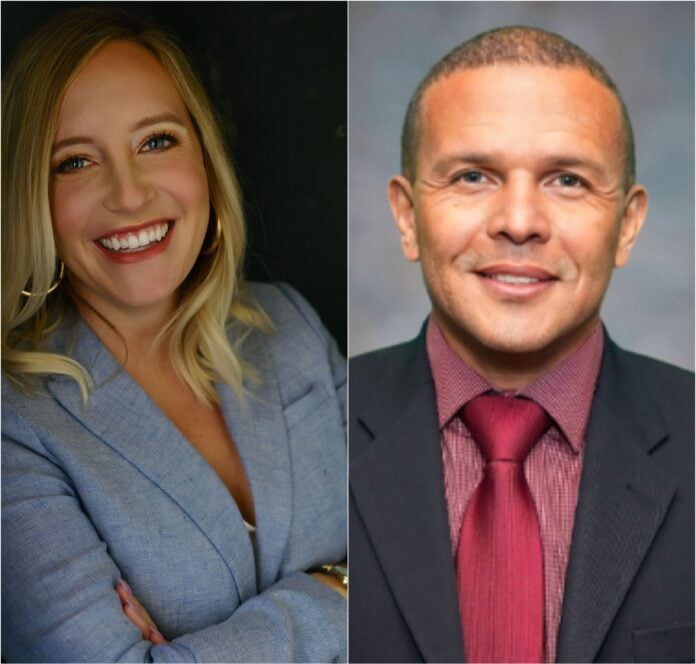
The School Board of Broward County, Florida, has selected new leadership for the year ahead, unanimously electing Sarah Leonardi (District 3) as Chair and Jamaican-American Dr. Jeff Holness (District 5) as Vice Chair during its annual Organizational Meeting on Tuesday, November 18, 2025.

Sarah Leonardi is an educator with nearly a decade of experience teaching English in Broward County’s public high schools. Throughout her career, she has been deeply involved in student life, serving as a sponsor for several extracurricular clubs and mentoring new teachers. Her dedication to the classroom earned her recognition as Teacher of the Year at Coconut Creek High School in 2016.

Her global upbringing has also shaped her approach to public service. Leonardi grew up in the Middle East—spending six years in Cairo, Egypt, and nine years in Dubai, United Arab Emirates. As the daughter of a teacher, she said she was raised to believe deeply in education’s ability to change lives. She later moved to the United States to pursue her degree at the University of Miami, earning a Bachelor of Science in Education in 2011. Leonardi was first elected to the School Board in 2022.

Holness, also elected in 2022, brings a deep connection to the Caribbean community as a Jamaican-American leader with a strong track record in education. Born in St. Elizabeth, Jamaica, he emigrated to the United States more than 30 years ago and grew up in Fort Lauderdale, graduating from Dillard High School. At a recent press conference on hurricane relief efforts across the region, he spoke openly about his heritage and Broward’s support for Caribbean neighbors.

“I was born in Jamaica—I grew up in St. Elizabeth—so what I’ll say is Broward County Schools have also joined relief efforts to make sure that we’re providing the necessary support to Jamaica, Haiti, parts of the Bahamas, and regions that have been affected,” he said. “We’ve partnered with BrightStar Credit Union, the Broward County Association of Student Councils, the Broward Council of PTAs, the Broward Education Foundation, the Broward Principals and Assistant Principals Association, and the Broward Teachers Union to support Jamaica.”

A career educator, Holness has taught in Broward County Schools for more than 15 years, serving at Walter C. Young Middle School, Apollo Middle School, Lyons Creek Middle School, Dillard Community School, and Parkway Community School. He has also worked in higher education as a clinical intern educator at Florida Atlantic University. Holness holds a Doctorate in Organizational Leadership and a master’s degree from Nova Southeastern University, as well as a bachelor’s degree in sociology from Florida Atlantic University. He is the father of two sons who both attend Broward public schools.

The remaining School Board members are Lori Alhadeff (District 4), Maura McCarthy Bulman (District 1), Adam Cervera (District 6), Debra Hixon (Countywide At-Large, Seat 9), Nora Rupert (District 7), Rebecca Thompson (District 2), and Dr. Allen Zeman (Countywide At-Large, Seat 8).

Garvin Medera returns to Digicel as Atlantic Region CEO

Former Caribbean Airlines chief executive Garvin Medera has returned to Digicel, taking up the role of CEO in the Atlantic Region. The move marks a homecoming for Medera, who previously helped drive the development of Digicel’s telecom and fiber networks across the Caribbean.

Medera, regarded as a respected regional leader, also made notable contributions during his time with the Digicel Foundation. In that role, he supported community projects focused on education, inclusion and opportunity, reinforcing what the company described as a belief that people should be connected “not only by technology, but through service.”

Digicel said Medera’s return is part of its push to strengthen its leadership team as it focuses on service, reliability and building deeper relationships with customers.

“Garvin’s return is both a professional reunion as well as a powerful sign of our future. He is a man who understands the core of our mission, which is to connect communities through service, reliability, and trust. As Digicel continues to evolve, his blend regional insight and global management will help us accelerate the next chapter with clarity, ambition and ambition”, said Marcelo Cataldo.

“At Digicel our transformation is driven primarily by leaders who combine regional expertise with world-class performance. Garvin embodies this balance. Garvin began his career with Digicel and now returns with a wealth experience to strengthen teams, enhance performance, and build up the next generation of leaders across the Atlantic region”, added Terry Arnold.

Arnold noted that Medera’s success steering a complex transformation in the airline industry, along with his earlier Digicel experience — during which the company expanded modern wireless and fiber networks across 25 markets in Central and South America and the Caribbean and now serves nine million customers — positions him well to support Digicel’s ongoing mission. That transformation included operational profitability, digital modernisation and a renewed focus on customers.

The company added: “His leadership balanced his performance with purpose – a philosophy which aligns seamlessly with Digicel’s ambition to elevate the customer experience in every market we serve.”

Medera resigned abruptly from Caribbean Airlines a few weeks ago after nearly eight years as CEO. He said he is ready for what comes next.

“Returning back to Digicel feels both meaningful, and motivating. It was here that I learned the importance of connecting people not only through technology but also through service. I look forward to working alongside this exceptional team to help shape the next era in connectivity for our communities and customers,” he said.