Key data from Jamaica’s local government election is cause for concern
Key Points(5)
- <!-- wp:paragraph --> <p>The much-anticipated local government elections (LGE) were held in Jamaica on Tuesday, but at the time of writing, there’s no clear winner, as the final tabulation of votes was not completed.
- But the preliminary count indicates the Jamaica Labour Party (JLP) didn’t receive the landslide victory it, led by its leader Andrew Holness, predicted.
- The JLP certainly didn’t turn back the challenge presented by the People's National Party (PNP), as that party is winning the popular votes nationwide.
- Neither have Jamaican voters won.
- Party leader and prime minister Holness traveled across the country in a strong bid for his party to have an overwhelming victory.
The much-anticipated local government elections (LGE) were held in Jamaica on Tuesday, but at the time of writing, there’s no clear winner, as the final tabulation of votes was not completed. But the preliminary count indicates the Jamaica Labour Party (JLP) didn’t receive the landslide victory it, led by its leader Andrew Holness, predicted. The JLP certainly didn’t turn back the challenge presented by the People's National Party (PNP), as that party is winning the popular votes nationwide. Neither have Jamaican voters won. In fact, they barely showed up, as only 29.6 percent of registered voters voted, the lowest in recent local government elections.
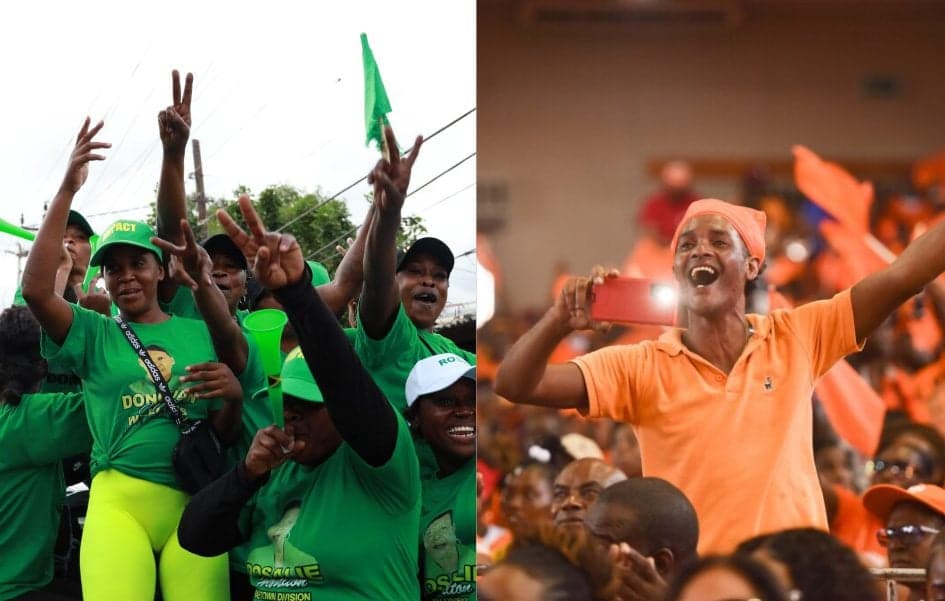
The campaign for this election seemed to be more associated with a general election, especially the campaign conducted by the JLP. Party leader and prime minister Holness traveled across the country in a strong bid for his party to have an overwhelming victory. It’s also alleged the JLP spent millions of dollars over the course of its campaign.
Mark Golding, who took over the reins of the PNP in 2020, following that party’s embarrassing defeat to the JLP in September that year, also led a very aggressive country-wide campaign, which began long before the date of the LGE was announced earlier this month.
The aggressive island-wide campaign conducted by both parties, and the high profile of party leaders in the respective campaigns had most political pundits predicting a large voter turnout. The potential for a large voter turnout was also buoyed by the perception that the LGE would essentially be a referendum on the performance of the Holness government, with mounting criticism against the government related to national issues like persistent crime and violence, and public corruption.
The turnout of 29.6 percent of voters certainly doesn’t justify the elections being a referendum against the JLP. But neither was it a strong endorsement of either Holness’ or Golding's leadership. The low voter turnout indicates neither leader is exciting and has strong interest among voters. This is not good for Jamaica. It’s important if Jamaicans are to have confidence in its government and its leaders, the party that forms the government must earn a strong mandate from a large percentage of voters.
Although the preliminary results of the LGE are indicating there’s likely to be a 7 to 7 tie in municipal victories by the JLP and PNP, the associated data seems more favorable to Golding and the PNP, particularly related to the popular vote.
In the last LGE held in 2016, the JLP won the popular vote 52.3 percent to the PNP’s 47 percent. The preliminary count of Tuesday’s election indicates the JLP has incurred a decline of 2 percent in the popular vote it enjoyed in 2016, while the PNP has gained approximately 17 percent. This is good news for Golding, giving him a foundation on which to build the PNP’s relevance to Jamaican voters leading up to the next general elections constitutionally due by September 2025. The PNP’s gain in the popular vote is a sign of a definite electoral shift, giving the PNP momentum to be taken advantage of.
With the LGE over, the next big question in Jamaican politics is when will Holness likely call general elections. If the final vote count in the LGE even shows the JLP won the majority of parish councils or municipalities, this is no comfort for the JLP. The low voter turnout, and shift in popular votes towards the PNP indicate the political tide is turning from the JLP. If the JLP had a strong showing in the LGE it’s likely Holness would seize upon those results to call the general election for possibly later this year. However, with the results being what they are he’s more likely to delay calling the election closer to September 2025.
On the other hand, Golding and the PNP could utilize a pressure strategy, using the momentum it gained from winning the popular votes in the LGE to pressure Holness into calling the general election earlier than he may want.
Both Golding and Holness expressed confidence in the LGE results on Tuesday night. Speaking to PNP supporters Golding said, “We will continue what we have been doing because we will not let the people down. The people want to see a PNP Government, and see I man, Mark Jefferson Golding, in Jamaica House. We can go forward with confidence that we have pulled off a great victory here today. The PNP is alive and well.” In his reaction Holness said the results indicated Jamaicans retained confidence in the Government. However, “there are issues that came up during the campaign which the Government recognizes, and the people in their wisdom have found a way to communicate these issues through the ballot to the Government.” The irony is it seems the majority of Jamaican voters have no real confidence in either of the two party leaders. The period leading to the general elections should be very interesting in Jamaica’s politics.