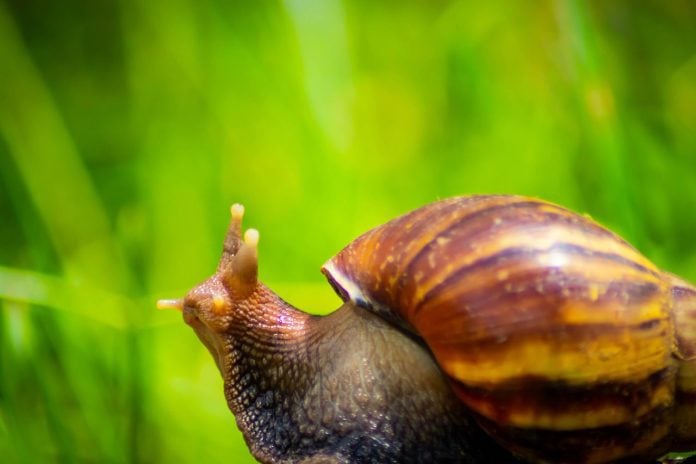
South Florida officials quarantined parts of Broward County on Tuesday after a giant African land snail was spotted in the area.
The quarantine was imposed after confirming the sighting of the snail in the Miramar area of Broward County.
The quarantine means that giant African land snails or plants (including soil, compost, and yard waste) cannot be moved in or out of the zone without a compliance agreement from the Florida Department of Agriculture and Consumer Services (FDACS).

The zone stretches from Pembroke Road to the north, NW 215th Street in Miami-Dade to the south, South University Drive to the west, and SW 62nd Avenue to the east.
According to the FDACS, the snail is one of the most invasive pests on the planet, causing agricultural and environmental devastation. It is said that they consume over 500 types of plants and can eat the stucco off of buildings.
It is further said that the snail can grow to be as long as 8 inches as an adult and can procreate in enormous quantities, laying thousands of eggs at a time.
Additionally, it carries a parasite called rat lungworm that can cause meningitis, posing a serious health risk for humans.
Within the quarantine zone, the FDACS will spray the insecticide metaldehyde, also known as “snail bait,” in two treatment centers. Metaldehyde inhibits snail mucus production, causing them to dry out and perish within a few days.
The pesticide is applied around plants or crops to protect them, the FDACS said.

Florida has dealt with the giant African land snail in the past and has successfully eliminated the snail twice before, in 1975 and 2021.
In 2021, the state used Labrador retriever dogs to assist control the snail population.