Health experts sound alarm over Jamaica's declining birth rate
Key Points(5)
- Among them is former permanent secretary of the Ministry of Industry, Investment and Commerce Reginald Budhan who said the island's declining birth rate is a serious problem.
- Speaking at a recent forum hosted by the Hugh Wynter Institute for Reproductive Healthcare and Endoscopic Surgery at The University of the West Indies, Budhan emphasized the urgent need for action to reverse the trend.
- Jamaica’s Population Health Status Report 2000–2022, tabled in Parliament earlier this year, reveals a troubling decline in the country’s birth rate.
- The crude birth rate, which measures live births per 1,000 people annually, dropped by 10.2 percentage points between 2000 and 2022.
- Jamaica has also fallen below the replacement fertility rate of 2.1, needed to sustain the population, with the current rate at 1.9.
Several health experts have warned that Jamaica’s declining birth rate could jeopardize the island’s aspirations for developed country status, urging immediate action to reverse the trend and address the socio-economic factors contributing to the issue.
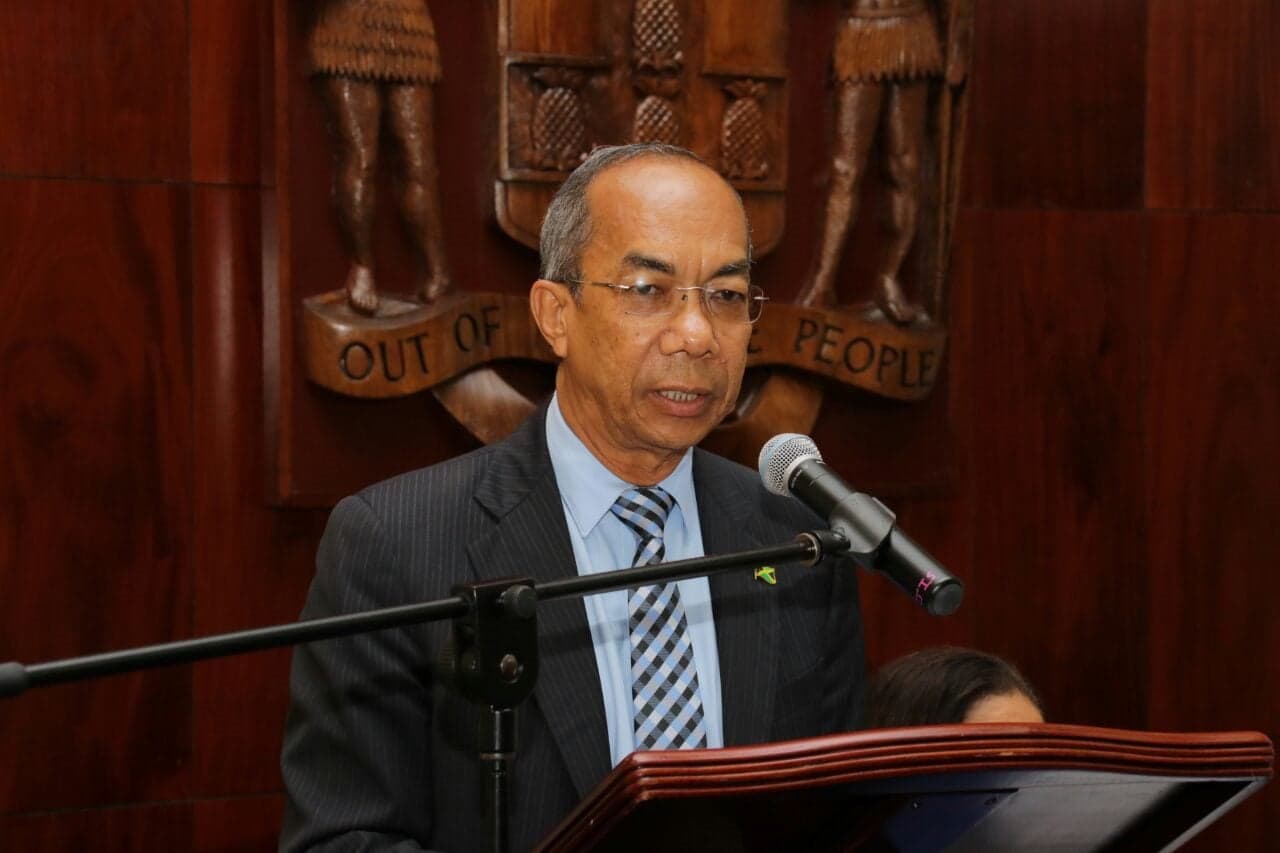
Among them is former permanent secretary of the Ministry of Industry, Investment and Commerce Reginald Budhan who said the island's declining birth rate is a serious problem.
Speaking at a recent forum hosted by the Hugh Wynter Institute for Reproductive Healthcare and Endoscopic Surgery at The University of the West Indies, Budhan emphasized the urgent need for action to reverse the trend.
Jamaica’s Population Health Status Report 2000–2022, tabled in Parliament earlier this year, reveals a troubling decline in the country’s birth rate. The crude birth rate, which measures live births per 1,000 people annually, dropped by 10.2 percentage points between 2000 and 2022. Jamaica has also fallen below the replacement fertility rate of 2.1, needed to sustain the population, with the current rate at 1.9.
"We had about 52,000 births last year, 21,000 migrations, and 20,000 deaths," Budhan said. "We have a serious problem... If this continues, Jamaica will never achieve its Vision 2030 goal. It will remain a dream, moving from 2030, to 2040, to 2050."
Budhan also criticized the effectiveness of the 1970s “Two is Better Than Too Many” campaign, stating that it was "too effective" and calling for a new approach that encourages larger families. He emphasized the importance of promoting strong family values to create a sense of security for women in raising children.
Other experts at the forum echoed Budhan’s concerns. Dr. Garth McDonald, Senior Medical Officer at Victoria Jubilee Hospital, highlighted the socio-economic implications of a low birth rate and stressed the need to focus not only on fertility but also on addressing infertility issues. “What about those women who want to have children but can’t?” McDonald asked. He pointed out that economic instability also discourages many women from starting families.
Consultant obstetrician-gynaecologist Dr. Loxley Christie revealed that 15% of couples experience fertility issues, urging a more inclusive approach to infertility treatment that considers both male and female factors. “Up to 50% of the time, there may be a problem with the male,” Christie said, calling for better integration of fertility discussions into the government’s health campaigns.
As Jamaica grapples with these demographic challenges, Easton Williams, Senior Director of Social Policy, Planning, and Research at the Planning Institute of Jamaica (PIOJ), warned that the country is at a critical juncture. "Most of the countries in the Caribbean are now below replacement level. The challenge is up to us," Williams said, recommending a long-term strategic approach to tackling the issue.
Professor Karen Carpenter from the Institute for Gender & Development Studies added that addressing the balance in child-rearing responsibilities between men and women is also critical. “Both partners should contribute to the care of the child. If we do not address how men have not moved forward while women have advanced themselves, we are not creating a balance,” she said.
With the birth rate declining and the socio-economic factors contributing to it, experts agree that Jamaica must take immediate action to address its population crisis or risk falling short of its development goals.